
Life Cycle Funds explained: How SEBI’s new target-date mutual funds work in India

1/8
A mutual fund that de-risks your money for you
Managing investments over decades is hard. Most people stay too aggressive for too long, or turn too cautious too early. SEBI’s new Life Cycle Funds are built to fix that problem.
SEBI formally introduced the category on February 26, 2026. These are open-ended mutual funds with a fixed maturity year and a pre-set schedule for changing their asset mix, called a glide path. They work much like target-date funds abroad, and they replace the older solution-oriented schemes, such as retirement and children’s funds.
SEBI formally introduced the category on February 26, 2026. These are open-ended mutual funds with a fixed maturity year and a pre-set schedule for changing their asset mix, called a glide path. They work much like target-date funds abroad, and they replace the older solution-oriented schemes, such as retirement and children’s funds.
2/8
What exactly is a Life Cycle Fund?
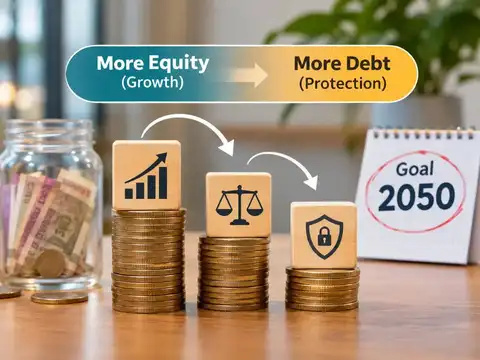
A Life Cycle Fund has a fixed maturity date and a built-in system that shifts your allocation as that date nears. When your goal is far away, the fund leans heavily on equity for growth. As the goal comes closer, it moves gradually into debt to protect what you have built.
The maturity year is part of the fund’s name. A “Life Cycle Fund 2050” is meant for someone with a 2050 goal. The fund manager does the rebalancing year after year, so you do not have to.
The maturity year is part of the fund’s name. A “Life Cycle Fund 2050” is meant for someone with a 2050 goal. The fund manager does the rebalancing year after year, so you do not have to.

3/8
How the glide path works
You pick the fund whose maturity year matches your goal, such as retirement in 2041 or a child’s education in 2036. With a long horizon, the fund favours growth-oriented equity. As the target year approaches, the manager steadily cuts equity and moves into safer assets like debt.
These funds are not limited to equity and debt. They can also invest in gold and silver ETFs, exchange-traded commodity derivatives (ETCDs) and Infrastructure Investment Trusts (InvITs). That gives them a multi-asset mix.
These funds are not limited to equity and debt. They can also invest in gold and silver ETFs, exchange-traded commodity derivatives (ETCDs) and Infrastructure Investment Trusts (InvITs). That gives them a multi-asset mix.
4/8
SEBI’s allocation bands, year by year
SEBI has set equity ranges based on the years left to maturity:
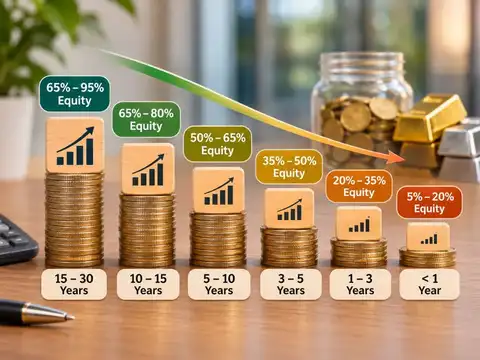
15 to 30 years: 65% to 95% equity
10 to 15 years: 65% to 80% equity
5 to 10 years: 50% to 65% equity
3 to 5 years: 35% to 50% equity
1 to 3 years: 20% to 35% equity
Less than 1 year: 5% to 20% equity
In every band, the rest of the corpus goes into debt, and up to 10% can go into gold or silver ETFs, ETCDs and InvITs. The bands show how the fund grows less aggressive over time.
15 to 30 years: 65% to 95% equity
10 to 15 years: 65% to 80% equity
5 to 10 years: 50% to 65% equity
3 to 5 years: 35% to 50% equity
1 to 3 years: 20% to 35% equity
Less than 1 year: 5% to 20% equity
In every band, the rest of the corpus goes into debt, and up to 10% can go into gold or silver ETFs, ETCDs and InvITs. The bands show how the fund grows less aggressive over time.

5/8
Safety rules for the debt portion
SEBI has put guardrails on the debt side. All debt instruments must be rated AA or above. Their maturity cannot go beyond the fund’s target year. This keeps the portfolio safer just when you need it most.
Funds are offered in 5-year intervals, from 5 to 30 years. Each fund house can run a maximum of 6 active Life Cycle schemes, which keeps the choice manageable.
Funds are offered in 5-year intervals, from 5 to 30 years. Each fund house can run a maximum of 6 active Life Cycle schemes, which keeps the choice manageable.
6/8
Exit loads punish quick exits
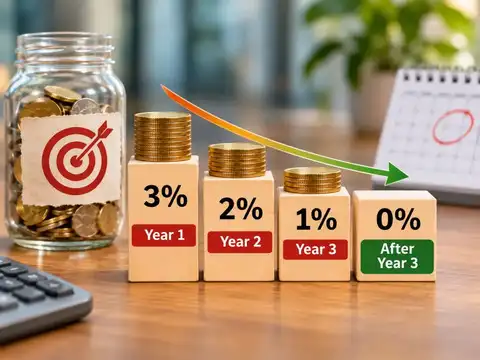
SEBI wants investors to stay put. The exit load is 3% in Year 1, 2% in Year 2 and 1% in Year 3. After that, there is no exit load.
These funds are built for goals that are many years away, not for short-term trading. If you may need the money within three years, a Life Cycle Fund is probably not the right place for it.
These funds are built for goals that are many years away, not for short-term trading. If you may need the money within three years, a Life Cycle Fund is probably not the right place for it.

7/8
Tax benefits and what happens at maturity
Even as the debt share grows, these schemes can still qualify for equity-oriented taxation. To keep this benefit, they must maintain specific equity-plus-arbitrage exposure levels. For funds within 5 years of maturity, equity arbitrage exposure of up to 50% is allowed for this purpose.
When a fund reaches its final year, you have three options. You can redeem your units, move to a Systematic Withdrawal Plan (SWP), or agree to merge your corpus into a nearer-term Life Cycle Fund. The merge option, which needs your consent, keeps your money working instead of paying it out all at once.
When a fund reaches its final year, you have three options. You can redeem your units, move to a Systematic Withdrawal Plan (SWP), or agree to merge your corpus into a nearer-term Life Cycle Fund. The merge option, which needs your consent, keeps your money working instead of paying it out all at once.

8/8
Who should consider a Life Cycle Fund?
These funds suit investors with a clear, time-bound goal. If you are 30 and plan to retire at 60, a Life Cycle Fund 2055 offers about three decades of equity-led growth, followed by gradual de-risking. If you are saving for a child’s college in 2042, a matching fund can handle the whole journey.
The biggest advantage is discipline. You do not have to remember to rebalance or guess when to move from equity to debt. The structure does it for you. Check the fund’s costs, track record and your own risk appetite before investing, and speak to a registered adviser if you are unsure.
This is general information, not investment advice.
The biggest advantage is discipline. You do not have to remember to rebalance or guess when to move from equity to debt. The structure does it for you. Check the fund’s costs, track record and your own risk appetite before investing, and speak to a registered adviser if you are unsure.
This is general information, not investment advice.