
Investing in 2026? This simple ETF vs index fund test tells you what to buy

1/9
ETF vs Index fund — which one actually makes you richer?
Both funds may track the same index, but what truly matters is how you invest. Your behaviour, cash flow, and discipline play a bigger role in determining returns than the product itself. Staying consistent and avoiding impulsive decisions often leads to better outcomes. In the end, success depends more on you than on the fund’s name or hype.
2/9
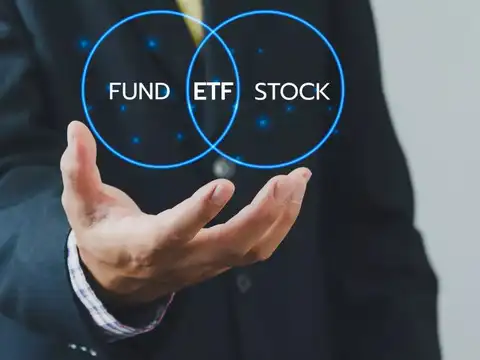
The core difference most investors miss
⦁ETFs trade like stocks during market hours.
⦁Index funds buy and sell at end-day NAV.
⦁Same index, very different experience and outcomes.
⦁Index funds buy and sell at end-day NAV.
⦁Same index, very different experience and outcomes.
3/9
Can you really do an SIP in an ETF? Here’s the truth
⦁ETFs don’t offer a true SIP like mutual funds. There’s no AMC-run auto-invest feature.
⦁What brokers offer instead is a “Stock SIP”—an automated buy order placed on the exchange at market price on a fixed date. Same discipline, different mechanics.
⦁What brokers offer instead is a “Stock SIP”—an automated buy order placed on the exchange at market price on a fixed date. Same discipline, different mechanics.
Amazon Top Deals
POWERED BY

Crompton Ozone 75 Litres Desert Air Cooler for home | Large & Easy Clean Ice Chamber | 4-Way Air Deflection | High Density Honeycomb Pads | Everlast Pump | Auto Fill| 3 Year Brand Warranty
₹9,798Buy Now43%
OFF
LG 32 L Convection Microwave Oven (MC3286BRUM, Black, 360° Motorised Rotisserie for Bar-be-queing, 301 Auto Cook Menu, Stainless steel cavity, Indian Cuisine, Tandoor Se, Steam Clean & Diet Fry)
₹19,340Buy Now19%
OFF

4/9
How ETF SIPs work and why investors still use them
⦁Your broker places a scheduled ETF buy at the live market price.
⦁Why it works: regular investing, rupee-cost averaging, and lower expense ratios.
⦁The catch: no NAV-based allotment, no fractional units, and execution depends on market liquidity.
⦁Why it works: regular investing, rupee-cost averaging, and lower expense ratios.
⦁The catch: no NAV-based allotment, no fractional units, and execution depends on market liquidity.

5/9
Choose ETFs if you’re deploying a big lump sum
⦁Investing Rs.5–10 lakh at once? ETFs win on cost with ultra-low expense ratios (as low as 0.05%), making a real difference over long periods.
ETFs are built for tactical investors
⦁Want to buy a sharp dip at 11:30 am or sell a rally at 3 pm?
⦁Only ETFs allow intraday execution, limit orders, and fast exits.
ETFs are built for tactical investors
⦁Want to buy a sharp dip at 11:30 am or sell a rally at 3 pm?
⦁Only ETFs allow intraday execution, limit orders, and fast exits.

6/9
Choose index funds if you invest via SIP
⦁For monthly investing, index funds are better.
⦁They allow true SIPs, automatic deductions, and fractional unit allotment—no leftover cash, no timing stress.
⦁They allow true SIPs, automatic deductions, and fractional unit allotment—no leftover cash, no timing stress.

7/9
Index funds win on simplicity
⦁No demat worries.
⦁No bid-ask spread.
⦁No liquidity checks.
⦁You invest, the NAV applies, and units are allotted. Clean and stress-free.
⦁No bid-ask spread.
⦁No liquidity checks.
⦁You invest, the NAV applies, and units are allotted. Clean and stress-free.
8/9
Tracking error — the hidden ETF risk
⦁In volatile markets, ETF prices can trade at a premium or discount to NAV.
⦁Index funds always execute exactly at NAV, with no surprises.
⦁Index funds always execute exactly at NAV, with no surprises.

9/9
The real wealth rule most people ignore
⦁Don’t overthink 0.05% vs 0.20%.
⦁Consistency beats optimisation.
⦁Start early, invest regularly, and stay invested—the compounding does the rest.
⦁Consistency beats optimisation.
⦁Start early, invest regularly, and stay invested—the compounding does the rest.