
Can Sukanya Samriddhi Yojana help you build ₹50 lakh, ₹75 lakh corpus or more for your daughter's future? Here's the math

1/8
Sukanya Samriddhi Yojana: Why parents are rushing to invest for their daughters
With education and future expenses rising rapidly, many parents are looking for safe long-term investments. The Sukanya Samriddhi Yojana (SSY) stands out because it combines government-backed security, attractive interest rates, tax benefits, and long-term compounding. Opened in a daughter's name, the scheme helps families build a substantial corpus for education, marriage, or other future goals.

2/8
How Sukanya Samriddhi Yojana works and who can open an account
Parents or legal guardians can open an SSY account for a girl child any time before she turns 10. Contributions can be made for 15 years, while the account matures after 21 years. Even after deposits stop, the accumulated balance continues earning interest until maturity, helping the investment grow significantly over time.

3/8
How much maximum corpus can SSY help generate?
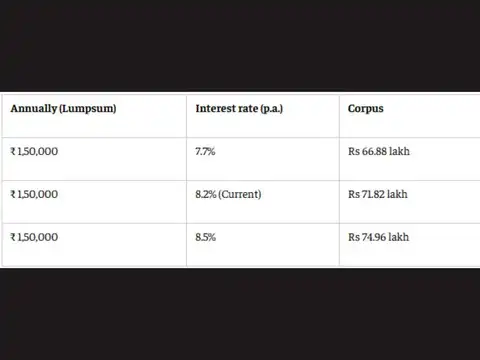
The maximum investment allowed in SSY is ₹1.5 lakh per financial year. If parents invest this amount annually for 15 years and the scheme earns 8.2% interest, the maturity value can reach approximately ₹72-75 lakh after 21 years. Remarkably, the interest earned can be more than double the original investment amount.
Amazon Top Deals
POWERED BY

4/8
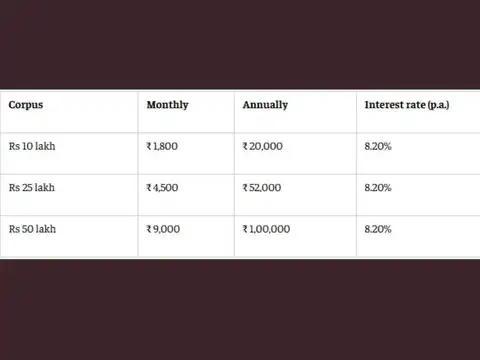
How much should you invest in SSY to build ₹10 lakh, ₹25 lakh or ₹50 lakh corpus?
Parents targeting specific goals can plan contributions accordingly. Based on current returns, a monthly investment of about ₹1,800 may help create ₹10 lakh, ₹4,500 could target ₹25 lakh, and roughly ₹9,000 per month may build a corpus near ₹50 lakh. Starting early gives compounding more time to work.

5/8
Can SSY alone help you build a ₹1-crore corpus?
Building a ₹1-crore corpus through SSY alone is challenging because annual contributions are capped at ₹1.5 lakh. Even with maximum investments and current interest rates, the maturity amount is expected to remain below ₹1 crore. Parents aiming for a larger corpus may need to supplement SSY with other long-term investments.
6/8
SSY interest rates matter more than you think
SSY interest rates are reviewed periodically by the government and are not permanently fixed. Over a 21-year period, even small rate changes can have a major impact on the final corpus. For example, the maturity amount can differ by several lakh rupees depending on whether the interest rate is 7.7%, 8.2%, or 8.5%.

7/8
Best age to start a Sukanya Samriddhi Yojana account
Financial experts recommend opening an SSY account as early as possible after a daughter's birth. Starting early maximizes the power of compounding because the money gets more time to grow. Delaying the account opening by several years reduces the compounding period and can significantly lower the maturity value available at the end of the tenure.

8/8
SSY vs mutual funds, PPF or fixed deposits: Which is better?
SSY offers higher returns than many government-backed savings options and comes with tax-free maturity benefits. However, equity mutual funds have historically delivered stronger long-term wealth creation potential. Many financial planners suggest using SSY as the stable, low-risk part of a child's education portfolio while combining it with equity mutual funds or index funds for higher growth.