
45% return on FCNR(B) deposits? Understand the 19X leverage strategy before you invest
1/8
What is the 19X FCNR(B) leverage strategy?
Under this strategy, an NRI opens an FCNR(B) fixed deposit and borrows against it. The borrowed money is then reinvested into another FCNR(B) deposit, increasing the total amount earning interest. Since the investor uses borrowed funds in addition to their own money, the return on their own capital can become much higher than a regular FCNR(B) deposit.

2/8
How can leverage increase your FCNR(B) returns?
The strategy works by taking advantage of the difference between the interest earned on the FCNR(B) deposit and the interest paid on the loan. If the deposit earns more than the borrowing cost, the spread generates additional profit. The larger the leverage, the greater the potential return on your original investment.
3/8
FCNR(B) return calculator: How a 19X leverage example works
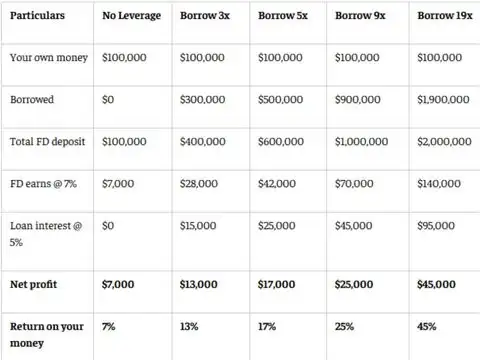
In the illustrative example, an investor places $100,000 in an FCNR(B) deposit earning 7% annually. By borrowing $1.9 million at 5% and reinvesting it, the total deposit grows to $2 million. The illustration shows net annual earnings increasing from $7,000 without leverage to $45,000 with 19X leverage, taking the return on the investor's own capital from 7% to 45%.
Amazon Top Deals
POWERED BY
4/8
When can the FCNR(B) leverage strategy fail?
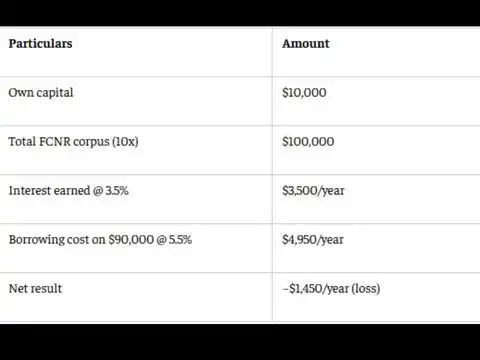
Leverage is beneficial only when the deposit interest rate remains higher than the borrowing cost. If loan rates exceed the return on the deposit, the strategy can generate losses instead of profits. In the illustration, a deposit earning 3.5% financed with borrowing at 5.5% results in a net annual loss despite the larger investment amount.

5/8
Why rising SOFR can reduce your returns
Most borrowing under this strategy is linked to the Secured Overnight Financing Rate (SOFR). If SOFR rises when the loan is rolled over, borrowing costs increase while the FCNR(B) deposit continues earning the previously fixed rate. Even a modest increase in SOFR can significantly reduce or completely eliminate the expected profit margin.

6/8
Why many NRIs prefer FCNR(B) deposits
An FCNR(B) deposit is held in a foreign currency such as the US dollar, pound sterling, euro or yen. Both the principal and interest remain in the chosen currency throughout the tenure, helping NRIs avoid losses from rupee depreciation and eliminating currency conversion risk on maturity.

7/8
Who should consider an FCNR(B) deposit?
FCNR(B) deposits may suit NRIs who expect to use their money overseas, want to retain exposure to foreign currencies or wish to avoid exchange rate risk. They can also appeal to investors looking for greater certainty about the value of their savings in foreign currency terms rather than in Indian rupees.

8/8
Should you use leverage with an FCNR(B) deposit?
A leveraged FCNR(B) strategy can amplify returns, but it also magnifies risks. Before opting for it, investors should evaluate borrowing costs, possible changes in SOFR, the interest rate on the deposit and their own risk tolerance. A higher projected return alone should not be the deciding factor when using borrowed money.