
Top companies hiring checklist for 2026: Skills, rather than degrees, that Indian employers test now and recruiters actually use
1/10
Is skills-first hiring the new reality in India’s job market?
India’s workforce is shifting from degree-centric hiring to skills-first evaluation. Companies such as Google, Apple, Infosys and TCS now prioritise skills—coding tests, portfolios and certifications—over degrees, particularly in tech, digital marketing and creative roles, where job performance matters more than whether a candidate holds a traditional degree.

2/10
Why are more and more Indian employers dropping degrees as the top filter?
Even with millions of graduates, India struggles with job quality. Traditional filters—degrees and years of experience—often miss job-ready talent. Skills-first hiring expands the talent pool, reduces hiring costs, and boosts performance. Employers report up to 50% faster onboarding and better retention when hiring based on skills over credentials.

3/10
How big is India’s skill gap despite 1 crore graduates?
India produces over 10 million graduates annually, but less than half are considered employable in their fields. Many work in unrelated jobs or underemployment. This gap is particularly stark in tech and finance, where 80% of recruiters report difficulty finding candidates with real-world skills, despite a large graduate population.
Amazon Top Deals
POWERED BY

Crompton Ozone 75 Litres Desert Air Cooler for home | Large & Easy Clean Ice Chamber | 4-Way Air Deflection | High Density Honeycomb Pads | Everlast Pump | Auto Fill| 3 Year Brand Warranty
₹9,798Buy Now43%
OFF

LG 32 L Convection Microwave Oven (MC3286BRUM, Black, 360° Motorised Rotisserie for Bar-be-queing, 301 Auto Cook Menu, Stainless steel cavity, Indian Cuisine, Tandoor Se, Steam Clean & Diet Fry)
₹19,340Buy Now19%
OFF

4/10
What essential skills do Indian employers want in 2025?
Top skills in demand include Digital Literacy, Generative AI familiarity, data analytics, communication, and adaptability. Salaries for data analysts and AI-literate professionals in India often start around Rs.6–10 lakh, with top performers in metros earning upwards of ?15–20 lakh, far above average graduate packages. There are also many roles that don’t require a college degree but pay well including Graphic Designer, Social Media Manager, Virtual Assistant, Video Editor, and Data Entry specialist. Learn the basics of the role, responsibility, tools, and build a portfolio to demonstrate the skill set.
5/10
Skills checklist for jobseekers in India
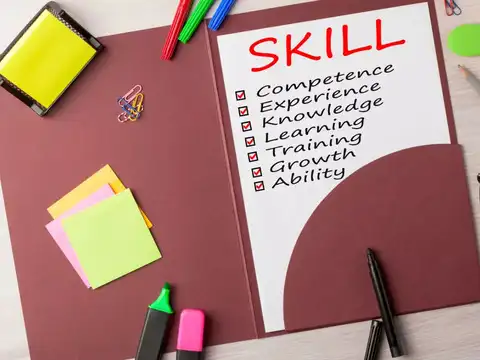
Technical & digital: Excel, dashboards, automation basics, AI/GenAI tools, data interpretation, role-specific software.
Cognitive & work: Problem-solving, business understanding, adaptability.
Human skills: Clear communication, teamwork, ownership.
Proof: Projects, internships, portfolios, short-term certifications, and the ability to explain how you solved real problems.
Cognitive & work: Problem-solving, business understanding, adaptability.
Human skills: Clear communication, teamwork, ownership.
Proof: Projects, internships, portfolios, short-term certifications, and the ability to explain how you solved real problems.

6/10
Skills checklist for hiring managers in India
Before hiring: Identify day-one skills; drop unnecessary degree filters.
Job descriptions: Focus on tasks and outcomes; use inclusive language.
Evaluation: Case studies, simulations, behavioural questions.
Track outcomes: Faster hiring, better retention, stronger performance and greater workforce diversity through skills-matched hiring.
Job descriptions: Focus on tasks and outcomes; use inclusive language.
Evaluation: Case studies, simulations, behavioural questions.
Track outcomes: Faster hiring, better retention, stronger performance and greater workforce diversity through skills-matched hiring.
7/10
Do degrees still matter—or just get you an interview?
In India, degrees are still entry tickets—but skills decide the hire. Recruiters increasingly screen with skill tests, portfolios, and practical assessments. For example, candidates with AI/ML certifications can command 20–30% higher starting packages, even without a top-tier degree, showing the shift from theory to practical ability.

8/10
How is Indian policy supporting skills over degrees?
The National Education Policy (NEP) 2020 emphasises experiential learning, internships, vocational training, and credits for practical skills. NEP reforms aim to reduce rote memorisation and align India’s 7000+ universities and colleges with industry needs, signalling a long-term shift to competency-based education and hiring.

9/10
Can candidates without degrees still land great jobs in India?
Yes—especially in tech, digital marketing, design and analytics. Skills-based pathways like internships, bootcamps and micro-credentials allow non-degree candidates to break into high-growth roles. Platforms like NASSCOM and government skill missions increasingly recognise alternative routes to career success.

10/10
Does skills-first hiring give India a competitive advantage?
India’s job market is evolving: the future of work values proven capability over paper credentials. Companies that hire on skills unlock better performance, while professionals who upskill earn higher pay and job security. In India’s new economy, degrees open doors—but skills take you farther.