You must have read up on the company before you applied. After you get the interview call, dig deep into its affairs. The interviewers will expect you to know about the company, its products and the market it operates in.
By ET Bureau | Updated:
Getty Images
Connecting to the meeting room on time, dressing neatly and keeping the cell phone on silent are some of the obvious things to do when you go for an interview. Here are a few more tips that can help you score well in the interaction.
Know your company You must have read up on the company before you applied. After you get the interview call, dig deep into its affairs. The interviewers will expect you to know about the company, its products and the market it operates in. Don’t just look up the company website though. Go through news items and reports by independent analysts on the company to get a better perspective.
Mind the body language The non-verbal communication during an interview is almost as important as what you say. Panelists will notice if your tone doesn’t match the expression on your face or the posture of your body. Leaning back indicates boredom or arrogance. However, leaning forward can be a sign of aggression, even nervousness. It’s best to sit straight, but not in a stiff posture.
Maintain eye contact Eye contact is crucial and should be as natural as possible. Keeping your head straight shows you are neutral but tilting it slightly to one side indicates a positive attitude. Don’t face the panel with your head pointing downwards, which signals a negative attitude. Also, don’t nod too much—it denotes nervousness and a desperate attempt to agree. Crossing your arms implies that you disagree with the interviewer. Keep your hands in your lap or on your knees, but don’t grip them tightly, which indicates you are tense.
Focus your attention Interviewers ask a lot of questions, including some open-ended ones. Don’t launch into lengthy answers and try to complete what you are saying even though the interviewer is trying to break your monologue. Keep your replies short, focused and relevant. It’s better to give a concise answer that’s to the point than explain in detail about something that is peripheral.
Don’t rush into the conversation. Listen carefully to what the interviewer is saying, even wait for a second or two to ensure the interviewer doesn’t want to add something, and then reply calmly and slowly. Don’t keep interrupting the speaker for clarifications or try to dominate the conversation by being loud, and replying the instant the speaker stops.
Don’t show desperation Companies are looking for committed employees. Don’t let the interviewers think that you only seek a job. Convince them that you are looking for a career by becoming a part of the company’s culture. Let them know that you have researched the company thoroughly. Don’t make the mistake of discussing money and position right at the beginning. That is best left for later, after the basics have been sorted out.
Rehearse the interview The biggest challenge for candidates is the lack of exposure to a verbal selection process. For a group discussion, get a bunch of friends together and practice multiple mock group discussions. For all other interviews, build a question bank from online resources and practice saying answers aloud in front of a mirror. Do mock interviews with as many people as possible including family members, friends, campus seniors etc. Practice for a neutral accent and clean English without use of colloquial or swear words. Discover and eliminate repetitive fillers in your speech like – “umm”, “ahh”, “you know”.
To fail that job interview, any of these 5 mistakes is all it takes
1/6
Connecting to the meeting room on time, dressing neatly and keeping the cell phone on silent are some of the obvious things to do when you go for an interview. But what do you not do?
Looking for a job is a long-drawn out and emotionally draining experience for many. Not everyone is lucky enough to find success in the first try; there are many reasons why one may face rejection at a job they applied for. Chief among them is failing at the interview. Here are five ways one can fail at a job interview.
Connecting to the meeting room on time, dressing neatly and keeping the cell phone on silent are some of the obvious things to do when you go for an interview. But what do you not do?Looking for a jo..
Read More
You have made it to the interview. Where you know all about yourself. You expect that the interviewers know all about their company’s business, people and role. Which you do not know. You never hear back from them after the interview. The person who was hired had researched these for a week before the interview. Your homework and due diligence on the company are just as crucial a part of the interaction as your own stories. Be well-versed and thorough.
You have made it to the interview. Where you know all about yourself. You expect that the interviewers know all about their company’s business, people and role. Which you do not know. You never hear ..
Read More
Your previous employer’s business model was flawed and you had told them so. Your boss was a terrible manager. Your team mates would never support you and steal your credit. It was not your fault. You tell your interviewers about it. Your interviewers choose to interpret it as disloyalty and lack of ownership while bidding you goodbye. Even if you had bitter experiences, an interview with your potential future company or bosses is not the place to make a pity party or bad mouth anyone. Remain ethical and moral at all times.
Your previous employer’s business model was flawed and you had told them so. Your boss was a terrible manager. Your team mates would never support you and steal your credit. It was not your fault. Yo..
Read More
Why would you waste time in an interview if the salary was not up to expectations? So you discuss money and position right at the beginning. The interview seems to go downhill thereafter. The interviewer thinks of himself as a buyer and wants to be sold and convinced about the product before discussing price. Money matters are important but if you show that it's the only thing that's important to you, don't expect the company to put its faith in you.
Why would you waste time in an interview if the salary was not up to expectations? So you discuss money and position right at the beginning. The interview seems to go downhill thereafter. The intervi..
Read More
The interviewer asks strange questions from your resume. Like examples of how you outperformed or handled negative clients or team conflicts. Or about industry numbers. Or specific learnings from the certifications and education you have claimed. You fumble or spin a story. The stories don't check out. And you don't either. Know you stories by heart, prepare for behavioral workplace questions, they are the most common part of any job interview because past performance is often taken as a metric to determine future behavior.
The interviewer asks strange questions from your resume. Like examples of how you outperformed or handled negative clients or team conflicts. Or about industry numbers. Or specific learnings from the..
Read More
You heard your interviewer ask you about yourself. And later ask you to leave. You do not remember the questions that were asked in between. And why the interviewer would repeat each question even after you had answered. Meanwhile, the interviewer’s notes look somewhat like this— poor listener, irrelevant answers. You must be attentive, present and alert at all times. An interview is not the place to have your focus detracted. Be mindful.
You heard your interviewer ask you about yourself. And later ask you to leave. You do not remember the questions that were asked in between. And why the interviewer would repeat each question even af..
Ask the right questions At the end of the interview, a candidate is often asked if he has any questions. Don’t waste this opportunity on vague questions or something that can be easily researched on the Net. Ask about the responsibilities that you would be handling, major projects that can come up and other things you would be permitted to do.
After the interview is over, send a thank you note to the interviewer. Avoid sending an SMS, as it is seen as too informal. An email is a better option. Only don’t make the note too long. Keep it short and sweet.
Not able to bag a job interview? These 10 resume mistakes could be the reason
1/11
First impression is usually the last. And the way you make a first impression when recruiting is obviously via your resume. This document is a key link in the recruitment chain. It is not only a selection tool to shortlist applicants, but also serves as a base document for your future employer. If you want your resume to stand out you must make sure it is devoid of these common but avoidable mistakes. If your job search has thus far been futile, you probably need to reflect on your resume and figure out which of these 10 steps has torpedoed your chances in the recruitment team's hands.
First impression is usually the last. And the way you make a first impression when recruiting is obviously via your resume. This document is a key link in the recruitment chain. It is not only a sele..
Read More
Keeping your resume completely confidential, letting no eyes other than your own get a peak at it before it goes to a recruiter are rookie mistakes. Matters are made worse if you do not believe in criticism of what you have written. Meanwhile, the recruiter does not see your resume like you do and trashes it in five seconds finding it ordinary and even irrelevant. So what went wrong? Other job-seekers who got short listed had polished their resumes with inputs from multiple friends, and that's where you can err.
Keeping your resume completely confidential, letting no eyes other than your own get a peak at it before it goes to a recruiter are rookie mistakes. Matters are made worse if you do not believe in cr..
Read More
If you choose to explain your entire career over six pages of size six font, you are headed the wrong path. The average recruiter spends about six seconds on a CV decision. Your CV lands in the out tray while the in tray is filled with one page resumes or two pages for 20+ years of experience. These CVs avoid writing much about older jobs, irrelevant hobbies or information like a residence address.
If you choose to explain your entire career over six pages of size six font, you are headed the wrong path. The average recruiter spends about six seconds on a CV decision. Your CV lands in the out t..
Read More
If you shoot your shot at every distinct target job with a single weapon, I.e. the same CV every time, you are likely to miss many targets. Your old CV simply takes a single click to send and you target multiple job applications in an hour. What did the successful candidate, on the other hand, do? He took hours to line up his target by reading the job description, learning about the company and role and then customising his resume to prune, reword and highlight what was important to the employer.
If you shoot your shot at every distinct target job with a single weapon, I.e. the same CV every time, you are likely to miss many targets. Your old CV simply takes a single click to send and you tar..
Read More
Surely the resume is about you and tells your professional highlights. But using personal pronouns such as “I”, “me”, “we” is perhaps the biggest no-no. Otherwise, your CV will stand out in the recruiter’s hands but only for the wrong reasons. Regular resume writers know that using a personal pronoun as the subject or object of a sentence is not expected. Instead they start bullet points with an active verb like ‘Managed a team of five engineers’.
Surely the resume is about you and tells your professional highlights. But using personal pronouns such as “I”, “me”, “we” is perhaps the biggest no-no. Otherwise, your CV will stand out in the recru..
Read More
If you exaggerate, use partial facts or someone else’s achievements, you are putting yourself in grave danger not just for one time but probably for life. In most places, the recruiter’s existing knowledge and access to the internet will uncover the truth. Where you get a shortlist or a job, the situation is worse. A termination, black-listing and a permanent blot on reputation follows after a post hiring background verification including a document and reference check.
If you exaggerate, use partial facts or someone else’s achievements, you are putting yourself in grave danger not just for one time but probably for life. In most places, the recruiter’s existing kno..
Read More
You believe a picture is worth a thousand words. And that what you see is what you get. So you include your own passport photograph at the top of your CV and then maybe add a few graphs or colourful designs for good measure. Which is all very well if you are auditioning for Bollywood. Or showing off your creative abilities for a designer or artist’s role. For all other purposes, the ATS—applicant tracking software—rejects your resume finding it unreadable. Thereafter the recruiter overlooks it in favour of standard professional resumes minus pictures and designs.
You believe a picture is worth a thousand words. And that what you see is what you get. So you include your own passport photograph at the top of your CV and then maybe add a few graphs or colourful ..
Read More
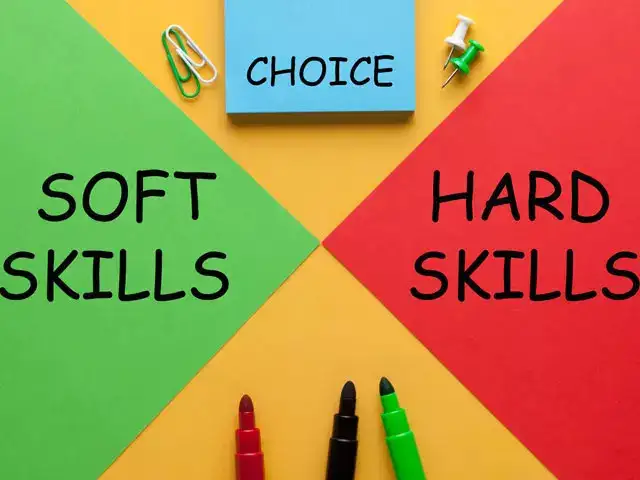
Your manager agrees that you are hardworking and smart. The job description calls for diligence and professionalism. You put these words in your resume. And yet your resume does not make it to the recruiter’s laptop. A recruiter searches for hard skills like “python” and “Tally” and not for subjective attributes like “hardworking” or “diligent”.
Your manager agrees that you are hardworking and smart. The job description calls for diligence and professionalism. You put these words in your resume. And yet your resume does not make it to the re..
Read More
You are proud of the responsibilities you handle in your role and pour them all out in your resume. The recruiter will then be left wondering why you wrote down a job description instead of a resume and whether you even contributed to the company's growth or success story. Meanwhile, the smart resume writer will pen his personal achievements and not his duties, core tasks or responsibilities, thus making the CV relatable, comparable and of course, catchy.
You are proud of the responsibilities you handle in your role and pour them all out in your resume. The recruiter will then be left wondering why you wrote down a job description instead of a resume ..
Read More
You have never heard of a spell check nor asked someone for a grammar check and submit your resume. Your resume contains an extra digit or wrong dates or even incorrect contact info. Basically, you do not check what you have once drafted. Big time mistake! Your resume is not a rough draft, it is the real deal. Why let your telephone be unreachable for the recruiter? Observing such errors and typos, she assumes that the job is not important for you and you haven't even taken the first step seriously.
You have never heard of a spell check nor asked someone for a grammar check and submit your resume. Your resume contains an extra digit or wrong dates or even incorrect contact info. Basically, you d..
Tips for online interviews Online job interviews are not new, but covid has made them necessary. Most companies now conduct online interviews, which not only ensures safety but also saves them time, effort and money. Here are a few tips to keep in mind when you are being interviewed online.
Test the tech Interviewers mostly use video conferencing software such as Teams, Skype, Zoom or Google Hangouts. Download the required software and familiarise yourself with it beforehand. Laptops and tablets have built-in webcams but you will need to instal one if you are using a desktop. You can also use a smartphone, but it’s best to go with a laptop or desktop computer. It’s a good idea to practice using the technology before the actual interview. Rope in a friend in a remote location to test out the video conferencing so there is no last-minute technical glitch.
Clear the clutter A disorganised room and cluttered surroundings gives a bad impression to the interviewer. Your workspace and the surroundings should be free of clutter. Choose a room where you will not be disturbed by anyone when the interview is on. Besides being noise-free, the room should have good wifi connection for the interview to go smoothly. Also, make sure that you put your phone on quiet mode and all alarms are off.
Dress for real Just because the interviewers cannot see you fully doesn’t mean you can dress up partially. You might be required to get up so wear formal clothes just like you are appearing in a regular in-person interview.
Keep a cheat sheet A cheat sheet helps formulate responses without confusion and delay. So, keep your resume, cover letter, a list of questions you want to ask, any notes you want to take, as well as relevant information about the organisation handy with you.













 ‘Promoted, burnt out, or quit quietly?’: Gen Z candidate’s question on job interview gives HR a reality check on modern hiring2026-05-28T04:46:39Z



