
EMIs now eat up to 60% of income: How easy credit is draining India’s youth
1/9
India’s debt crisis is here: Households now owe 45.5% of GDP
India is going through a quiet financial shift. According to RBI data, household debt has climbed past 45.5% of the country’s GDP. The biggest worry is what people are borrowing for. More than 58% of household loans are now non-housing retail loans, such as credit cards, personal loans and digital credit. Families are borrowing less to build assets and more to spend today.

2/9
Why Indian households are saving less than ever
As borrowing rises, savings are falling. Net household financial savings have dropped to about 5% of GDP, among the lowest levels on record. The old Indian habit of “save first, spend later” is fading. Many people now buy first and pay later, and a home loan builds wealth in a way a gadget loan never can.

3/9
Gen Z is borrowing fast, and often before turning 30
Young Indians are driving this boom. Around 40% to 50% of retail loan demand comes from borrowers under 30 or 35. About 53% of Indians take their first personal loan before 30, and 57% get their first credit card before 30. Fintech apps and Buy Now, Pay Later offers make credit a single tap away. Many young people are using future income to pay for travel, phones and lifestyle upgrades.

4/9
The “small loan” trap: How little debts add up to a big problem
Financial trouble rarely starts with one huge loan. It builds through many small ones. Fintech firms hold a 56.8% share of small personal loans under ₹50,000, and about 70% of their loan books are unsecured. Credit card debt has now crossed ₹3 lakh crore. Some borrowers practice “card stacking”, using one card to pay off another. Rolled-over balances can carry interest of 36% to 60% a year.
5/9
Young Indians are taking loans to pay their parents’ bills
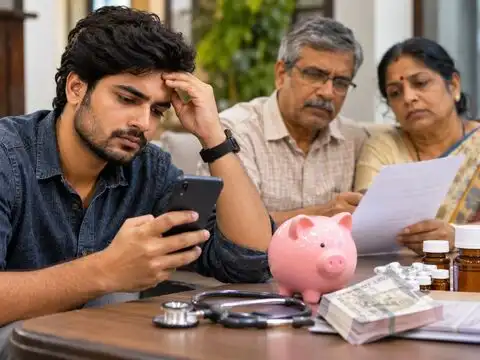
One worrying trend is young workers taking high-interest personal loans to cover family needs. These include a parent’s medical emergency, a shortfall at a family shop or farm, or old family debts. These loans create no income and no asset. Repaying them depends entirely on an entry-level salary staying steady, which is a risky bet for a first-time earner.
6/9
Warning signs: EMIs are eating up to 60% of monthly income
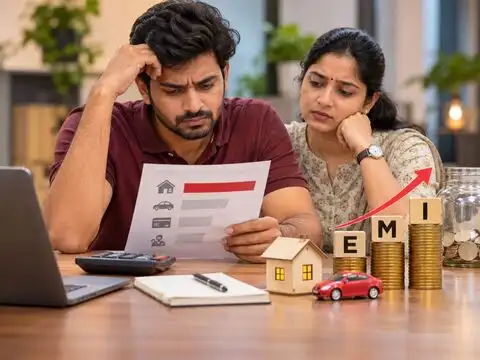
The strain is easy to see in the numbers. Household liabilities have doubled in five years, while financial assets grew only 48%. A heavily indebted borrower now spends 40% to 60% of monthly income on EMIs. Defaults on small loans under ₹1 lakh are rising fastest, with delinquencies in the fintech small-loan segment at about 6.4%. The RBI has responded by raising risk weights to 125%, pushing banks and NBFCs to lend more carefully.
7/9
Why this matters for the whole economy, not just borrowers
Household debt affects everyone, not just the people who owe it. When savings fall, India has less domestic money for investment and leans more on foreign capital. Heavy debt also cuts spending, which slows growth. Bad loans in the unsecured segment are rising toward 1.8%, putting pressure on private banks. For the borrower, one missed EMI leads to penalty charges, and CIBIL keeps a default on record for 7 years. That can block future home loans and cheap credit.

8/9
The hidden cost of debt: Anxiety, depression and helplessness
Debt hurts more than a bank balance. Studies link severe over-indebtedness to higher rates of clinical depression and chronic anxiety, especially among young people. Constant calls, rising dues and the fear of a damaged credit record can leave borrowers feeling trapped. Talking openly about money problems and getting help early can make a real difference.
9/9
How to escape the debt trap: 3 steps experts recommend
Financial planners suggest a clear order of action:
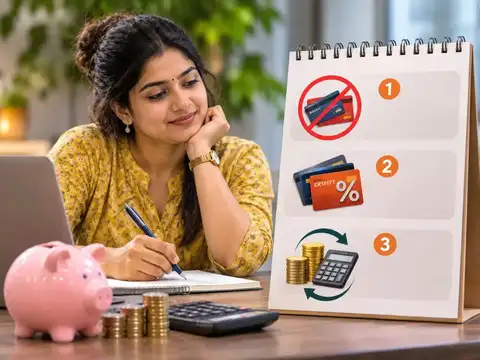
Step 1: Stop new borrowing. Pause BNPL apps, instant credit lines and credit cards.
Step 2: Clear the costliest debt first. Credit card balances at 36% or more should be repaid before lower-interest personal loans.
Step 3: Consider consolidation. If many lenders are overwhelming you, a debt consolidation loan or a balance transfer can combine payments into one lower, fixed EMI.
Start small, stay consistent, and protect your credit score while you recover.
Step 1: Stop new borrowing. Pause BNPL apps, instant credit lines and credit cards.
Step 2: Clear the costliest debt first. Credit card balances at 36% or more should be repaid before lower-interest personal loans.
Step 3: Consider consolidation. If many lenders are overwhelming you, a debt consolidation loan or a balance transfer can combine payments into one lower, fixed EMI.
Start small, stay consistent, and protect your credit score while you recover.