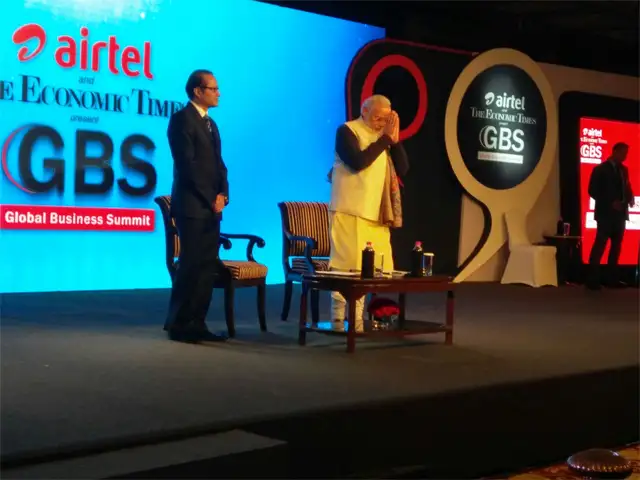
ET GBS: Lessons in digital disruption from management guru & CEO coach Ram Charan

Layers in businesses are a problem too. Ram Charan advised CEOs to have three layers instead of many when it come to digitisation. "We've got to totally redo the future of work," Ram Charan said.

ET GBS: Lessons in digital disruption from management guru & CEO coach Ram Charan
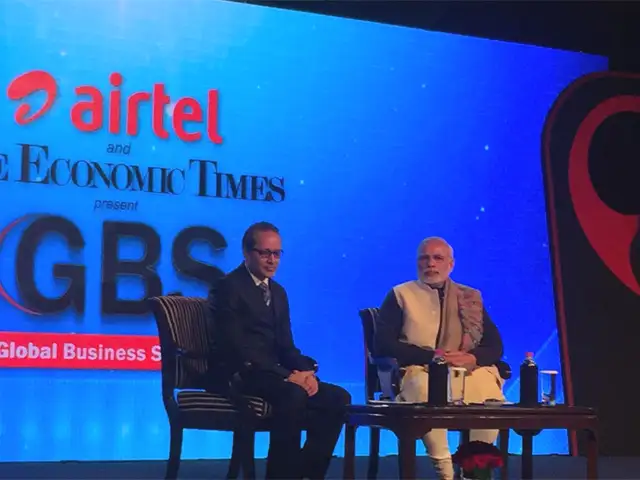
NEW DELHI: When you are aiming for digital disruption, you must define the customer experience in excruciating detail, according to management guru and CEO coach Ram Charan who was addressing the audience at the second The Economic Times Global Business Summit in New Delhi on Saturday.

Making sense of digital disruption, Ram Charan listed out key factors that are critical in creating competitive advantage in a digital environment. These include algorithm, cloud, software, mobility, and mindset. "It's not digitisation, it is the algorithm that's the new core competence," he said adding, "To succeed, all of these have to be integrated."

Ram Charan told businesses to make the millennials a part of the top echelons. "Millennials need to question your business and you should allow them to question you."

On digitisation, Ram Charan advised businesses to not go ahead with digitisation without putting out a blueprint. Businesses should also realise that the eco-system partners are going to change. "Think globally who should be your partners. Trusting the partners in digital disruption is absolutely necessary," Ram Charan said.

Layers in businesses are a problem too. Ram Charan advised CEOs to have three layers instead of many when it come to digitisation. "We've got to totally redo the future of work," Ram Charan said.
Download
The Economic Times Business News App
for the Latest News in Business, Sensex, Stock Market Updates & More.
Download
The Economic Times News App
for Quarterly Results, Latest News in ITR, Business, Share Market, Live Sensex News & More.
PM Modi at ET GBS 2016: 10 takeaways from his enthralling speech
1/11
Economictimes.com

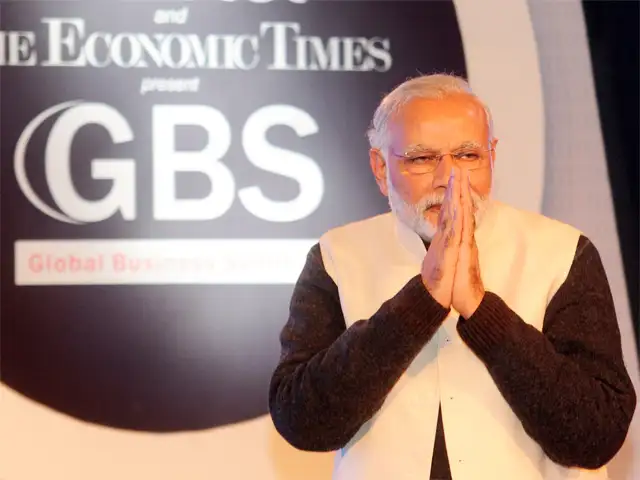
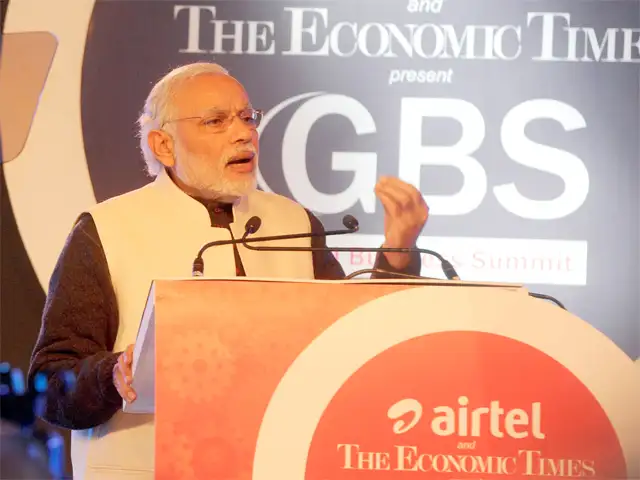
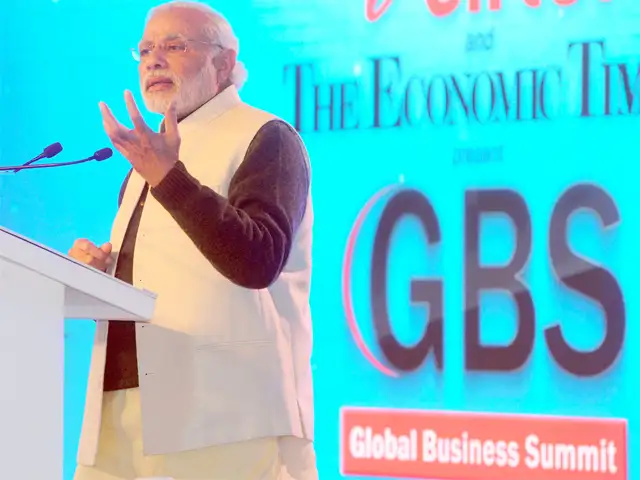
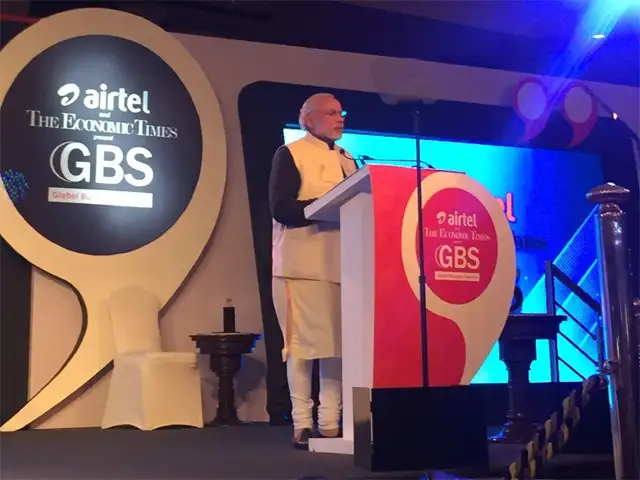
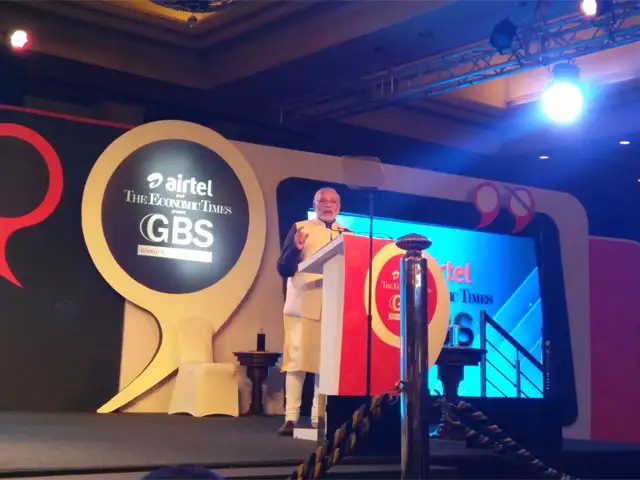
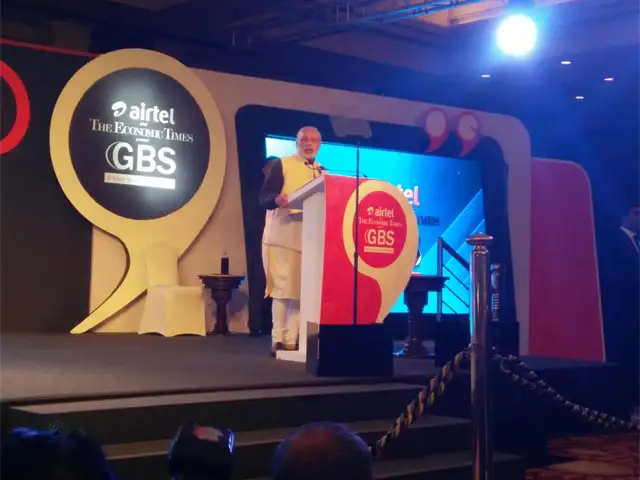
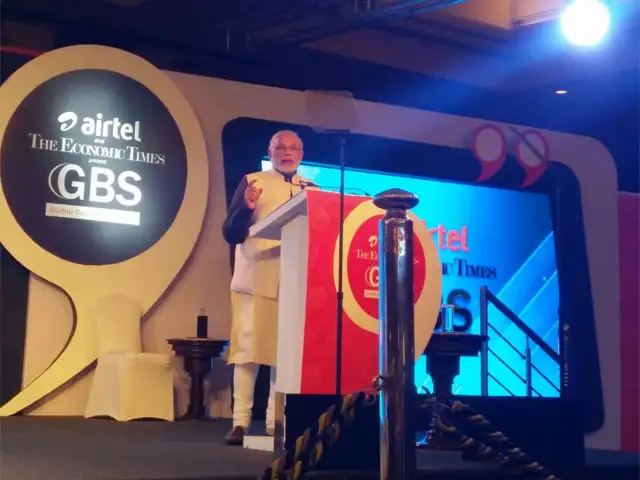
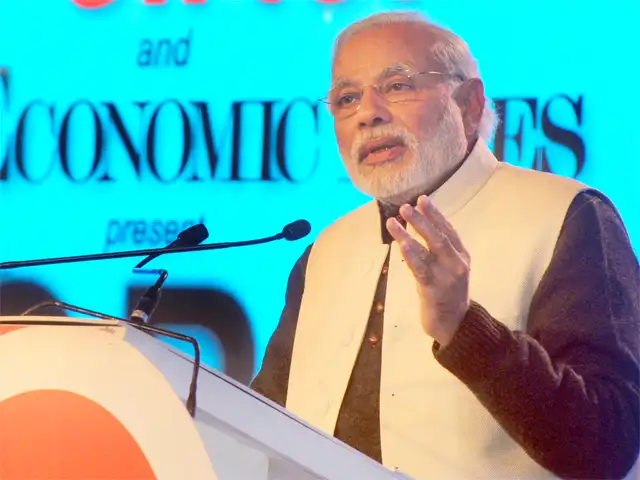
At a power-packed Day 1 of the ET Global Business Summit 2016, Prime Minister Narendra Modi shared his thoughts on the progress of the Indian economy and on the business environment.

Outlining his government's achievements and his vision for a "new India", PM Modi said, "In 19 months, much has been achieved. Much more is expected of us. And there are challenges ahead. Yet, I am now confident that we can successfully go forward, that we can successfully go faster, and that we can do so in a way that will benefit the common people."

We take a look at ten takeaways from PM Modi's extensive and enthralling speech:
Economictimes.com

At a power-packed Day 1 of the ET Global Business Summit 2016, Prime Minister Narendra Modi shared his thoughts on the progress of the Indian economy and on the ..
Read More
Broad statistics give only a partial picture of what we are attempting, and what we are achieving. It is often said "the devil is in the detail". But I believe that God is in the proper execution of many so-called details. It is these so-called details which, when done well, add up to a big picture.

You may be interested to know that:

> India's highest ever production of ethanol as blended fuel, benefiting sugar cane farmers, was in 2015.

> The highest number of new cooking gas connections to the rural poor was achieved in 2015.

> India's highest ever output of coal; generation of electricity was achieved in 2015

> India's highest ever quantity of cargo handled by major ports was in 2015.

> India's highest ever increase in railway capital expenditure was achieved in 2015.

> India's highest ever rank in World Bank Doing Business indicators, was achieved in 2015.
Broad statistics give only a partial picture of what we are attempting, and what we are achieving. It is often said "the devil is in the detail". But I believe that God is in the proper execution of ..
Read More
Not only have many indicators improved, but they have improved by large margins. For example, in 2013-14, the total number of National Highway kilometres awarded was about 3500. This more than doubled in the first year of this Government to nearly 8000 kilometres, an all-time high. This year we are planning to award 10,000 kilometres.

Let me give you more examples of quantum leaps. The Shipping Corporation of India which made a loss of Rs 275 crore in 2013-14 made a profit of Rs 201 crore in 2014-15. This is a turnaround of Rs 575 crore in one single year.
Not only have many indicators improved, but they have improved by large margins. For example, in 2013-14, the total number of National Highway kilometres awarded was about 3500. This more than double..
Read More
What should be the basic guiding principles of economic policy in any country, particularly for the developing countries?

Firstly, we have to improve the use of our natural and human resources, to increase the value addition we can get from them. This means increasing the efficiency in allocation of resources. It means greater managerial efficiency. It means removing unnecessary controls and distortions.

Secondly, we should create new opportunities for citizens to progress and also give them a choice of opportunities. In simple terms, it means Sabka Saath, Sabka Vikas.

Thirdly, we have to increase the quality of life of the common citizen and even more so, the quality of life of the poor. Quality of life may have an economic aspect, but it is not economics alone. If a government is progressive, and runs an honest and efficient administration, the biggest beneficiaries are the poor. I know from my experience, that poor governance hurts the poor more than it hurts others. Therefore, improved governance is as important as economic reform.
What should be the basic guiding principles of economic policy in any country, particularly for the developing countries?

Firstly, we have to improve the use of our natural and hu..
Read More
Let me turn to talking about improving opportunities. I believe in the politics of empowerment.

I believe in empowering the people to improve their own lives. We undertook the world's largest and most successful financial inclusion programme. It has brought over two hundred million unbanked people into the banking system.

In the early days of this programme, sceptics felt that these accounts would have no balances. You will be surprised to know that today these accounts have a balance exceeding over 4 billion dollars. We have also issued a record number of debit cards to them. India is now one of the few countries where the market share of an indigenous credit card brand exceeds 33%.

We have introduced a new and comprehensive program of crop insurance. This empowers farmers to give their best, with the State providing cover against risks beyond the farmer's control. We have introduced soil health cards to empower our farmers.
Let me turn to talking about improving opportunities. I believe in the politics of empowerment.

I believe in empowering the people to improve their own lives. We undertook the world's la..
Read More
Entrepreneurship is one of India's traditional strengths. It was sad to see it neglected in the last few years. "Business" and "profits" had become bad words. We have changed that. We need to value enterprise and hard work, not wealth.

Our programs ranging from MUDRA to Start Up India and Stand-Up India provide opportunity to the hard working and to the enterprising. In so doing, we have placed special emphasis on Scheduled Castes, Scheduled Tribes, Other Backward Classes and women. We are empowering them to become masters of their own destinies.
Entrepreneurship is one of India's traditional strengths. It was sad to see it neglected in the last few years. "Business" and "profits" had become bad words. We have changed that. We need to value e..
Read More
Creating opportunities for cities and towns to grow is very crucial. Urban areas are an engine of growth. A key initiative for urban transformation is the Smart City Mission.

The mission has several 'firsts'. It is the first time that certain areas in cities will be comprehensively developed in a systematic and qualitative way. These areas will act as 'light houses' which will eventually influence the rest of the city.

It is the first time that there has been such extensive citizen consultation. Nearly 2.5 million people participated through contests, discussions, polls, blogs and talks on the MyGov platform. This is a major break from the top-down approach to urban planning.

It is the first time that allocation of funds in a government scheme is done not by decisions of Ministers or officers but on the basis of competition. This is a good example of competitive and cooperative federalism.
Creating opportunities for cities and towns to grow is very crucial. Urban areas are an engine of growth. A key initiative for urban transformation is the Smart City Mission.

The mission..
Read More
Good governance is crucial. We have taken numerous steps which have transformative potential. We have ended the era of high level corruption. This is a fact acknowledged by Indians and foreigners, and by critics and supporters of this government.

This is not an easy achievement. We have ended political interference and crony capitalism in nationalized banks. We have for the first time appointed several heads of public sector banks from the private sector. Transparent auctions have cleaned up the natural resources sector which was riddled with scandals.
Good governance is crucial. We have taken numerous steps which have transformative potential. We have ended the era of high level corruption. This is a fact acknowledged by Indians and foreigners, an..
Read More
I must confess that I am surprised by the way words are used by experts on the matter of subsidies. When a benefit is given to farmers or to the poor, experts and government officers normally call it a subsidy. However, I find that if a benefit is given to industry or commerce, it is usually called an "incentive" or a "subvention".

We must ask ourselves whether this difference in language also reflects a difference in our attitude? Why is it that subsidies going to the well-off are portrayed in a positive manner? Perhaps these are seen as incentives for investment. I wonder whether, if the fertiliser subsidy is re-named as "incentive for agricultural production", some experts will view it differently.

I am not arguing that all subsidies are good. My point is that there cannot be any ideological position on such matters. We have to be pragmatic. We have to eliminate bad subsidies, whether or not they are called subsidies. But some subsidies may be necessary to protect the poor and the needy and give them a fair chance to succeed. Hence my aim is not to eliminate subsidies but to rationalize and target them.
I must confess that I am surprised by the way words are used by experts on the matter of subsidies. When a benefit is given to farmers or to the poor, experts and government officers normally call it..
Read More
Our country suffers from an excess of old and unnecessary laws which obstruct people and businesses. We began the exercise of identifying unnecessary laws and repealing them. 1,827 Central laws have been identified for repeal. Out of these, 125 have already been repealed.

Bills for repealing another 758 have been passed by the Lok Sabha and are awaiting the approval of the Upper House.
Our country suffers from an excess of old and unnecessary laws which obstruct people and businesses. We began the exercise of identifying unnecessary laws and repealing them. 1,827 Central laws have ..
Read More
READ MORE
ADVERTISEMENT

READ MORE:

LOGIN & CLAIM

50 TIMESPOINTS

More from our Partners

Loading next story
Business News › Tech › Software › ET GBS: Lessons in digital disruption from management guru & CEO coach Ram Charan
Text Size:AAA
Success
This article has been saved

*

+