
 Daily Top 5 Daily Top 5 |
Zepto vs rivals; Cybersecurity goes outsourced
Want this newsletter delivered to your inbox?
I agree to receive newsletters and marketing communications via e-mail

Thank you for subscribing to Daily Top 5
We'll soon meet in your inbox.
As Zepto lines up a public markets debut this year, a look at how it stacks up against rivals Blinkit and Instamart. This and more in today's ETtech Top 5.
Also in the letter:
■ OpenAI boss attack case
■ Indian AI goes deep
■ House help safety concerns
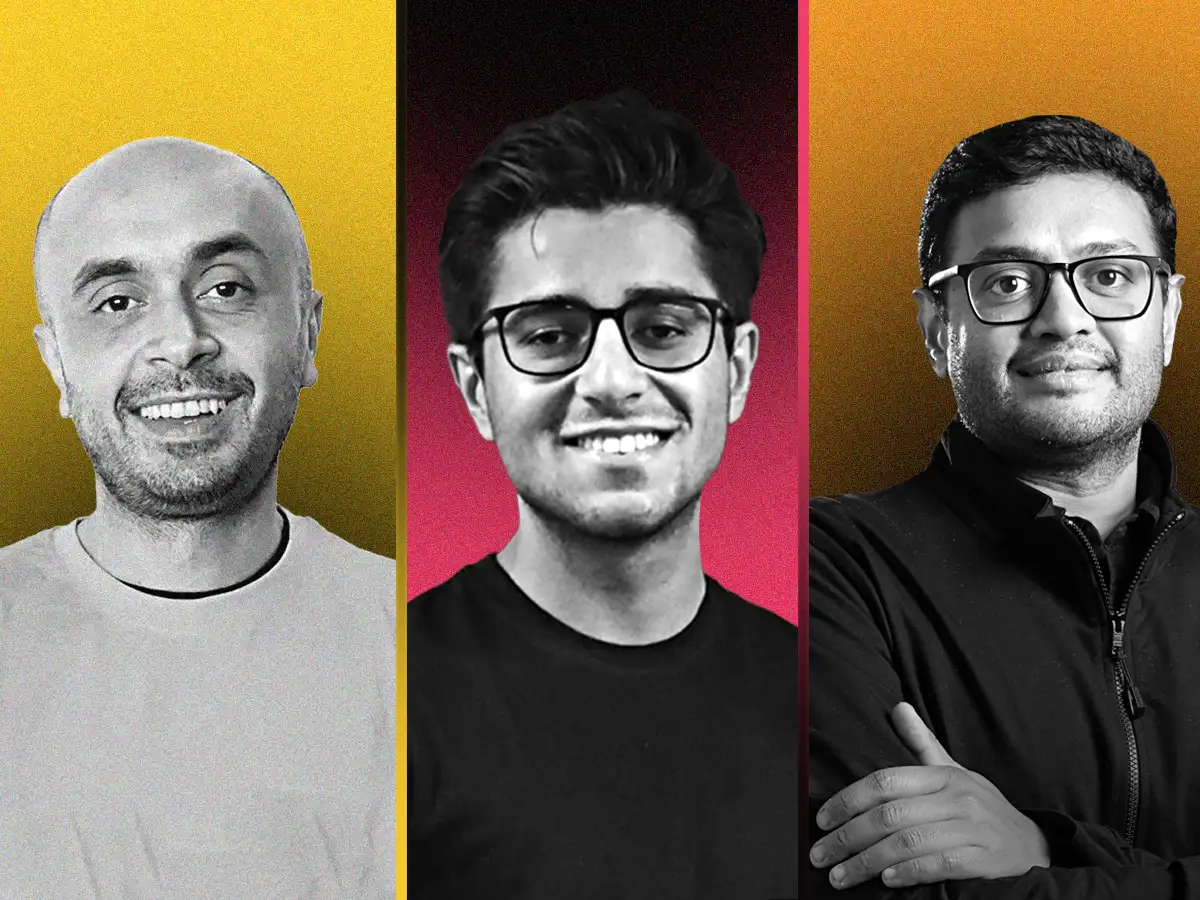 (L-R) Albinder Dhindsa (Blinkit), Aadit Palicha (Zepto) and Sriharsha Majety (Swiggy)
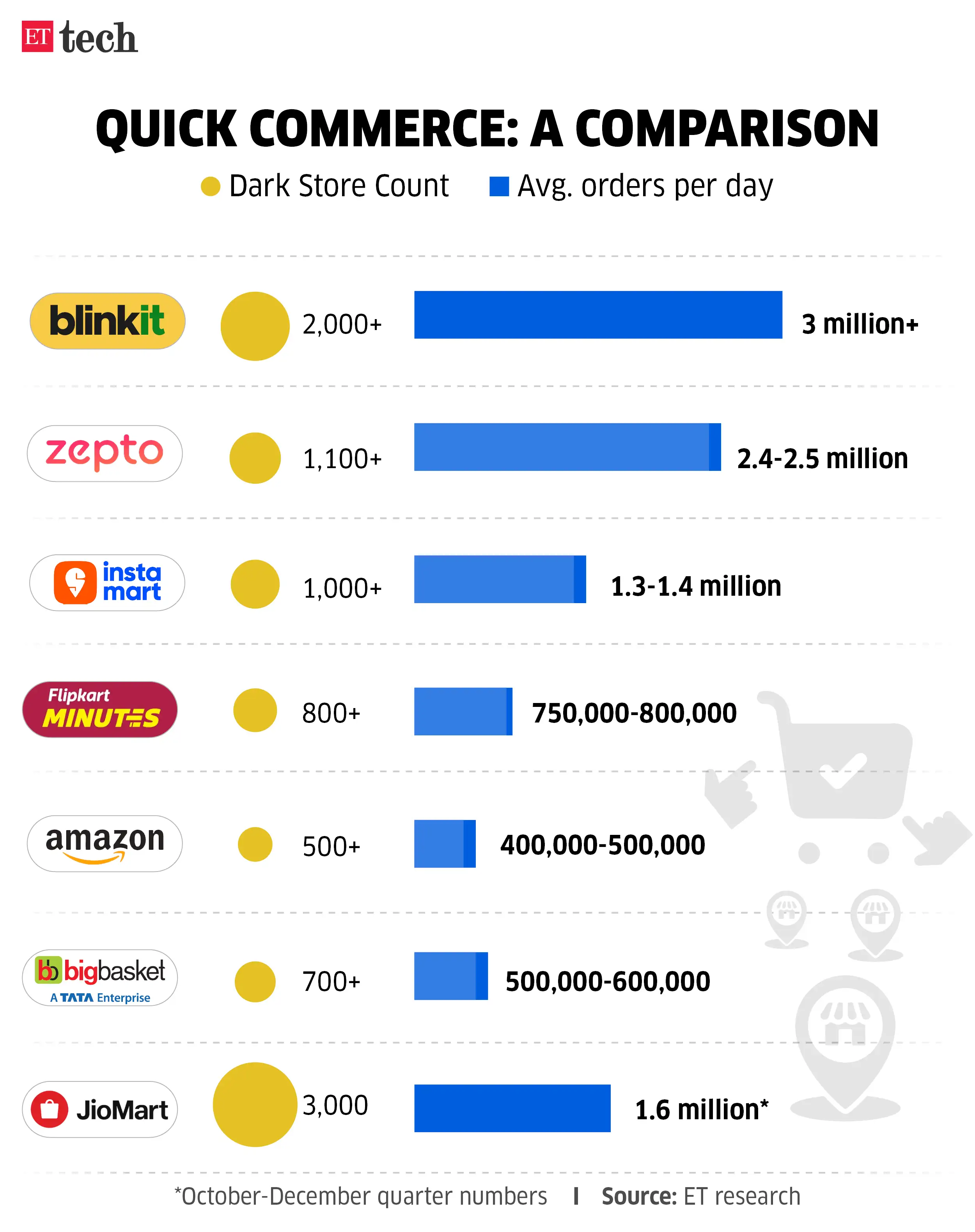
Quick commerce platform Zepto, which has filed confidential draft papers with Sebi, is aiming to list by June–July 2026 with an issue size of about Rs 11,000–12,000 crore. The market will judge Zepto not just on its own numbers but also on how it compares with Blinkit and Swiggy’s Instamart.
Dark stores:
Also Read: Flipkart, Amazon expand dark stores as profit check slows quick commerce majors
Daily orders:
Financials:
At Rs 850-900 crore, Zepto's quarterly cash burn is the highest among the top three quick commerce players. To be sure, Blinkit and Instamart’s parent companies run profitable food delivery businesses.
Fundraising backdrop:
Also Read: Zepto trims cash burn before IPO, pitches profitability by FY29 to public market investors

Indian companies are no longer treating outsourced cybersecurity as a temporary patch for a hiring problem. Instead, they are rebuilding their security architecture around it.
What's driving this: “About half of the organisations we are seeing are considering outsourcing their security operations centre (SOC) functions,” said Adrian Hia, APAC head at cybersecurity and anti-virus provider Kaspersky.
Behind that choice lie a few hard facts. Cyber risk keeps climbing. IT estates sprawl across clouds, data centres, and devices. The cost of running a 24/7 in-house SOC keeps rising faster than most budgets can keep up with.
“Indian enterprises are increasingly making a deliberate choice to adopt SOC-as-a-service rather than treating it as a temporary response to talent shortages,” said Biswajeet Patra, senior principal analyst at research and advisory firm Forrester.
Who is leading the charge: The shift is most visible in BFSI, telecom and IT services, sectors that live on continuous monitoring, clean audit trails, and fast incident response.
Industry experts estimate that roughly 80% to 85% of organisations in the BFSI space now outsource at least some cybersecurity functions. The most frequently handed-off work includes vulnerability assessment and penetration testing (VAPT), red teaming, threat intelligence and SOC monitoring.
A market takes shape: Outsourced SOC services convert high fixed costs into a subscription, and let providers spread expensive AI investments across many clients. India accounted for about 5–6% of global SOC-as-a-service revenue in 2025, and the market is growing faster there than in most other regions.
Also Read: Cybersecurity talent squeeze paints a big target on India Inc
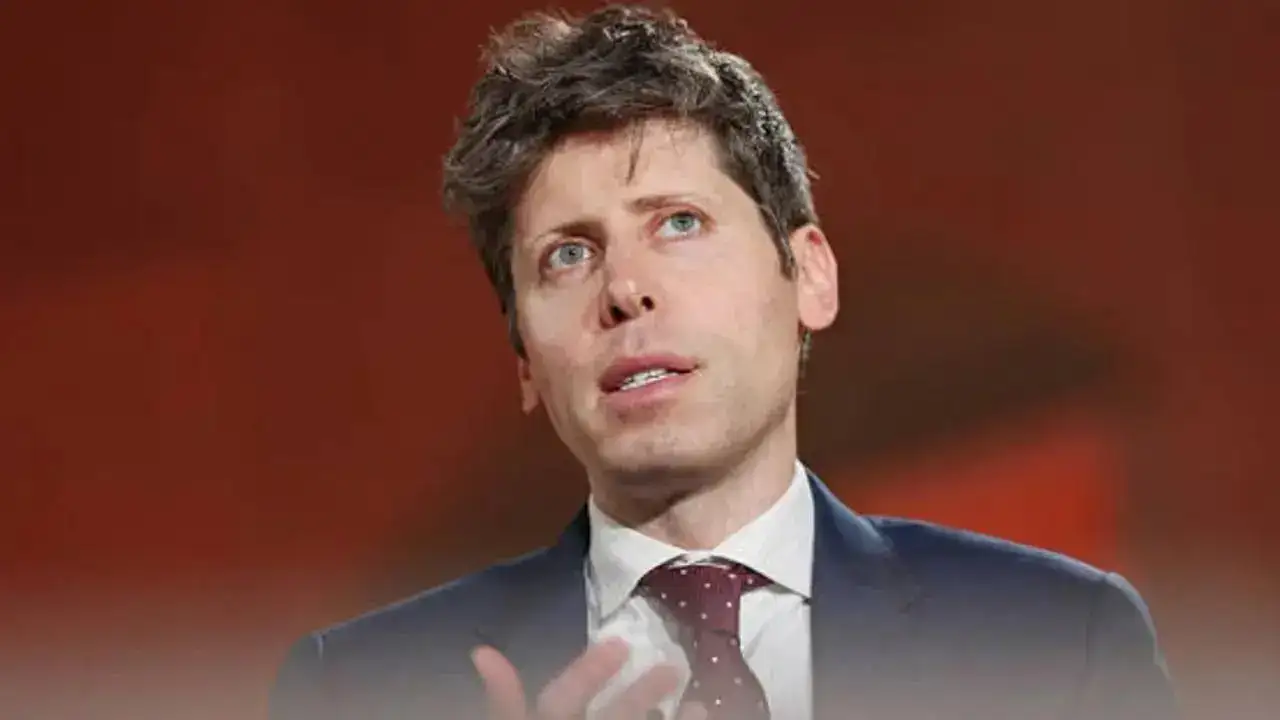 Sam Altman, CEO, OpenAI
US officials say the man who allegedly hurled a Molotov cocktail at OpenAI CEO Sam Altman’s California home intended to kill him.
What's happening?
A second scare: Two days later, Altman’s home was again the scene of an incident. Two individuals allegedly fired shots at the property on Sunday. Police arrested both on firearms-related charges.
Valuation on trial: These attacks unfold as OpenAI’s $852 billion valuation prompts searching questions from parts of the investor community, even after the company raised $122 billion in what could rank as Silicon Valley’s largest funding round.
According to The Financial Times, some backers are uneasy with how often OpenAI’s strategy has shifted, changing twice in six months as competition from Google and Anthropic intensifies. CFO Sarah Friar has pushed back against those concerns.
Also Read: OpenAI acquires AI personal finance startup Hiro

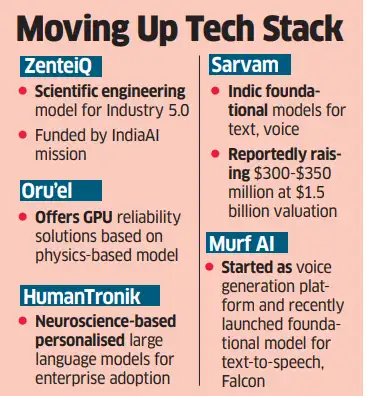
A new wave of Indian AI startups is choosing to work on the hard problems. Instead of building thin application layers and cosmetic “AI wrappers,” they are pushing into frontier areas of science, engineering, physics and neuroscience.
What are they building:
Why it matters: Founders say the conversation has moved from generic AI demos to domain-specific innovation that creates real value. Investors are paying close attention to fields such as healthcare, materials and physics, where specialist foundation models could offer deeper defensibility and stronger differentiation.
The catch: While momentum is real, the gaps are, too. Talent constraints, compute scarcity, and fragile infrastructure continue to weigh on the ecosystem. Experts warn that while Indian startups are clearly rising up the innovation ladder, the country still has a long road ahead before it can stand level with China and the United States.
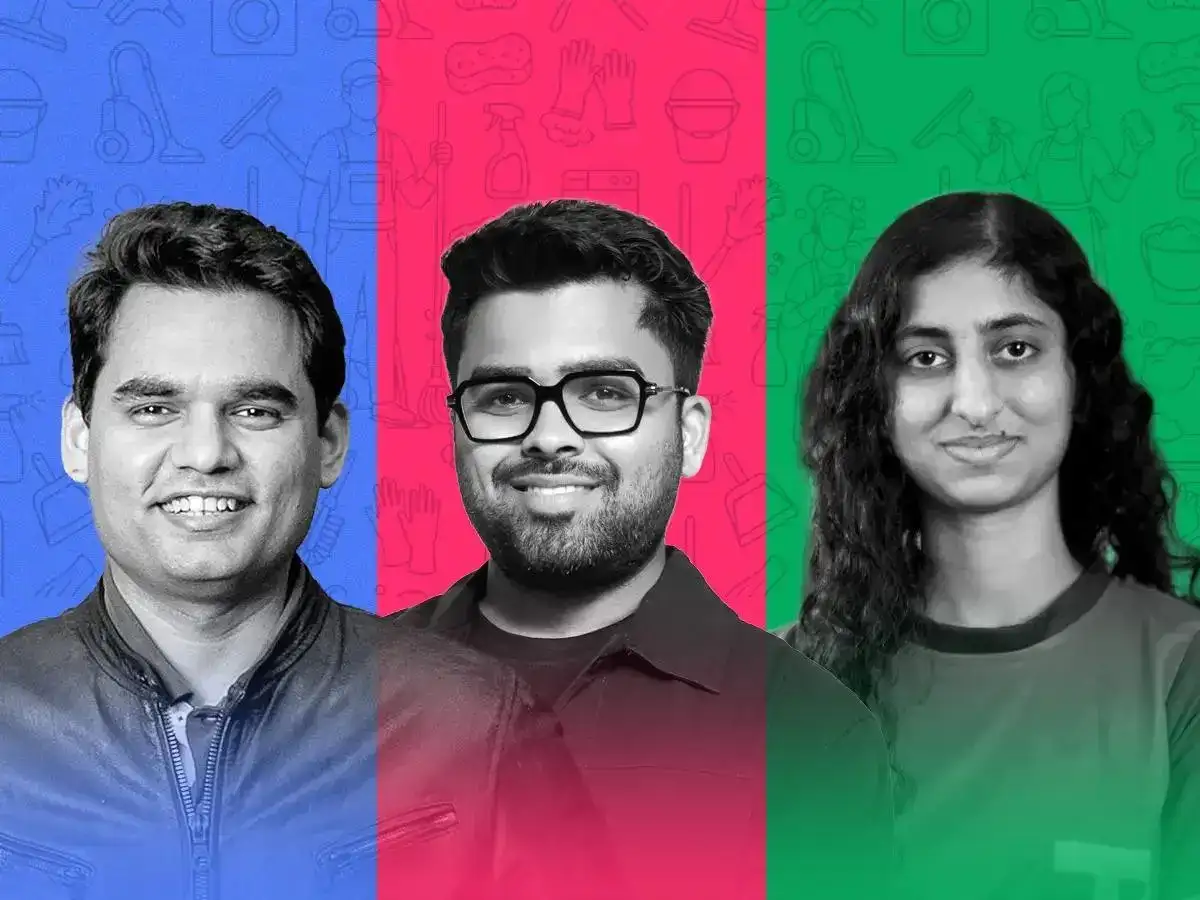 (L -R) Urban Company's Abhiraj Bhal, Snabbit's Aayush Aggarwal and Pronto's Anjali Sardana.
As demand surges for house help priced at roughly $1 an hour, women are being trained not just to chop and clean but also to send SOS alerts if they feel unsafe in customers’ homes.
Safety concerns: Household outsourcing is already common. Startups such as Pronto, Snabbit, and Urban Company have trained thousands of women for cleaning and kitchen work. Yet worries persist about what happens once they step into private homes.
Unlike delivery couriers who make quick, visible stops, housekeepers spend hours behind closed doors. That time can heighten the risk of sexual harassment.
Tell me more:
Shabnam Hashmi, a women’s rights activist, said companies routinely run background checks on workers before hiring them, but rarely on customers. For now, users can book domestic help through apps with minimal screening, leaving a growing safety gap at the heart of a booming market.
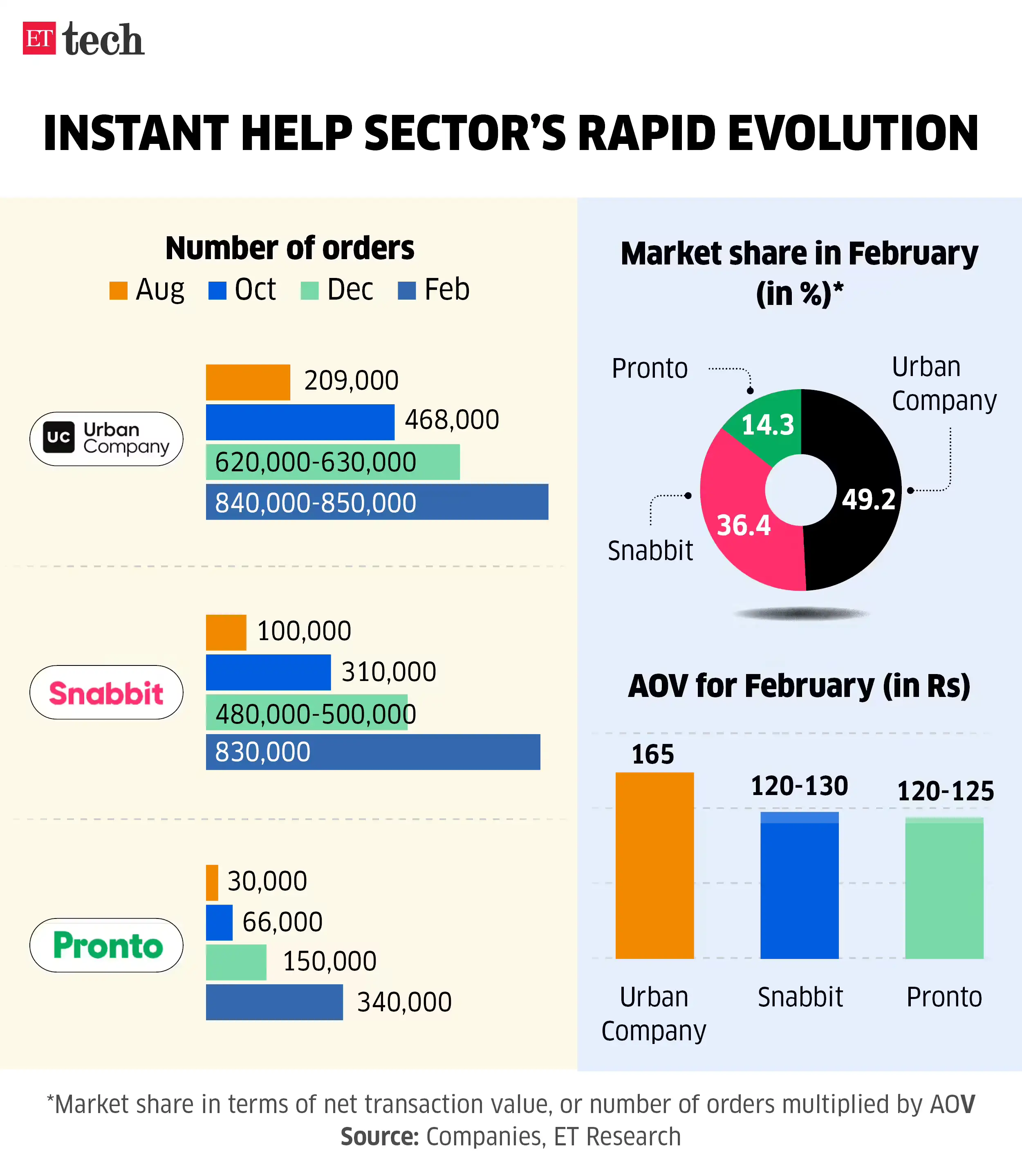
Also Read: Househelp apps top 2 million monthly orders amid profitability questions
Also in the letter:
■ OpenAI boss attack case
■ Indian AI goes deep
■ House help safety concerns
Zepto's IPO test: how it stacks up against listed rivals Blinkit and Instamart
Quick commerce platform Zepto, which has filed confidential draft papers with Sebi, is aiming to list by June–July 2026 with an issue size of about Rs 11,000–12,000 crore. The market will judge Zepto not just on its own numbers but also on how it compares with Blinkit and Swiggy’s Instamart.
Dark stores:
- Blinkit leads with about 2,027 dark stores as of December 31, 2025, and plans to reach 3,000 by March 2027.
- Swiggy Instamart has 1,034 dark stores.
- Zepto runs more than 1,100.
Also Read: Flipkart, Amazon expand dark stores as profit check slows quick commerce majors
Daily orders:
- Blinkit handles about 2.6 million.
- Zepto clocks around 2.4–2.5 million.
- Swiggy Instamart is at roughly 1.2 million.
Financials:
- Blinkit reported an adjusted Ebitda profit of Rs 4 crore (Oct–Dec 2025), up from a loss of Rs 156 crore in the previous quarter.
- Swiggy Instamart saw losses rise to Rs 791 crore (Oct–Dec 2025), even as adjusted revenue grew to Rs 1,052 crore.
- Zepto posted an Ebitda loss of Rs 55–60 crore (Mar 2026 quarter), improving from Rs 100–110 crore in the July–September period.
At Rs 850-900 crore, Zepto's quarterly cash burn is the highest among the top three quick commerce players. To be sure, Blinkit and Instamart’s parent companies run profitable food delivery businesses.
Fundraising backdrop:
- Zepto raised $450 million in October through a mix of primary and secondary deals, valuing the company at $7 billion.
- Swiggy recently raised Rs 10,000 crore via a QIP, after deploying most of the Rs 4,500 crore it raised through its IPO in November last year.
- Eternal raised Rs 8,500 crore in 2024.
Also Read: Zepto trims cash burn before IPO, pitches profitability by FY29 to public market investors
Indian companies turn to outsourced cybersecurity to bridge talent gap
Indian companies are no longer treating outsourced cybersecurity as a temporary patch for a hiring problem. Instead, they are rebuilding their security architecture around it.
What's driving this: “About half of the organisations we are seeing are considering outsourcing their security operations centre (SOC) functions,” said Adrian Hia, APAC head at cybersecurity and anti-virus provider Kaspersky.
Behind that choice lie a few hard facts. Cyber risk keeps climbing. IT estates sprawl across clouds, data centres, and devices. The cost of running a 24/7 in-house SOC keeps rising faster than most budgets can keep up with.
“Indian enterprises are increasingly making a deliberate choice to adopt SOC-as-a-service rather than treating it as a temporary response to talent shortages,” said Biswajeet Patra, senior principal analyst at research and advisory firm Forrester.
Who is leading the charge: The shift is most visible in BFSI, telecom and IT services, sectors that live on continuous monitoring, clean audit trails, and fast incident response.
Industry experts estimate that roughly 80% to 85% of organisations in the BFSI space now outsource at least some cybersecurity functions. The most frequently handed-off work includes vulnerability assessment and penetration testing (VAPT), red teaming, threat intelligence and SOC monitoring.
A market takes shape: Outsourced SOC services convert high fixed costs into a subscription, and let providers spread expensive AI investments across many clients. India accounted for about 5–6% of global SOC-as-a-service revenue in 2025, and the market is growing faster there than in most other regions.
Also Read: Cybersecurity talent squeeze paints a big target on India Inc
OpenAI firebomber was trying to kill boss Sam Altman: prosecutors
US officials say the man who allegedly hurled a Molotov cocktail at OpenAI CEO Sam Altman’s California home intended to kill him.
What's happening?
- Federal prosecutors have charged 20-year-old Daniel Moreno-Gama over the attack.
- He reportedly travelled from Spring, Texas, to San Francisco with a plan.
- After throwing the Molotov cocktail at Altman’s residence, he fled to OpenAI’s headquarters and tried to smash the glass doors with a chair.
- Police later found him carrying kerosene, a lighter, and a note advocating the killing of AI executives. The document suggested he had singled out Altman as a target.
A second scare: Two days later, Altman’s home was again the scene of an incident. Two individuals allegedly fired shots at the property on Sunday. Police arrested both on firearms-related charges.
Valuation on trial: These attacks unfold as OpenAI’s $852 billion valuation prompts searching questions from parts of the investor community, even after the company raised $122 billion in what could rank as Silicon Valley’s largest funding round.
According to The Financial Times, some backers are uneasy with how often OpenAI’s strategy has shifted, changing twice in six months as competition from Google and Anthropic intensifies. CFO Sarah Friar has pushed back against those concerns.
Also Read: OpenAI acquires AI personal finance startup Hiro
Indian AI firms take up super hard stuff
A new wave of Indian AI startups is choosing to work on the hard problems. Instead of building thin application layers and cosmetic “AI wrappers,” they are pushing into frontier areas of science, engineering, physics and neuroscience.
What are they building:
- ZenetiQ is building a scientific large language model.
- HumanTronik is developing personalised LLMs for enterprise use.
- Oru’el uses physics-based architectures to predict GPU failures.
- Other startups such as Sarvam, Murf AI and Maya Research are also climbing up the stack with new foundational models for vision, language and speech.
Why it matters: Founders say the conversation has moved from generic AI demos to domain-specific innovation that creates real value. Investors are paying close attention to fields such as healthcare, materials and physics, where specialist foundation models could offer deeper defensibility and stronger differentiation.
The catch: While momentum is real, the gaps are, too. Talent constraints, compute scarcity, and fragile infrastructure continue to weigh on the ecosystem. Experts warn that while Indian startups are clearly rising up the innovation ladder, the country still has a long road ahead before it can stand level with China and the United States.
In India, $1 housekeepers spark a consumer, worker frenzy despite safety risks
As demand surges for house help priced at roughly $1 an hour, women are being trained not just to chop and clean but also to send SOS alerts if they feel unsafe in customers’ homes.
Safety concerns: Household outsourcing is already common. Startups such as Pronto, Snabbit, and Urban Company have trained thousands of women for cleaning and kitchen work. Yet worries persist about what happens once they step into private homes.
Unlike delivery couriers who make quick, visible stops, housekeepers spend hours behind closed doors. That time can heighten the risk of sexual harassment.
Tell me more:
- Snabbit and Pronto say they offer in-app SOS buttons that alert area supervisors if workers feel in danger.
- Pronto also provides self-defence training, while Urban Company has a women-only safety helpline and an SOS feature in its app.
Shabnam Hashmi, a women’s rights activist, said companies routinely run background checks on workers before hiring them, but rarely on customers. For now, users can book domestic help through apps with minimal screening, leaving a growing safety gap at the heart of a booming market.
Also Read: Househelp apps top 2 million monthly orders amid profitability questions
Want this newsletter delivered to your inbox?
I agree to receive newsletters and marketing communications via e-mail