
 Daily Top 5 Daily Top 5 |
UPI MDR explained; AI leaders split on slowing down
Want this newsletter delivered to your inbox?
I agree to receive newsletters and marketing communications via e-mail

Thank you for subscribing to Daily Top 5
We'll soon meet in your inbox.
UPI’s new MDR framework will change how large merchant payments are charged. This and more in today’s ETtech Top 5.
Also in the letter:
■ PE exits get tougher in IT
■ EU plans SM curbs for U-15s
■ Paisabazaar’s wealth push

The NPCI has finalised the MDR framework for UPI, introducing a charge on select merchant payments from October 15. This comes six years after MDR was set at zero in 2020.
The basics: Payments above Rs 2,000 to eligible merchants will attract an MDR of up to 0.4%. The charge is capped at Rs 300 for transactions of Rs 75,000 and above.
Who pays: The merchant. The customer pays nothing, and the merchant cannot add the charge to the bill.
How’s it split: The merchant’s bank will deduct Rs 40 from a payment of Rs 10,000, retain Rs 12, and pass on Rs 28 to the customer’s bank. The customer’s bank keeps Rs 16 and sends Rs 12 to the bank that connects the payment app to UPI. That bank retains Rs 4 and pays Rs 8 to the app.
Reactions: The MDR on UPI has received mixed reactions from industry leaders. Zerodha cofounder Nithin Kamath said MDR was "probably inevitable" but questioned its impact on broking and investment payments.

MDR on large-value UPI transactions is likely to provide fintechs and banks with enough revenue to sustain the rapidly expanding payments infrastructure rather than create a large profit pool, as the framework has been structured to shield small merchants from any charges.
Small merchants: Small merchants under the P2PM category, receiving up to Rs 1 lakh a month through UPI QR codes, will continue to pay zero MDR even if individual transactions exceed Rs 2,000.
Quote, unquote: "PCI has consistently maintained that UPI needs a sustainable economic model to support its scale," said Vishwas Patel, managing director and CEO of AvenuesAI and chairman of the Payments Council of India.

Nvidia CEO Jensen Huang and Anthropic CEO Dario Amodei have taken different positions on the pace of AI development, with the debate over safety becoming sharper.
Huang’s view: "The market forces are already there, we don't need any new laws, we don't need new regulations," he said at Salesforce’s annual conference in San Francisco, dismissing what he called a "false choice" between the speed of innovation and the ability to build safe products.
"Run as fast as you can, but if at any point you feel the company is out of control or products aren't going to be safe, take a pause and get it right," Huang added.
Amodei’s view: "Left unchecked, it could outrun our ability to understand and control these systems, and so must be pursued very carefully, if at all. We must slow the pace at which we improve the capabilities of AI models. Progress will still seem fast, and we must make wise use of the time we gain," he had said in an essay last week.
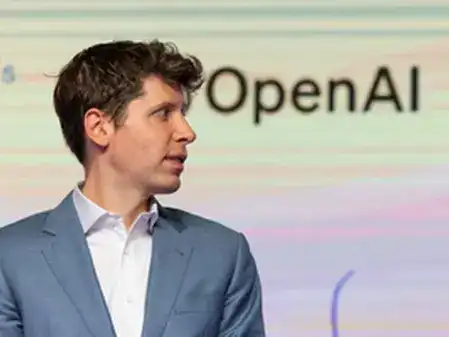
OpenAI is in early talks with large investors for a fresh funding round that could value the ChatGPT maker at around $1.2 trillion, according to a Financial Times report.
By the numbers: The company closed a funding round in March with $122 billion in committed capital, valuing it at $852 billion.
CEOSpeak: OpenAI CEO Sam Altman said on Saturday that the company would not go public in 2026, citing safety concerns over artificial intelligence.

Private equity (PE) buyers and sellers, who rode the Covid-led spurt in engineering and technology services where valuations ran ahead of reality, are finding exits tougher in a sector roiled by AI uncertainty.
Valuations get real: Analysts said that valuations are getting more realistic with some estimating markdowns of up to 30-40% in 2026 over 2025, mirroring the market cap decline of listed IT services providers. The BSE IT index has plunged almost 30% since January, recouping around 10% from its July lows.
Dropped deals: Since January, at least four assets in the sector worth over $1 billion have seen PE firms abandon their plans to either let a strategic player acquire them, or shelved the sale altogether.
Oracle has begun cutting jobs in a fresh round of global layoffs that is expected to affect around 10% of the enterprise software company’s India workforce, or about 3,000 employees, said experts tracking the industry.
The cuts: This is part of a broader trend among some large global capability centres (GCCs), where parent companies are slashing their headcount.
The bigger picture: However, the overall workforce in Indian GCCs is expected to grow. Industry estimates peg the GCC headcount to grow 9-10% this year, as new centres open and existing ones expand.
Also Read: Oracle trims 3,000 India roles; Microsoft places 500 on PIP

The European Union will unveil long-awaited plans to protect children from online harm by curbing access to social media, video-sharing platforms, games, and AI chatbots for under-15s.
Age-wise rules:
 Santosh Agarwal, CEO, Paisabazaar
Paisabazaar is expanding its wealth business with a foray into mutual funds as part of a broader move to diversify beyond unsecured credit, which accounted for almost all its revenues about 18 months back, chief executive Santosh Agarwal told ET.
Revenue mix: The PB Fintech-owned marketplace, which introduced fixed deposits and bonds last year, currently gets around two-thirds of its revenues from unsecured credit and a third from secured products.
User acquisition: The company plans to primarily tap consumers already using PB instead of spending heavily on acquiring new investors. It has around two crore active consumers and sees roughly 50 lakh users visit its platform every month. Around 22 lakh users on its app are already investing in mutual funds on other platforms.
Also in the letter:
■ PE exits get tougher in IT
■ EU plans SM curbs for U-15s
■ Paisabazaar’s wealth push
ETtech Explainer: Who pays MDR on UPI and who does not
The NPCI has finalised the MDR framework for UPI, introducing a charge on select merchant payments from October 15. This comes six years after MDR was set at zero in 2020.
The basics: Payments above Rs 2,000 to eligible merchants will attract an MDR of up to 0.4%. The charge is capped at Rs 300 for transactions of Rs 75,000 and above.
Who pays: The merchant. The customer pays nothing, and the merchant cannot add the charge to the bill.
How’s it split: The merchant’s bank will deduct Rs 40 from a payment of Rs 10,000, retain Rs 12, and pass on Rs 28 to the customer’s bank. The customer’s bank keeps Rs 16 and sends Rs 12 to the bank that connects the payment app to UPI. That bank retains Rs 4 and pays Rs 8 to the app.
Reactions: The MDR on UPI has received mixed reactions from industry leaders. Zerodha cofounder Nithin Kamath said MDR was "probably inevitable" but questioned its impact on broking and investment payments.
UPI MDR seen as sustenance fee, small merchants remain shielded
MDR on large-value UPI transactions is likely to provide fintechs and banks with enough revenue to sustain the rapidly expanding payments infrastructure rather than create a large profit pool, as the framework has been structured to shield small merchants from any charges.
Small merchants: Small merchants under the P2PM category, receiving up to Rs 1 lakh a month through UPI QR codes, will continue to pay zero MDR even if individual transactions exceed Rs 2,000.
Quote, unquote: "PCI has consistently maintained that UPI needs a sustainable economic model to support its scale," said Vishwas Patel, managing director and CEO of AvenuesAI and chairman of the Payments Council of India.
AI leaders split on how fast the tech should advance
Nvidia CEO Jensen Huang and Anthropic CEO Dario Amodei have taken different positions on the pace of AI development, with the debate over safety becoming sharper.
Huang’s view: "The market forces are already there, we don't need any new laws, we don't need new regulations," he said at Salesforce’s annual conference in San Francisco, dismissing what he called a "false choice" between the speed of innovation and the ability to build safe products.
"Run as fast as you can, but if at any point you feel the company is out of control or products aren't going to be safe, take a pause and get it right," Huang added.
Amodei’s view: "Left unchecked, it could outrun our ability to understand and control these systems, and so must be pursued very carefully, if at all. We must slow the pace at which we improve the capabilities of AI models. Progress will still seem fast, and we must make wise use of the time we gain," he had said in an essay last week.
OpenAI eyes $1.2 trillion valuation
OpenAI is in early talks with large investors for a fresh funding round that could value the ChatGPT maker at around $1.2 trillion, according to a Financial Times report.
By the numbers: The company closed a funding round in March with $122 billion in committed capital, valuing it at $852 billion.
CEOSpeak: OpenAI CEO Sam Altman said on Saturday that the company would not go public in 2026, citing safety concerns over artificial intelligence.
PE exits get tougher as tech valuations cool
Private equity (PE) buyers and sellers, who rode the Covid-led spurt in engineering and technology services where valuations ran ahead of reality, are finding exits tougher in a sector roiled by AI uncertainty.
Valuations get real: Analysts said that valuations are getting more realistic with some estimating markdowns of up to 30-40% in 2026 over 2025, mirroring the market cap decline of listed IT services providers. The BSE IT index has plunged almost 30% since January, recouping around 10% from its July lows.
Dropped deals: Since January, at least four assets in the sector worth over $1 billion have seen PE firms abandon their plans to either let a strategic player acquire them, or shelved the sale altogether.
Oracle India layoffs may put pressure on routine IT roles
Oracle has begun cutting jobs in a fresh round of global layoffs that is expected to affect around 10% of the enterprise software company’s India workforce, or about 3,000 employees, said experts tracking the industry.
The cuts: This is part of a broader trend among some large global capability centres (GCCs), where parent companies are slashing their headcount.
The bigger picture: However, the overall workforce in Indian GCCs is expected to grow. Industry estimates peg the GCC headcount to grow 9-10% this year, as new centres open and existing ones expand.
Also Read: Oracle trims 3,000 India roles; Microsoft places 500 on PIP
EU chief to unveil social media, gaming curbs for under-15s
The European Union will unveil long-awaited plans to protect children from online harm by curbing access to social media, video-sharing platforms, games, and AI chatbots for under-15s.
Age-wise rules:
- Teens aged 15 and over would be allowed to open their own accounts with social media, AI, and gaming platforms.
- Those aged 13 and 14 would be allowed "introductory" accounts on such platforms, set up under parental control with limited features and strict screen time caps.
- Children between three and 13 would only have access to "fully parent-controlled accounts on child-friendly services" with strict safety standards.
- No access at all for children below the age of three.
Paisabazaar expands wealth push with mutual funds, diversifies beyond unsecured credit
Paisabazaar is expanding its wealth business with a foray into mutual funds as part of a broader move to diversify beyond unsecured credit, which accounted for almost all its revenues about 18 months back, chief executive Santosh Agarwal told ET.
Revenue mix: The PB Fintech-owned marketplace, which introduced fixed deposits and bonds last year, currently gets around two-thirds of its revenues from unsecured credit and a third from secured products.
User acquisition: The company plans to primarily tap consumers already using PB instead of spending heavily on acquiring new investors. It has around two crore active consumers and sees roughly 50 lakh users visit its platform every month. Around 22 lakh users on its app are already investing in mutual funds on other platforms.
Want this newsletter delivered to your inbox?
I agree to receive newsletters and marketing communications via e-mail