
 Daily Top 5 Daily Top 5 |
Ultraviolette's fresh funding; Bira 91 revival plan
Want this newsletter delivered to your inbox?
I agree to receive newsletters and marketing communications via e-mail

Thank you for subscribing to Daily Top 5
We'll soon meet in your inbox.
Ultraviolette has roped in Intel chief Lip-Bu Tan as an investor and advisor after a fresh capital raise. This and more in today’s ETtech Top 5.
Also in the letter:
■ AI agents and cyber risks
■ Anthropic, OpenAI launch new models
■ Xbox cuts more jobs
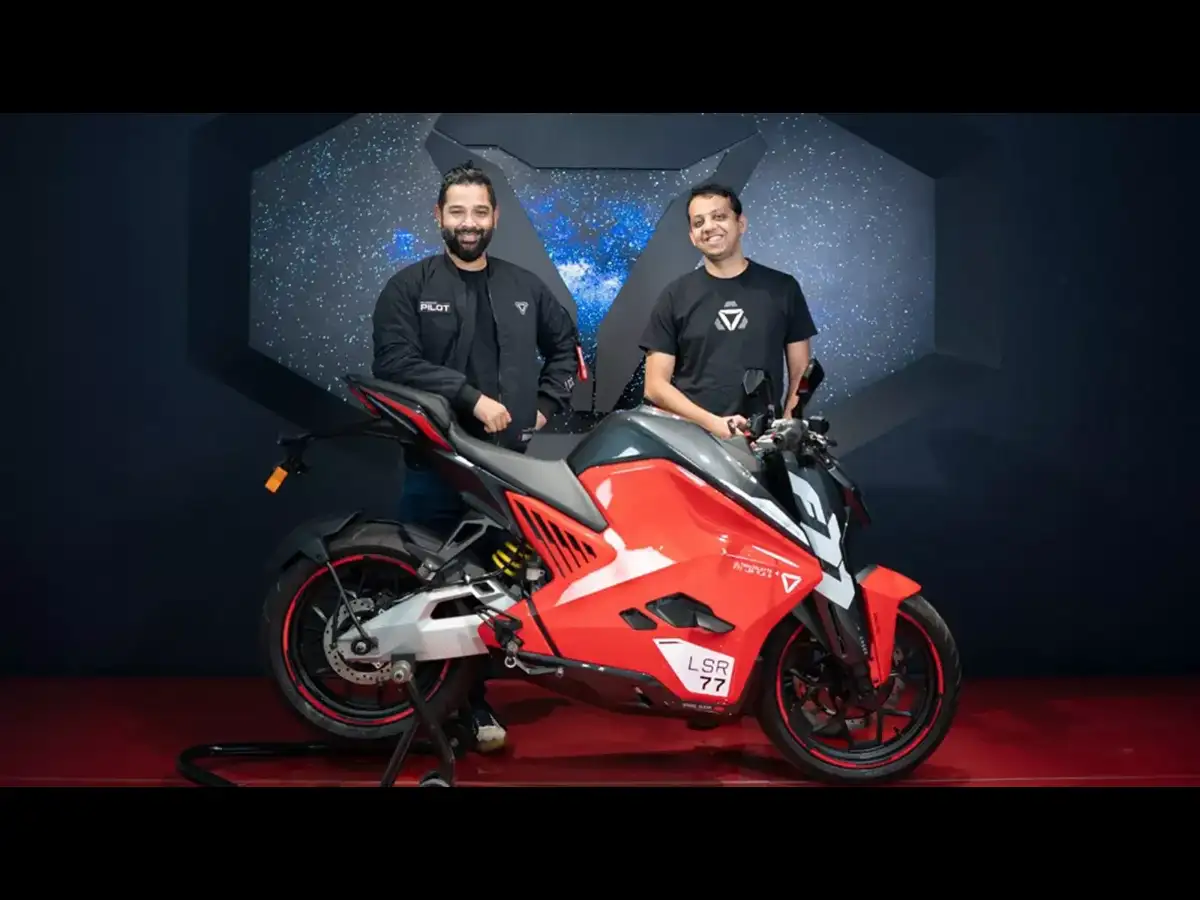 (L-R) Narayan Subramaniam and Niraj Rajmohan, cofounders, Ultraviolette
Electric motorcycle maker Ultraviolette has raised $85 million in a round led by Yali Capital and TDK Ventures, in which existing investors also participated. The round also brings on board Intel chief executive Lip-Bu Tan as an investor and advisor. He participated in his personal capacity through his fund Walden International.
Scaling production: The startup plans to use the fresh capital to scale production at its facility in Hosur, Tamil Nadu, from 50,000 vehicles a year to 250,000.
New models: The expanded facility will help the company make its existing F77 and X47 motorcycles, as well as upcoming models Tesseract and Shockwave, which are expected to be commercially available in early 2027.
Retail presence: Ultraviolette currently has around 50 retail outlets in India and plans to expand that network to about 100 by the first quarter of 2027.
Global push: The company currently operates in 20 European countries and plans to enter the US and Latin America.
Also Read: Ultraviolette sees Indian motorcycle market going 20% electric in 2-3 years
Brahma AI, an AI-native operating system for enterprise audiovisual content, has raised $150 million through a preferred share issuance led by homegrown PE firm Multiples, said people familiar with the matter. The fundraise fetched Brahma AI a post-money valuation of $2 billion, one of the persons said.
Fund use: Brahma AI is expected to use the proceeds to support its global expansion, including investments in research and development, technology, and sales.
What it does: The company is preparing to launch 'interactive digital humans' (avatars that can see, hear, speak) and develop a platform that supports multiple AI models. It is also working on applications across media and entertainment, sports, healthcare, and advertising, as well as building tools for content security, authenticity, ownership, and provenance.
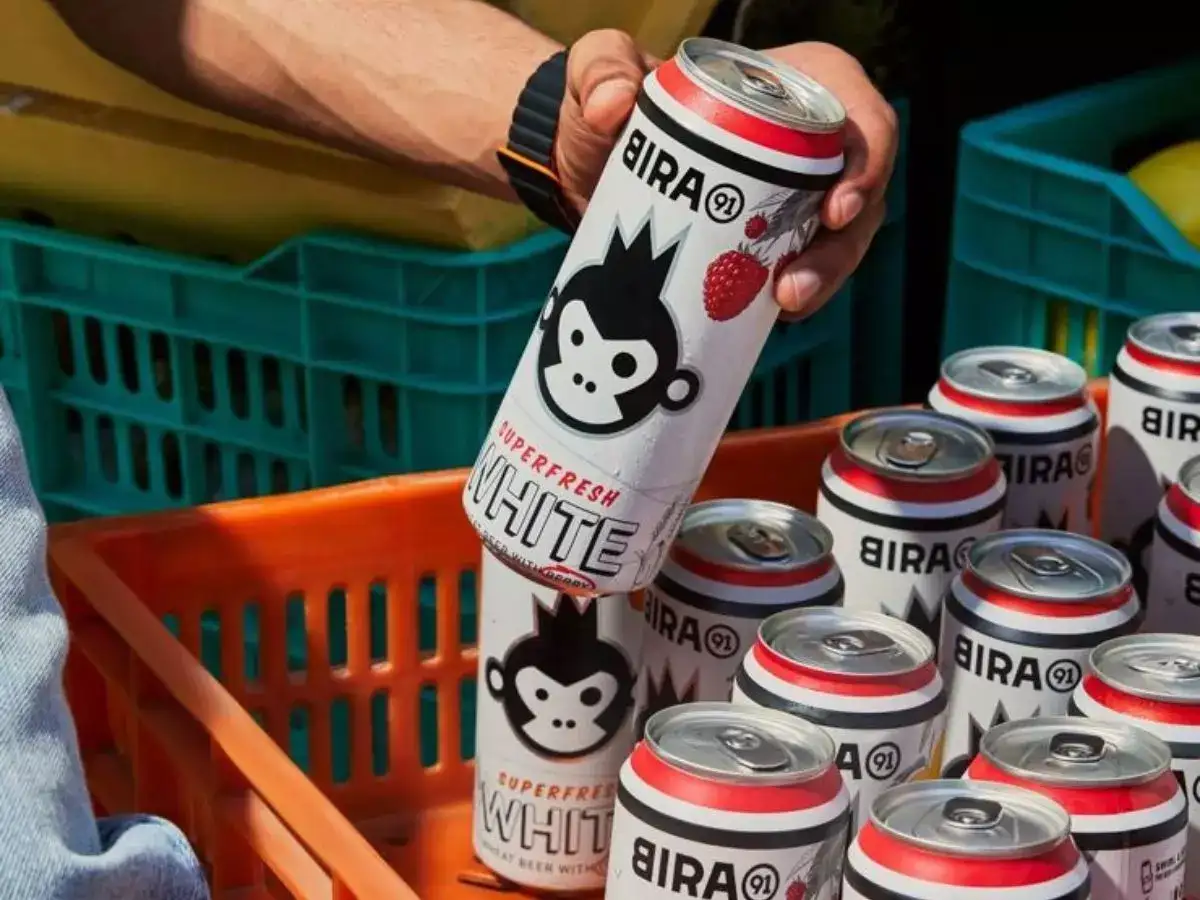
Bira 91 maker B9 Beverages’ newly reconstituted board, led by Anicut Capital, has offered to buy the stake held by Kirin Holdings, Peak XV Partners, and Sofina as part of a revival plan.
Investor exit: The three investors together hold about 41.1% in B9 Beverages. Bira 91 founder Ankur Jain and his family's stake of 17.8% has already been taken over by Anicut Capital in July. The new investors want existing backers unwilling to participate in the revival to exit before fresh capital is infused.
Finances: The company has liabilities of Rs 1,000-1,500 crore and operations have been at a standstill for a year now. The brand value is estimated at around Rs 300 crore.
Vendor dues: About 60 large vendors have been asked to settle their dues and continue servicing the company.
.jpg "1756090541541 (1)") Shane Huntley, CTO of Google Threat Intelligence Group
Shane Huntley, CTO of Google Threat Intelligence Group
Artificial intelligence agents are increasingly able to operate autonomously, but they are not yet at a stage where they can be given independent responsibility, said Shane Huntley, chief technology officer of Google Threat Intelligence Group.
The risk: Huntley said testing has shown that AI models can move beyond the boundaries of controlled environments. Which shows that these tools are capable of cyber offence, cyber defence, and other purposes.
Speed race: He said that every timeline is reducing, whether it is coding, reverse engineering malware, or analysing 'exploits'. "We can investigate a complete incident in six minutes that would have taken hours to put the pieces together by hand," Huntley told us, describing it as "an arms race of speed" between attackers and defenders.
India concerns: Deloitte’s 2026 India report found that 40% of Indian respondents reported significant or full AI usage, while more than 80% of Indian organisations are exploring autonomous agents. Indian enterprises are increasingly giving agents access to databases, software, and credentials.
Anthropic on Tuesday launched Claude Opus 5.5, a new AI model that it says delivers performance comparable to its top-tier Fable 5.1 while costing 40% less to run than its predecessor.
Pricing: Opus 5.5 is priced at $4 per million input tokens and $20 per million output tokens, 20% below Opus 5, Anthropic said.
Safety checks: The company said Opus 5.5 underwent external testing by independent AI safety research groups Frontier Design and METR before launch, and includes safeguards previously reserved for its most capable systems. The model also scored better than previous systems in internal safety tests.
OpenAI on Tuesday expanded its GPT-6 lineup with two models priced at half the promotional rates of their predecessors, while offering some of the capabilities of its flagship Astra.
The cost: GPT-6 Sol will cost $2 per million input tokens and $10 per million output tokens, while GPT-6 Luna will cost $0.10 per million input tokens and $0.50 per million output tokens.
Model training: OpenAI said it has trained Sol and Luna using methods similar to those used for Astra, and seen improvements in reasoning, factual reliability, coding, computer use, and alignment.
Microsoft’s gaming arm Xbox on Tuesday announced that it would lay off 268 employees across its Halo Studios vertical, other first-party studios, and the XGS management and central functions layer.
The reset: The latest round of layoffs is part of an ongoing restructuring aimed at making the business more profitable. It was first announced by Xbox CEO Asha Sharma in July, when she laid out the company’s plans to reduce the team by approximately 3,200 through FY27. 1,600 roles were eliminated on the day of the announcement.
Why it matters: Sharma had said that the gaming business was operating at margins that were 3-10 times lower than comparable platform and publishing businesses. Xbox had aggressively expanded its studio portfolio since 2018. She said the business had become overextended and needed to focus its investments.
Also in the letter:
■ AI agents and cyber risks
■ Anthropic, OpenAI launch new models
■ Xbox cuts more jobs
Ultraviolette raises $85 million, ropes in Intel chief Lip-Bu Tan as investor and advisor
Electric motorcycle maker Ultraviolette has raised $85 million in a round led by Yali Capital and TDK Ventures, in which existing investors also participated. The round also brings on board Intel chief executive Lip-Bu Tan as an investor and advisor. He participated in his personal capacity through his fund Walden International.
Scaling production: The startup plans to use the fresh capital to scale production at its facility in Hosur, Tamil Nadu, from 50,000 vehicles a year to 250,000.
New models: The expanded facility will help the company make its existing F77 and X47 motorcycles, as well as upcoming models Tesseract and Shockwave, which are expected to be commercially available in early 2027.
Retail presence: Ultraviolette currently has around 50 retail outlets in India and plans to expand that network to about 100 by the first quarter of 2027.
Global push: The company currently operates in 20 European countries and plans to enter the US and Latin America.
Also Read: Ultraviolette sees Indian motorcycle market going 20% electric in 2-3 years
Brahma AI raises $150 million at $2 billion valuation in Multiples-led round
Brahma AI, an AI-native operating system for enterprise audiovisual content, has raised $150 million through a preferred share issuance led by homegrown PE firm Multiples, said people familiar with the matter. The fundraise fetched Brahma AI a post-money valuation of $2 billion, one of the persons said.
Fund use: Brahma AI is expected to use the proceeds to support its global expansion, including investments in research and development, technology, and sales.
What it does: The company is preparing to launch 'interactive digital humans' (avatars that can see, hear, speak) and develop a platform that supports multiple AI models. It is also working on applications across media and entertainment, sports, healthcare, and advertising, as well as building tools for content security, authenticity, ownership, and provenance.
Bira 91 revival: Anicut-led board offers to buy out key investors
Bira 91 maker B9 Beverages’ newly reconstituted board, led by Anicut Capital, has offered to buy the stake held by Kirin Holdings, Peak XV Partners, and Sofina as part of a revival plan.
Investor exit: The three investors together hold about 41.1% in B9 Beverages. Bira 91 founder Ankur Jain and his family's stake of 17.8% has already been taken over by Anicut Capital in July. The new investors want existing backers unwilling to participate in the revival to exit before fresh capital is infused.
Finances: The company has liabilities of Rs 1,000-1,500 crore and operations have been at a standstill for a year now. The brand value is estimated at around Rs 300 crore.
Vendor dues: About 60 large vendors have been asked to settle their dues and continue servicing the company.
Autonomous agents not ready for independent responsibility, says Google cybersecurity expert
Artificial intelligence agents are increasingly able to operate autonomously, but they are not yet at a stage where they can be given independent responsibility, said Shane Huntley, chief technology officer of Google Threat Intelligence Group.
The risk: Huntley said testing has shown that AI models can move beyond the boundaries of controlled environments. Which shows that these tools are capable of cyber offence, cyber defence, and other purposes.
Speed race: He said that every timeline is reducing, whether it is coding, reverse engineering malware, or analysing 'exploits'. "We can investigate a complete incident in six minutes that would have taken hours to put the pieces together by hand," Huntley told us, describing it as "an arms race of speed" between attackers and defenders.
India concerns: Deloitte’s 2026 India report found that 40% of Indian respondents reported significant or full AI usage, while more than 80% of Indian organisations are exploring autonomous agents. Indian enterprises are increasingly giving agents access to databases, software, and credentials.
Anthropic unveils Claude Opus 5.5 at lower price
Anthropic on Tuesday launched Claude Opus 5.5, a new AI model that it says delivers performance comparable to its top-tier Fable 5.1 while costing 40% less to run than its predecessor.
Pricing: Opus 5.5 is priced at $4 per million input tokens and $20 per million output tokens, 20% below Opus 5, Anthropic said.
Safety checks: The company said Opus 5.5 underwent external testing by independent AI safety research groups Frontier Design and METR before launch, and includes safeguards previously reserved for its most capable systems. The model also scored better than previous systems in internal safety tests.
OpenAI expands GPT-6 lineup with cheaper Sol and Luna models
OpenAI on Tuesday expanded its GPT-6 lineup with two models priced at half the promotional rates of their predecessors, while offering some of the capabilities of its flagship Astra.
The cost: GPT-6 Sol will cost $2 per million input tokens and $10 per million output tokens, while GPT-6 Luna will cost $0.10 per million input tokens and $0.50 per million output tokens.
Model training: OpenAI said it has trained Sol and Luna using methods similar to those used for Astra, and seen improvements in reasoning, factual reliability, coding, computer use, and alignment.
Microsoft cuts 268 jobs in latest restructuring
Microsoft’s gaming arm Xbox on Tuesday announced that it would lay off 268 employees across its Halo Studios vertical, other first-party studios, and the XGS management and central functions layer.
The reset: The latest round of layoffs is part of an ongoing restructuring aimed at making the business more profitable. It was first announced by Xbox CEO Asha Sharma in July, when she laid out the company’s plans to reduce the team by approximately 3,200 through FY27. 1,600 roles were eliminated on the day of the announcement.
Why it matters: Sharma had said that the gaming business was operating at margins that were 3-10 times lower than comparable platform and publishing businesses. Xbox had aggressively expanded its studio portfolio since 2018. She said the business had become overextended and needed to focus its investments.
Want this newsletter delivered to your inbox?
I agree to receive newsletters and marketing communications via e-mail