
 Daily Top 5 Daily Top 5 |
Uber cuts 3,300 jobs; Astrobase eyes fresh fundraise
Want this newsletter delivered to your inbox?
I agree to receive newsletters and marketing communications via e-mail

Thank you for subscribing to Daily Top 5
We'll soon meet in your inbox.
Uber will cut roughly 10% of its workforce in a restructuring aimed at removing management layers and slashing costs. This and more in today’s ETtech Top 5.
Also in the letter:
■ Inside Happiest Minds-ITC Infotech merger
■ ED conducts raids in Parimatch probe
■ Amazon Now taps More
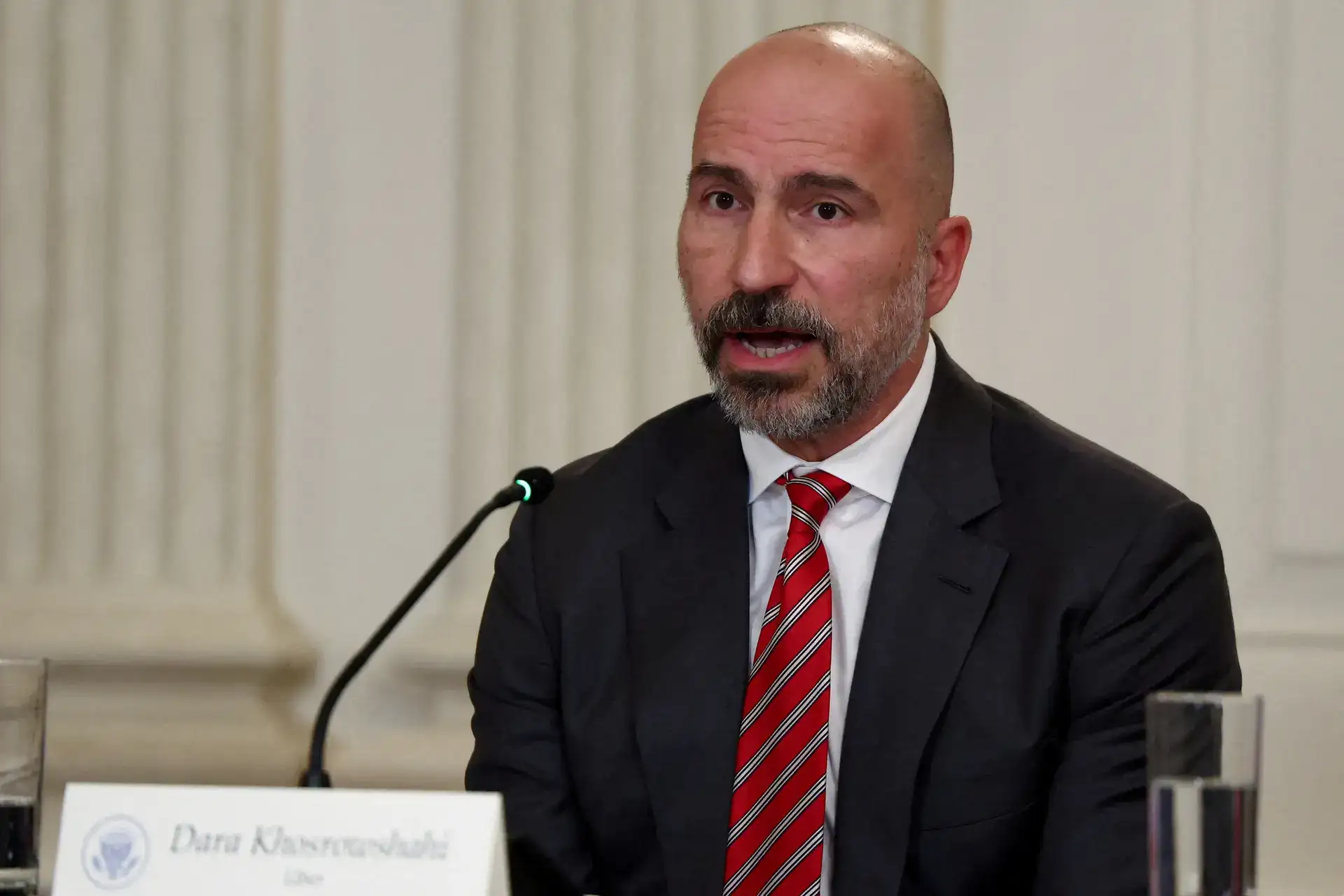 Uber CEO Dara Khosrowshahi
Uber is eliminating about 3,300 roles globally, roughly 10% of its workforce, as part of a restructuring designed to reduce management layers and redirect spending towards the ride-hailing, delivery, and robotaxi businesses.
CEO announces cuts: In a company-wide email to employees, CEO Dara Khosrowshahi said the company’s growth has created unnecessary layers, coordination overhead, and fragmented ownership. The changes are intended to make Uber “simpler and faster” by flattening its organisational structure.
“I’m sure many of you have felt that you spend too much time “aligning” rather than building, shipping, or serving customers. To improve this, we have reduced roles primarily focussed on coordination, and have clarified the remit of the coordination roles that remain,” the email read.
What changes:
Remote work: Khosrowshahi also said only about 1% of employees will be allowed to remain fully remote going forward, as part of a broader push to bring more staff back to key offices.
Also Read: Uber still ahead despite stiffening competition, playing to win: CEO Dara Khosrowshahi
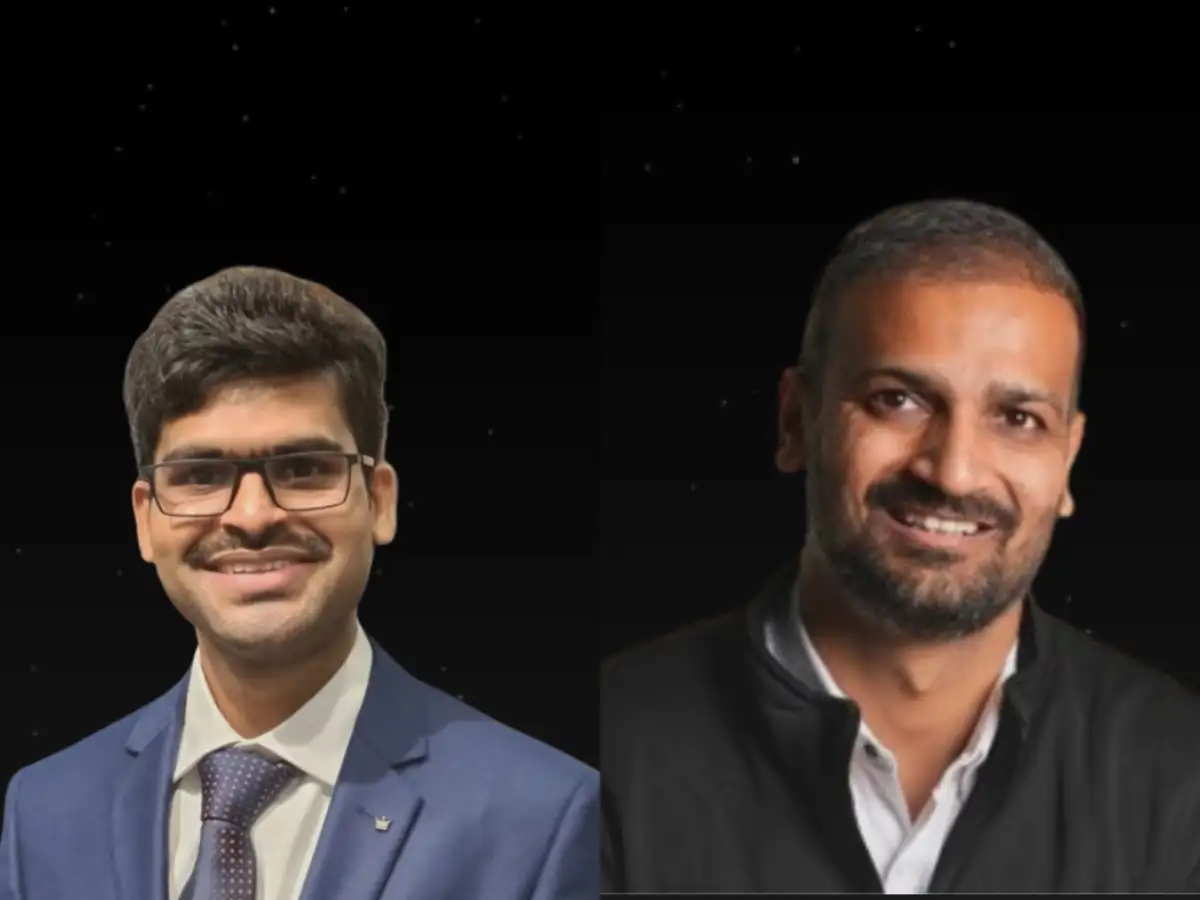 Devakumar Thammisetty (left) and Neeraj Khandelwal, founders, Astrobase
Bengaluru-based spacetech startup Astrobase is in talks to raise $40-50 million in a new round led by Peak XV Partners, valuing the company at $250-300 million, people aware of the matter told us.
Tell me more:
About the company: Founded in 2024, Astrobase was started by former ISRO propulsion scientist Devakumar Thammisetty and Neeraj Khandelwal, an IIT Bombay alumnus and cofounder of cryptocurrency exchange CoinDCX.
In June, the startup was selected for the IN-SPACe (Indian National Space Promotion and Authorisation Centre) Technology Adoption Fund to develop its indigenous 800 kN LOX-methane FFSC engine.
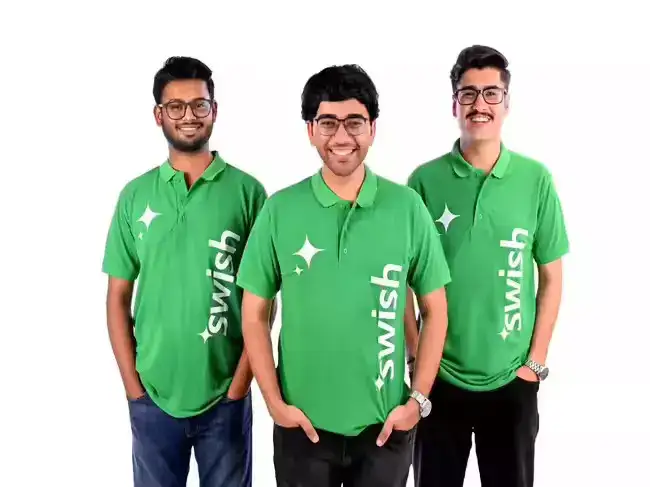 L-R: Saran S, Aniket Shah and Ujjwal Sukheja, founders, Swish
Bengaluru-based food delivery startup Swish is finalising a $20-25 million round led by Bertelsmann India Investments, two people aware of the matter told ET.
Deal details:
 Ashok Soota, founder, Happiest Minds Technologies
Experts see the proposed merger between Happiest Minds Technologies and unlisted ITC Infotech as a consolidation driven by AI-led revenue compression in the Indian IT services sector.
Deal background: ITC Infotech is acquiring a 22.1% stake in Happiest Minds from founder Ashok Soota for Rs 1,330 crore. This will be followed by a share swap between the two entities, exchanging 25 ITC Infotech shares for 81 of Happiest Minds.
Both are mid-sized firms facing slowing organic growth, and the deal provides a backdoor listing for ITC Infotech while creating a larger, more competitive entity.
Expert take: Analysts said the deal price reflects stagnant revenue growth due to AI on both sides.
The technology is reducing demand for certain offshore digital engineering, cloud, and SAP work. Neither company has yet shown significant AI-related revenue to offset this pressure. Clients are consolidating vendor panels, and deal sizes are shrinking as AI automates parts of traditional IT work.

Midsize Indian IT services companies are expected to capture more than half the incremental organic revenue added by the sector in FY27, extending a trend of market-share gains over larger rivals.
Tell me more: ICICI Securities estimates that LTIMindtree, Mphasis, Coforge, Persistent Systems, and Hexaware will account for 51% of incremental organic revenue in FY27, up from 46% in FY26. The share of the top five – TCS, Infosys, HCLTech, Wipro, and Tech Mahindra – is expected to fall to 48% from 53%.
 The Enforcement Directorate (ED) on Wednesday conducted searches at 12 locations across Maharashtra, Delhi-NCR, Rajasthan, and Gujarat in a money-laundering investigation tied to the illegal Cyprus-based online betting platform Parimatch.
What happened: The premises searched included those of payment companies that allegedly converted betting proceeds into cash through cash management system agents, chartered accountants, and company secretaries accused of facilitating illegal outward remittances and sham overseas direct investments, and payment gateways that handled payouts on behalf of Parimatch.
How the scheme worked: According to ED, Parimatch and its associates used a complex network of mule accounts, payment intermediaries, and financial-inclusion channels to collect, layer, and transfer user funds.

Amazon is expanding its quick commerce service Now to tier-II and -III markets using an asset-light model, that leverages More Retail’s existing stores instead of building a dense network of dark stores from scratch.
How it works:
Expansion play: Amazon India announced in June that it plans to take Now to more than 300 cities, with over 1,000 MFCs and more than 100 larger urban fulfilment centres (UFCs).
Also in the letter:
■ Inside Happiest Minds-ITC Infotech merger
■ ED conducts raids in Parimatch probe
■ Amazon Now taps More
Uber to cut 3,300 jobs to reduce management layers
Uber is eliminating about 3,300 roles globally, roughly 10% of its workforce, as part of a restructuring designed to reduce management layers and redirect spending towards the ride-hailing, delivery, and robotaxi businesses.
CEO announces cuts: In a company-wide email to employees, CEO Dara Khosrowshahi said the company’s growth has created unnecessary layers, coordination overhead, and fragmented ownership. The changes are intended to make Uber “simpler and faster” by flattening its organisational structure.
“I’m sure many of you have felt that you spend too much time “aligning” rather than building, shipping, or serving customers. To improve this, we have reduced roles primarily focussed on coordination, and have clarified the remit of the coordination roles that remain,” the email read.
What changes:
- Management layers will be reduced by about 20%, with some managers moved to individual contributor roles.
- The number of very small teams (one or two members) will be cut by nearly half.
- The company is reducing the number of employees who sit more than seven layers below the CEO.
- Core engineering, science, and delivery groups are being streamlined.
Remote work: Khosrowshahi also said only about 1% of employees will be allowed to remain fully remote going forward, as part of a broader push to bring more staff back to key offices.
Also Read: Uber still ahead despite stiffening competition, playing to win: CEO Dara Khosrowshahi
Astrobase in talks to raise $40-50 million led by Peak XV at $300 million valuation
Bengaluru-based spacetech startup Astrobase is in talks to raise $40-50 million in a new round led by Peak XV Partners, valuing the company at $250-300 million, people aware of the matter told us.
Tell me more:
- Astrobase is developing two-stage reusable launch vehicles that can carry payloads of 3-10 tonnes.
- It is aiming for its first orbital launch in 2028.
- The talks follow the startup’s recent unveiling of Everest, an 80-tonne-class, 800 kN full-flow staged combustion (FFSC) rocket engine, which Astrobase claimed was India’s first such engine.
About the company: Founded in 2024, Astrobase was started by former ISRO propulsion scientist Devakumar Thammisetty and Neeraj Khandelwal, an IIT Bombay alumnus and cofounder of cryptocurrency exchange CoinDCX.
In June, the startup was selected for the IN-SPACe (Indian National Space Promotion and Authorisation Centre) Technology Adoption Fund to develop its indigenous 800 kN LOX-methane FFSC engine.
Rapid food delivery startup Swish to raise $20-25 million led by Bertelsmann India: Sources
Bengaluru-based food delivery startup Swish is finalising a $20-25 million round led by Bertelsmann India Investments, two people aware of the matter told ET.
Deal details:
- The transaction is also likely to see participation from Swish’s existing investors.
- The round is expected to value the two-year-old company at about $200 million.
- Swish had last raised $38 million in March at a valuation of $120 million.
Happiest Minds-ITC Infotech merger driven by AI-led revenue squeeze: Experts
Experts see the proposed merger between Happiest Minds Technologies and unlisted ITC Infotech as a consolidation driven by AI-led revenue compression in the Indian IT services sector.
Deal background: ITC Infotech is acquiring a 22.1% stake in Happiest Minds from founder Ashok Soota for Rs 1,330 crore. This will be followed by a share swap between the two entities, exchanging 25 ITC Infotech shares for 81 of Happiest Minds.
Both are mid-sized firms facing slowing organic growth, and the deal provides a backdoor listing for ITC Infotech while creating a larger, more competitive entity.
Expert take: Analysts said the deal price reflects stagnant revenue growth due to AI on both sides.
The technology is reducing demand for certain offshore digital engineering, cloud, and SAP work. Neither company has yet shown significant AI-related revenue to offset this pressure. Clients are consolidating vendor panels, and deal sizes are shrinking as AI automates parts of traditional IT work.
Midsize Indian IT firms set to capture majority of FY27 growth
Midsize Indian IT services companies are expected to capture more than half the incremental organic revenue added by the sector in FY27, extending a trend of market-share gains over larger rivals.
Tell me more: ICICI Securities estimates that LTIMindtree, Mphasis, Coforge, Persistent Systems, and Hexaware will account for 51% of incremental organic revenue in FY27, up from 46% in FY26. The share of the top five – TCS, Infosys, HCLTech, Wipro, and Tech Mahindra – is expected to fall to 48% from 53%.
ED raids 12 places across 4 states in Cyprus-based betting platform Parimatch probe
What happened: The premises searched included those of payment companies that allegedly converted betting proceeds into cash through cash management system agents, chartered accountants, and company secretaries accused of facilitating illegal outward remittances and sham overseas direct investments, and payment gateways that handled payouts on behalf of Parimatch.
How the scheme worked: According to ED, Parimatch and its associates used a complex network of mule accounts, payment intermediaries, and financial-inclusion channels to collect, layer, and transfer user funds.
- In some cases, withdrawals were processed without any direct outward payment from accounts controlled by the platform.
- Instead, deposits made by other users were routed directly into the withdrawing user’s bank account or UPI ID in multiple tranches, obscuring the money trail.
Amazon Now to take asset-light route, taps More Retail stores in smaller cities
Amazon is expanding its quick commerce service Now to tier-II and -III markets using an asset-light model, that leverages More Retail’s existing stores instead of building a dense network of dark stores from scratch.
How it works:
- Amazon Now is converting More Retail outlets into omnichannel fulfilment points that handle both walk-in shoppers and online orders.
- In the 35 cities where the service is currently live, including Warangal, Karimnagar, Tirupati, Guntur, and Amritsar, about 75-80% of fulfilment points are existing More Retail stores, with the remainder being micro-fulfilment centres (MFCs) or dark stores.
- Amazon owns roughly 49% of More Retail, which it acquired — along with Samara Capital — from the Aditya Birla Group in 2019.
Expansion play: Amazon India announced in June that it plans to take Now to more than 300 cities, with over 1,000 MFCs and more than 100 larger urban fulfilment centres (UFCs).
Want this newsletter delivered to your inbox?
I agree to receive newsletters and marketing communications via e-mail