
 Daily Top 5 Daily Top 5 |
The Economic Times Startup Awards 2026: Nominees for Startup of the Year and Midas Touch
Want this newsletter delivered to your inbox?
I agree to receive newsletters and marketing communications via e-mail

Thank you for subscribing to Daily Top 5
We'll soon meet in your inbox.
The 12th edition of The Economic Times Startup Awards (ETSA) is approaching. Our esteemed jury will convene in Bengaluru next week to pick the winners.
Today, we revealed nominees for the most coveted categories of ETSA: Startup of the Year and Midas Touch, for the best investor.
The Startup of the Year award celebrates breakthrough innovation, top-class execution, and fast-paced growth, while Midas Touch recognises the most lucrative exit in the year.

Startup of the Year
Read more about the nominees here.

Midas Touch
Read more about the nominees here
Background: Since its launch in 2015, ETSA has grown alongside India’s startup ecosystem, chronicling its defining moments. Now, over a decade later, it stands as a record of how far things have come. Several of its winners, including Freshworks, Lenskart, Zomato, Delhivery and Swiggy, have gone on to list publicly, reflecting the remarkable journey of Indian entrepreneurship.
Over the week, we also revealed nominees for the following categories:
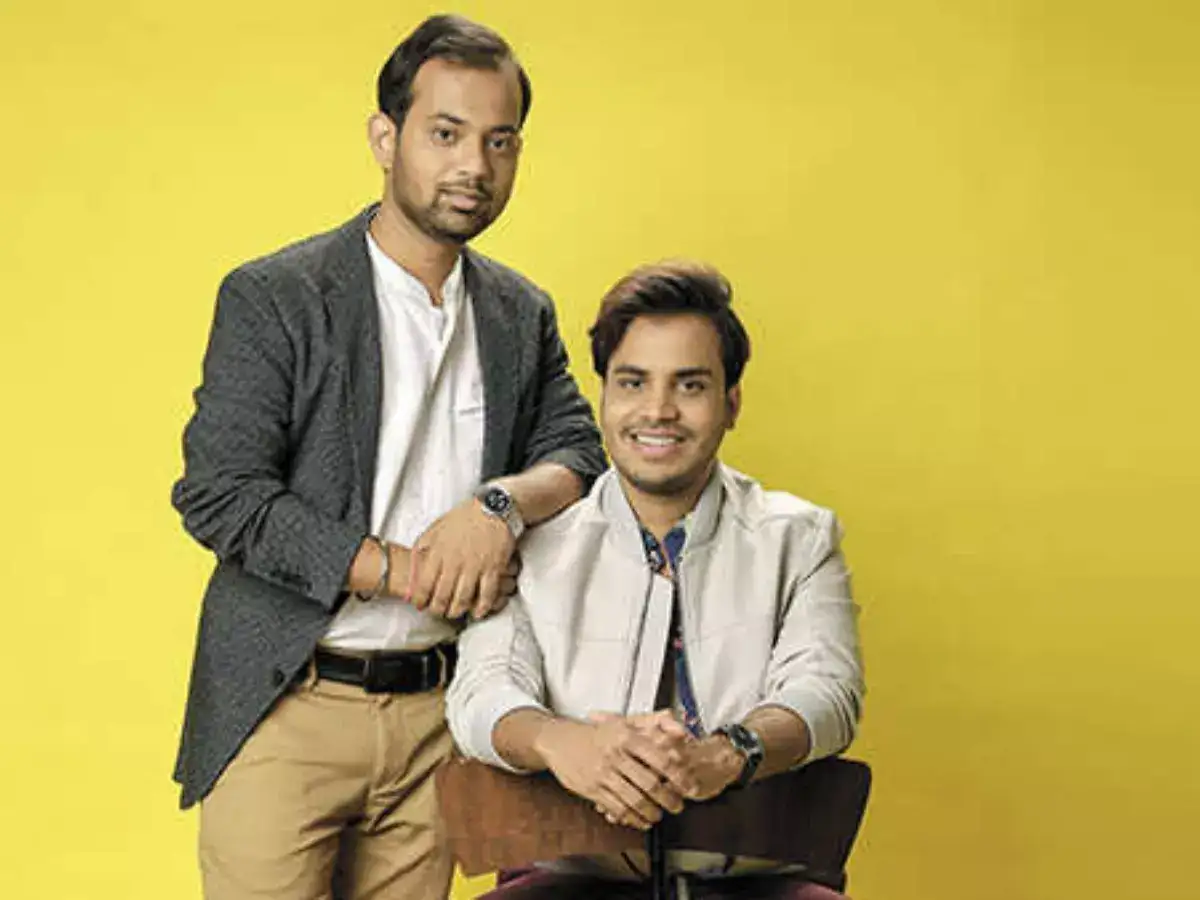 Shibam Das (left) and Manoj Meena, founders, Atomberg
Consumer appliances company Atomberg Technologies has filed its draft red herring prospectus (DRHP) for an initial public offering (IPO).
ET first reported on July 31 that Atomberg was preparing for a Rs 1,500-2,000 crore IPO over the next few weeks, and that its business-to-business (B2B) engineering arm was raising Rs 150-200 crore.
Issue details:
Fund use: Atomberg will spend Rs 150 crore on marketing, Rs 100 crore on research and development, and Rs 90 crore on repaying debt. It may raise up to Rs 90 crore through a pre-IPO placement, which would reduce the fresh issue by that amount.
 Ultraviolette founders Narayan Subramaniam (left) and Niraj Rajmohan
Electric motorcycle maker Ultraviolette is in talks to raise $45-50 million from existing investors such as Speciale Invest and TDK Ventures as part of its ongoing round, sources told us.
Tell me more: This funding will take the total capital raised in this round to $115-120 million. One of the sources said the talks are still ongoing, and the valuation is expected to be higher than the previous round.
Ultraviolette’s valuation stood at about $340 million last December, according to Tracxn.
 Pine Labs CEO Amrish Rau
Pine Labs is increasing its investment in agentic commerce, expecting AI agents to increasingly discover products, negotiate, and complete purchases as transactions move from apps to prompts.
Chairman and CEO Amrish Rau said in the company’s annual report that the key issue is whether the payments infrastructure is ready for this shift.
AI adoption: Pine Labs said AI agents accounted for nearly 89% of code changes over the past two quarters, impacting more than 1.5 million lines of code across new products and platform upgrades.
Operational gains:
Background: Rau had said after Pine Labs’ latest quarterly results that the future of payments would involve the movement of data as well as money.
In the June quarter, Pine Labs’ consolidated net profit rose fourfold to Rs 19.6 crore from Rs 4.8 crore a year earlier, while revenue increased 20% to Rs 736.9 crore.
Also Read: Jefferies sees Paytm, Pine Labs gaining from proposal to levy MDR on UPI transactions
EV charging startups such as Kazam Energy and Pulse Energy are testing peer-to-peer energy trading, enabling households and farmers with surplus solar power to sell it directly to EV owners and charging operators.
Driving the news: These companies are participating in early pilots of peer-to-peer energy trading built on the India Energy Stack, an initiative by the Ministry of Power and state-run lender REC for digital energy infrastructure, modelled on the Aadhaar and UPI frameworks.
It was piloted in February at the India AI Summit.
How it works: The transactions are settled through existing power distribution companies (discoms).
Kazam and Pulse, as well as others like PowerXchange and YoGrid, offer digital trading platforms that match buyers of electricity with sellers of surplus solar power and facilitate the transaction and settlement.
Early results:

Artificial intelligence (AI) could create a $700 billion to $1.2 trillion market for AI-related services by 2030, but traditional IT services firms may capture only $260–440 billion of it, according to a study by Zinnov.
Where capture is limited: Newer AI-led categories are expected to have lower capture rates (the share of the business that can be snagged) for IT services firms:
Enterprises are still deciding whether to buy, build internally, or rely on existing software, particularly in areas such as SaaS replacement.
Today, we revealed nominees for the most coveted categories of ETSA: Startup of the Year and Midas Touch, for the best investor.
The Startup of the Year award celebrates breakthrough innovation, top-class execution, and fast-paced growth, while Midas Touch recognises the most lucrative exit in the year.
And the nominees are...
Startup of the Year
- Porter
- Skyroot Aerospace
- Rapido
- Meesho
- Groww
- Sarvam
Read more about the nominees here.
Midas Touch
- Shailesh Lakhani
- Manu Chandra
- Anu Hariharan
- Mukesh Bansal
Read more about the nominees here
Background: Since its launch in 2015, ETSA has grown alongside India’s startup ecosystem, chronicling its defining moments. Now, over a decade later, it stands as a record of how far things have come. Several of its winners, including Freshworks, Lenskart, Zomato, Delhivery and Swiggy, have gone on to list publicly, reflecting the remarkable journey of Indian entrepreneurship.
Over the week, we also revealed nominees for the following categories:
Atomberg files IPO papers for a fresh issue of Rs 450 crore
Consumer appliances company Atomberg Technologies has filed its draft red herring prospectus (DRHP) for an initial public offering (IPO).
ET first reported on July 31 that Atomberg was preparing for a Rs 1,500-2,000 crore IPO over the next few weeks, and that its business-to-business (B2B) engineering arm was raising Rs 150-200 crore.
Issue details:
- Fresh issue of up to Rs 450 crore.
- Offer for sale of up to 7.65 crore shares by existing investors.
- A91 Partners will sell up to 3.77 crore shares, while Singapore’s Temasek will be offloading 1.22 crore shares.
- Singapore-based Jungle Ventures, Inflexor Ventures, Steadview Capital, and Survam Partners will also offload stake.
Fund use: Atomberg will spend Rs 150 crore on marketing, Rs 100 crore on research and development, and Rs 90 crore on repaying debt. It may raise up to Rs 90 crore through a pre-IPO placement, which would reduce the fresh issue by that amount.
E-bike maker Ultraviolette in talks to raise $45-50 million: Sources
Electric motorcycle maker Ultraviolette is in talks to raise $45-50 million from existing investors such as Speciale Invest and TDK Ventures as part of its ongoing round, sources told us.
Tell me more: This funding will take the total capital raised in this round to $115-120 million. One of the sources said the talks are still ongoing, and the valuation is expected to be higher than the previous round.
Ultraviolette’s valuation stood at about $340 million last December, according to Tracxn.
Pine Labs to step up agentic commerce investments: CEO
Pine Labs is increasing its investment in agentic commerce, expecting AI agents to increasingly discover products, negotiate, and complete purchases as transactions move from apps to prompts.
Chairman and CEO Amrish Rau said in the company’s annual report that the key issue is whether the payments infrastructure is ready for this shift.
AI adoption: Pine Labs said AI agents accounted for nearly 89% of code changes over the past two quarters, impacting more than 1.5 million lines of code across new products and platform upgrades.
Operational gains:
- AI-assisted development improved developer productivity by 25%, according to the company.
- Regression-testing time fell from around six hours to five minutes.
- Automation in merchant-onboarding workflows rose to 80% from 35%.
- About 54% of field hardware issues are now resolved automatically.
Background: Rau had said after Pine Labs’ latest quarterly results that the future of payments would involve the movement of data as well as money.
In the June quarter, Pine Labs’ consolidated net profit rose fourfold to Rs 19.6 crore from Rs 4.8 crore a year earlier, while revenue increased 20% to Rs 736.9 crore.
Also Read: Jefferies sees Paytm, Pine Labs gaining from proposal to levy MDR on UPI transactions
EV charging startups explore peer-to-peer solar power trading
EV charging startups such as Kazam Energy and Pulse Energy are testing peer-to-peer energy trading, enabling households and farmers with surplus solar power to sell it directly to EV owners and charging operators.
Driving the news: These companies are participating in early pilots of peer-to-peer energy trading built on the India Energy Stack, an initiative by the Ministry of Power and state-run lender REC for digital energy infrastructure, modelled on the Aadhaar and UPI frameworks.
It was piloted in February at the India AI Summit.
How it works: The transactions are settled through existing power distribution companies (discoms).
Kazam and Pulse, as well as others like PowerXchange and YoGrid, offer digital trading platforms that match buyers of electricity with sellers of surplus solar power and facilitate the transaction and settlement.
Early results:
- Pulse has enabled around 700-800 trades in six months.
- Most sellers were farmers in Uttar Pradesh, while buyers were EV owners and charging operators in Delhi.
- Farmers usually earn about Rs 3.50 per unit by selling surplus power back to discoms; peer-to-peer sales can fetch about Rs 5 per unit, providing a stronger incentive.
IT firms slow to seize the opportunity in new AI services: Study
Artificial intelligence (AI) could create a $700 billion to $1.2 trillion market for AI-related services by 2030, but traditional IT services firms may capture only $260–440 billion of it, according to a study by Zinnov.
Where capture is limited: Newer AI-led categories are expected to have lower capture rates (the share of the business that can be snagged) for IT services firms:
- Physical AI and edge: 10-15% of a $300 billion market.
- SaaS replacement: 25-30% of a $90 billion market.
- Silicon engineering and private infrastructure: 30-35% of a $40-80 billion opportunity.
Enterprises are still deciding whether to buy, build internally, or rely on existing software, particularly in areas such as SaaS replacement.
Want this newsletter delivered to your inbox?
I agree to receive newsletters and marketing communications via e-mail