
 Daily Top 5 Daily Top 5 |
Qcomm leads retail; AI beyond optics
Want this newsletter delivered to your inbox?
I agree to receive newsletters and marketing communications via e-mail

Thank you for subscribing to Daily Top 5
We'll soon meet in your inbox.
Quick commerce has become the urban consumer's preferred mode of shopping, reshaping organised retail. This and more in today's ETtech Top 5.
Also in the letter:
■ IT outlook slips
■ Anthropic flags data theft
■ OpenAI COO interview

Quick commerce is quickly changing how people in India's biggest cities buy groceries. In 2025, ecommerce and modern trade (also called organised retail or alternative channel) comprised about 40–50% of sales in key food categories.
What's changing? Shoppers in Delhi-NCR, Mumbai, Bengaluru, Pune, and Chennai are choosing online and quick delivery platforms more often. Staples, edible oil, breakfast cereals, ice cream, and frozen foods are growing especially fast.
Industry executives say that quick commerce is leading this shift. These alternative channels' contribution to total sales has vaulted 4-6 percentage points compared to 2024.
By the numbers:
Also Read: Competitive intensity increases as Amazon, Flipkart take on quick commerce players
What else? In large cities, alternative channels make up around 40% of ice cream sales, nearly 60% of breakfast cereals, and 70–75% of frozen foods. Amul managing director Jayen Mehta says quick commerce is boosting metro ice cream sales by meeting instant demand.
Also Read: Quick commerce march trampling on ecommerce toes
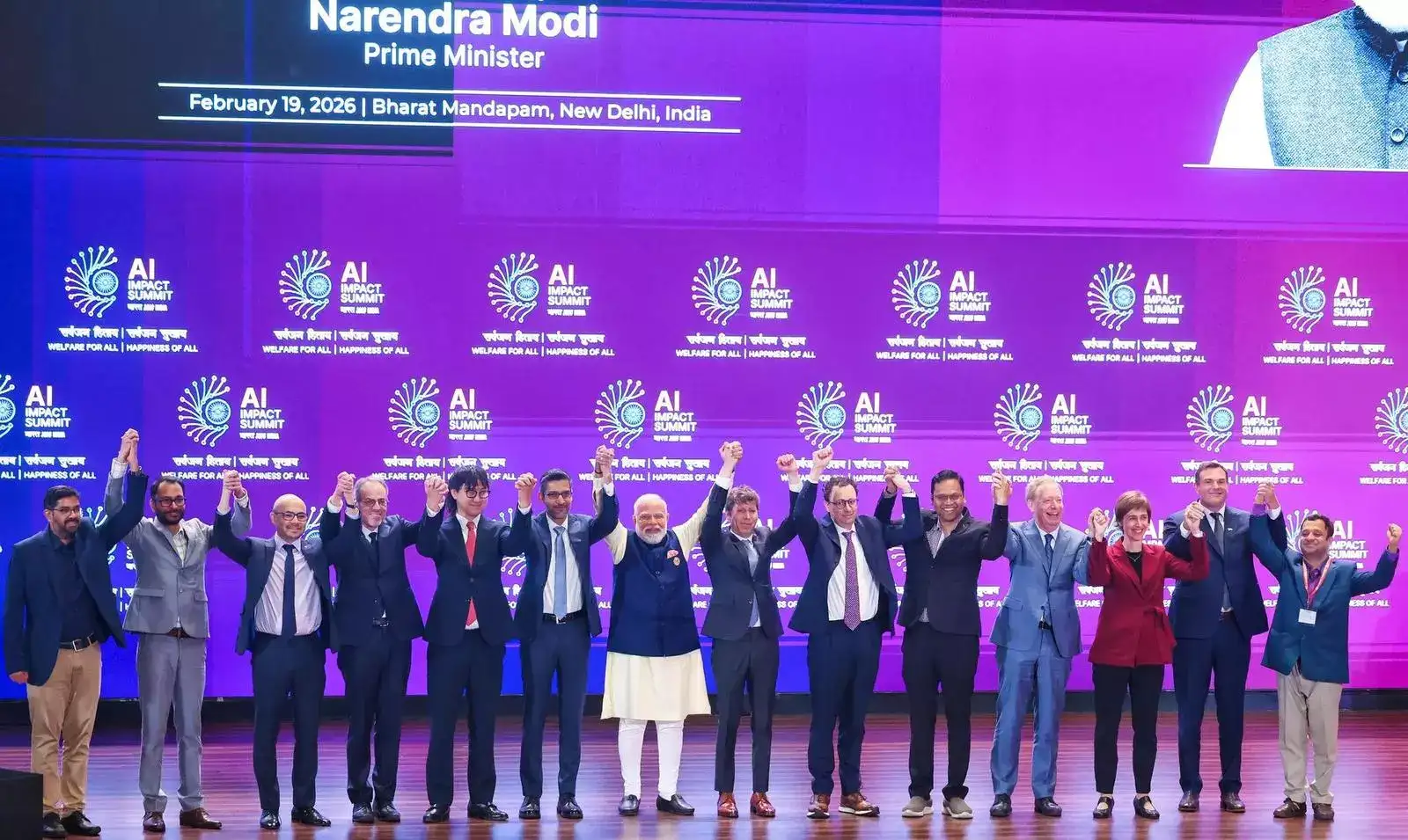
India's AI Impact Summit may have stumbled on execution, but it has forced a hard question into the open: where is the foundational capital for India's AI ambitions?
Why it matters: Governments can convene global heavyweights from Sam Altman to Dario Amodei — but ecosystems are built on capital formation, not conference optics.
The India question:
If serious GPU capacity sits with a handful of global cloud providers and Indian startups pay in dollars, margins compress fast.
Between the lines: Announcements of $100 billion-plus data centre investments from conglomerates sound transformative. But infrastructure is not innovation. AI value will accrue to those building differentiated applications, not just server farms.
The bottomline: Five years from now, the metric won't be who spoke on stage in Delhi. It will be whether India built globally consequential AI companies and whether domestic capital had the conviction to back them early and big.
Read the full column here.
Also Read: Indian AI innovations make their mark

Global brokerage Jefferies has downgraded a broad swathe of Indian IT stocks, warning that AI-led disruption now poses greater downside risk than the upside potential for the sector.
What changed? Despite strong third-quarter earnings that triggered upgrades across the industry, Jefferies argued that recent advances in generative AI could compress demand for traditional IT services, particularly application development, maintenance, testing, and support, which form the backbone of India's information technology sector.
Who was downgraded?
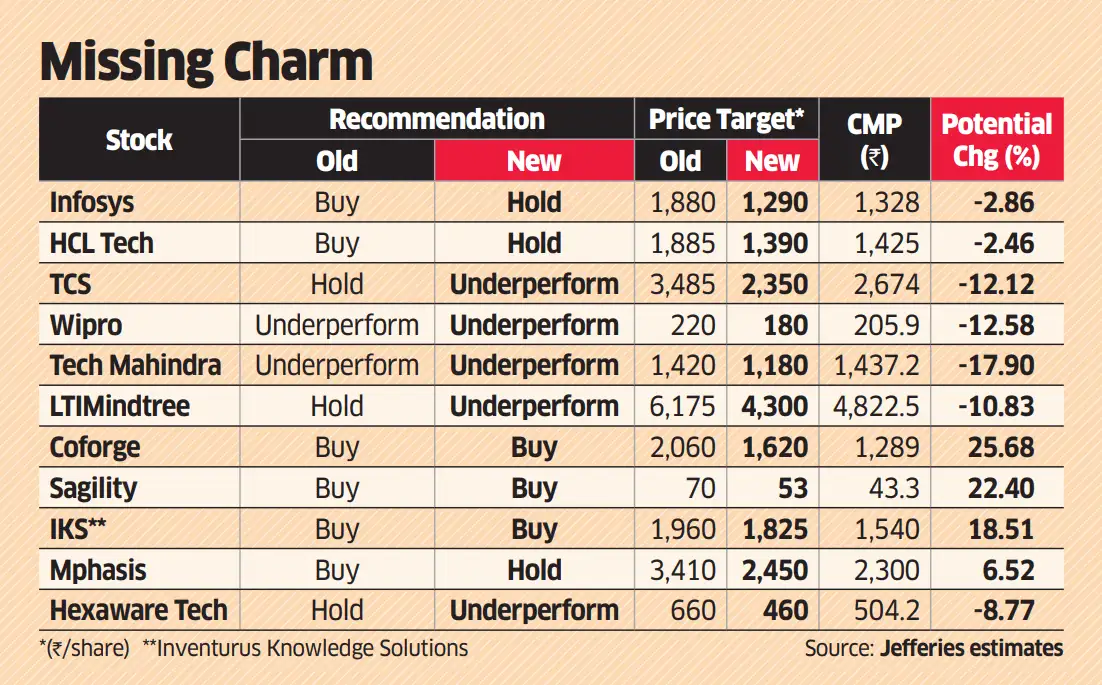
Why the concern? Jefferies believes AI tools are accelerating productivity gains for global clients, which will potentially reduce outsourced billing volumes over time. That shifts the market's focus from near-term earnings to long-term growth visibility.
Ray of hope: The brokerage prefers agile mid-size players such as Coforge, Sagility, and Inventurus Knowledge Solutions. It forecasts a 19%–26% upside for them, arguing they can pivot faster to AI-native opportunities.
Also Read: $56 billion AI scare tests resilience of TCS, Infosys and other Indian IT stocks
Days after a warning from OpenAI, rival Anthropic has accused three Chinese AI labs —DeepSeek, Moonshot AI, and MiniMax — of extracting 'capabilities' from its Claude model through a sweeping 'distillation' campaign.
What did they do?
How did they do it?
Meanwhile, the AI darling is facing the heat at home.
Anthropic vs Pentagon: CEO Dario Amodei has been summoned to the Pentagon today by defence secretary Pete Hegseth in order to pressure the company to loosen its AI guardrails.
Unlike rivals such as xAI and Google, Anthropic insists its models not be used for mass surveillance or fully autonomous weapons, even as its tools operate on classified networks alongside Palantir Technologies' systems.
Also Read: Anthropic kicks off share sale for staffers of up to $6 billion
 Brad Lightcap, COO, OpenAI
In an interview with ET, OpenAI's chief operating officer Brad Lightcap explained why he believes 2026 will mark the shift from AI trials to real business use, and outlined how important India is to the company's wider global plans. He was accompanied by Oliver Jay, managing director for international strategy.
Edited excerpts:
On India: (Oliver Jay) We're seeing explicit demand across segments — enterprise, developers, startups. The announcements with the Tatas include many elements, but a big part is thinking about groupwide transformation.
You see it in our work with startups like Eternal and MakeMyTrip, and in our announcement with JioStar — rethinking user experience in media, entertainment, and sports in an AI-native way. We're seeing market leadership in India, and we're here to support that.
OpenAI's 2026 playbook: (Brad Lightcap) Now, 2026, is the year of adoption. It's no longer experimental. There is a push inside enterprises towards wanting to see real results. It's top-down, executive-led, and there's a willingness to rethink core parts of business, such as sales, marketing, customer support, finance, legal, as well as verticals like life sciences, energy, and healthcare.
Also Read: Data centre industry moving fast to racks with megawatt power density: Vertiv CEO
Also in the letter:
■ IT outlook slips
■ Anthropic flags data theft
■ OpenAI COO interview
Quick commerce takes the lead in organised retail
Quick commerce is quickly changing how people in India's biggest cities buy groceries. In 2025, ecommerce and modern trade (also called organised retail or alternative channel) comprised about 40–50% of sales in key food categories.
What's changing? Shoppers in Delhi-NCR, Mumbai, Bengaluru, Pune, and Chennai are choosing online and quick delivery platforms more often. Staples, edible oil, breakfast cereals, ice cream, and frozen foods are growing especially fast.
Industry executives say that quick commerce is leading this shift. These alternative channels' contribution to total sales has vaulted 4-6 percentage points compared to 2024.
By the numbers:
- Modern trade is growing 15–20%.
- Quick commerce is expanding the fastest, at 65%.
- Ecommerce is rising at 45%.
- Overall, alternative channels are growing 35–40%, while general trade is up only 5–7%.
- In metros, ecommerce and modern trade now account for over 40% of sales, according to Marico's chief executive Saugata Gupta.
Also Read: Competitive intensity increases as Amazon, Flipkart take on quick commerce players
What else? In large cities, alternative channels make up around 40% of ice cream sales, nearly 60% of breakfast cereals, and 70–75% of frozen foods. Amul managing director Jayen Mehta says quick commerce is boosting metro ice cream sales by meeting instant demand.
Also Read: Quick commerce march trampling on ecommerce toes
Full Stack by Samidha Sharma | AI Impact Summit: Beyond the optics, where is the 'foundational' capital?
India's AI Impact Summit may have stumbled on execution, but it has forced a hard question into the open: where is the foundational capital for India's AI ambitions?
Why it matters: Governments can convene global heavyweights from Sam Altman to Dario Amodei — but ecosystems are built on capital formation, not conference optics.
The India question:
- Who owns the compute?
- What does access cost?
- Who sets the rules?
If serious GPU capacity sits with a handful of global cloud providers and Indian startups pay in dollars, margins compress fast.
Between the lines: Announcements of $100 billion-plus data centre investments from conglomerates sound transformative. But infrastructure is not innovation. AI value will accrue to those building differentiated applications, not just server farms.
The bottomline: Five years from now, the metric won't be who spoke on stage in Delhi. It will be whether India built globally consequential AI companies and whether domestic capital had the conviction to back them early and big.
Read the full column here.
Also Read: Indian AI innovations make their mark
Price targets, ratings of big IT companies lowered on 'downside risks'
Global brokerage Jefferies has downgraded a broad swathe of Indian IT stocks, warning that AI-led disruption now poses greater downside risk than the upside potential for the sector.
What changed? Despite strong third-quarter earnings that triggered upgrades across the industry, Jefferies argued that recent advances in generative AI could compress demand for traditional IT services, particularly application development, maintenance, testing, and support, which form the backbone of India's information technology sector.
Who was downgraded?
- 'Buy' ratings on Infosys, HCL Technologies, and Mphasis were cut to 'Hold'.
- Tata Consultancy Services, LTIMindtree, and Hexaware Technologies were lowered to 'Underperform' with a projected downside of 2%–18%.
- Nifty IT fell 1.4% even as the broader Nifty 50 rose 0.6%.
Why the concern? Jefferies believes AI tools are accelerating productivity gains for global clients, which will potentially reduce outsourced billing volumes over time. That shifts the market's focus from near-term earnings to long-term growth visibility.
Ray of hope: The brokerage prefers agile mid-size players such as Coforge, Sagility, and Inventurus Knowledge Solutions. It forecasts a 19%–26% upside for them, arguing they can pivot faster to AI-native opportunities.
Also Read: $56 billion AI scare tests resilience of TCS, Infosys and other Indian IT stocks
Anthropic accuses three Chinese AI labs of extracting its data
Days after a warning from OpenAI, rival Anthropic has accused three Chinese AI labs —DeepSeek, Moonshot AI, and MiniMax — of extracting 'capabilities' from its Claude model through a sweeping 'distillation' campaign.
What did they do?
- According to the San Francisco–based firm, the three labs generated more than 16 million interactions using roughly 24,000 fraudulent accounts, violating its terms of service and regional restrictions.
- Distillation typically trains a smaller model on the outputs of a stronger one. Anthropic alleges that the labs used the technique to replicate Claude's advanced reasoning, coding, and tool-use capabilities without authorisation.
How did they do it?
- DeepSeek reportedly focused on reasoning tasks and step-by-step explanations.
- Moonshot AI ran over 3.4 million exchanges targeting agentic reasoning, coding, and computer use systems.
- MiniMax generated 13 million-plus interactions, concentrating on coding and orchestration tools, and adjusted its activity within 24 hours of a new Claude release.
Meanwhile, the AI darling is facing the heat at home.
Anthropic vs Pentagon: CEO Dario Amodei has been summoned to the Pentagon today by defence secretary Pete Hegseth in order to pressure the company to loosen its AI guardrails.
Unlike rivals such as xAI and Google, Anthropic insists its models not be used for mass surveillance or fully autonomous weapons, even as its tools operate on classified networks alongside Palantir Technologies' systems.
Also Read: Anthropic kicks off share sale for staffers of up to $6 billion
2026 will be the year of mass AI adoption: OpenAI's Brad Lightcap
In an interview with ET, OpenAI's chief operating officer Brad Lightcap explained why he believes 2026 will mark the shift from AI trials to real business use, and outlined how important India is to the company's wider global plans. He was accompanied by Oliver Jay, managing director for international strategy.
Edited excerpts:
On India: (Oliver Jay) We're seeing explicit demand across segments — enterprise, developers, startups. The announcements with the Tatas include many elements, but a big part is thinking about groupwide transformation.
You see it in our work with startups like Eternal and MakeMyTrip, and in our announcement with JioStar — rethinking user experience in media, entertainment, and sports in an AI-native way. We're seeing market leadership in India, and we're here to support that.
OpenAI's 2026 playbook: (Brad Lightcap) Now, 2026, is the year of adoption. It's no longer experimental. There is a push inside enterprises towards wanting to see real results. It's top-down, executive-led, and there's a willingness to rethink core parts of business, such as sales, marketing, customer support, finance, legal, as well as verticals like life sciences, energy, and healthcare.
Also Read: Data centre industry moving fast to racks with megawatt power density: Vertiv CEO
Want this newsletter delivered to your inbox?
I agree to receive newsletters and marketing communications via e-mail