
 Daily Top 5 |
Payment firms seek MDR date; Gaming cos get GST lifeline
Want this newsletter delivered to your inbox?
I agree to receive newsletters and marketing communications via e-mail

Thank you for subscribing to Daily Top 5
We'll soon meet in your inbox.
Payment companies are pressing the government for a firm date on MDR for select UPI transactions. This and more in today’s ETtech Top 5.
Also in the letter:
■ Ribbit Capital cuts Groww stake
■ Anthropic to price IPO
■ Nvidia earnings beat estimates

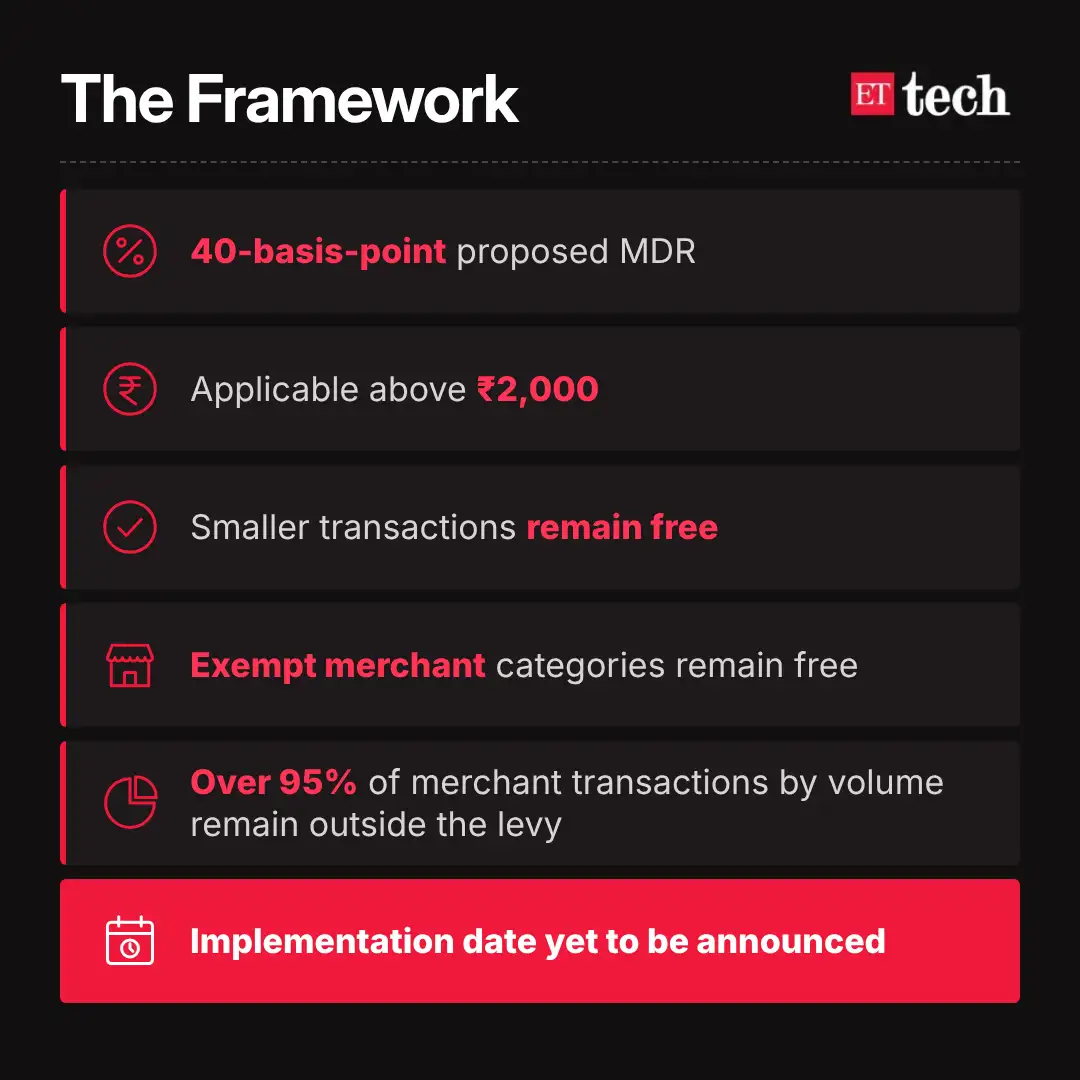
The Payments Council of India (PCI) has made multiple representations to the finance ministry and National Payments Corporation of India (NPCI), seeking early implementation of the MDR (merchant discount rate) on select UPI transactions, people in the know told us.
The proposed rollout was deferred until after Diwali.
Unpaid incentives: The industry has also flagged that banks and payment companies have not received government incentives for processing UPI and RuPay debit card transactions.
Verbatim: "The ecosystem has not been paid for nearly 18 months, while deployment, servicing, and compliance costs have continued to increase. With the festive season now over, the industry is seeking clarity on when the new framework will actually be implemented," one of the people said.
Key concern: Payment companies are warning that prolonged uncertainty could affect investments in expanding the digital payment ecosystem, particularly in smaller towns and rural areas.
Industry executives said the delay was making it increasingly difficult to sustain investments in merchant acceptance infrastructure.
Also Read: NPCI defends MDR charges in SC, says merchants can't pass on them to customers
Real money gaming companies facing allegations of GST fraud heaved a sigh of relief after the Allahabad High Court stayed the tax department’s demand on Skillwin Technology and questioned the applicability of section 74 of the CGST Act, which covers tax evasion through fraud, wilful misstatement, or suppression of facts.
Court’s reasoning: The court noted Skillwin’s contention that there was no factual allegation of active suppression, fraud, concealment, or misstatement, and that the taxability involved interpretation of law — there was no ground for invoking fraud. The court indicated that mere documentation gaps cannot establish suppression of facts.
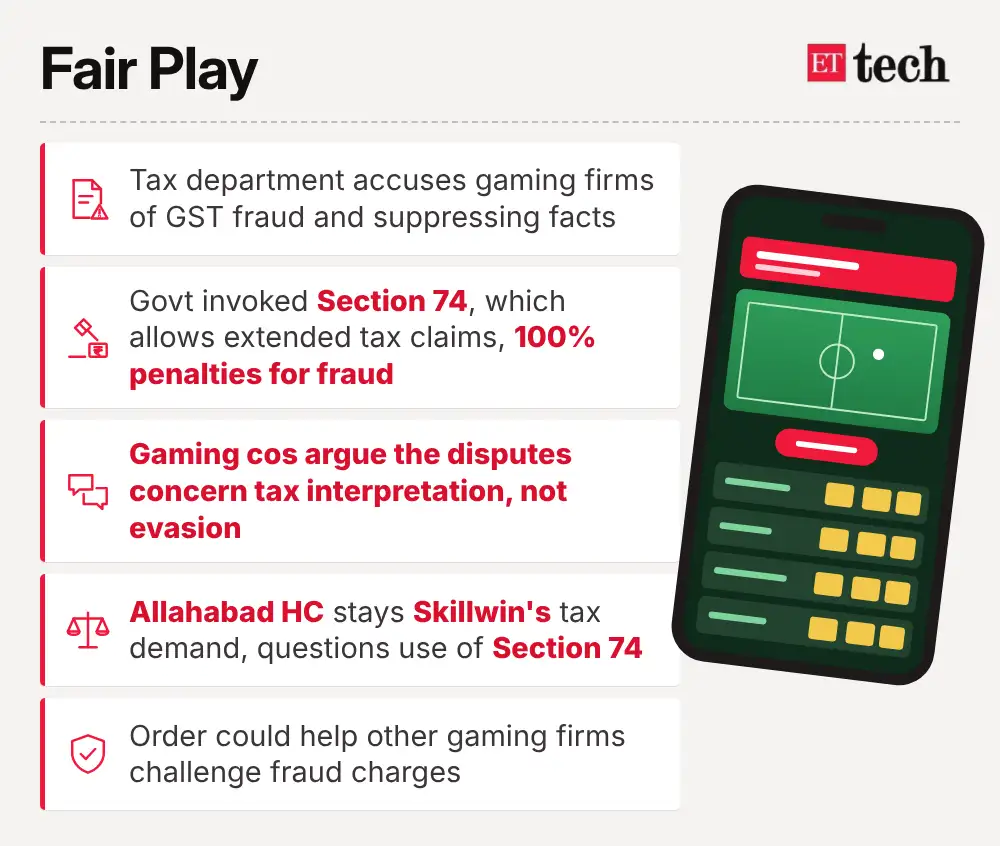
Fine print: The tax department had invoked rule 31A, under which GST applies not only to a gamer’s initial deposit but also to subsequent deposits from winnings. The Supreme Court, on May 27, 2026, ruled that GST would be collected retrospectively under rule 31B, which confines GST to the initial deposit.
Why this matters: This is the first High Court stay after the Supreme Court ruling. Lawyer Jay Sayta said non-applicability of section 74 is a major win for all online gaming companies in the ongoing GST litigation.
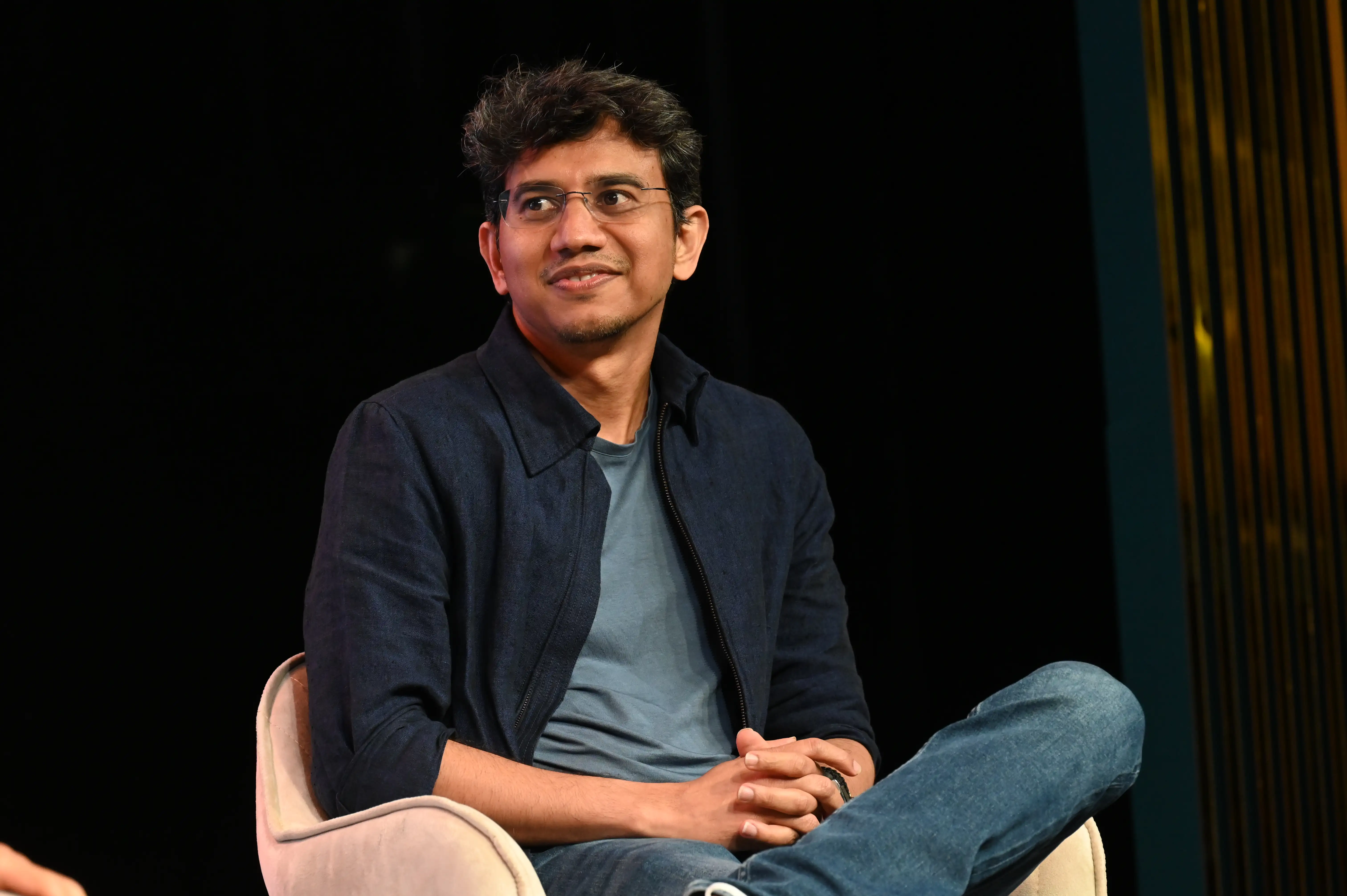 Groww CEO Lalit Keshre at the Economic Times Startup Awards 2026 in Bengaluru
US-based venture capital firm Ribbit Capital sold shares worth Rs 1,905 crore in Groww parent Billionbrains Garage Ventures through block deals on Tuesday, per NSE data.
The details: Two funds associated with the venture capital firm, Ribbit Capital V LP and Ribbit Cayman GW Holdings V, sold 48.6 million shares and 38.5 million shares, respectively.
The shares were bought by Societe Generale, Kotak Mahindra Mutual Fund, BlackRock, Fidelity Investments, BNP Paribas, Morgan Stanley Asia Singapore, HDFC Standard Life Insurance, NPS Trust, and Norges Bank, among others.
Second major stake sale: This is the second major stake sale by Ribbit Capital in Groww in recent months. In August, the venture capital firm sold 113.2 million shares of the brokerage through bulk deals worth Rs 1,900 crore.
Also Read: Groww expects new businesses to reshape revenue mix as they scale: Lalit Keshre
 Anthropic cofounder and CEO Dario Amodei
Investors fearing an AI bubble are getting jittery with financing costs rising and Democrats vowing to crack down on the industry in the US. It’s not an ideal time for an AI company to go public, but Anthropic is pressing ahead with its blockbuster initial public offering anyway.
A massive IPO: No ordinary sale, the Claude chatbot maker’s IPO could raise more than $60 billion on Thursday, a massive haul that, depending on the ultimate pricing and other issues, could rival SpaceX’s in June.
Tell me more: Anthropic prices its blockbuster IPO early Thursday, India time. Pricing is the step at which Anthropic and its underwriting banks set the final cost for shares sold to investors who placed orders in the offering, typically after markets close the evening before trading begins.
The maker of the Claude AI models said in a filing with the US Securities and Exchange Commission last week that it plans to sell 825 million shares at $70 to $78 each.
Investors are spooked: Tech stocks have done well so far this year, but the path has been rocky, especially for AI-related companies. That’s not a reassuring setup for the IPO.
Adding to the sector volatility recently has been the abrupt departure of Nvidia CEO Jensen Huang over extramarital affairs, including one with an alleged Chinese spy.
Also Read: Anthropic's IPO: How do you price the future of AI?
 Nvidia cofounder Jensen Huang; interim CEO Colette Kress
Nvidia's strong revenue forecast has soothed investor fears for the time being about the sustainability of AI demand, but the next big question now is who succeeds Jensen Huang after the CEO's shock exit.
Financials:
Point of no return: Nvidia began a conference call with analysts and investors by saying it wouldn't take questions on longtime CEO Huang's resignation and doesn't plan to reinstate him. Colette Kress, interim CEO, told investors that the company expects revenues to rise 75% in fiscal 2028.
Huang happy to return: In the first statement since his exit,Huang said in a post on X on Tuesday that he is willing to return to the top job if the company's board of directors believes his reinstatement would be in the organisation's best interests.
Also Read: 'Business as usual': Nvidia's Colette Kress passes first test as board slams door on Huang
Also in the letter:
■ Ribbit Capital cuts Groww stake
■ Anthropic to price IPO
■ Nvidia earnings beat estimates
Payment firms seek clarity on MDR rollout for select UPI transactions
The Payments Council of India (PCI) has made multiple representations to the finance ministry and National Payments Corporation of India (NPCI), seeking early implementation of the MDR (merchant discount rate) on select UPI transactions, people in the know told us.
The proposed rollout was deferred until after Diwali.
Unpaid incentives: The industry has also flagged that banks and payment companies have not received government incentives for processing UPI and RuPay debit card transactions.
Verbatim: "The ecosystem has not been paid for nearly 18 months, while deployment, servicing, and compliance costs have continued to increase. With the festive season now over, the industry is seeking clarity on when the new framework will actually be implemented," one of the people said.
Key concern: Payment companies are warning that prolonged uncertainty could affect investments in expanding the digital payment ecosystem, particularly in smaller towns and rural areas.
Industry executives said the delay was making it increasingly difficult to sustain investments in merchant acceptance infrastructure.
Also Read: NPCI defends MDR charges in SC, says merchants can't pass on them to customers
Gaming firms get a GST lifeline as Allahabad HC questions fraud charges
Real money gaming companies facing allegations of GST fraud heaved a sigh of relief after the Allahabad High Court stayed the tax department’s demand on Skillwin Technology and questioned the applicability of section 74 of the CGST Act, which covers tax evasion through fraud, wilful misstatement, or suppression of facts.
Court’s reasoning: The court noted Skillwin’s contention that there was no factual allegation of active suppression, fraud, concealment, or misstatement, and that the taxability involved interpretation of law — there was no ground for invoking fraud. The court indicated that mere documentation gaps cannot establish suppression of facts.
Fine print: The tax department had invoked rule 31A, under which GST applies not only to a gamer’s initial deposit but also to subsequent deposits from winnings. The Supreme Court, on May 27, 2026, ruled that GST would be collected retrospectively under rule 31B, which confines GST to the initial deposit.
Why this matters: This is the first High Court stay after the Supreme Court ruling. Lawyer Jay Sayta said non-applicability of section 74 is a major win for all online gaming companies in the ongoing GST litigation.
Ribbit Capital sells Groww shares worth Rs 1,905 crore
US-based venture capital firm Ribbit Capital sold shares worth Rs 1,905 crore in Groww parent Billionbrains Garage Ventures through block deals on Tuesday, per NSE data.
The details: Two funds associated with the venture capital firm, Ribbit Capital V LP and Ribbit Cayman GW Holdings V, sold 48.6 million shares and 38.5 million shares, respectively.
The shares were bought by Societe Generale, Kotak Mahindra Mutual Fund, BlackRock, Fidelity Investments, BNP Paribas, Morgan Stanley Asia Singapore, HDFC Standard Life Insurance, NPS Trust, and Norges Bank, among others.
Second major stake sale: This is the second major stake sale by Ribbit Capital in Groww in recent months. In August, the venture capital firm sold 113.2 million shares of the brokerage through bulk deals worth Rs 1,900 crore.
Also Read: Groww expects new businesses to reshape revenue mix as they scale: Lalit Keshre
Anthropic forges ahead with its IPO even as AI fears mount and markets wobble
Investors fearing an AI bubble are getting jittery with financing costs rising and Democrats vowing to crack down on the industry in the US. It’s not an ideal time for an AI company to go public, but Anthropic is pressing ahead with its blockbuster initial public offering anyway.
A massive IPO: No ordinary sale, the Claude chatbot maker’s IPO could raise more than $60 billion on Thursday, a massive haul that, depending on the ultimate pricing and other issues, could rival SpaceX’s in June.
Tell me more: Anthropic prices its blockbuster IPO early Thursday, India time. Pricing is the step at which Anthropic and its underwriting banks set the final cost for shares sold to investors who placed orders in the offering, typically after markets close the evening before trading begins.
The maker of the Claude AI models said in a filing with the US Securities and Exchange Commission last week that it plans to sell 825 million shares at $70 to $78 each.
Investors are spooked: Tech stocks have done well so far this year, but the path has been rocky, especially for AI-related companies. That’s not a reassuring setup for the IPO.
Adding to the sector volatility recently has been the abrupt departure of Nvidia CEO Jensen Huang over extramarital affairs, including one with an alleged Chinese spy.
Also Read: Anthropic's IPO: How do you price the future of AI?
Nvidia earnings beat estimates; management didn't take questions on Huang’s resignation
Nvidia's strong revenue forecast has soothed investor fears for the time being about the sustainability of AI demand, but the next big question now is who succeeds Jensen Huang after the CEO's shock exit.
Financials:
- Earnings per share: $2.68 adjusted
- Revenue: $115.84 billion
- Outlook: Fourth quarter revenue expected to be $130.0 billion, plus or minus 3%.
Point of no return: Nvidia began a conference call with analysts and investors by saying it wouldn't take questions on longtime CEO Huang's resignation and doesn't plan to reinstate him. Colette Kress, interim CEO, told investors that the company expects revenues to rise 75% in fiscal 2028.
Huang happy to return: In the first statement since his exit,Huang said in a post on X on Tuesday that he is willing to return to the top job if the company's board of directors believes his reinstatement would be in the organisation's best interests.
Also Read: 'Business as usual': Nvidia's Colette Kress passes first test as board slams door on Huang
Want this newsletter delivered to your inbox?
I agree to receive newsletters and marketing communications via e-mail