
 Daily Top 5 |
Nvidia’s $1-trillion U-turn; SoftBank's Narendra Rathi quits
Want this newsletter delivered to your inbox?
I agree to receive newsletters and marketing communications via e-mail

Thank you for subscribing to Daily Top 5
We'll soon meet in your inbox.
Nvidia short sellers saw heavy losses after the chipmaker's shares soared on Jensen Huang's surprise return as CEO. This and more in today’s ETtech Top 5.
Also in the letter:
■ Pixxel’s Bengaluru manufacturing plans
■ AI search disrupts web traffic
■ Google India layoffs
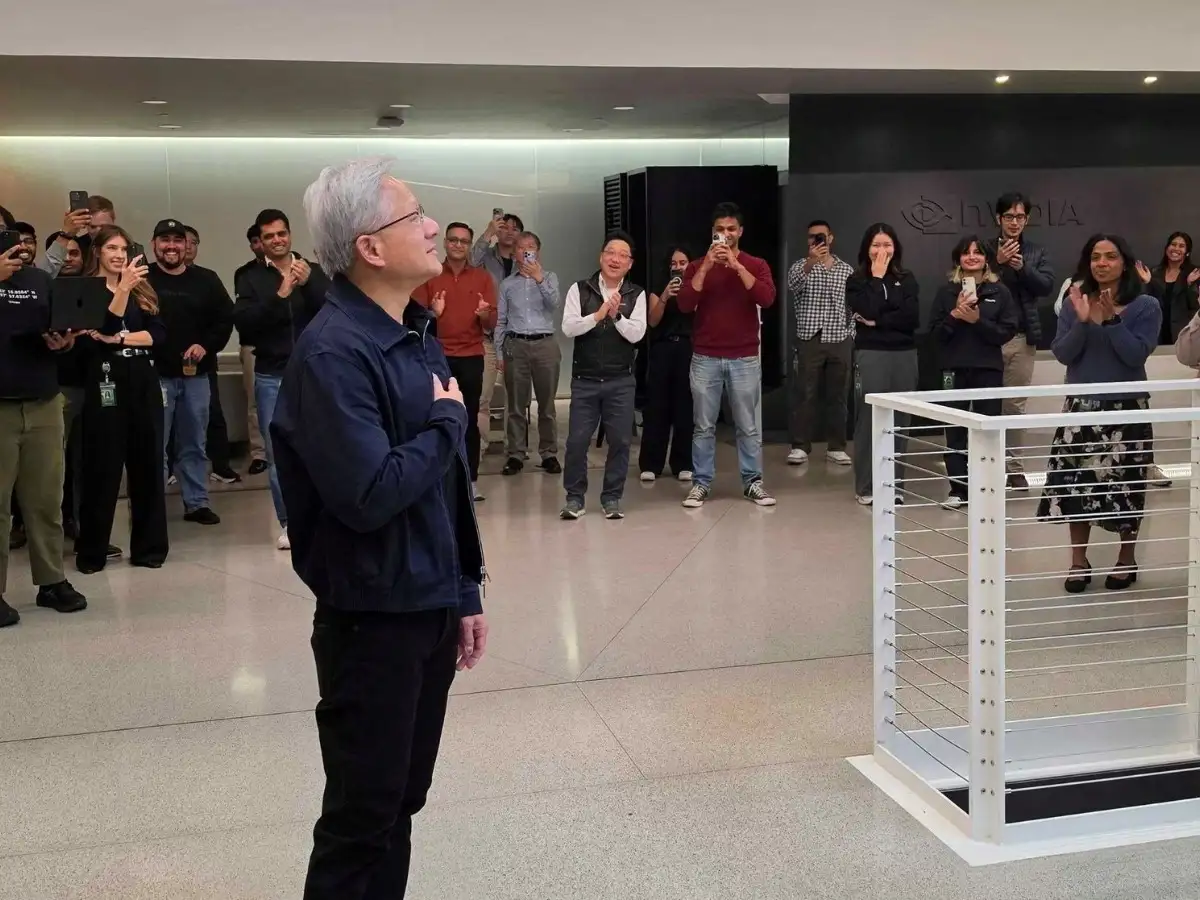 Jensen Huang gestures as employees applaud his return to office
Investors betting against Nvidia suffered heavy losses after the chipmaker’s sharp rebound on Monday. The rally followed the company’s board reinstating Jensen Huang as chief executive, turning profitable short positions into costly setbacks.
Who was hit hardest: The GraniteShares 2x Short NVDA Daily ETF (NVD), designed to move 2x in the opposite direction of Nvidia’s daily share price movement, fell 63%. It had gained 46% earlier in the year amid Nvidia’s selloff.
Losses were steeper in Europe. GraniteShares’ 3x Short NVIDIA Daily ETP (3SNV) plunged 92%, while Leverage Shares’ NV3S fell 80%.
Why such severe losses: Leveraged single-stock products amplify daily moves in a stock, offering bigger potential gains but also much larger losses. They reset exposure daily, so returns over longer periods may not match the stated multiple.
These products are meant mainly for short-term trading, not long-term investing, especially when markets are highly volatile.
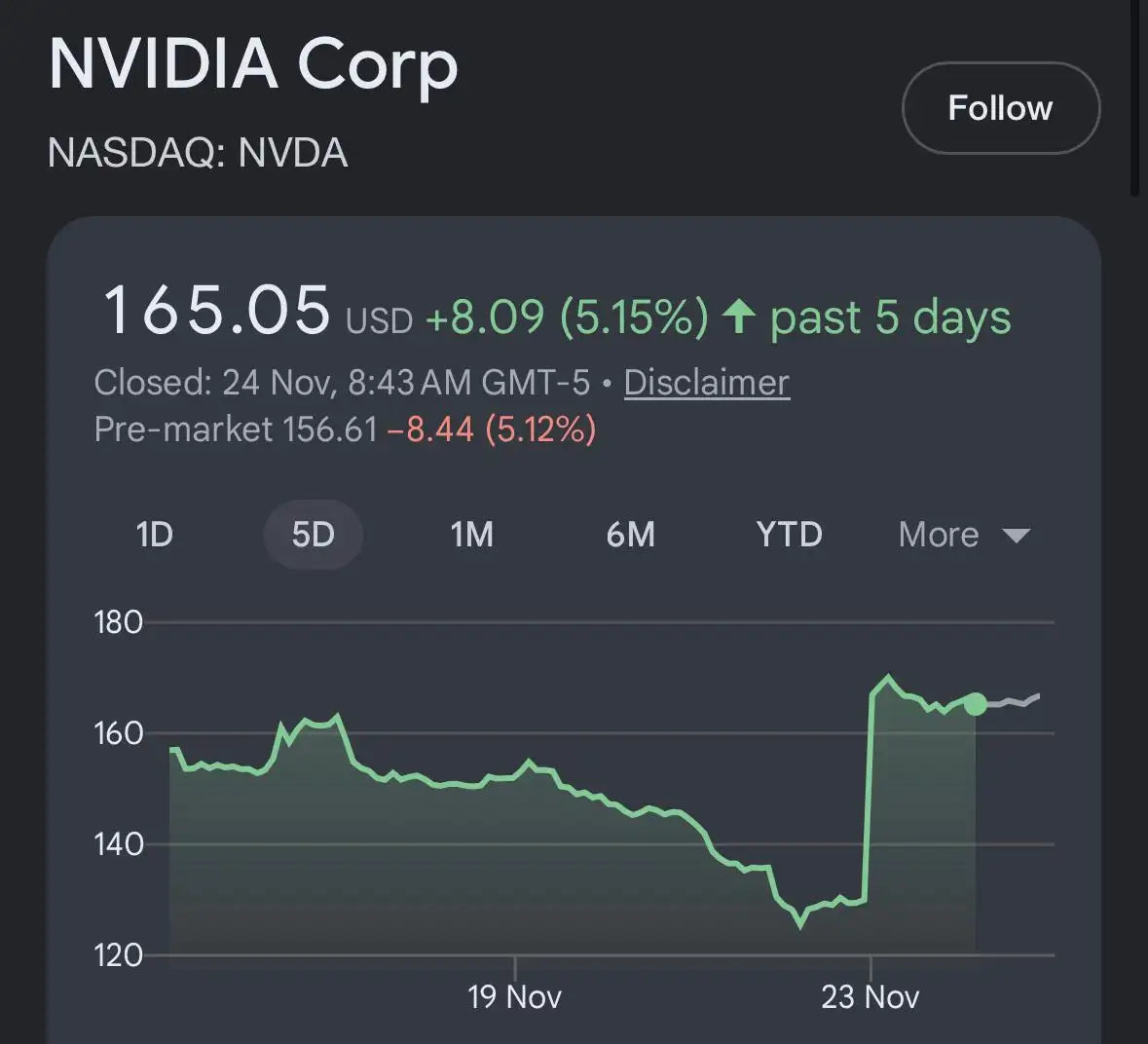 Source: Google Finance
A sudden reversal: Nvidia had fallen 23% last week and 39% for the month through Friday, rewarding traders betting on further declines. But Huang’s return changed the sentiment quickly, and Nvidia shares surged as much as 37% on Monday.
Recap: Under pressure from US president Donald Trump, the Nvidia board on Monday put Huang back at the helm of the largest chipmaker in the world. Clad in his trademark black leather jacket, hand on heart, the 63-year-old CEO came back to the Nvidia HQ in Santa Clara, California, to cheering employees who packed an atrium and crowded the balconies above.
Huang's swift reinstatement is the story of a stunning comeback, one that underscores his sway over Washington, markets, the AI industry, and geopolitics.
Also Read: Jensen Huang's Nvidia return sparks relief for battered AI trade, but questions remain
.jpg "narendra-rathi-ettech-2 (1)")
Narendra Rathi, a key member of SoftBank’s India investment team, is leaving the firm to start a public-markets fund focused on India’s AI infrastructure build-out, people aware of the matter told us.
Fund details: The fund will look for opportunities among industrial companies, including lesser-known firms in the public market that stand to gain from the proliferation of data centres in the country. Rathi is in talks with family offices, founders, and promoters to back the fund, the sources added.
Rathi’s background: Before SoftBank, Rathi worked as an investment banker at Morgan Stanley and Nomura. He helped set up SoftBank’s Mumbai office in 2019 and invested in software, B2B, and consumer-internet companies including Whatfix, Mindtickle, Icertis, ElasticRun, Cars24, and FirstCry.
His portfolio companies are expected to transition to SoftBank Vision Fund’s London-based investment director Zoravar Gill, one of the sources said.
Part of a wider churn: Rathi’s move comes as senior India investors leave established venture and growth funds to start their own firms. Unlike most, he is moving from private to public markets.
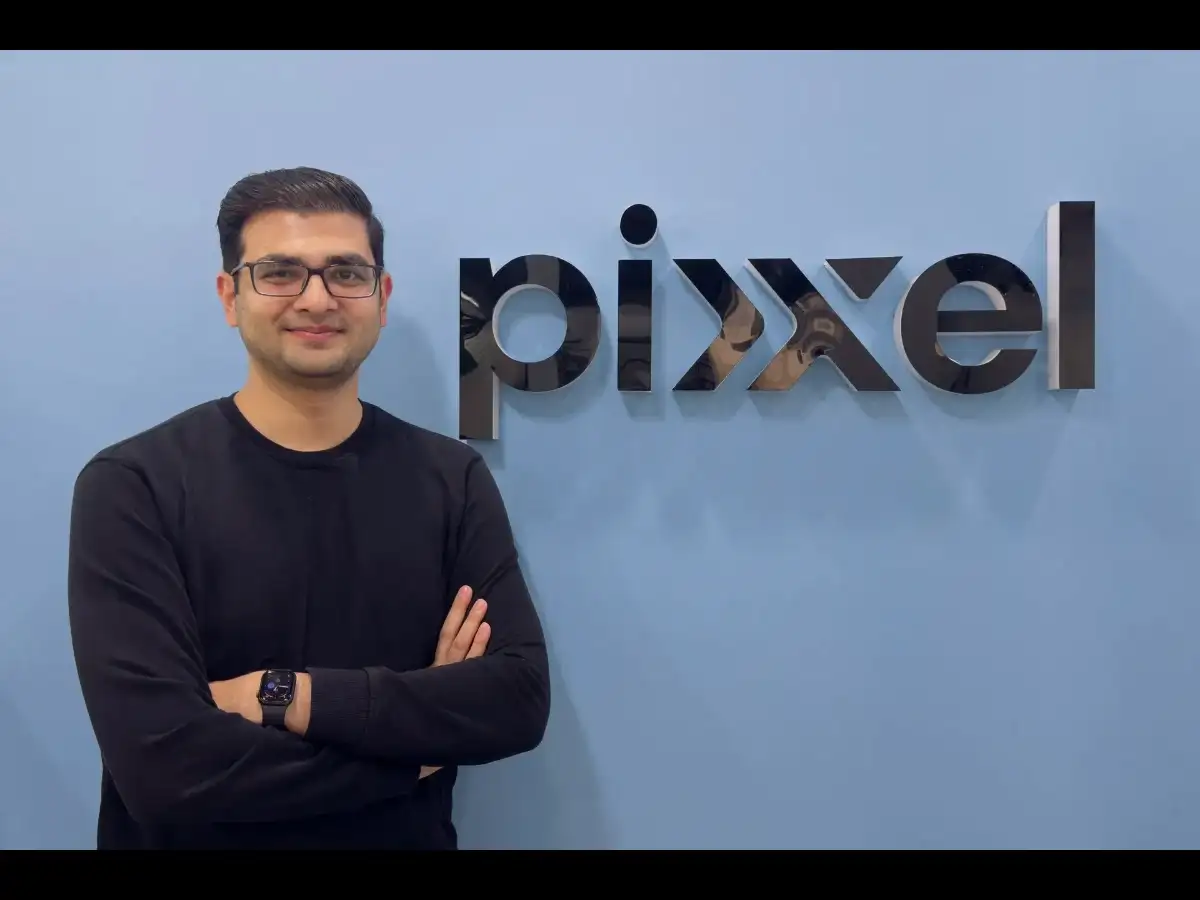 Awais Ahmed, founder and CEO, Pixxel
Spacetech startup Pixxel is setting up a 250,000 sq ft satellite manufacturing facility, GigaPixxel, near Kempegowda International Airport in Bengaluru. It is expected to begin operations in 2027 and will mainly build satellites for external customers, CEO and cofounder Awais Ahmed told us.
Driving the news: Pixxel plans to build 50 satellites in parallel by mid-2027, increase this capacity to 100 by end-2027, and reach 200 by mid-2028. Its existing facility can make around 20-25 satellites in parallel, but that capacity is already committed.
Yes, and: Unlike its existing Mega facility, which caters largely to the company's own satellite requirements while also building some satellites for external customers, GigaPixxel will be dedicated predominantly to third-party manufacturing. “The Giga will be 90% for external satellites,” Ahmed said.
Tell me more: The expansion is also aimed at preparing for an expected increase in demand over the next two to three years. “We don't have the demand (for 400 satellites) yet, but I think we will get there in 2027-28. The idea is that we will have the capacity ready so that when the growth happens, we don't need to scramble,” he said.
Also Read: Pixxel cofounder Awais Ahmed rejects claims of US control, defends Indian credentials

Artificial intelligence (AI) tools are changing how people find businesses, jobs, and colleges, putting pressure on platforms that rely on Google search traffic to sell leads.
The revenue model for business-to-business (B2B) online marketplaces was simple: Google sends traffic, the platform turns visitors into a lead, and the lead is sold to a seller. AI answer engines are now upending this model.
Exclusive data critical: Analysts say verified suppliers, live inventory, transaction data, and trusted customer relationships offer stronger protection than public information alone. Partnerships with AI platforms can bring users, but relying too heavily on them risks loss of control over one’s customers and pricing.
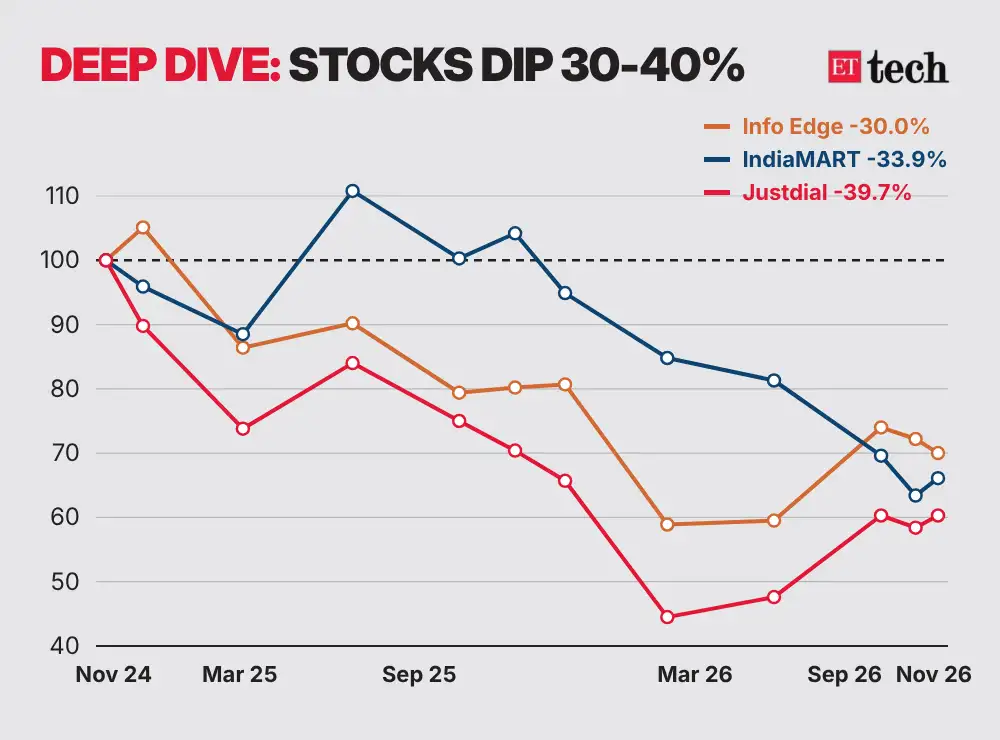
Hard pivot:
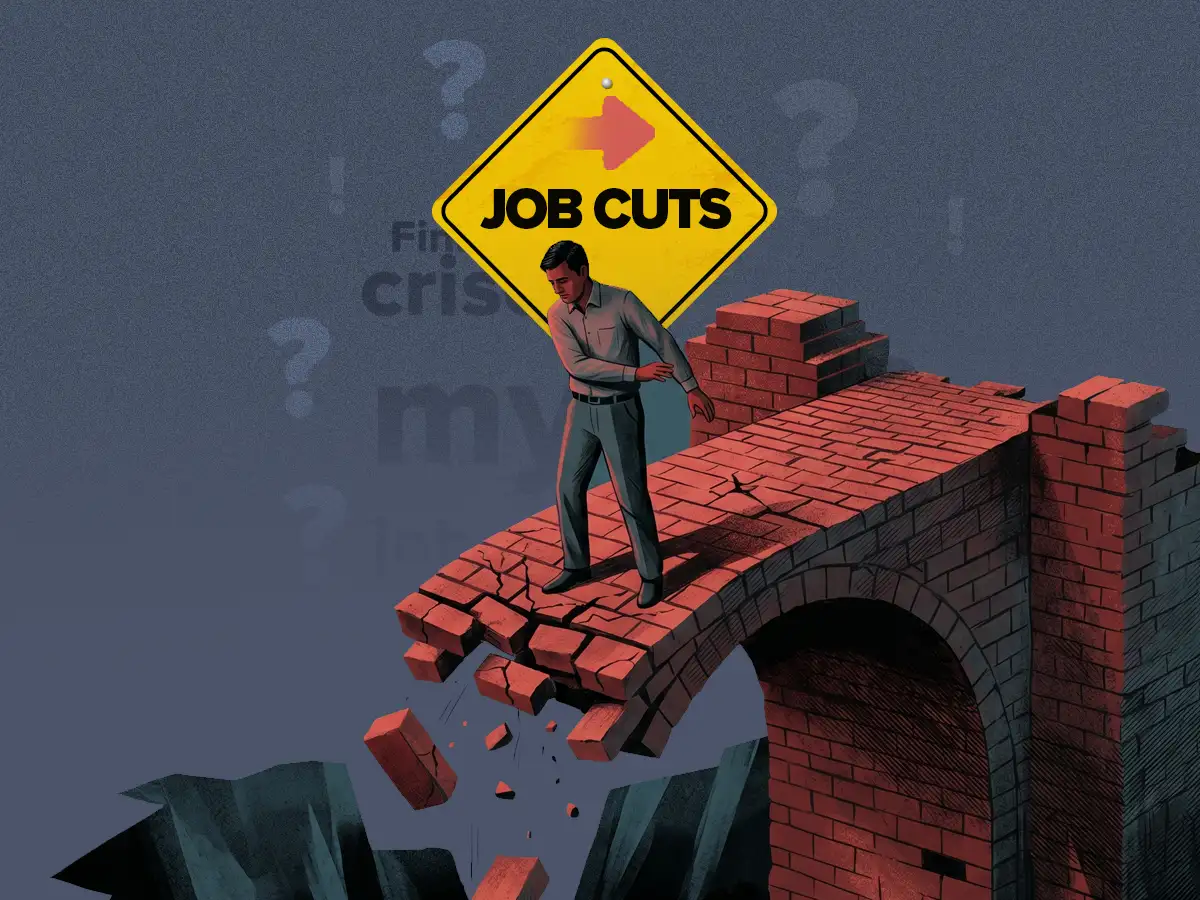
Google Cloud on Tuesday confirmed that about 30 roles in its India team were eliminated last week. The company called it a “small organisational change” and reprioritisation of work, rejecting social-media claims of large-scale layoffs.
What happened: The company was responding to a user named Venkatesh Alla on X, who posted, “Huge layoffs at Google India. What's going on?”
“These rumors are totally inaccurate. Last week, Google Cloud made a small organisational change in India, and approximately 30 roles were eliminated as part of a re-prioritisation of work,” the company replied.
Context: The layoffs come amid a top deck shuffle at Google Cloud India. Managing director Sashikumar Sreedharan recently stepped down to join AI startup Sarvam. The company announced that it had appointed Amit Kumar, managing director of the Digital Natives Business at Google Cloud India, as interim MD.
Also Read: Of ‘voluntary’ exits and garden leave: When job cuts come dressed in euphemisms
Also in the letter:
■ Pixxel’s Bengaluru manufacturing plans
■ AI search disrupts web traffic
■ Google India layoffs
Nvidia's $1 trillion rebound crushes short sellers as funds tank up to 92% in a day
Investors betting against Nvidia suffered heavy losses after the chipmaker’s sharp rebound on Monday. The rally followed the company’s board reinstating Jensen Huang as chief executive, turning profitable short positions into costly setbacks.
Who was hit hardest: The GraniteShares 2x Short NVDA Daily ETF (NVD), designed to move 2x in the opposite direction of Nvidia’s daily share price movement, fell 63%. It had gained 46% earlier in the year amid Nvidia’s selloff.
Losses were steeper in Europe. GraniteShares’ 3x Short NVIDIA Daily ETP (3SNV) plunged 92%, while Leverage Shares’ NV3S fell 80%.
Why such severe losses: Leveraged single-stock products amplify daily moves in a stock, offering bigger potential gains but also much larger losses. They reset exposure daily, so returns over longer periods may not match the stated multiple.
These products are meant mainly for short-term trading, not long-term investing, especially when markets are highly volatile.
A sudden reversal: Nvidia had fallen 23% last week and 39% for the month through Friday, rewarding traders betting on further declines. But Huang’s return changed the sentiment quickly, and Nvidia shares surged as much as 37% on Monday.
Recap: Under pressure from US president Donald Trump, the Nvidia board on Monday put Huang back at the helm of the largest chipmaker in the world. Clad in his trademark black leather jacket, hand on heart, the 63-year-old CEO came back to the Nvidia HQ in Santa Clara, California, to cheering employees who packed an atrium and crowded the balconies above.
Huang's swift reinstatement is the story of a stunning comeback, one that underscores his sway over Washington, markets, the AI industry, and geopolitics.
Also Read: Jensen Huang's Nvidia return sparks relief for battered AI trade, but questions remain
SoftBank's Narendra Rathi quits; to launch public markets fund betting on India's AI build-out
Narendra Rathi, a key member of SoftBank’s India investment team, is leaving the firm to start a public-markets fund focused on India’s AI infrastructure build-out, people aware of the matter told us.
Fund details: The fund will look for opportunities among industrial companies, including lesser-known firms in the public market that stand to gain from the proliferation of data centres in the country. Rathi is in talks with family offices, founders, and promoters to back the fund, the sources added.
Rathi’s background: Before SoftBank, Rathi worked as an investment banker at Morgan Stanley and Nomura. He helped set up SoftBank’s Mumbai office in 2019 and invested in software, B2B, and consumer-internet companies including Whatfix, Mindtickle, Icertis, ElasticRun, Cars24, and FirstCry.
His portfolio companies are expected to transition to SoftBank Vision Fund’s London-based investment director Zoravar Gill, one of the sources said.
Part of a wider churn: Rathi’s move comes as senior India investors leave established venture and growth funds to start their own firms. Unlike most, he is moving from private to public markets.
- We had reported earlier that former Peak XV Partners managing directors Shailesh Lakhani and Harshjit Sethi were starting Ambition Capital.
- In May, we wrote about Ashish Agrawal, Ishaan Mittal, and Tejeshwi Sharma, three more managing directors who had left Peak XV Partners, and were setting up Mettle Capital.
Pixxel to set up 250,000 sq ft satellite manufacturing facility in Bengaluru
Spacetech startup Pixxel is setting up a 250,000 sq ft satellite manufacturing facility, GigaPixxel, near Kempegowda International Airport in Bengaluru. It is expected to begin operations in 2027 and will mainly build satellites for external customers, CEO and cofounder Awais Ahmed told us.
Driving the news: Pixxel plans to build 50 satellites in parallel by mid-2027, increase this capacity to 100 by end-2027, and reach 200 by mid-2028. Its existing facility can make around 20-25 satellites in parallel, but that capacity is already committed.
Yes, and: Unlike its existing Mega facility, which caters largely to the company's own satellite requirements while also building some satellites for external customers, GigaPixxel will be dedicated predominantly to third-party manufacturing. “The Giga will be 90% for external satellites,” Ahmed said.
Tell me more: The expansion is also aimed at preparing for an expected increase in demand over the next two to three years. “We don't have the demand (for 400 satellites) yet, but I think we will get there in 2027-28. The idea is that we will have the capacity ready so that when the growth happens, we don't need to scramble,” he said.
Also Read: Pixxel cofounder Awais Ahmed rejects claims of US control, defends Indian credentials
AI search is diverting web traffic: How India's classifieds platforms are rewriting lead generation
Artificial intelligence (AI) tools are changing how people find businesses, jobs, and colleges, putting pressure on platforms that rely on Google search traffic to sell leads.
The revenue model for business-to-business (B2B) online marketplaces was simple: Google sends traffic, the platform turns visitors into a lead, and the lead is sold to a seller. AI answer engines are now upending this model.
Exclusive data critical: Analysts say verified suppliers, live inventory, transaction data, and trusted customer relationships offer stronger protection than public information alone. Partnerships with AI platforms can bring users, but relying too heavily on them risks loss of control over one’s customers and pricing.
Hard pivot:
- B2B classifieds platform IndiaMart limited access to its content and blocked unrestricted scraping. Its unique business queries fell 14% to 27 million in the September quarter.
- Info Edge’s education portal Shiksha’s billings fell 27.2% and revenue dropped 8.5% in the second quarter of fiscal 2027. It is developing direct student counselling supported by AI voice bots.
- JustDial has opened its data to external AI engines to attract leads.
Google India layoffs: Tech giant fires 30 employees in Cloud team
Google Cloud on Tuesday confirmed that about 30 roles in its India team were eliminated last week. The company called it a “small organisational change” and reprioritisation of work, rejecting social-media claims of large-scale layoffs.
What happened: The company was responding to a user named Venkatesh Alla on X, who posted, “Huge layoffs at Google India. What's going on?”
“These rumors are totally inaccurate. Last week, Google Cloud made a small organisational change in India, and approximately 30 roles were eliminated as part of a re-prioritisation of work,” the company replied.
Context: The layoffs come amid a top deck shuffle at Google Cloud India. Managing director Sashikumar Sreedharan recently stepped down to join AI startup Sarvam. The company announced that it had appointed Amit Kumar, managing director of the Digital Natives Business at Google Cloud India, as interim MD.
Also Read: Of ‘voluntary’ exits and garden leave: When job cuts come dressed in euphemisms
Want this newsletter delivered to your inbox?
I agree to receive newsletters and marketing communications via e-mail