
 Daily Top 5 Daily Top 5 |
Infra.Market’s backdoor listing; Honasa posts record profit
Want this newsletter delivered to your inbox?
I agree to receive newsletters and marketing communications via e-mail

Thank you for subscribing to Daily Top 5
We'll soon meet in your inbox.
Infra.Market is set to enter the public markets through a reverse merger with Shalimar Paints. This and more in today's ETtech Top 5.
Also in the letter:
■ Cognition eyes $40B valuation
■ UPI's revenue challenge
■ Dark stores under scanner
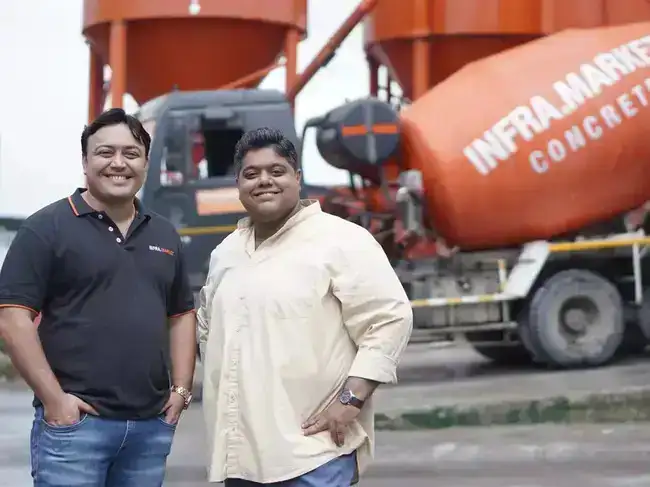 (L-R) Aaditya Sharda and Souvik Sengupta, cofounders, Infra.Market
Infra.Market, backed by Accel and Nexus Venture Partners, will enter the public markets through a reverse merger with the listed Shalimar Paints.
The building materials unicorn had confidentially filed for a Rs 5,000-crore initial public offering (IPO) last October.
What's happening?
Also Read: Infra.Market raises Rs 1,250 crore in debt ahead of IPO
Tell me more: Shalimar Paints will issue equity shares worth around Rs 3,544.7 crore on a preferential basis to its promoters and non-promoter allottees. It will also issue compulsorily convertible preference shares (CCPS) worth about Rs 6,895.2 crore.
After the deal closes, Infra.Market will become an unlisted subsidiary of Shalimar Paints. The final swap ratio will be based on valuation reports and will need shareholder approval.
Also Read: Accel raises $3.5 billion to invest in emerging global AI startups
 Varun Alagh and Ghazal Alagh, founders, Honasa Consumer
Honasa Consumer, the parent of Mamaearth, reported strong growth in profit and revenue in the first quarter of FY27.
By the numbers:
CEOSpeak: Varun Alagh, chairman, CEO and cofounder of Honasa Consumer, said the company began FY27 by building on the momentum from the second half of FY26. “Q1 has reinforced that the strategy is working,” he said, adding that both core and newer brands were driving growth.
 Supam Maheshwari, CEO, FirstCry
Brainbees Solutions, the parent of FirstCry, reported strong operating revenue and narrowed its losses in the April-June quarter of FY27.
The numbers:
Also Read: Amagi net profit surges 8x to Rs 34 crore in Q1

Cognition AI is discussing a new funding round that could value the coding startup at more than $40 billion, Bloomberg reported.
Round details: The company could raise over $1 billion, though it may choose not to proceed or could seek funding on different terms, according to the report.
The talks come less than three months after Cognition raised $1 billion at a $26 billion valuation. Its annualised revenue run rate is now nearing $1 billion, about twice the level at its previous funding round, Bloomberg said.
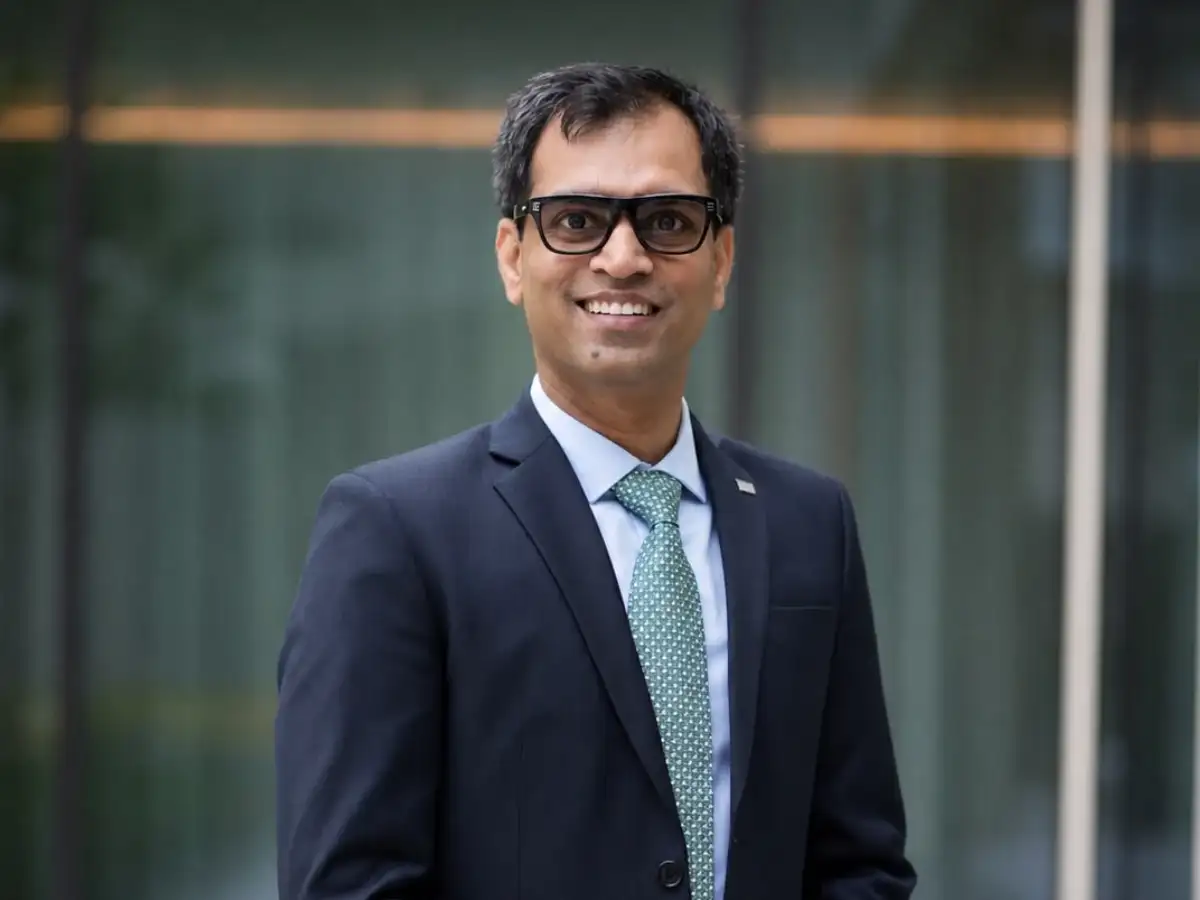 Puneet Kumar, CEO, Mirae Asset Venture Investments (India)
Mirae Asset Venture Investments India has raised Rs 1,125 crore in the first close of its second flagship India fund to invest in early-growth startups.
More in this: The Mirae Asset Venture Opportunity Fund-II has a target corpus of Rs 1,800 crore. Its first flagship fund had a corpus of Rs 370 crore, while a separate late-stage fund had Rs 700 crore.
The new fund is Mirae's third India-focused vehicle. It will mainly back startups that have found product-market fit and are ready to scale, CEO Puneet Kumar told us.

A parliamentary panel has urged the government to consider a tiered revenue model to make the Unified Payments Interface (UPI) ecosystem financially sustainable without continued pressure on the government exchequer.
Driving the news: Parliament has amended the Payment and Settlement Systems (PSS) Act, 2007, allowing the centre to permit banks and other service providers to charge for UPI and other notified digital payments.
The finance standing committee, led by Bhartruhari Mahtab, said UPI could handle up to 150 billion transactions a month and add 600 million users. However, the current government incentive covers only 11% of actual industry costs and 14% of potential merchant discount rate (MDR) collections.
Also Read: UPI fee should vary by merchant size and sector: PayU India CEO
Yes, and? The committee flagged the gap between the Rs 2,000 crore government allocation and the industry's estimated operational cost of Rs 20,700 crore, warning that it could hurt long-term investment.
It said the legal framework now allows calibrated MDR on high-value transactions, but delays in implementing it could leave payment service providers reliant on inadequate subsidies, affecting investment in cybersecurity, fraud prevention, and network infrastructure.
ET was the first to report on India's plan to restore MDR for large-merchant UPI transactions.
Also Read: MDR on UPI will impact businesses, not users: FM Nirmala Sitharaman hits back at Congress' Jairam Ramesh

Food safety authorities have acted against Zepto and Blinkit facilities in Karnataka and Maharashtra after inspections found alleged hygiene, storage, and labelling violations.
What's the issue?
Experts said the rapid expansion of dark stores is making operational oversight more important. Regulators are also shifting focus from FMCG products to distribution channels, sources told us.
Also Read: Eternal's Hyperpure unit gets food safety notice after Bengaluru inspection
Tell me more: Authorities are examining quick commerce dark stores and may extend their remit to large retailers, sources said.
"Every new retail format goes through this phase. Cloud kitchens faced similar regulatory scrutiny a decade ago, and restaurants before that. Dark stores are now going through their first major compliance cycle as the sector matures," said Madhav Kasturia, founder of Zippee.
Also in the letter:
■ Cognition eyes $40B valuation
■ UPI's revenue challenge
■ Dark stores under scanner
Accel-backed B2B unicorn Infra.Market to reverse list via merger with Shalimar Paints
Infra.Market, backed by Accel and Nexus Venture Partners, will enter the public markets through a reverse merger with the listed Shalimar Paints.
The building materials unicorn had confidentially filed for a Rs 5,000-crore initial public offering (IPO) last October.
What's happening?
- Shalimar Paints' board approved a share-swap deal with Infra.Market, under which its shareholders will receive newly issued equity and preference shares in Shalimar.
- Infra.Market owns a 52.9% stake in Shalimar Paints and is a promoter entity.
- Infra.Market's domestic shareholders, including founders Aaditya Sharda and Souvik Sengupta, and investors Nikhil Kamath and Ashish Kacholia, will own 77% of the listed company.
- Shalimar Paints will also raise Rs 1,000 crore through a qualified institutional placement (QIP).
Also Read: Infra.Market raises Rs 1,250 crore in debt ahead of IPO
Tell me more: Shalimar Paints will issue equity shares worth around Rs 3,544.7 crore on a preferential basis to its promoters and non-promoter allottees. It will also issue compulsorily convertible preference shares (CCPS) worth about Rs 6,895.2 crore.
After the deal closes, Infra.Market will become an unlisted subsidiary of Shalimar Paints. The final swap ratio will be based on valuation reports and will need shareholder approval.
Also Read: Accel raises $3.5 billion to invest in emerging global AI startups
Mamaearth parent Honasa Consumer posts record profit of Rs 90 crore in Q1
Honasa Consumer, the parent of Mamaearth, reported strong growth in profit and revenue in the first quarter of FY27.
By the numbers:
- Profit after tax (PAT): Up 116.5% YoY at Rs 90 crore, vs Rs 41 crore a year earlier.
- Revenue: Up 27% YoY at Rs 756 crore vs Rs 595 crore.
- Earnings before interest, taxes, depreciation and amortisation (Ebitda): Up 140.7% YoY at Rs 110 crore, compared to Rs 46 crore.
CEOSpeak: Varun Alagh, chairman, CEO and cofounder of Honasa Consumer, said the company began FY27 by building on the momentum from the second half of FY26. “Q1 has reinforced that the strategy is working,” he said, adding that both core and newer brands were driving growth.
FirstCry reports 13% growth in revenues, cuts losses by 34% in Q1
Brainbees Solutions, the parent of FirstCry, reported strong operating revenue and narrowed its losses in the April-June quarter of FY27.
The numbers:
- Revenue: Up 13% YoY at Rs 2,106 crore, compared with Rs 1,863 crore.
- Loss: Down 34.3% YoY at Rs 44 crore vs Rs 67 crore.
- Expenses: Up 12% YoY to Rs 2,046 crore from Rs 1,829 crore.
Also Read: Amagi net profit surges 8x to Rs 34 crore in Q1
AI startup Cognition in new funding talks at $40 billion value
Cognition AI is discussing a new funding round that could value the coding startup at more than $40 billion, Bloomberg reported.
Round details: The company could raise over $1 billion, though it may choose not to proceed or could seek funding on different terms, according to the report.
The talks come less than three months after Cognition raised $1 billion at a $26 billion valuation. Its annualised revenue run rate is now nearing $1 billion, about twice the level at its previous funding round, Bloomberg said.
Mirae Asset Venture raises Rs 1,125 crore in first close of new India-dedicated fund
Mirae Asset Venture Investments India has raised Rs 1,125 crore in the first close of its second flagship India fund to invest in early-growth startups.
More in this: The Mirae Asset Venture Opportunity Fund-II has a target corpus of Rs 1,800 crore. Its first flagship fund had a corpus of Rs 370 crore, while a separate late-stage fund had Rs 700 crore.
The new fund is Mirae's third India-focused vehicle. It will mainly back startups that have found product-market fit and are ready to scale, CEO Puneet Kumar told us.
UPI costs Rs 20,700 crore, government allocation just Rs 2,000 crore: Parliament panel
A parliamentary panel has urged the government to consider a tiered revenue model to make the Unified Payments Interface (UPI) ecosystem financially sustainable without continued pressure on the government exchequer.
Driving the news: Parliament has amended the Payment and Settlement Systems (PSS) Act, 2007, allowing the centre to permit banks and other service providers to charge for UPI and other notified digital payments.
The finance standing committee, led by Bhartruhari Mahtab, said UPI could handle up to 150 billion transactions a month and add 600 million users. However, the current government incentive covers only 11% of actual industry costs and 14% of potential merchant discount rate (MDR) collections.
Also Read: UPI fee should vary by merchant size and sector: PayU India CEO
Yes, and? The committee flagged the gap between the Rs 2,000 crore government allocation and the industry's estimated operational cost of Rs 20,700 crore, warning that it could hurt long-term investment.
It said the legal framework now allows calibrated MDR on high-value transactions, but delays in implementing it could leave payment service providers reliant on inadequate subsidies, affecting investment in cybersecurity, fraud prevention, and network infrastructure.
ET was the first to report on India's plan to restore MDR for large-merchant UPI transactions.
Also Read: MDR on UPI will impact businesses, not users: FM Nirmala Sitharaman hits back at Congress' Jairam Ramesh
ETtech Explainer: Why are dark stores again under scrutiny over food safety
Food safety authorities have acted against Zepto and Blinkit facilities in Karnataka and Maharashtra after inspections found alleged hygiene, storage, and labelling violations.
What's the issue?
- Recently, Karnataka's Food Safety and Drug Administration (FSDA) sealed a Zepto warehouse in Hoskote over alleged labelling, misbranding, hygiene, and storage violations.
- Maharashtra's Food and Drug Administration (FDA) suspended the food licence of a Blinkit facility in Mumbai’s Malad after finding cockroach infestation and improper storage.
Experts said the rapid expansion of dark stores is making operational oversight more important. Regulators are also shifting focus from FMCG products to distribution channels, sources told us.
Also Read: Eternal's Hyperpure unit gets food safety notice after Bengaluru inspection
Tell me more: Authorities are examining quick commerce dark stores and may extend their remit to large retailers, sources said.
"Every new retail format goes through this phase. Cloud kitchens faced similar regulatory scrutiny a decade ago, and restaurants before that. Dark stores are now going through their first major compliance cycle as the sector matures," said Madhav Kasturia, founder of Zippee.
Want this newsletter delivered to your inbox?
I agree to receive newsletters and marketing communications via e-mail