
 Daily Top 5 Daily Top 5 |
Groww's strong Q4; Iran conflict hits India's GCCs
Want this newsletter delivered to your inbox?
I agree to receive newsletters and marketing communications via e-mail

Thank you for subscribing to Daily Top 5
We'll soon meet in your inbox.
Fintech major Groww more than doubled its net profit in the fourth quarter of FY26. This and more in today’s ETtech Top 5.
Also in the letter:
■ Multi-manager gig security net
■ PSBs take a quantum leap
■ Palantir's manifesto draws backlash
 Lalit Keshre, CEO, Groww
Groww parent Billionbrains Garage Ventures closed FY26 on a strong note, extending its lead in India's online investing market through disciplined cost control and sharper monetisation.
Financials:
March quarter (FY26):
FY26 (full year):
What else? The company said Ashish Agrawal, former MD at Peak XV Partners, has resigned from Groww’s board to start a new venture capital firm.
Investment focus: CEO Lalit Keshre said the company is investing in AI to build products faster with a lean team rather than scaling hiring. Of the Rs 1,016 crore raised in its IPO, Groww has spent Rs 104 crore on marketing and brand building till March 2026, and deployed Rs 850 crore to capitalise its margin trading financing subsidiary, Groww Invest Tech.
Also Read: Groww doubles down on wealth management, lending to diversify revenue base: CEO Lalit Keshre
Groww also disclosed an investment of Rs 961 crore last year to acquire wealthtech startup Fisdom, doubling down on its wealth management bet.
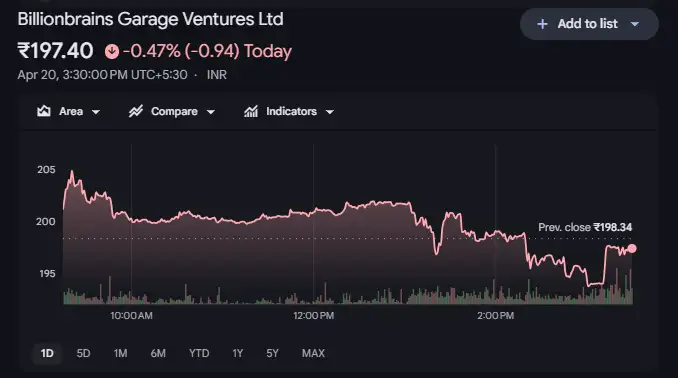 Source: Google Finance
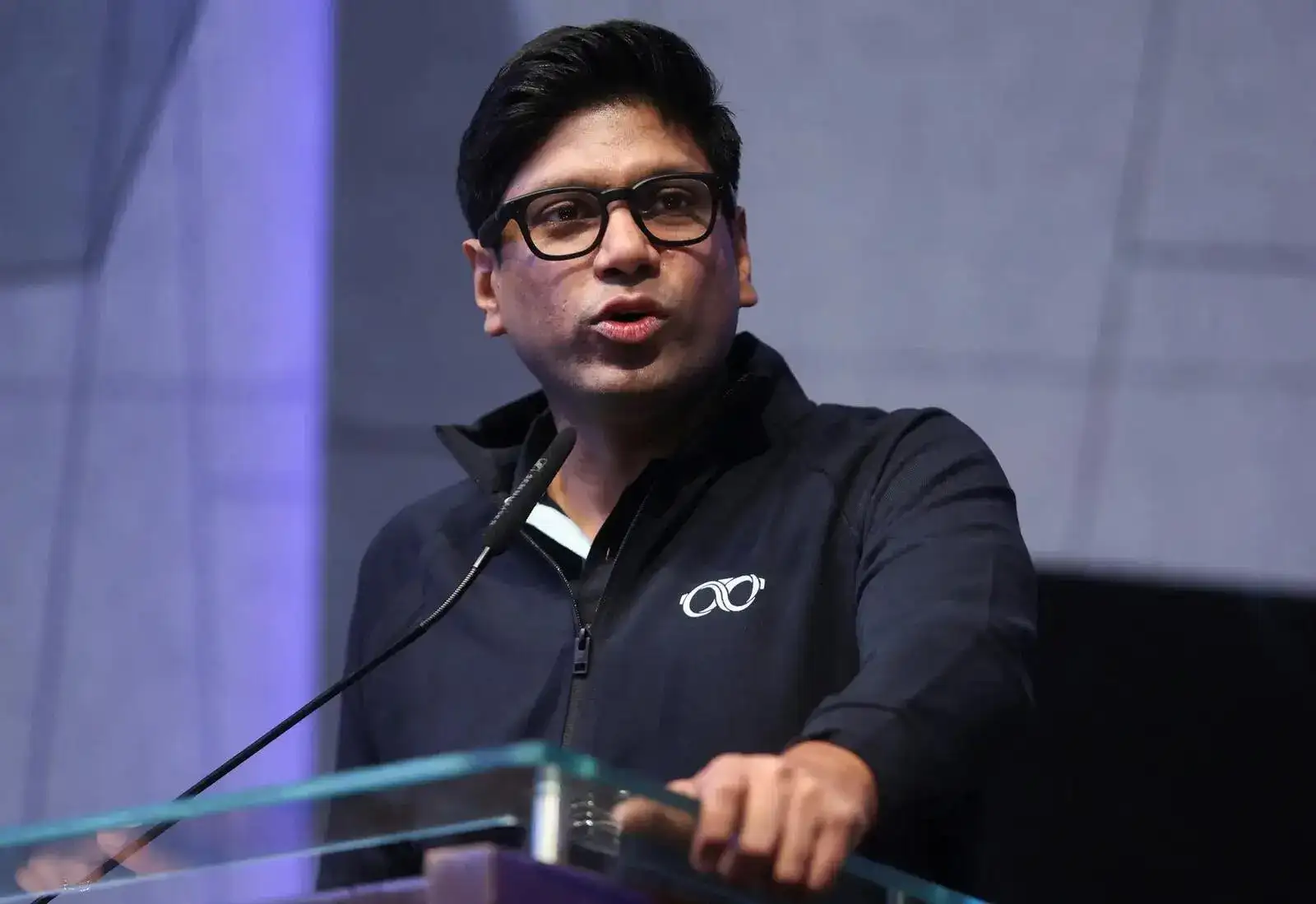 Peyush Bansal, CEO, Lenskart
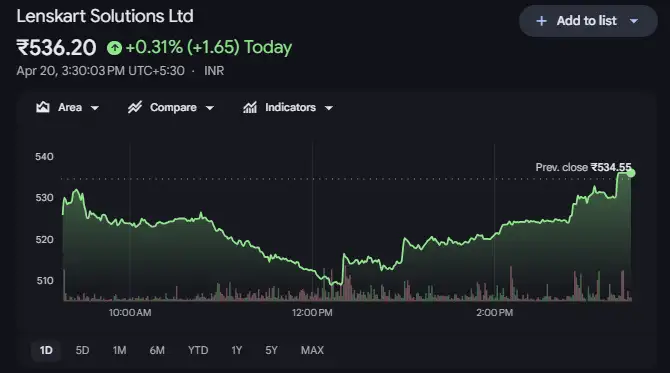
Lenskart Solutions shares fell nearly 5% on Monday after social media backlash over an alleged internal policy on religious symbols.
What's the story? The company faced criticism after an internal grooming policy, circulated online, appeared to restrict visible religious symbols such as the bindi and tilak. The leak sparked public anger and calls for boycotts.
The stock slid despite clarification from founder and CEO Peyush Bansal, who said the policy was outdated and does not reflect the company’s current stance.
 Source: Google Finance
The stock closed at Rs 536.20 on the BSE, representing a slight gain of approximately 0.31%.

Geopolitical tensions are slowing the pace of new global capability centres (GCCs) openings in India, as multinational companies reassess expansion plans.
By the numbers:
Also Read: Indian GCC talent taking up global leadership positions at a faster clip
On the other hand: Despite uncertainty weighing on new setups, India’s GCC industry continues to expand in value and scale.
Also Read: Indian GCCs ditch DIY build-out model to team up with external companies
AI majors building India base in Bengaluru boosting space demand

Global tech firms are increasingly choosing Bengaluru as their India base, reinforcing its status as an AI hub and driving demand for commercial real estate.
What's happening?
Yes, and? Flex office operators such as Smartworks, WeWork India, IndiQube and Table Space are seeing strong demand from AI startups, with deals ranging from 50 to 700 seats.
Also Read: Mistral sees AI as utility, emphasis more on efficiency: Founder Arthur Mensch

The labour ministry is considering a multi-manager structure for the proposed social security scheme for gig and platform workers, rather than assigning the entire programme to a single fund manager, sources told us.
What's the plan: One option on the table is to have the Employees Provident Fund Organisation (EPFO) handle provident fund contributions and payouts, while pension responsibilities are assigned to another manager.
The scheme is still being designed, and the ministry is weighing all options before finalising the structure, officials told us. This fund will be built through contributions from the Centre, states, aggregators, gig workers, and CSR allocations from establishments.
Setting up: The EPFO has upgraded its digital systems and infrastructure to handle a much larger beneficiary load. Life Insurance Corporation of India (LIC) already manages the ministry's Pradhan Mantri Shram Yogi Maandhan (PMSYM) scheme, a voluntary, contributory pension scheme for unorganised workers aged 18-40 years.
Also Read: Platforms brace for impact as gig workforce returns home

The finance ministry has asked public sector banks (PSBs) to explore quantum-resistant encryption as part of this year’s security efforts.
But why: The move is aimed at preparing banks for future quantum computing threats. Experts warn that quantum systems could become powerful enough over the next few years to break even sophisticated encryption within seconds.
Quantum-resistant encryption would help protect customer records, payments, ATM networks, mobile apps and inter-bank communication.
Work underway:
What's the cost: PSBs may need to step up spending to upgrade cybersecurity and computing infrastructure, with industry insiders expecting outlays of around Rs 2,000 crore each over the next five to seven years.
 Alex Karp, CEO, Palantir Technologies
Palantir's brief 22-point summary of CEO Alex Karp's book has triggered debate for its argument that the “atomic age” is ending and an AI-driven deterrence era is beginning.
Main themes: The company says AI weapons are inevitable and that Silicon Valley should have a larger role in national defence.
“The question is not whether A.I. weapons will be built; it is who will build them and for what purpose.”
Yes, and: The summary also weighs in on attitudes toward billionaires, particularly Elon Musk. It says that popular culture often “snickers” at Musk’s interest in broader narratives, as if “billionaires ought to simply stay in their lane of enriching themselves.”
Pushback: The post drew criticism from users who said private companies should not publish political or societal manifestos.
Also in the letter:
■ Multi-manager gig security net
■ PSBs take a quantum leap
■ Palantir's manifesto draws backlash
Groww Q4 FY26 results: Operating revenue surges 87%, net profit more than doubles
Groww parent Billionbrains Garage Ventures closed FY26 on a strong note, extending its lead in India's online investing market through disciplined cost control and sharper monetisation.
Financials:
March quarter (FY26):
- Operating revenue: Rose 87% to Rs 1,505 crore from Rs 801 crore a year earlier.
- Net profit: More than doubled to Rs 686 crore from Rs 309 crore.
- Expenses: Up 37% to Rs 599 crore
FY26 (full year):
- Total revenue: Rs 4,644 crore, up from Rs 3,901.7 crore in FY25.
- Total profit: Rs 2,083 crore.
What else? The company said Ashish Agrawal, former MD at Peak XV Partners, has resigned from Groww’s board to start a new venture capital firm.
Investment focus: CEO Lalit Keshre said the company is investing in AI to build products faster with a lean team rather than scaling hiring. Of the Rs 1,016 crore raised in its IPO, Groww has spent Rs 104 crore on marketing and brand building till March 2026, and deployed Rs 850 crore to capitalise its margin trading financing subsidiary, Groww Invest Tech.
Also Read: Groww doubles down on wealth management, lending to diversify revenue base: CEO Lalit Keshre
Groww also disclosed an investment of Rs 961 crore last year to acquire wealthtech startup Fisdom, doubling down on its wealth management bet.
Lenskart shares tumble 5% amid online backlash over dress code row
Lenskart Solutions shares fell nearly 5% on Monday after social media backlash over an alleged internal policy on religious symbols.
What's the story? The company faced criticism after an internal grooming policy, circulated online, appeared to restrict visible religious symbols such as the bindi and tilak. The leak sparked public anger and calls for boycotts.
The stock slid despite clarification from founder and CEO Peyush Bansal, who said the policy was outdated and does not reflect the company’s current stance.
The stock closed at Rs 536.20 on the BSE, representing a slight gain of approximately 0.31%.
Iran conflict and global risks slow GCC expansion in India
Geopolitical tensions are slowing the pace of new global capability centres (GCCs) openings in India, as multinational companies reassess expansion plans.
By the numbers:
- 63 GCCs opened in the March quarter, down from 74 a year earlier.
- Greenfield GCC setups rose to 28 from 24 a year earlier, but project discussions have slowed since the war began.
Also Read: Indian GCC talent taking up global leadership positions at a faster clip
On the other hand: Despite uncertainty weighing on new setups, India’s GCC industry continues to expand in value and scale.
- The sector is projected to grow 18–22% annually, according to TeamLease Digital.
- Industry estimates suggest GCC revenues may have crossed $80 billion in the latest fiscal year.
Also Read: Indian GCCs ditch DIY build-out model to team up with external companies
AI majors building India base in Bengaluru boosting space demand
Global tech firms are increasingly choosing Bengaluru as their India base, reinforcing its status as an AI hub and driving demand for commercial real estate.
What's happening?
- Anthropic opened its Bengaluru office in February at Embassy Golf Links, its second Asia base after Tokyo.
- OpenAI plans to open offices in Bengaluru and Mumbai in late 2026, alongside its New Delhi presence.
- Mistral AI is in talks with the Karnataka government to set up a GCC in Bengaluru.
Yes, and? Flex office operators such as Smartworks, WeWork India, IndiQube and Table Space are seeing strong demand from AI startups, with deals ranging from 50 to 700 seats.
Also Read: Mistral sees AI as utility, emphasis more on efficiency: Founder Arthur Mensch
Gig workers social security scheme may have multiple fund managers
The labour ministry is considering a multi-manager structure for the proposed social security scheme for gig and platform workers, rather than assigning the entire programme to a single fund manager, sources told us.
What's the plan: One option on the table is to have the Employees Provident Fund Organisation (EPFO) handle provident fund contributions and payouts, while pension responsibilities are assigned to another manager.
The scheme is still being designed, and the ministry is weighing all options before finalising the structure, officials told us. This fund will be built through contributions from the Centre, states, aggregators, gig workers, and CSR allocations from establishments.
Setting up: The EPFO has upgraded its digital systems and infrastructure to handle a much larger beneficiary load. Life Insurance Corporation of India (LIC) already manages the ministry's Pradhan Mantri Shram Yogi Maandhan (PMSYM) scheme, a voluntary, contributory pension scheme for unorganised workers aged 18-40 years.
Also Read: Platforms brace for impact as gig workforce returns home
Public sector banks told to take quantum leap in encryption for added security
The finance ministry has asked public sector banks (PSBs) to explore quantum-resistant encryption as part of this year’s security efforts.
But why: The move is aimed at preparing banks for future quantum computing threats. Experts warn that quantum systems could become powerful enough over the next few years to break even sophisticated encryption within seconds.
Quantum-resistant encryption would help protect customer records, payments, ATM networks, mobile apps and inter-bank communication.
Work underway:
- Punjab National Bank is working on quantum-proof systems for public-facing applications.
- SBI is partnering with IIT Jodhpur on fake mobile app threats.
What's the cost: PSBs may need to step up spending to upgrade cybersecurity and computing infrastructure, with industry insiders expecting outlays of around Rs 2,000 crore each over the next five to seven years.
Palantir's controversial manifesto: Post on AI weapons, Musk, religion and more stirs raging debate
Palantir's brief 22-point summary of CEO Alex Karp's book has triggered debate for its argument that the “atomic age” is ending and an AI-driven deterrence era is beginning.
Main themes: The company says AI weapons are inevitable and that Silicon Valley should have a larger role in national defence.
“The question is not whether A.I. weapons will be built; it is who will build them and for what purpose.”
Yes, and: The summary also weighs in on attitudes toward billionaires, particularly Elon Musk. It says that popular culture often “snickers” at Musk’s interest in broader narratives, as if “billionaires ought to simply stay in their lane of enriching themselves.”
Pushback: The post drew criticism from users who said private companies should not publish political or societal manifestos.
Want this newsletter delivered to your inbox?
I agree to receive newsletters and marketing communications via e-mail