
 Daily Top 5 Daily Top 5 |
Apple Pay lands in India; Google executive on AI's next big hurdle
Want this newsletter delivered to your inbox?
I agree to receive newsletters and marketing communications via e-mail

Thank you for subscribing to Daily Top 5
We'll soon meet in your inbox.
Apple Pay has finally arrived in India, giving iPhone users a new way to make payments. This and more in today’s ETtech Top 5.
Also in the letter:
■ Simple Energy raises $180 million
■ DoorDash opens first India office
■ OpenAI unveils Dots AI agents

Apple Pay has launched in India, a market dominated by the United Payments Interface (UPI) for years. For now, the service is limited to Axis Bank-issued Visa or Mastercard credit cards.
How it works: Customers can add a card to Apple Wallet via the latest version of the Axis Bank app. Alternatively, simply open the Wallet app on iPhone, tap the plus sign, and follow the steps to add an eligible card. Once that’s done, users can start using Apple Pay right away.
How to use: Simply double-click the side button or Home button; authenticate using Face ID, Touch ID, or a device passcode if prompted; and hold the top of the iPhone or display of the Apple Watch near an NFC-enabled point-of-sale terminal to pay.
Device support: The service is available on iPhone XR and later devices running iOS 18 or newer versions. It will also be supported on Apple Watch Series 6 or later with watchOS 11 or subsequent versions. It will work on certain iPad models as well.
Limitation: For now, Apple Pay is limited to eligible Axis Bank Visa and Mastercard credit cards; RuPay cards are not supported. Nor are other major banks like HDFC and ICICI part of this yet.
Also Read: Apple Pay vs UPI: Which requires fewer steps to make a payment?
 Andi Gutmans, vice president of Google's agentic data cloud
As companies shift from testing artificial intelligence (AI) to deploying it, the main constraint is moving from AI model capability to preparing corporate data for their use, Andi Gutmans, vice president of agentic data cloud at Google, told us.
The data problem: Companies need to organise contracts, financial records, and customer information so AI systems can securely access and understand them. “The bottleneck is… data,” Gutmans said.
Model choice: He added that companies are choosing AI models based on the cost and performance required for specific use cases.
Privacy: Gutmans said Google does not train its models on enterprise customers’ data. “Their data is their data. We don’t train on their data,” he said, adding that this approach is drawing clients in financial services, healthcare, and other industries from rival data and cloud providers.
 (L-R) Donald Trump and Google CEO Sundar Pichai
US president Donald Trump said on Tuesday that he and a large group of leaders of AI companies had signed a voluntary accord that will include internal and external reviews, during a meeting at the White House aimed at addressing Americans' fears about the technology.
Who signed: The accord was signed by Trump, Anthropic CEO Dario Amodei, Google CEO Sundar Pichai, Meta CEO Mark Zuckerberg, OpenAI president Greg Brockman, Nvidia CEO Jensen Huang, and Elon Musk, founder of SpaceXAI.
What it says: The accord said the companies would implement "robust internal controls," partner with an "independent external auditor" to assess whether the controls were working, and establish a committee within each company's board of directors to evaluate reports from internal and external auditors.
Also Read: Trump calls Sundar Pichai a ‘monster’; here’s how the Google CEO replied
 (L-R) Shreshth Mishra, Suhas Rajkumar and Ankit Gupta, cofounders, Simple Energy
Bengaluru-based electric two-wheeler maker Simple Energy has raised Rs 1,750 crore ($180 million) in its largest funding round till date.
Deal details: The all-equity round was led by founder of diagnostics company Thyrocare Technologies - Dr Arokiaswamy Velumani’s family office, with participation from founder and CEO Suhas Rajkumar, cofounder and CFO Ankit Gupta, Bengaluru-based HNI Amit Mishra and the Haran Family Office.
Growth plans: It plans to use the capital to increase production capacity and expand its retail footprint across India, targeting a spot among the top five electric two-wheeler makers.
Demand outpaces supply: Rajkumar told us that Simple Energy has been able to cater to only about 50% of the demand for its scooters, with demand currently three to four times higher following the launch of its family scooter, the Simple Wave.
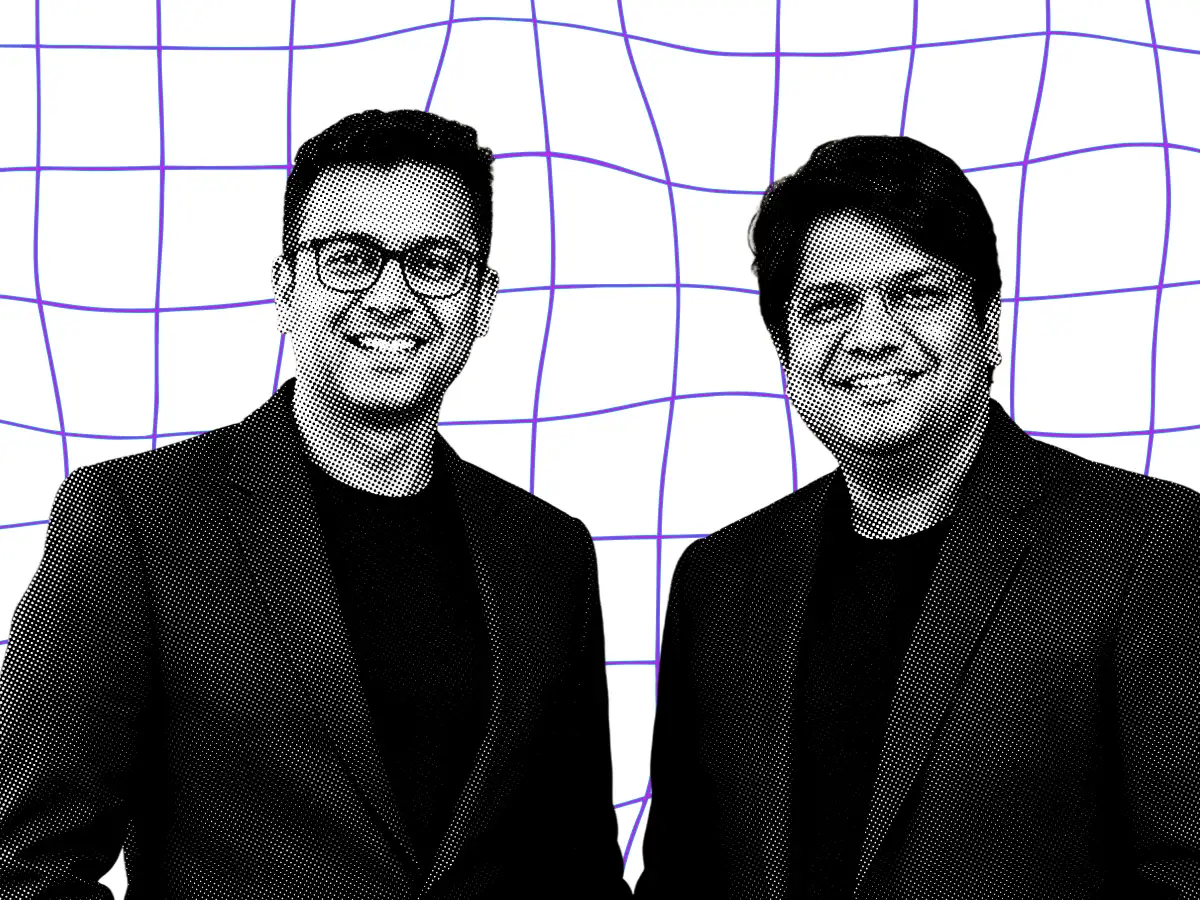 (L-R) Gravity founders Saurabh Jain and Lalit Mittal
Gravity, a home interior design startup founded by Livspace cofounder Saurabh Jain and its former CBO Lalit Mittal, has raised $15 million in a mix of equity and debt. The round was led by 3one4 Capital and Info Edge Ventures, Jain told us. Alteria Capital, Genesia Ventures, and a group of angel investors also participated.
What it does: Gravity supplies interior designers and firms with materials across kitchens, wardrobes, lighting, doors, windows, and home automation at institutional rates.
Business model: The company plans to work closely with supply partners through multiple arrangements, including exclusive alliances with manufacturers, where it would take on their capacity and distribute their products across India. It also plans to secure exclusive India distribution rights for European brands entering the country.
Fund use: Gravity will use the new capital to expand its technology and distribution infrastructure, enter new categories, and fund working capital, it said.

US-based DoorDash, one of the world's leading local commerce platforms, on Wednesday opened its talent hub — and first India office — in Hyderabad. The company is starting with 500 professionals and plans to scale its headcount to more than 3,000 within the next two years, a company press release said.
What it will do: The Hyderabad hub will initially house customer experience and integrity (CXI) and general and administrative (G&A) teams to support DoorDash's global operations.
Quote, unquote: "As one of the world's leading local commerce platforms, with operations across 40 plus countries, DoorDash is a strong addition to Hyderabad's growing hyperlocal digital commerce ecosystem," Telangana industries and commerce minister D Sridhar Babu said.
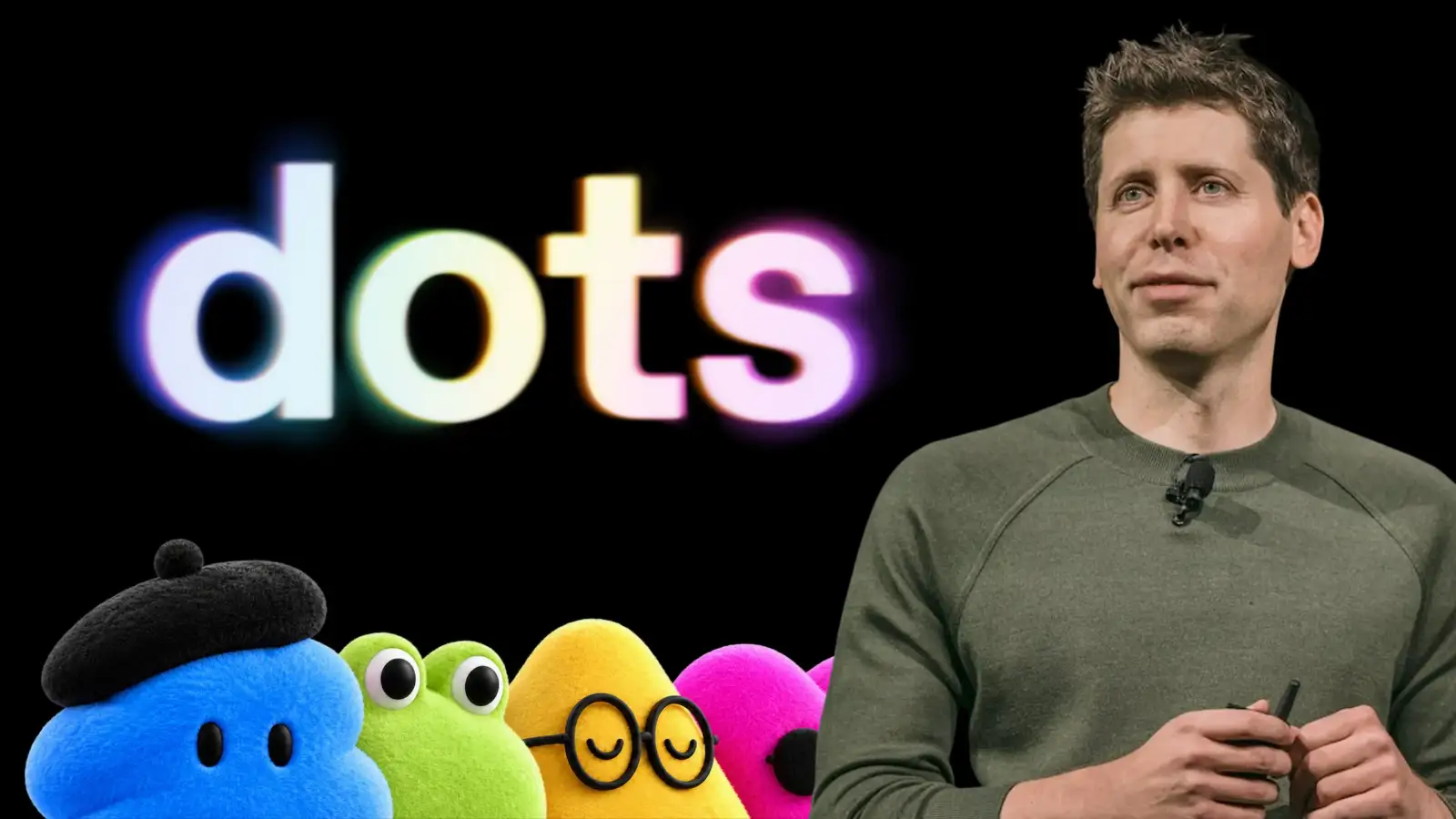
OpenAI launched Dots on Tuesday, its new "always-on" AI agents designed to work toward users' goals across apps, at its DevDay event in San Francisco. The launch comes less than a month after Meta introduced Muse, its personal AI agent that can handle tasks such as sending email, making travel bookings, and shopping.
What Dots can do: Each Dot gets a cloud computer and browser and can connect to more than 4,000 apps. It can monitor customer feedback, identify bugs, build and test fixes, update proposals, and flag issues for human review.
Workplace focus: Unlike Meta’s consumer-focussed Muse, OpenAI is pitching Dots as an AI teammate for businesses. OpenAI is initially rolling out Dots to Pro and Business Premium users in eligible markets. Enterprise users can access a beta version when their workspace administrator enables it.
OpenAI aims to raise at least $30 billion in a new funding round after the AI startup pushed back its plans for an initial public offering, according to a Bloomberg report.
Why it matters: The proposed valuation would put OpenAI above Anthropic’s latest private-market valuation. OpenAI last raised $122 billion in March at a post-money valuation of $852 billion.
AI race: This comes as OpenAI steps up its competition with Anthropic and Meta in agentic AI, while continuing to invest heavily in AI infrastructure and safety.
Also in the letter:
■ Simple Energy raises $180 million
■ DoorDash opens first India office
■ OpenAI unveils Dots AI agents
Apple Pay launches in India with Axis Bank credit cards
Apple Pay has launched in India, a market dominated by the United Payments Interface (UPI) for years. For now, the service is limited to Axis Bank-issued Visa or Mastercard credit cards.
How it works: Customers can add a card to Apple Wallet via the latest version of the Axis Bank app. Alternatively, simply open the Wallet app on iPhone, tap the plus sign, and follow the steps to add an eligible card. Once that’s done, users can start using Apple Pay right away.
How to use: Simply double-click the side button or Home button; authenticate using Face ID, Touch ID, or a device passcode if prompted; and hold the top of the iPhone or display of the Apple Watch near an NFC-enabled point-of-sale terminal to pay.
Device support: The service is available on iPhone XR and later devices running iOS 18 or newer versions. It will also be supported on Apple Watch Series 6 or later with watchOS 11 or subsequent versions. It will work on certain iPad models as well.
Limitation: For now, Apple Pay is limited to eligible Axis Bank Visa and Mastercard credit cards; RuPay cards are not supported. Nor are other major banks like HDFC and ICICI part of this yet.
Also Read: Apple Pay vs UPI: Which requires fewer steps to make a payment?
Models ready but data isn’t: Google’s Andi Gutmans on AI’s next big hurdle
As companies shift from testing artificial intelligence (AI) to deploying it, the main constraint is moving from AI model capability to preparing corporate data for their use, Andi Gutmans, vice president of agentic data cloud at Google, told us.
The data problem: Companies need to organise contracts, financial records, and customer information so AI systems can securely access and understand them. “The bottleneck is… data,” Gutmans said.
Model choice: He added that companies are choosing AI models based on the cost and performance required for specific use cases.
Privacy: Gutmans said Google does not train its models on enterprise customers’ data. “Their data is their data. We don’t train on their data,” he said, adding that this approach is drawing clients in financial services, healthcare, and other industries from rival data and cloud providers.
Trump says top tech firms have signed accord to 'self-police' AI development
US president Donald Trump said on Tuesday that he and a large group of leaders of AI companies had signed a voluntary accord that will include internal and external reviews, during a meeting at the White House aimed at addressing Americans' fears about the technology.
Who signed: The accord was signed by Trump, Anthropic CEO Dario Amodei, Google CEO Sundar Pichai, Meta CEO Mark Zuckerberg, OpenAI president Greg Brockman, Nvidia CEO Jensen Huang, and Elon Musk, founder of SpaceXAI.
What it says: The accord said the companies would implement "robust internal controls," partner with an "independent external auditor" to assess whether the controls were working, and establish a committee within each company's board of directors to evaluate reports from internal and external auditors.
Also Read: Trump calls Sundar Pichai a ‘monster’; here’s how the Google CEO replied
Simple Energy raises $180 million in largest funding round, eyes top-five EV two-wheeler spot
Bengaluru-based electric two-wheeler maker Simple Energy has raised Rs 1,750 crore ($180 million) in its largest funding round till date.
Deal details: The all-equity round was led by founder of diagnostics company Thyrocare Technologies - Dr Arokiaswamy Velumani’s family office, with participation from founder and CEO Suhas Rajkumar, cofounder and CFO Ankit Gupta, Bengaluru-based HNI Amit Mishra and the Haran Family Office.
Growth plans: It plans to use the capital to increase production capacity and expand its retail footprint across India, targeting a spot among the top five electric two-wheeler makers.
Demand outpaces supply: Rajkumar told us that Simple Energy has been able to cater to only about 50% of the demand for its scooters, with demand currently three to four times higher following the launch of its family scooter, the Simple Wave.
Ex-Livspace duo’s interiors startup Gravity raises $15 million
Gravity, a home interior design startup founded by Livspace cofounder Saurabh Jain and its former CBO Lalit Mittal, has raised $15 million in a mix of equity and debt. The round was led by 3one4 Capital and Info Edge Ventures, Jain told us. Alteria Capital, Genesia Ventures, and a group of angel investors also participated.
What it does: Gravity supplies interior designers and firms with materials across kitchens, wardrobes, lighting, doors, windows, and home automation at institutional rates.
Business model: The company plans to work closely with supply partners through multiple arrangements, including exclusive alliances with manufacturers, where it would take on their capacity and distribute their products across India. It also plans to secure exclusive India distribution rights for European brands entering the country.
Fund use: Gravity will use the new capital to expand its technology and distribution infrastructure, enter new categories, and fund working capital, it said.
DoorDash opens India Office, plans to scale tech, support teams to 3,000
US-based DoorDash, one of the world's leading local commerce platforms, on Wednesday opened its talent hub — and first India office — in Hyderabad. The company is starting with 500 professionals and plans to scale its headcount to more than 3,000 within the next two years, a company press release said.
What it will do: The Hyderabad hub will initially house customer experience and integrity (CXI) and general and administrative (G&A) teams to support DoorDash's global operations.
Quote, unquote: "As one of the world's leading local commerce platforms, with operations across 40 plus countries, DoorDash is a strong addition to Hyderabad's growing hyperlocal digital commerce ecosystem," Telangana industries and commerce minister D Sridhar Babu said.
OpenAI launches Dots to take on Meta’s Muse with AI agents that can act on your behalf
OpenAI launched Dots on Tuesday, its new "always-on" AI agents designed to work toward users' goals across apps, at its DevDay event in San Francisco. The launch comes less than a month after Meta introduced Muse, its personal AI agent that can handle tasks such as sending email, making travel bookings, and shopping.
What Dots can do: Each Dot gets a cloud computer and browser and can connect to more than 4,000 apps. It can monitor customer feedback, identify bugs, build and test fixes, update proposals, and flag issues for human review.
Workplace focus: Unlike Meta’s consumer-focussed Muse, OpenAI is pitching Dots as an AI teammate for businesses. OpenAI is initially rolling out Dots to Pro and Business Premium users in eligible markets. Enterprise users can access a beta version when their workspace administrator enables it.
OpenAI targets $30 billion in new funding at $1.4 trillion valuation
OpenAI aims to raise at least $30 billion in a new funding round after the AI startup pushed back its plans for an initial public offering, according to a Bloomberg report.
Why it matters: The proposed valuation would put OpenAI above Anthropic’s latest private-market valuation. OpenAI last raised $122 billion in March at a post-money valuation of $852 billion.
AI race: This comes as OpenAI steps up its competition with Anthropic and Meta in agentic AI, while continuing to invest heavily in AI infrastructure and safety.
Want this newsletter delivered to your inbox?
I agree to receive newsletters and marketing communications via e-mail