
 Daily Top 5 |
Anthropic IPO rocks Indian IT; Why Walmart is in no hurry to list Flipkart
Want this newsletter delivered to your inbox?
I agree to receive newsletters and marketing communications via e-mail

Thank you for subscribing to Daily Top 5
We'll soon meet in your inbox.
Anthropic’s US IPO filing sent Indian IT stocks lower on Tuesday. This and more in today’s ETtech Top 5.
Also in the letter:
■ Data protection body remains empty
■ Urban Company's QIP plans
■ Cert-In's rush for PHP patch

Anthropic unveiled its US IPO filing on Monday, laying out its ambitions to build AI systems capable of transforming the global economy while confronting the costs and challenges of developing the technology. However, the news sent shares of Indian IT giants tumbling on Tuesday.
What happened: Tata Consultancy Services (TCS), Infosys, Wipro, HCLTech, and Tech Mahindra fell up to 3% on Tuesday.
On the flip side, overnight, AI-linked stocks gained abroad. Nvidia closed 3% higher, South Korea’s KOSPI surged 5%, SK Hynix rallied more than 8%, and Samsung gained 5%.
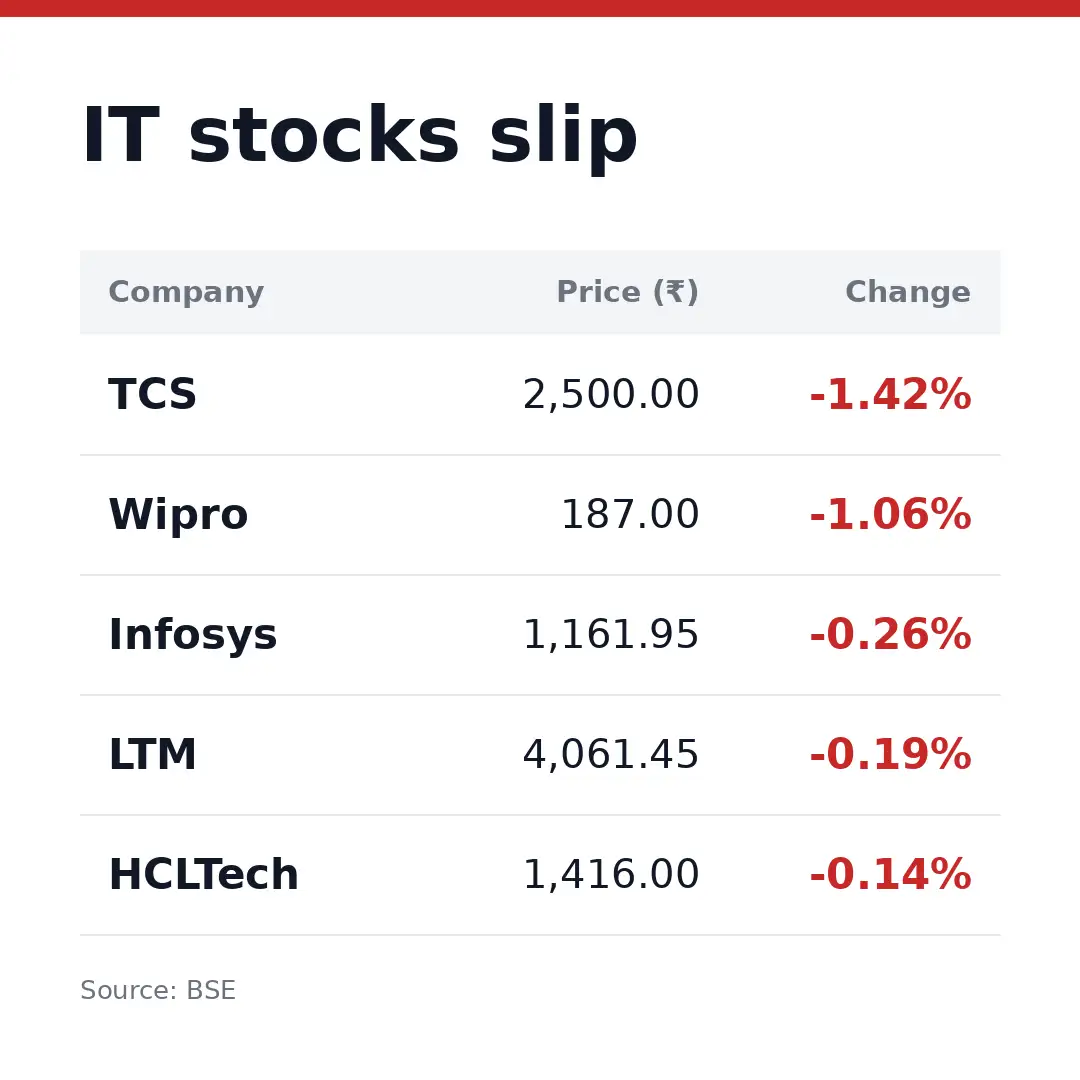
Anthropic’s listing plans: Anthropic has filed for an IPO under the ticker ANT and is preparing to market its shares. The listing would give public-market investors an entry into one of the leading developers of AI models.
However, the company’s rapid growth comes with mounting infrastructure costs and substantial losses. The filing shows $16.3 billion in revenues for the first half of 2026 and a net loss of $80.7 billion.
Also Read: Anthropic flags risk of AI systems escaping human control in IPO filing

Flipkart was the poster child of India's startup economy, spawning a generation of entrepreneurs and unleashing a new kind of energy in the country before it grew into a large corporation. A decade on, that is no longer the case, because the ecosystem has produced enough winners, several of them now publicly listed.
But Flipkart finds itself in much the same situation it was in then, with a listing that keeps slipping and losses it has yet to shake off. Except that the decision now rests with a parent in Bentonville that appears in no hurry to take it public.
Push from ex-employees: Over the past few weeks, former senior executives and employees of the online commerce company have been writing to Walmart's board, asking for liquidity on the stock options they were granted 10 to 15 years ago.
Why the hesitation?
Read the full column here.

The Data Protection Board of India (DPBI) has made little progress towards becoming a functional adjudicatory body, with less than three weeks left before the privacy watchdog is required to begin its first statutory task.
What’s the matter: Under the Digital Personal Data Protection (DPDP) Rules, 2025, the framework for registering consent managers with the DPBI is scheduled to start on November 13.
Tell me more: Under the DPDP Act, 2023, the board can adjudicate personal data breach cases and impose penalties up to Rs 250 crore. Provisions for its establishment and composition came into effect on November 13 last year, but its wider powers, including inquiring into complaints and imposing penalties, will come into force only on May 13, 2027.
Budget allocated: The DPBI was allocated Rs 5 crore in the 2025-26 budget estimates, revised to Rs 2 crore, against which actual expenditure was only around Rs 31,000. For 2026-27, the allocation rose to Rs 10 crore, but no expense has been reported as of September 30.
 Urban Company CEO Abhiraj Singh Bhal
Home services platform Urban Company has appointed Morgan Stanley to manage its Rs 2,500 crore QIP (qualified institutional placement) and begun roadshows for the fundraising, meeting potential investors, according to people familiar with the matter.
Fund use: A significant portion of the proceeds is expected to go towards InstaHelp, its instant house help business, which has been incurring heavy losses as the company invests in expanding the segment, one of the persons said.
Growth over profits: Urban Company said InstaHelp was driving customer frequency and attracting new users to the platform. The company added that absolute losses in the segment would remain elevated over the next few quarters as it invests to consolidate its market leadership.
Brokerage concerns: Brokerages, however, have taken a cautious view of the investment in InstaHelp. Goldman Sachs has assigned a negative value of Rs 8 per share to the business, while JM Financial has valued it at zero.
Also Read: Urban Company's Q2 loss triples on InstaHelp burn; CEO Bhal says ready to 'respond in full' to rivals

India’s nodal cybersecurity agency is coordinating with state-level cybersecurity authorities to quickly implement patches protecting thousands of government websites from critical vulnerabilities in the PHP programming language, officials told ET.
Coordinated effort: The Indian Computer Emergency Response Team (Cert-In) has discussed the issue in meetings with state information technology departments and assured help.
“Critical areas such as health and banking-related websites storing large caches of citizen’s personal information have been prioritised for patching,” an official said.
Deep footprint: Thousands of state government portals, district administration websites, municipal corporation services, and public grievance redressal systems in India have historically relied on content management systems and frameworks built on PHP. The National Portal of India links to over 6,700 government websites.
Also Read: ETtech Explainer: How a flaw in PHP, the code behind 70% of websites, sent governments offline
Also in the letter:
■ Data protection body remains empty
■ Urban Company's QIP plans
■ Cert-In's rush for PHP patch
Anthropic files for IPO; TCS, Infosys, other IT stocks drop up to 3%
Anthropic unveiled its US IPO filing on Monday, laying out its ambitions to build AI systems capable of transforming the global economy while confronting the costs and challenges of developing the technology. However, the news sent shares of Indian IT giants tumbling on Tuesday.
What happened: Tata Consultancy Services (TCS), Infosys, Wipro, HCLTech, and Tech Mahindra fell up to 3% on Tuesday.
On the flip side, overnight, AI-linked stocks gained abroad. Nvidia closed 3% higher, South Korea’s KOSPI surged 5%, SK Hynix rallied more than 8%, and Samsung gained 5%.
Anthropic’s listing plans: Anthropic has filed for an IPO under the ticker ANT and is preparing to market its shares. The listing would give public-market investors an entry into one of the leading developers of AI models.
However, the company’s rapid growth comes with mounting infrastructure costs and substantial losses. The filing shows $16.3 billion in revenues for the first half of 2026 and a net loss of $80.7 billion.
Also Read: Anthropic flags risk of AI systems escaping human control in IPO filing
Full Stack with Samidha Sharma: Why Walmart would rather keep Flipkart private, for now
Flipkart was the poster child of India's startup economy, spawning a generation of entrepreneurs and unleashing a new kind of energy in the country before it grew into a large corporation. A decade on, that is no longer the case, because the ecosystem has produced enough winners, several of them now publicly listed.
But Flipkart finds itself in much the same situation it was in then, with a listing that keeps slipping and losses it has yet to shake off. Except that the decision now rests with a parent in Bentonville that appears in no hurry to take it public.
Push from ex-employees: Over the past few weeks, former senior executives and employees of the online commerce company have been writing to Walmart's board, asking for liquidity on the stock options they were granted 10 to 15 years ago.
Why the hesitation?
- New leadership team at Walmart: Doug McMillon, who was Walmart's CEO when it bought Flipkart, retired in January and John Furner took over.
- Quarterly scrutiny: A listed Flipkart would have to explain every rupee of discounting and quick-commerce spend to analysts.
- Flipkart is still losing money, and Walmart doesn't want to take a loss-making company this size to the public markets.
Read the full column here.
Clock’s ticking for data protection, but the boardroom remains empty
The Data Protection Board of India (DPBI) has made little progress towards becoming a functional adjudicatory body, with less than three weeks left before the privacy watchdog is required to begin its first statutory task.
What’s the matter: Under the Digital Personal Data Protection (DPDP) Rules, 2025, the framework for registering consent managers with the DPBI is scheduled to start on November 13.
- Per a Right to Information (RTI) response, the board has not spent a single rupee on salaries, office expenses, rent, or ICT equipment as of September 30 this year.
- The board must have a chairman and four other members, but no appointments have yet been publicly announced.
Tell me more: Under the DPDP Act, 2023, the board can adjudicate personal data breach cases and impose penalties up to Rs 250 crore. Provisions for its establishment and composition came into effect on November 13 last year, but its wider powers, including inquiring into complaints and imposing penalties, will come into force only on May 13, 2027.
Budget allocated: The DPBI was allocated Rs 5 crore in the 2025-26 budget estimates, revised to Rs 2 crore, against which actual expenditure was only around Rs 31,000. For 2026-27, the allocation rose to Rs 10 crore, but no expense has been reported as of September 30.
Urban Company taps Morgan Stanley for Rs 2,500 crore QIP
Home services platform Urban Company has appointed Morgan Stanley to manage its Rs 2,500 crore QIP (qualified institutional placement) and begun roadshows for the fundraising, meeting potential investors, according to people familiar with the matter.
Fund use: A significant portion of the proceeds is expected to go towards InstaHelp, its instant house help business, which has been incurring heavy losses as the company invests in expanding the segment, one of the persons said.
Growth over profits: Urban Company said InstaHelp was driving customer frequency and attracting new users to the platform. The company added that absolute losses in the segment would remain elevated over the next few quarters as it invests to consolidate its market leadership.
Brokerage concerns: Brokerages, however, have taken a cautious view of the investment in InstaHelp. Goldman Sachs has assigned a negative value of Rs 8 per share to the business, while JM Financial has valued it at zero.
Also Read: Urban Company's Q2 loss triples on InstaHelp burn; CEO Bhal says ready to 'respond in full' to rivals
Cert-In and states rush to patch PHP flaws across govt portals
India’s nodal cybersecurity agency is coordinating with state-level cybersecurity authorities to quickly implement patches protecting thousands of government websites from critical vulnerabilities in the PHP programming language, officials told ET.
Coordinated effort: The Indian Computer Emergency Response Team (Cert-In) has discussed the issue in meetings with state information technology departments and assured help.
“Critical areas such as health and banking-related websites storing large caches of citizen’s personal information have been prioritised for patching,” an official said.
Deep footprint: Thousands of state government portals, district administration websites, municipal corporation services, and public grievance redressal systems in India have historically relied on content management systems and frameworks built on PHP. The National Portal of India links to over 6,700 government websites.
Also Read: ETtech Explainer: How a flaw in PHP, the code behind 70% of websites, sent governments offline
Want this newsletter delivered to your inbox?
I agree to receive newsletters and marketing communications via e-mail