
 Daily Top 5 Daily Top 5 |
AI Summit 2026: PM Modi's develop in India pitch; New Delhi impact pledge
Want this newsletter delivered to your inbox?
I agree to receive newsletters and marketing communications via e-mail

Thank you for subscribing to Daily Top 5
We'll soon meet in your inbox.
Top AI leaders and policymakers took the stage on Day 4 of the India AI Impact Summit and called for the democratisation of AI. This and more in today's ETtech Top 5.
Also in the letter:
■ OpenAI backs Tata bet
■ Swiggy's Snacc shuts shop
■ India, UK vs Grok
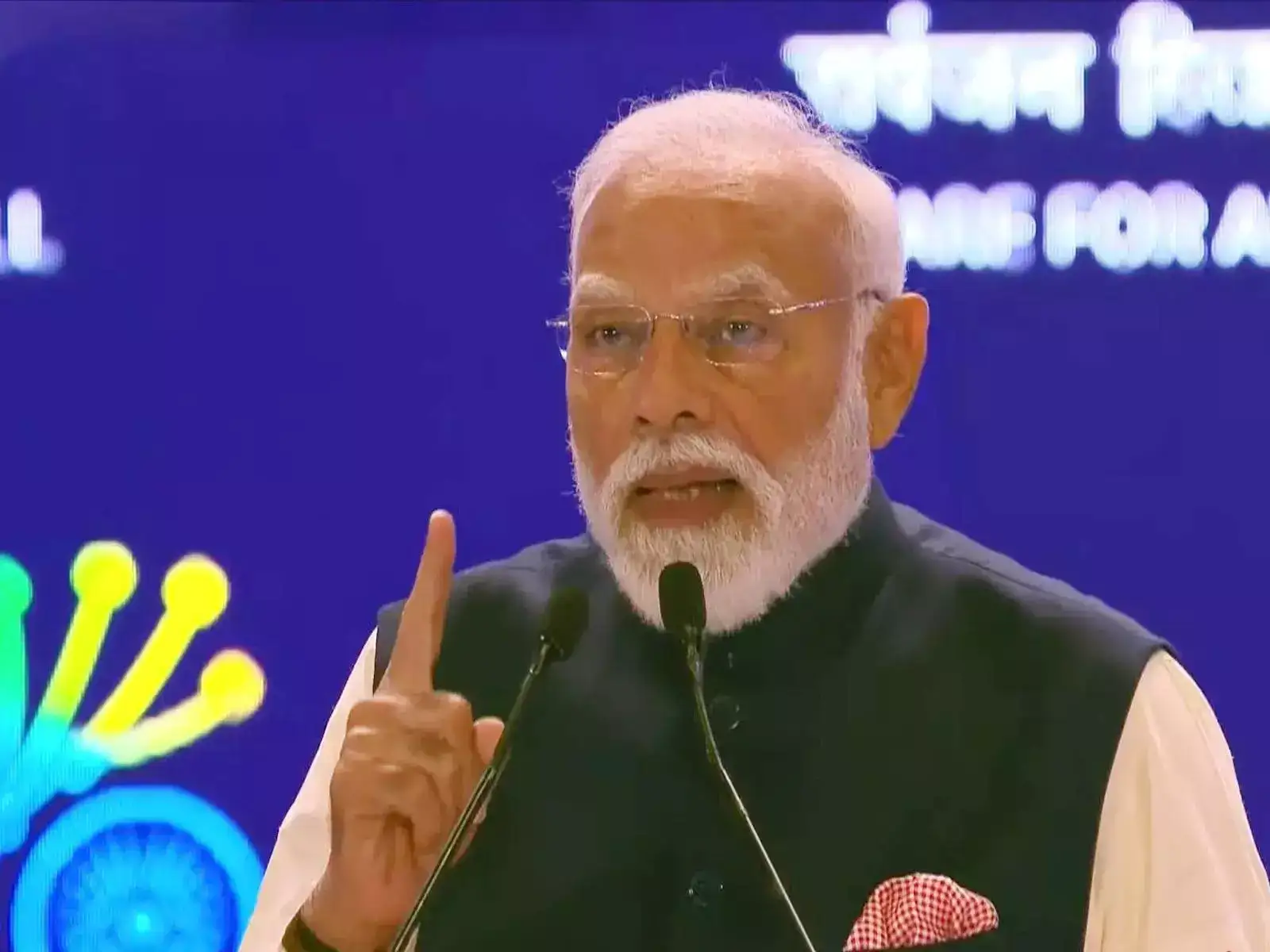
Prime Minister Narendra Modi used the India AI Impact Summit to pitch India as both a builder and exporter of artificial intelligence, urging global leaders and businesses to design and develop in India and deliver it to the world "for the common good."
Positive direction: He framed AI as a powerful but double-edged force. "If directionless, it becomes a disruption; if the right direction is found, it becomes a solution," Modi said. The task, he added, is to shift AI from machine-centric to human-centric systems that are sensitive and responsive, with humans firmly in control.
No misinformation: On deepfakes and synthetic content, Modi called for "authenticity labels and watermarking standards," adding, "As AI generates more text, images, and video, the industry must adopt clear source disclosures" so users can distinguish between real and AI-generated material.
Also Read: AI is an incredible power and is deeply disruptive: Vishal Sikka
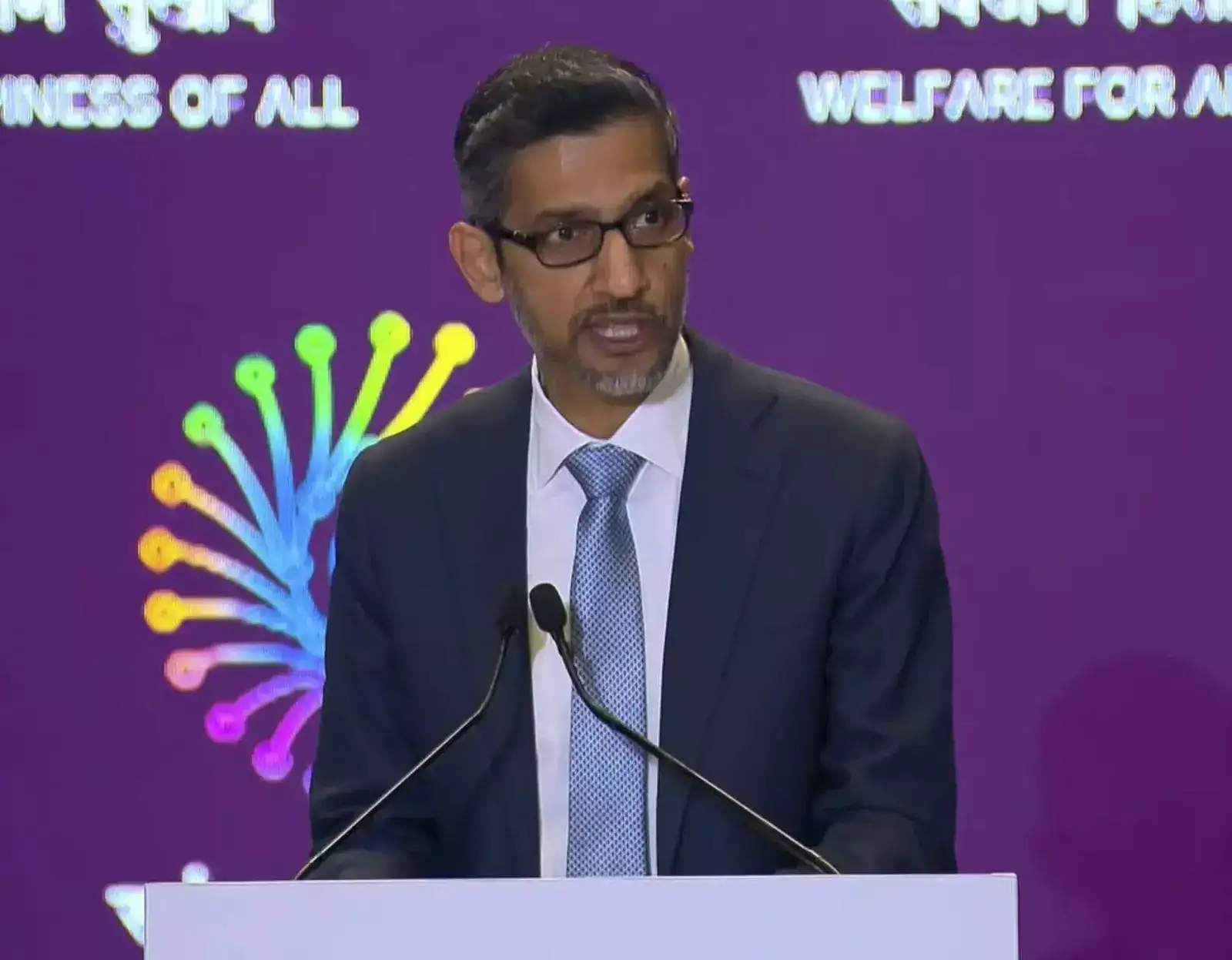 Sundar Pichai, CEO, Google
Google chief executive Sundar Pichai described AI as an era of “hyper progress” that could help emerging economies leapfrog development stages, adding that no technology has made him "dream bigger".
New roles: He acknowledged that AI will undeniably reshape the workforce. Some roles will be automated, others will evolve, and new ones will emerge. “Twenty years ago, the concept of a professional YouTube creator didn't exist and today there are millions around the world,” he said.
Pichai warned against allowing a digital divide to morph into an “AI divide”, urging more investment in computing infrastructure and connectivity.
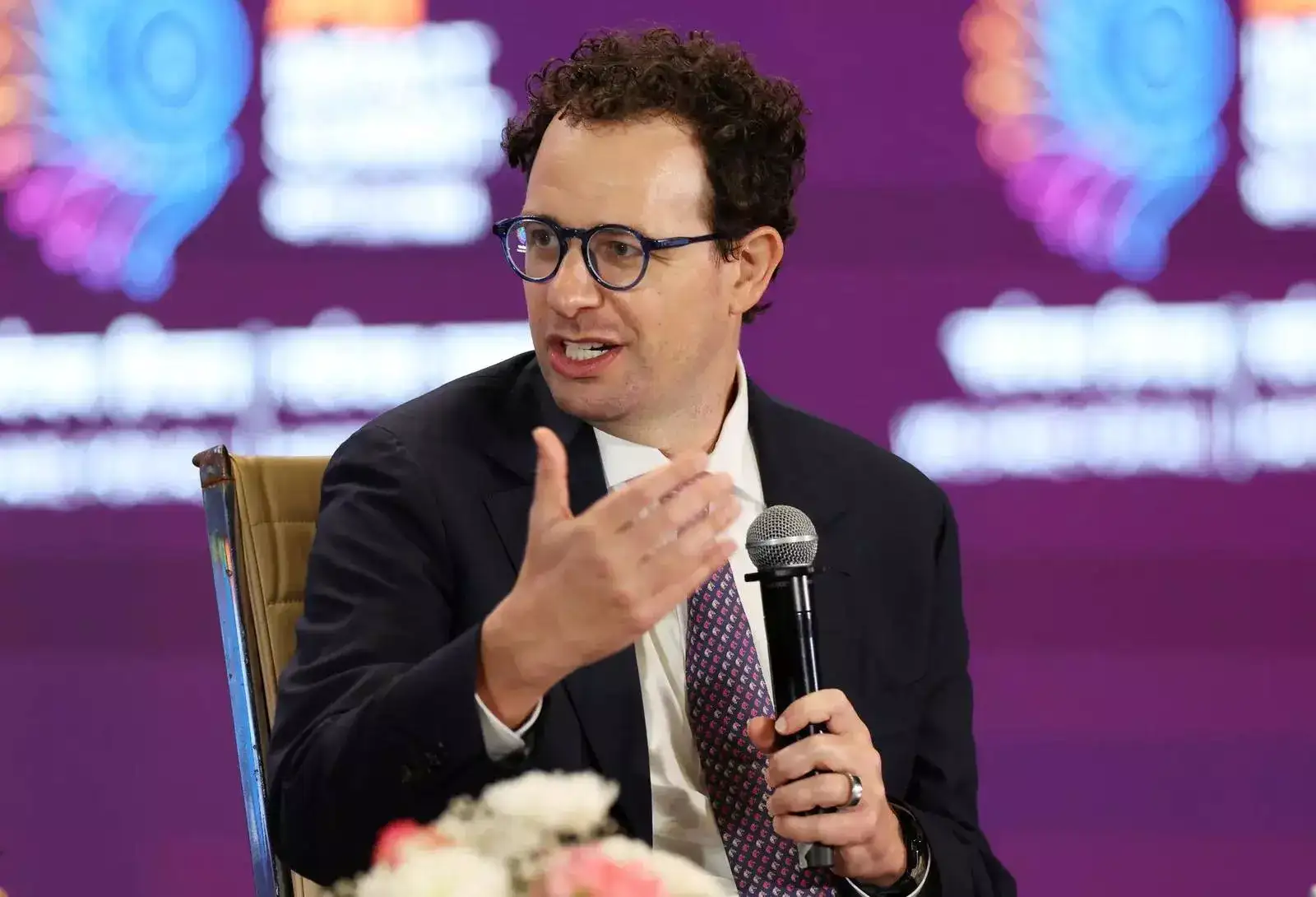 Dario Amodei, CEO, Anthropic
Dario Amodei, CEO of Anthropic praised the “energy and ambition” he witnessed in India, calling it an inspiring environment for AI development and deployment.
Also Read: India’s AI usage concentrated in tech-heavy states: Anthropic executive Elizabeth Kelly
He also cautioned that the stakes are high. “I'm concerned about the autonomous behaviour of AI models, their potential for misuse by individuals and governments, and their potential for economic displacement. India has an absolutely central role to play in these questions and challenges,” he said.
Also Read: Widespread adoption of AI for the benefit of society is critical, say Nandan Nilekani and Dario Amodei
India introduced the ‘New Delhi Frontier AI Impact Commitments’ at the Summit, laying out voluntary pledges for responsible and inclusive AI deployment.
What are the commitments?
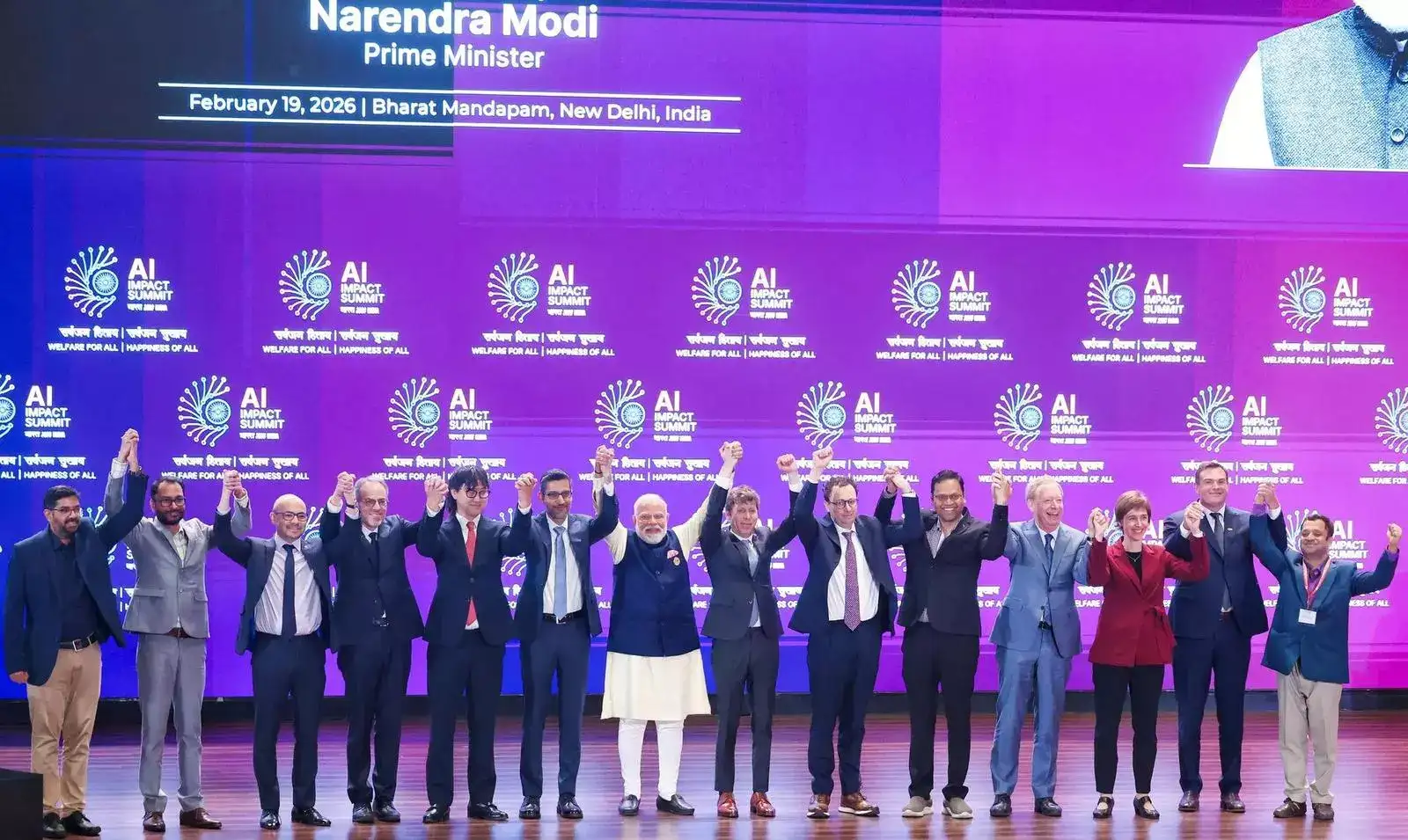
Awkwaa…rd moment: A photo-op with Prime Minister Modi drew unexpected attention. OpenAI chief Sam Altman and Anthropic’s Dario Amodei stood apart, raising clenched fists instead of holding hands like other leaders. The visible gap circulated online, fuelling talk of rivalry between the two AI firms (and erstwhile colleagues).
Regarding the incident, Altman said, "I was sort of confused and didn't know what I was supposed to do."
Also Read: Sam Altman defends OpenAI’s ad strategy after Anthropic’s Super Bowl criticism
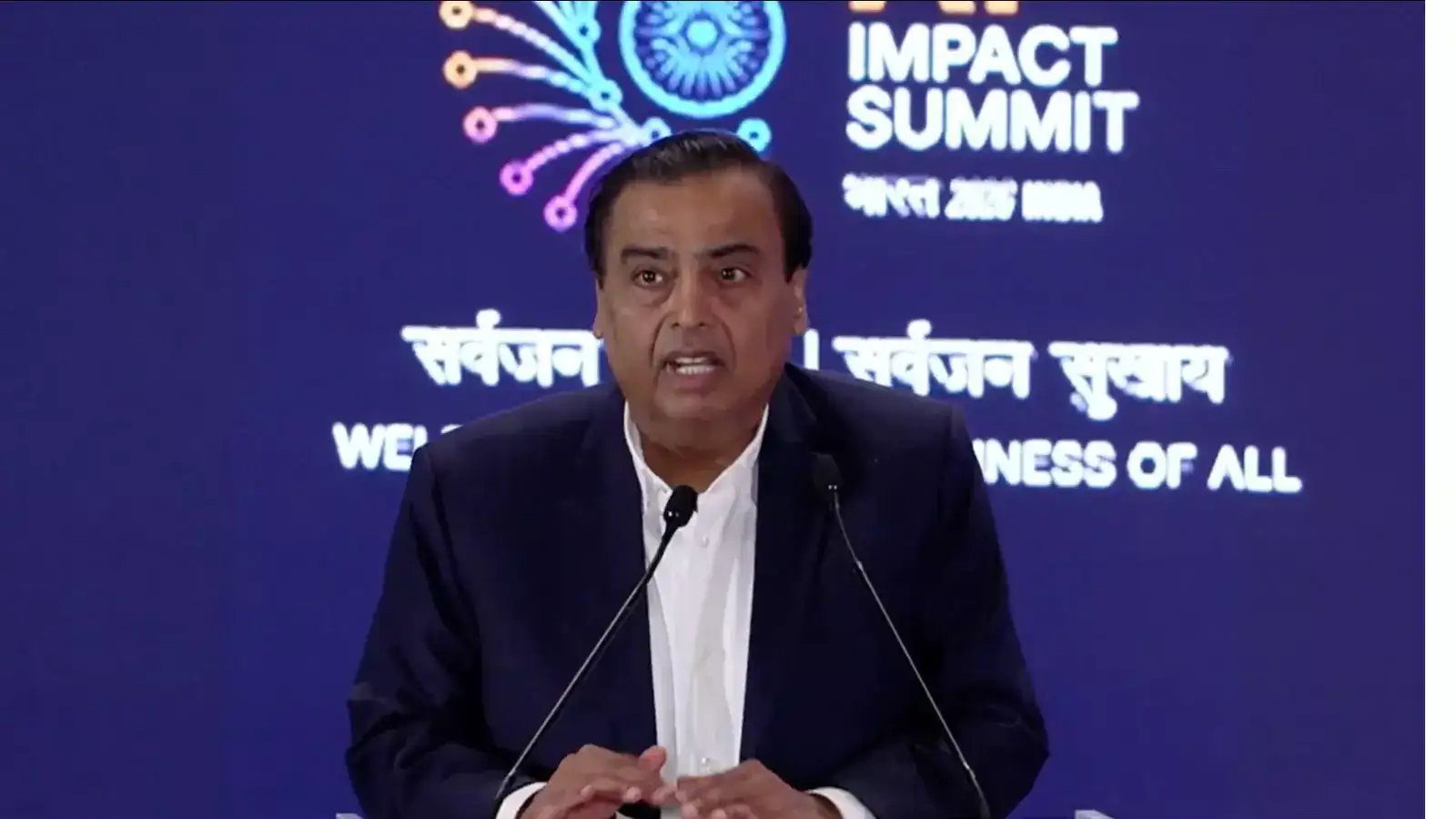 Mukesh Ambani, chairman and MD, Reliance Industries
Ambani follows Adani: Days after the Adani Group outlined a $100 billion data centre plan, Mukesh Ambani announced Reliance Industries and Jio will invest Rs 10 lakh crore (~$110 billion) in sovereign AI infrastructure, green energy and affordable AI. He said the aim is to lower the cost of intelligence in the same way Jio cut mobile data prices.
No show: Bill Gates cancelled his keynote address at the Summit shortly before the event. Nvidia’s Jensen Huang had already pulled out, adding to last minute disruptions at the Summit.
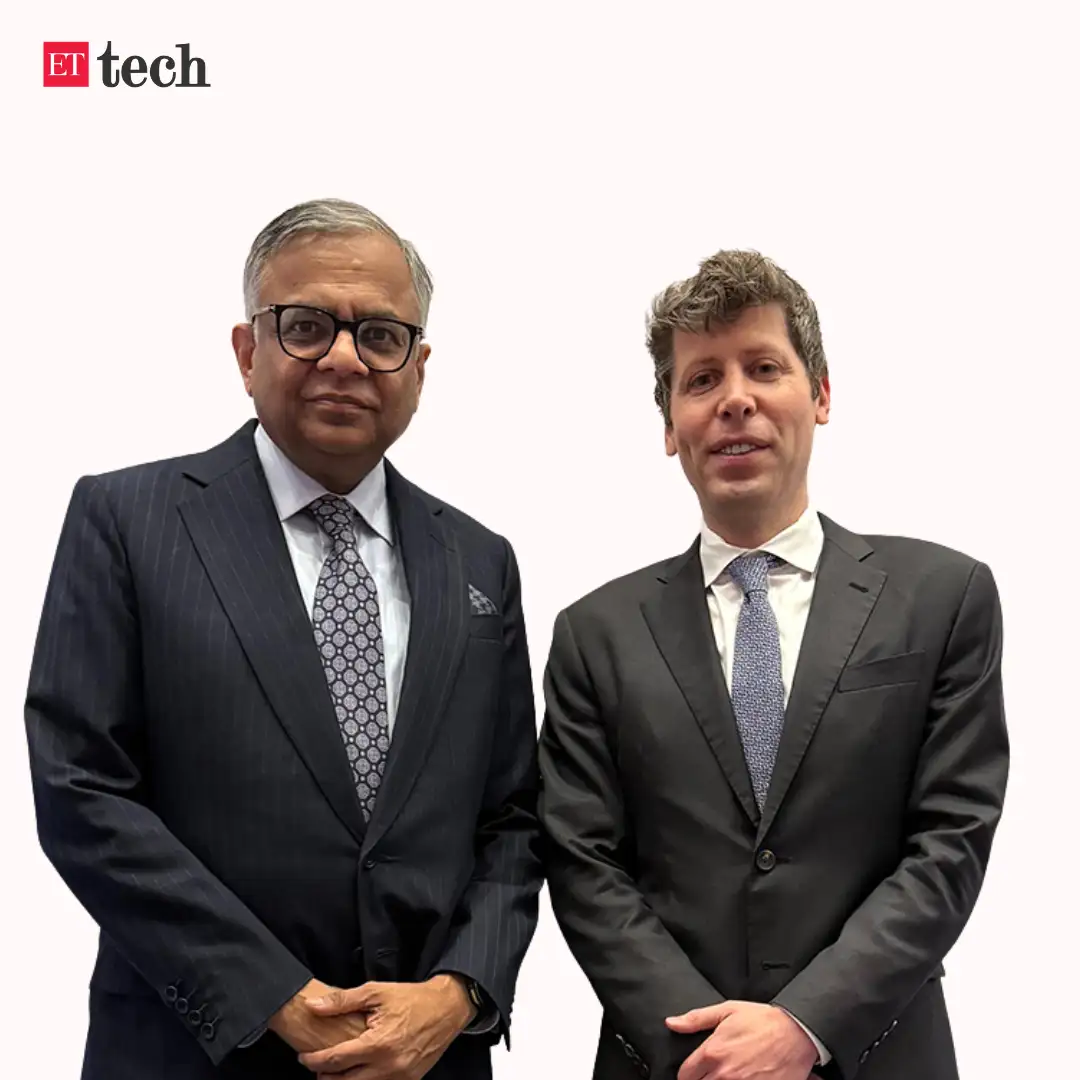 Natarajan Chandrasekaran, chairman, Tata Sons & Sam Altman, CEO, OpenAI
OpenAI will anchor Tata Consultancy Services’ new data centre venture in India, committing an initial 100 megawatts of capacity under the global $500 billion Stargate AI infrastructure programme.
Tell me more: The deal marks an early win for TCS, which last year pledged up to $7 billion to build a 1 gigawatt data centre platform in India.
In parallel, the Tata Group plans to deploy ChatGPT Enterprise across its company over the coming years, starting with hundreds of thousands of staff.
OpenAI also announced that it is preparing to open offices in Bengaluru and Mumbai later this year.
Pine Labs integration: OpenAI has partnered with Pine Labs to enable “agentic commerce”, allowing AI agents to discover products and complete payments for users. The integration follows similar moves last year when Razorpay, NPCI and OpenAI partnered to pilot “agentic payments.”
Also Read: OpenAI funding on track to top $100 billion with latest round
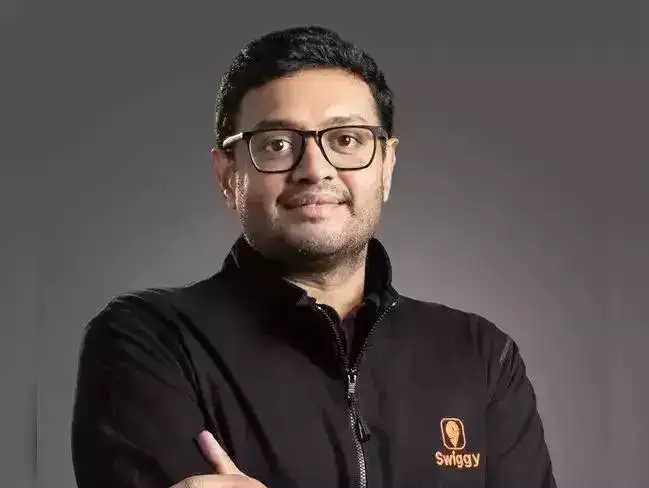 Sriharsha Majety, group CEO, Swiggy
Swiggy has shuttered its 10-minute food delivery app, Snacc, after operating for nearly a year, following pressure on profits. The decision was shared in an internal company email, seen by ET.
Why the move? Swiggy shut Snacc because challenging unit economics made it difficult to expand the service. “With a focus on our business objectives to create scalable platforms that create long-term value, we have taken this decision after extensive deliberation,” the email read.
Yes, and? Other firms have taken similar steps. Zomato closed its 15-minute service Quick and Everyday in May 2025 after poor customer response, while Zepto Cafe scaled back operations in July 2025 due to supply issues, staff shortages, and increasing competition.
Also Read: Food delivery startup Swish in talks to raise $30-35 million from Bain Capital Ventures, Accel: Sources
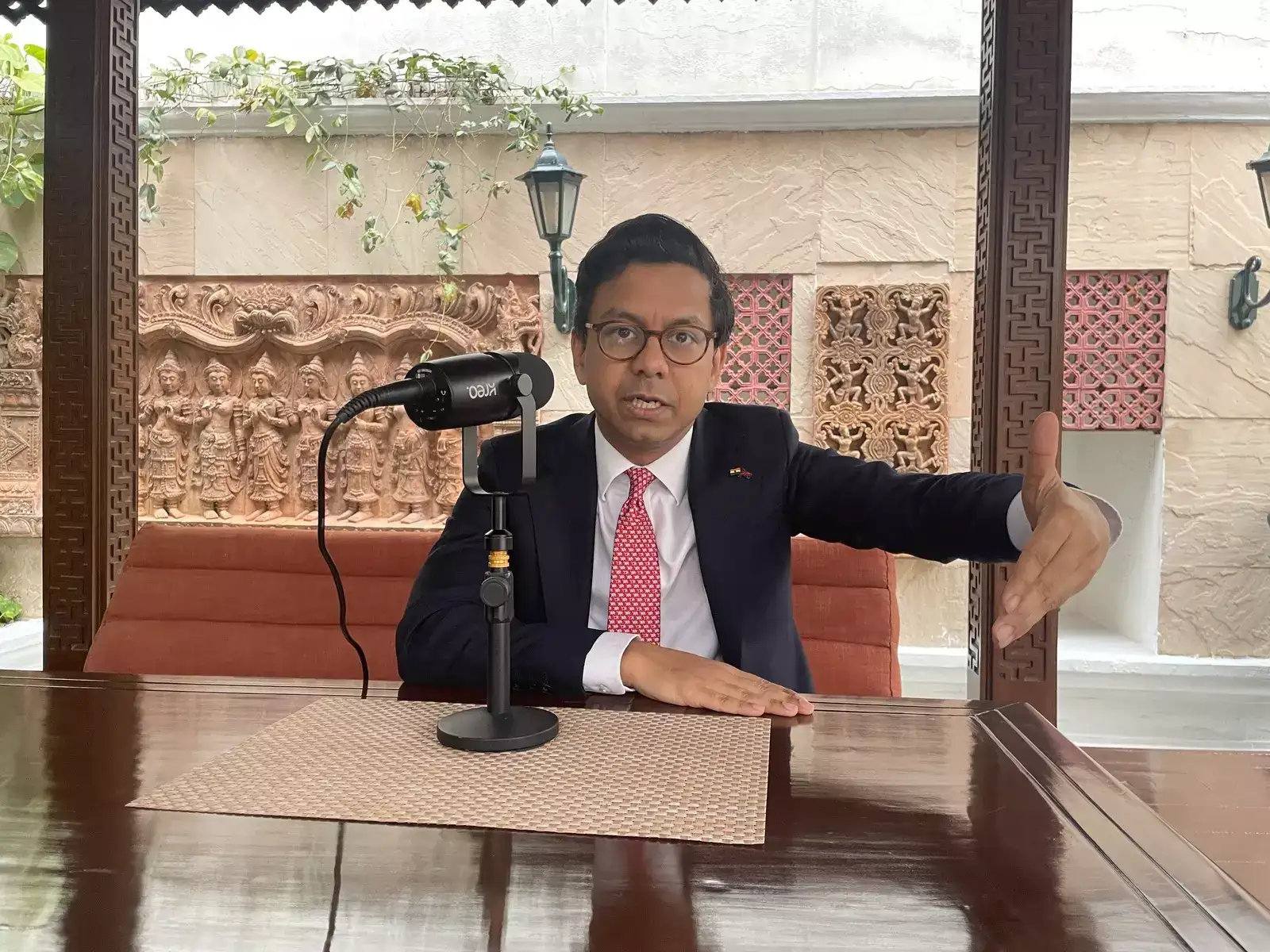 Kanishka Narayan, UK's minister for AI and online safety
Technology and AI are “central drivers” of the India-UK partnership, Britain’s minister for AI and online safety Kanishka Narayan told us in an interview, adding that the two nations have multiple opportunities to collaborate in areas such as chip design and language models.
Tell me more: Narayan, 36, who is of Indian origin, added that the UK and India were among the first countries to negotiate a free trade agreement that was “impactful economically.”
Against Grok: “...Grok was allowing the nudification of women's and children's images, India stood up and said this is not right by our values, we will not accept it. The UK stood up and called Elon Musk out. As a combination of that, it stopped,” Narayan said.
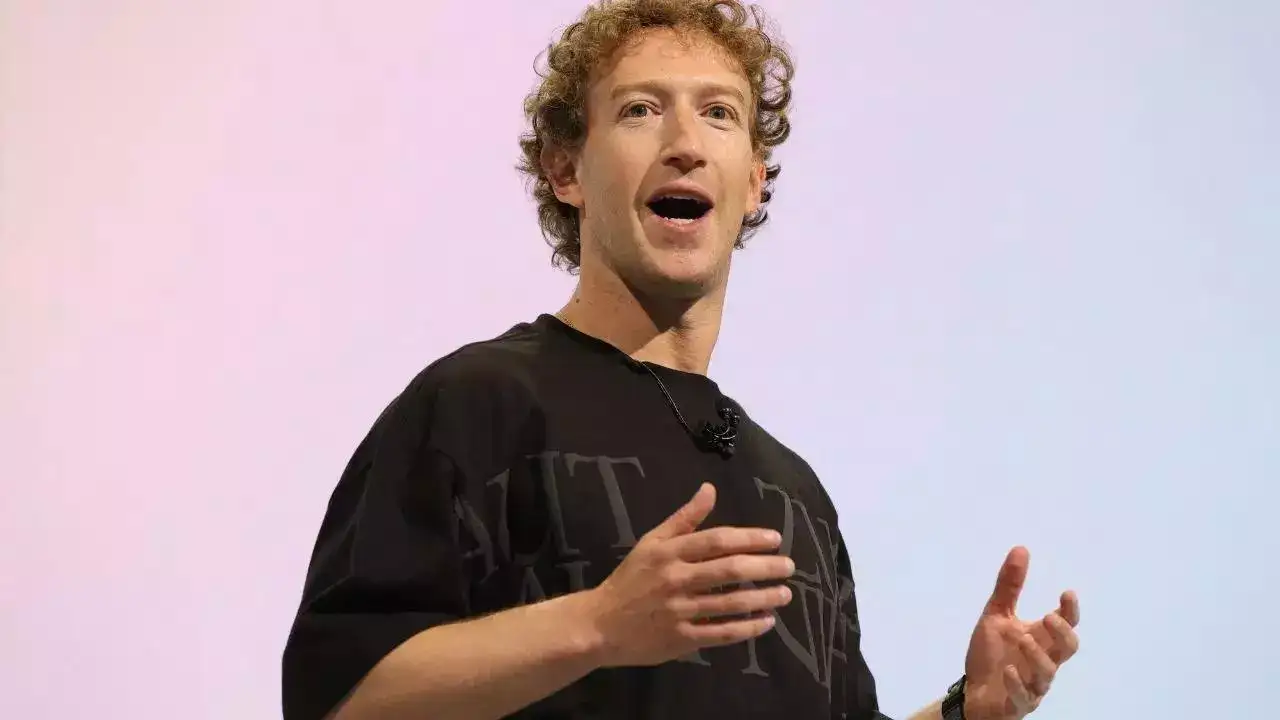 Mark Zuckerberg, CEO, Meta
In a landmark trial about social media addiction, Meta CEO Mark Zuckerberg testified that Facebook and Instagram are no longer created to maximise user screentime.
He added that Meta does not allow kids under 13 on its platforms, despite being confronted with evidence suggesting they were a key demographic.
Also Read: India govt discussing age restrictions with social media platforms
Also in the letter:
■ OpenAI backs Tata bet
■ Swiggy's Snacc shuts shop
■ India, UK vs Grok
Design and develop in India and deliver to the world: PM Modi at India AI Impact Summit
Prime Minister Narendra Modi used the India AI Impact Summit to pitch India as both a builder and exporter of artificial intelligence, urging global leaders and businesses to design and develop in India and deliver it to the world "for the common good."
Positive direction: He framed AI as a powerful but double-edged force. "If directionless, it becomes a disruption; if the right direction is found, it becomes a solution," Modi said. The task, he added, is to shift AI from machine-centric to human-centric systems that are sensitive and responsive, with humans firmly in control.
No misinformation: On deepfakes and synthetic content, Modi called for "authenticity labels and watermarking standards," adding, "As AI generates more text, images, and video, the industry must adopt clear source disclosures" so users can distinguish between real and AI-generated material.
Also Read: AI is an incredible power and is deeply disruptive: Vishal Sikka
Outcome of AI neither guaranteed, nor automatic: Google CEO Sundar Pichai
Google chief executive Sundar Pichai described AI as an era of “hyper progress” that could help emerging economies leapfrog development stages, adding that no technology has made him "dream bigger".
New roles: He acknowledged that AI will undeniably reshape the workforce. Some roles will be automated, others will evolve, and new ones will emerge. “Twenty years ago, the concept of a professional YouTube creator didn't exist and today there are millions around the world,” he said.
Pichai warned against allowing a digital divide to morph into an “AI divide”, urging more investment in computing infrastructure and connectivity.
Technologies pioneered in India set standard for Global South: Dario Amodei
Dario Amodei, CEO of Anthropic praised the “energy and ambition” he witnessed in India, calling it an inspiring environment for AI development and deployment.
Also Read: India’s AI usage concentrated in tech-heavy states: Anthropic executive Elizabeth Kelly
He also cautioned that the stakes are high. “I'm concerned about the autonomous behaviour of AI models, their potential for misuse by individuals and governments, and their potential for economic displacement. India has an absolutely central role to play in these questions and challenges,” he said.
Also Read: Widespread adoption of AI for the benefit of society is critical, say Nandan Nilekani and Dario Amodei
India announces commitments for inclusive and responsible AI
India introduced the ‘New Delhi Frontier AI Impact Commitments’ at the Summit, laying out voluntary pledges for responsible and inclusive AI deployment.
What are the commitments?
- Union minister Ashwini Vaishnaw said the first pledge focuses on studying real-world AI use through anonymised and aggregated datasets.
- The goal is to inform policymaking on employment, skills and structural economic change.
- The second pledge targets multilingual and contextual evaluation of AI systems with a focus on improving performance across diverse languages and local settings.
Awkwaa…rd moment: A photo-op with Prime Minister Modi drew unexpected attention. OpenAI chief Sam Altman and Anthropic’s Dario Amodei stood apart, raising clenched fists instead of holding hands like other leaders. The visible gap circulated online, fuelling talk of rivalry between the two AI firms (and erstwhile colleagues).
Regarding the incident, Altman said, "I was sort of confused and didn't know what I was supposed to do."
Also Read: Sam Altman defends OpenAI’s ad strategy after Anthropic’s Super Bowl criticism
Reliance to invest Rs 10 lakh crore in AI compute, energy, apps: Mukesh Ambani
Ambani follows Adani: Days after the Adani Group outlined a $100 billion data centre plan, Mukesh Ambani announced Reliance Industries and Jio will invest Rs 10 lakh crore (~$110 billion) in sovereign AI infrastructure, green energy and affordable AI. He said the aim is to lower the cost of intelligence in the same way Jio cut mobile data prices.
No show: Bill Gates cancelled his keynote address at the Summit shortly before the event. Nvidia’s Jensen Huang had already pulled out, adding to last minute disruptions at the Summit.
Tata's data centre business signs up OpenAI as customer
OpenAI will anchor Tata Consultancy Services’ new data centre venture in India, committing an initial 100 megawatts of capacity under the global $500 billion Stargate AI infrastructure programme.
Tell me more: The deal marks an early win for TCS, which last year pledged up to $7 billion to build a 1 gigawatt data centre platform in India.
In parallel, the Tata Group plans to deploy ChatGPT Enterprise across its company over the coming years, starting with hundreds of thousands of staff.
OpenAI also announced that it is preparing to open offices in Bengaluru and Mumbai later this year.
Pine Labs integration: OpenAI has partnered with Pine Labs to enable “agentic commerce”, allowing AI agents to discover products and complete payments for users. The integration follows similar moves last year when Razorpay, NPCI and OpenAI partnered to pilot “agentic payments.”
Also Read: OpenAI funding on track to top $100 billion with latest round
Swiggy shutters 10-minute food delivery app Snacc due to profit pressures
Swiggy has shuttered its 10-minute food delivery app, Snacc, after operating for nearly a year, following pressure on profits. The decision was shared in an internal company email, seen by ET.
Why the move? Swiggy shut Snacc because challenging unit economics made it difficult to expand the service. “With a focus on our business objectives to create scalable platforms that create long-term value, we have taken this decision after extensive deliberation,” the email read.
Yes, and? Other firms have taken similar steps. Zomato closed its 15-minute service Quick and Everyday in May 2025 after poor customer response, while Zepto Cafe scaled back operations in July 2025 due to supply issues, staff shortages, and increasing competition.
Also Read: Food delivery startup Swish in talks to raise $30-35 million from Bain Capital Ventures, Accel: Sources
India and UK stood up to Grok against generation of obscene content: UK minister
Technology and AI are “central drivers” of the India-UK partnership, Britain’s minister for AI and online safety Kanishka Narayan told us in an interview, adding that the two nations have multiple opportunities to collaborate in areas such as chip design and language models.
Tell me more: Narayan, 36, who is of Indian origin, added that the UK and India were among the first countries to negotiate a free trade agreement that was “impactful economically.”
Against Grok: “...Grok was allowing the nudification of women's and children's images, India stood up and said this is not right by our values, we will not accept it. The UK stood up and called Elon Musk out. As a combination of that, it stopped,” Narayan said.
Meta's Zuckerberg denies at LA trial that Instagram targets kids
In a landmark trial about social media addiction, Meta CEO Mark Zuckerberg testified that Facebook and Instagram are no longer created to maximise user screentime.
He added that Meta does not allow kids under 13 on its platforms, despite being confronted with evidence suggesting they were a key demographic.
Also Read: India govt discussing age restrictions with social media platforms
Want this newsletter delivered to your inbox?
I agree to receive newsletters and marketing communications via e-mail