
 Daily Top 5 Daily Top 5 |
AI jitters continue to hit IT; USV Pharma buys Wellbeing stake
Want this newsletter delivered to your inbox?
I agree to receive newsletters and marketing communications via e-mail

Thank you for subscribing to Daily Top 5
We'll soon meet in your inbox.
IT stocks slid sharply Thursday on rising fears of AI-led disruption. Here’s more in today’s ETtech Top 5:
Also in the letter:
■ Honasa, Shadowfax results
■ FM defends data centre policy
■ Flipkart’s playing today

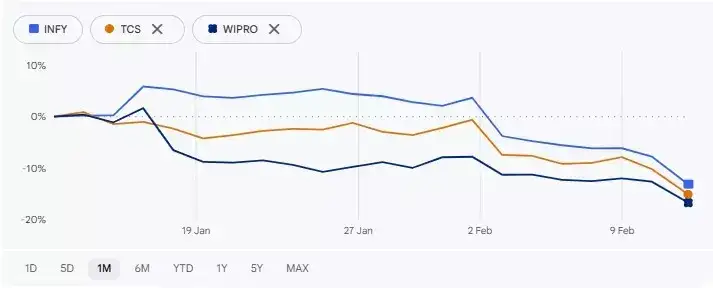
Shares of Infosys, Wipro and TCS dropped sharply on Thursday after their American Depository Receipts (ADRs) fell by up to 5.2% in US trading overnight.
Share price movement:
Why is this happening? Investor nerves rose after US-based AI startup Anthropic unveiled a new tool aimed at corporate legal teams. The company said its Claude-powered product can automate contract review, NDA triage, compliance workflows, legal brief preparation, and standardised responses.
Also Read: Explained: What is Anthropic's AI tool that's sparking job loss fears
The announcement has revived concerns that generative AI tools could erode routine, process-heavy work that large IT firms traditionally handle for global clients.
Also Read: What is Anthropic’s new legal AI tool and why investors are dumping software stocks
Executive exit: Anthropic also confirmed that researcher Mrinank Sharma has left the company’s safeguards team.
In a message that appeared indirect, Sharma wrote that it was “clear to me that the time to move on has come”, adding that holding firm to one’s values can become difficult. The company told CNN that Sharma did not lead safety and was not responsible for broader safeguards at the firm.
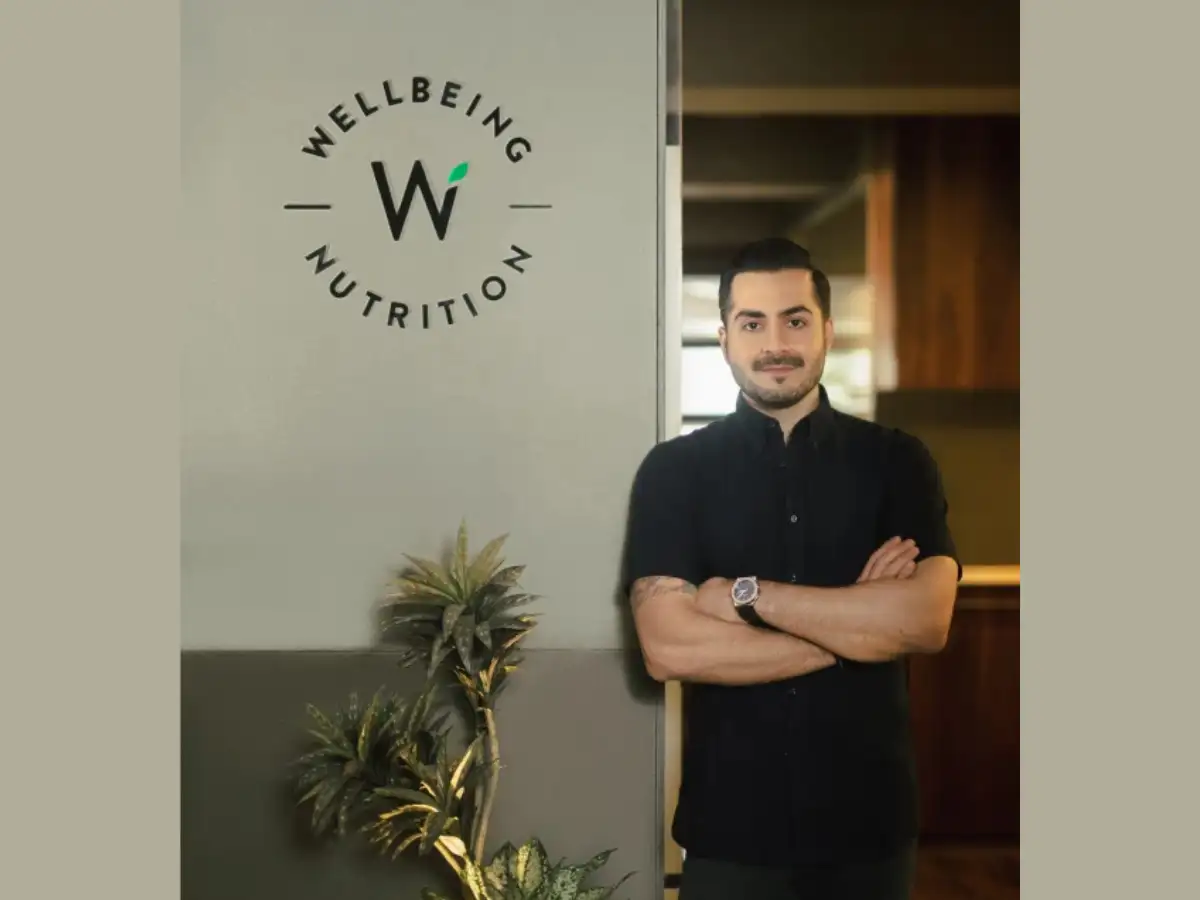 Avnish Chhabria, CEO, Wellbeing Nutrition
USV Pharma has acquired a 79% stake in Wellbeing Nutrition for Rs 1,583 crore in an all-cash deal, marking its entry into India’s fast-growing nutraceutical supplements and wellness market.
Deal details:
About the brand: Founded in 2019, Wellbeing Nutrition started as a digital-first, clean-label nutrition brand. It has since built an omnichannel presence across offline retail and online marketplaces. The company expects to close FY26 with net revenue exceeding Rs 260 crore.
Big picture: The transaction adds to long list of direct-to-consumer (D2C) brands being acquired by larger companies. Earlier this month, Marico picked a controlling stake in protein supplement brand Cosmix, valuing it at Rs 375 crore. Companies such as Hindustan Unilever, ITC and Emami have acquired brands including Minimalist, Oziva, Yoga Bar, Prasuma, TruNativ and The Man Company.
Also Read: FMCG majors turn to D2C for growth, but profitability remains distant
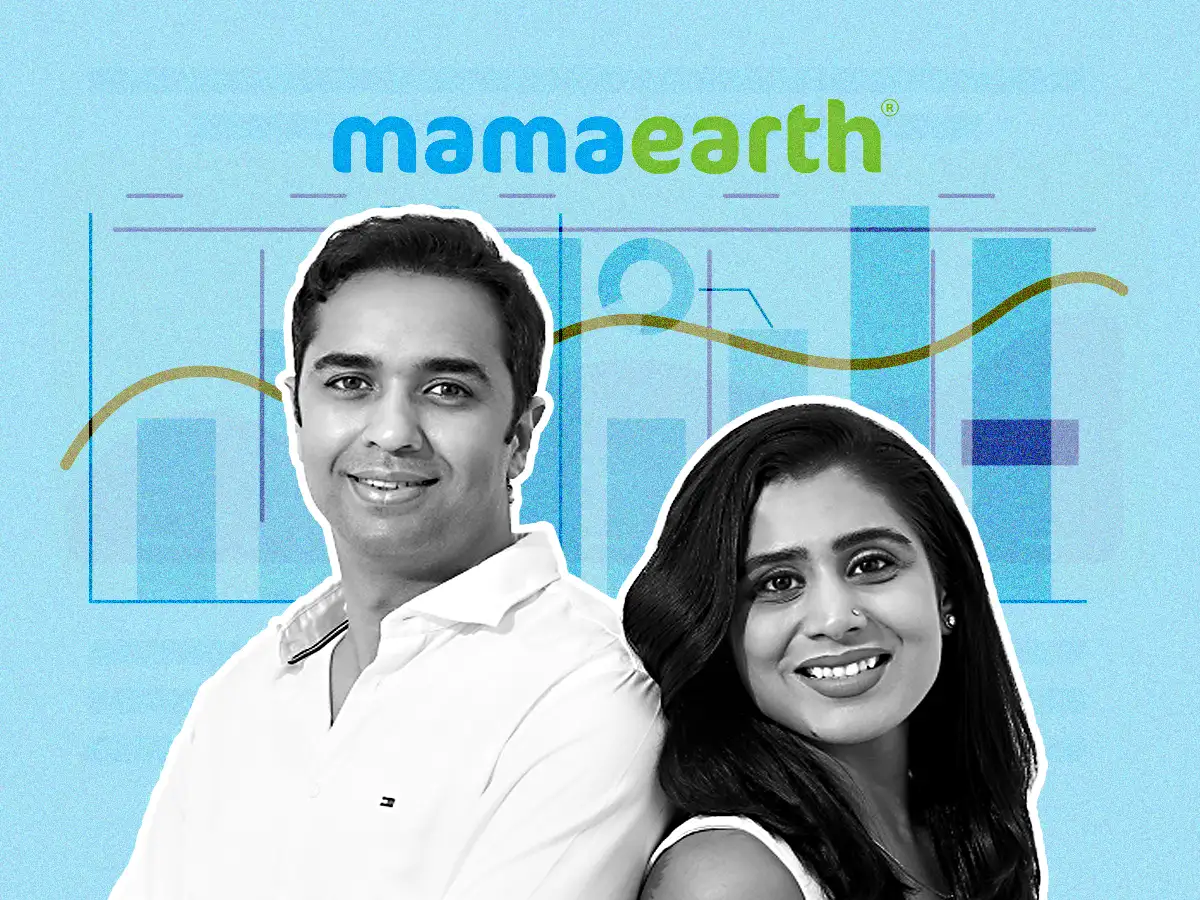 Varun Alagh and Ghazal Alagh, founders, Honasa Consumer
Honasa Consumer reported strong quarterly growth, driven by gains in focus categories and new product launches.
Financials:
CEO speak: Cofounder and chief executive Varun Alagh said a change in the company’s settlement arrangement with the Flipkart group led to a one-off accounting impact of about Rs 28 crore on quarterly revenue but did not affect overall profitability. Without this adjustment, revenue would have been Rs 630 crore, he said.
“As we move ahead, we remain focused on strengthening our margin profile, improving capital efficiency, and building a structurally stronger business that can compound growth sustainably over the long term,” he added.
Also Read: SoftBank posts fourth straight quarterly profit of $1.6 billion on OpenAI gains
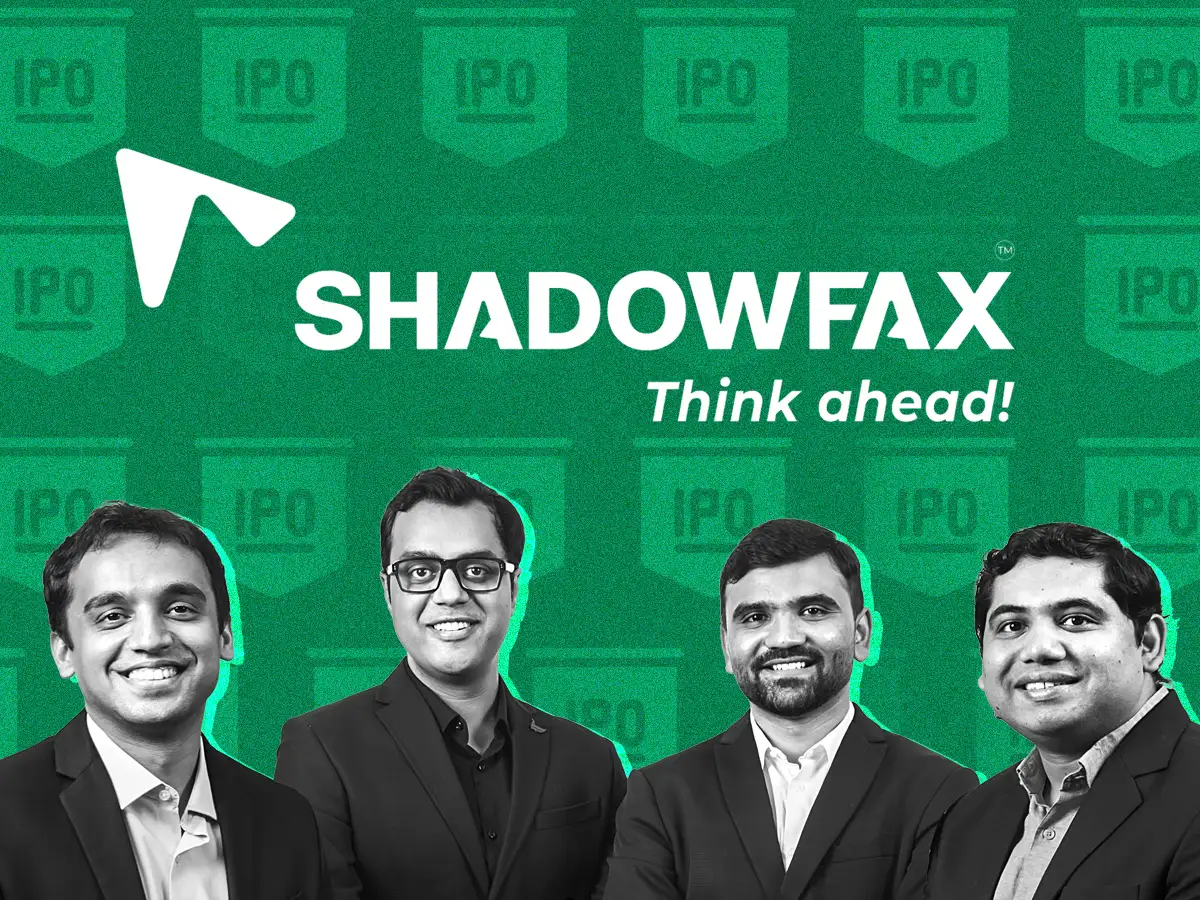 (L-R) Praharsh Chandra, Abhishek Bansal, Gaurav Jaithliya, Vaibhav Khandelwal, founders, Shadowfax
Shadowfax reported strong quarterly growth, led by higher market share and rising demand for its delivery services.
Financials:
In Q3 FY26, Shadowfax delivered 206 million orders across Express and Hyperlocal services, with a festive season peak of 3.6 million orders in a single day.
More details: This is the company’s first earnings report since listing on the exchanges on January 28. Shadowfax raised Rs 1,000 crore through a fresh issue in its IPO, along with a Rs 907 crore offer for sale (OFS).
Also Read: Amagi’s revenue jumps 22% in Q3, profit stands at Rs 31 crore
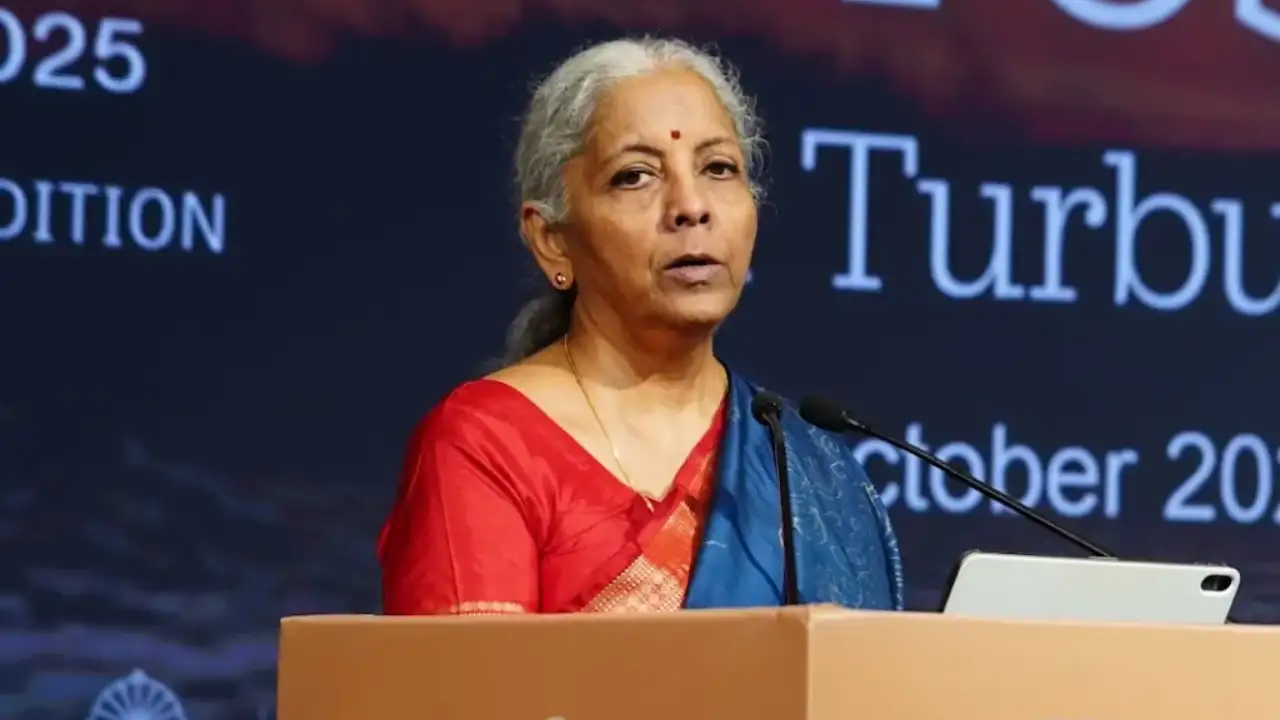
Finance Minister Nirmala Sitharaman used the Union Budget 2026 to double down on India’s data localisation push, framing new incentives for data centres as both an economic and strategic priority.
She said the measures would keep Indian data within national borders while creating jobs.
Tell me more:
Opposition reacts: Sitharaman rejected Opposition leader Rahul Gandhi’s charge that the government had allowed unrestricted flow of Indian data to the US under a proposed trade deal, calling the claim incorrect.
India’s data centre capacity is projected to expand 48% by 2029, according to Gartner, as global cloud providers scale local infrastructure.

Security specialists caution that AI infrastructure is expanding faster than defences.
Risks involved:
As India play Namibia at Delhi’s Arun Jaitley Stadium tonight, look beyond the scoreboard. On the Namibian jersey, you will notice a familiar logo: Walmart-owned ecommerce giant Flipkart.
The deal: Reports suggest that IPO-bound Flipkart has paid about Rs 40 crore to sponsor Namibia at the 2026 Men’s T20 World Cup. That is a fraction of the Rs 579 crore Apollo Tyres committed last year for the Indian team’s sponsorship.
Right match: Namibia share Group A with India. That guarantees prime-time fixtures, identical broadcast windows, and the same on-screen jersey visibility as a marquee side. The exposure comes without the premium pricing or sponsor clutter attached to India’s kit. Hyderabad-based SaaS firm Zaggle has taken a similar route, backing Ireland at the tournament.
The bigger picture: This is a targeted brand placement. Instead of paying for prestige, Flipkart has bought reach inside a premium property. The play mirrors tactics used by brands (Amul, Nandini, Kent RO) that sponsor associate teams at World Cups or teams touring India, securing high-impact visibility at lower cost.
Also Read: Exclusive: IPO-bound Flipkart explores food delivery launch
Also in the letter:
■ Honasa, Shadowfax results
■ FM defends data centre policy
■ Flipkart’s playing today
Infosys, Wipro shares down 5-6% as Anthropic shock continues to haunt investors
Shares of Infosys, Wipro and TCS dropped sharply on Thursday after their American Depository Receipts (ADRs) fell by up to 5.2% in US trading overnight.
Share price movement:
- Infosys fell 5.8% to Rs 1,387.2.
- Wipro slipped 4.7% to Rs 218.9.
- TCS declined 5.4% to Rs 2,751.9.
Why is this happening? Investor nerves rose after US-based AI startup Anthropic unveiled a new tool aimed at corporate legal teams. The company said its Claude-powered product can automate contract review, NDA triage, compliance workflows, legal brief preparation, and standardised responses.
Also Read: Explained: What is Anthropic's AI tool that's sparking job loss fears
The announcement has revived concerns that generative AI tools could erode routine, process-heavy work that large IT firms traditionally handle for global clients.
Also Read: What is Anthropic’s new legal AI tool and why investors are dumping software stocks
Executive exit: Anthropic also confirmed that researcher Mrinank Sharma has left the company’s safeguards team.
In a message that appeared indirect, Sharma wrote that it was “clear to me that the time to move on has come”, adding that holding firm to one’s values can become difficult. The company told CNN that Sharma did not lead safety and was not responsible for broader safeguards at the firm.
USV Pharma buys 79% stake in Wellbeing Nutrition for Rs 1,583 crore
USV Pharma has acquired a 79% stake in Wellbeing Nutrition for Rs 1,583 crore in an all-cash deal, marking its entry into India’s fast-growing nutraceutical supplements and wellness market.
Deal details:
- Early investors Hindustan Unilever and Fireside Ventures will exit their combined 40% stake in the company.
- USV will purchase approximately a 35% stake from founder and CEO Avnish Chhabria, who holds 51% in the company.
- Chhabria would earn about Rs 800 crore from the transaction and retain the option to sell his remaining stake in the coming years.
About the brand: Founded in 2019, Wellbeing Nutrition started as a digital-first, clean-label nutrition brand. It has since built an omnichannel presence across offline retail and online marketplaces. The company expects to close FY26 with net revenue exceeding Rs 260 crore.
Big picture: The transaction adds to long list of direct-to-consumer (D2C) brands being acquired by larger companies. Earlier this month, Marico picked a controlling stake in protein supplement brand Cosmix, valuing it at Rs 375 crore. Companies such as Hindustan Unilever, ITC and Emami have acquired brands including Minimalist, Oziva, Yoga Bar, Prasuma, TruNativ and The Man Company.
Also Read: FMCG majors turn to D2C for growth, but profitability remains distant
Honasa Consumer sees 16% revenue uptick in Q3; profit at Rs 601 crore
Honasa Consumer reported strong quarterly growth, driven by gains in focus categories and new product launches.
Financials:
- Operating revenue: Up 16% to Rs 601 crore.
- Net profit: Rose to Rs 50 crore from Rs 26 crore a year ago.
- Total expenses: Increased to Rs 550 crore from Rs 507 crore.
CEO speak: Cofounder and chief executive Varun Alagh said a change in the company’s settlement arrangement with the Flipkart group led to a one-off accounting impact of about Rs 28 crore on quarterly revenue but did not affect overall profitability. Without this adjustment, revenue would have been Rs 630 crore, he said.
“As we move ahead, we remain focused on strengthening our margin profile, improving capital efficiency, and building a structurally stronger business that can compound growth sustainably over the long term,” he added.
Also Read: SoftBank posts fourth straight quarterly profit of $1.6 billion on OpenAI gains
Shadowfax clocks five-fold jump in net profit in Q3, revenue up 65%
Shadowfax reported strong quarterly growth, led by higher market share and rising demand for its delivery services.
Financials:
- Net profit: Up 5x to Rs 35 crore from Rs 6.4 crore a year ago.
- Operating revenue: Up 65% to Rs 1,160 crore from Rs 700 crore.
- Expenses: Rose 62% year-on-year to Rs 1,131 crore.
In Q3 FY26, Shadowfax delivered 206 million orders across Express and Hyperlocal services, with a festive season peak of 3.6 million orders in a single day.
More details: This is the company’s first earnings report since listing on the exchanges on January 28. Shadowfax raised Rs 1,000 crore through a fresh issue in its IPO, along with a Rs 907 crore offer for sale (OFS).
Also Read: Amagi’s revenue jumps 22% in Q3, profit stands at Rs 31 crore
FM Nirmala Sitharaman cites data centre sops, rejects Opposition claims on India data flow
Finance Minister Nirmala Sitharaman used the Union Budget 2026 to double down on India’s data localisation push, framing new incentives for data centres as both an economic and strategic priority.
She said the measures would keep Indian data within national borders while creating jobs.
Tell me more:
- The budget offers a 20-year tax holiday for large cloud providers setting up data centres in India, a benefit later extended to domestic payers.
- Foreign companies offering global cloud services from India will receive tax exemption until 2047.
- The India AI Mission has been allocated Rs 1,000 crore for FY27.
Opposition reacts: Sitharaman rejected Opposition leader Rahul Gandhi’s charge that the government had allowed unrestricted flow of Indian data to the US under a proposed trade deal, calling the claim incorrect.
India’s data centre capacity is projected to expand 48% by 2029, according to Gartner, as global cloud providers scale local infrastructure.
Cyber risks loom over data centre build-out
Security specialists caution that AI infrastructure is expanding faster than defences.
Risks involved:
- While 99% of organisations use AI-assisted coding, only 18% can patch vulnerabilities at the same speed.
- “Shadow data” — duplicate datasets created during testing or system transfers — remains poorly tracked.
- Nearly 40% of cloud breaches originate from unmonitored systems, with data sometimes exfiltrated within an hour.
- Palo Alto Networks has tracked Chinese-linked groups targeting cloud credentials. Kaspersky blocked more than 218,000 spyware attacks in India in the first half of 2025.
Why Flipkart is sponsoring Namibia at the T20 World Cup?
As India play Namibia at Delhi’s Arun Jaitley Stadium tonight, look beyond the scoreboard. On the Namibian jersey, you will notice a familiar logo: Walmart-owned ecommerce giant Flipkart.
The deal: Reports suggest that IPO-bound Flipkart has paid about Rs 40 crore to sponsor Namibia at the 2026 Men’s T20 World Cup. That is a fraction of the Rs 579 crore Apollo Tyres committed last year for the Indian team’s sponsorship.
Right match: Namibia share Group A with India. That guarantees prime-time fixtures, identical broadcast windows, and the same on-screen jersey visibility as a marquee side. The exposure comes without the premium pricing or sponsor clutter attached to India’s kit. Hyderabad-based SaaS firm Zaggle has taken a similar route, backing Ireland at the tournament.
The bigger picture: This is a targeted brand placement. Instead of paying for prestige, Flipkart has bought reach inside a premium property. The play mirrors tactics used by brands (Amul, Nandini, Kent RO) that sponsor associate teams at World Cups or teams touring India, securing high-impact visibility at lower cost.
Also Read: Exclusive: IPO-bound Flipkart explores food delivery launch
Want this newsletter delivered to your inbox?
I agree to receive newsletters and marketing communications via e-mail