
 Daily Top 5 |
UPI sees Diwali boom; AI cracks Captcha
Want this newsletter delivered to your inbox?
I agree to receive newsletters and marketing communications via e-mail

Thank you for subscribing to Daily Top 5
We'll soon meet in your inbox.
Diwali spending fuelled a surge in UPI transactions, with both payment volumes and values rising. This and more in today’s ETtech Top 5.
Also in the letter:
■ SoftBank’s India gains
■ Crypto users exploit UPI
■ Jensen Huang faces spy probe

Festive spending drove a sharp increase in digital payments during the Diwali weekend, with transactions on the Unified Payments Interface (UPI) rising 28% year-on-year (YoY) to 3.75 billion over four days, according to data released by the National Payments Corporation of India (NPCI).
By the numbers:
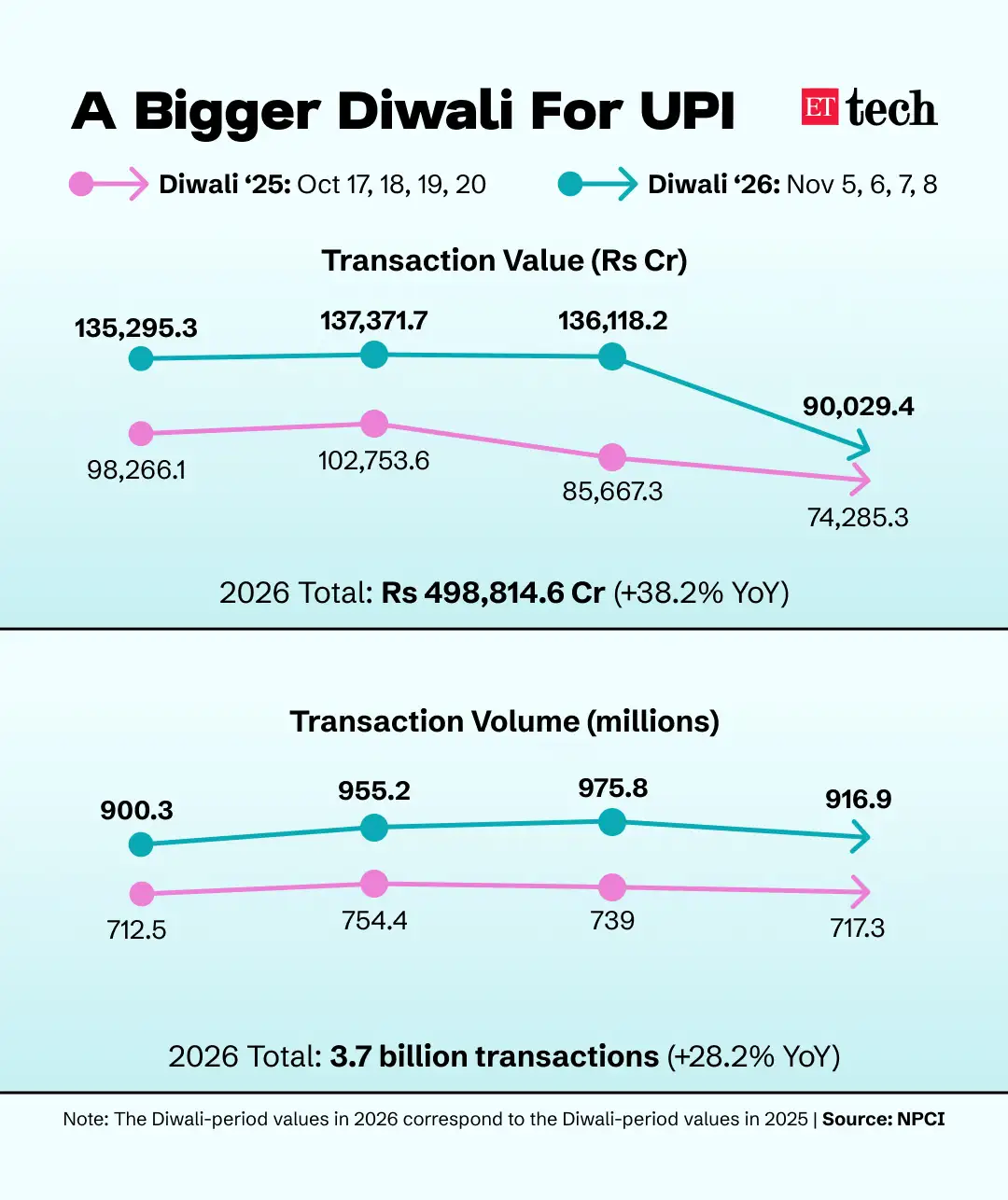
What drove the growth: Higher gold prices played a part in driving the transaction value higher, said Reeju Datta, cofounder of Cashfree, a digital payment infrastructure provider.
The bigger picture: UPI processed a record 25.47 billion transactions in October, up 23% on-year, as consumers stepped up digital payments during the festive shopping season. Major ecommerce sales also began in October, boosting payment volumes and transaction values.
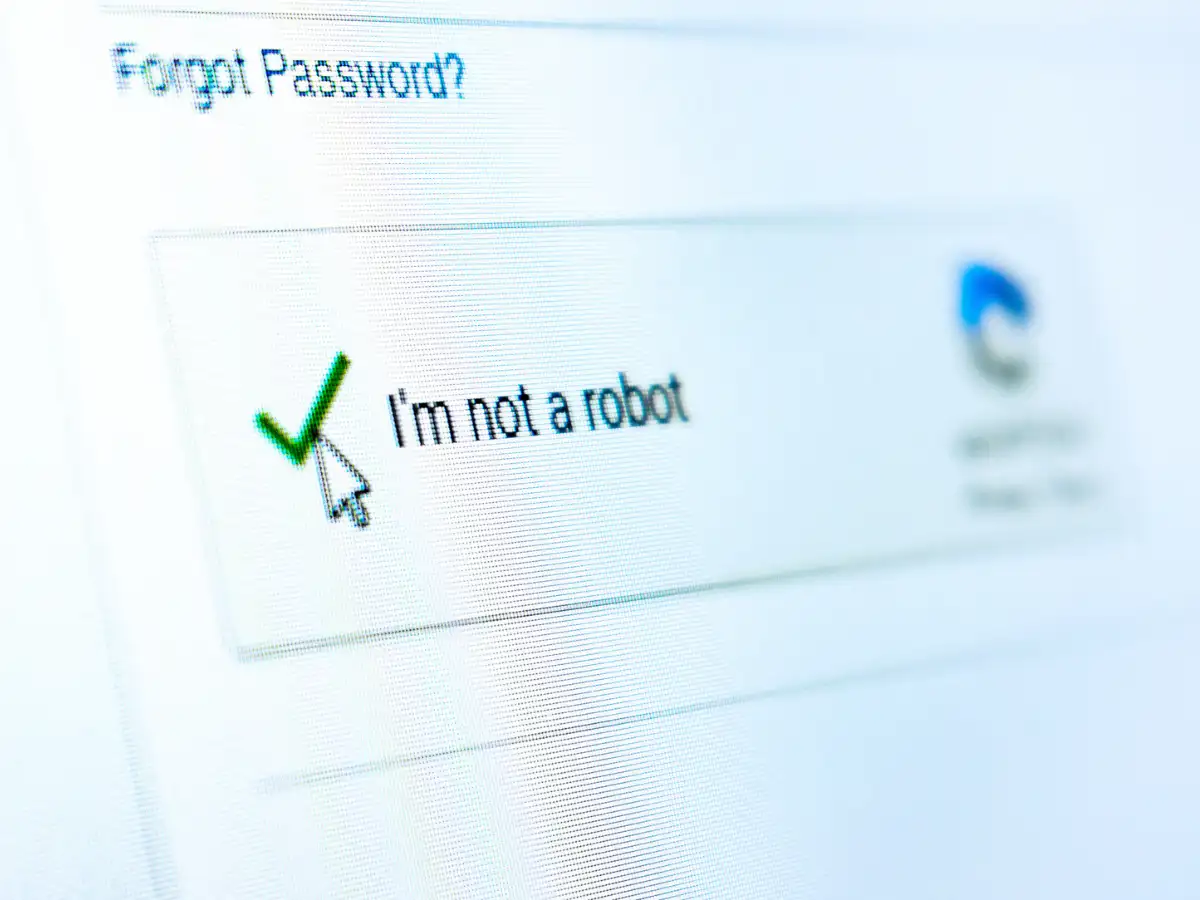
Traditional Captcha techniques are failing to identify bot traffic and the internet’s oldest security question: ‘Are you a human?’ no longer has a reliable answer. Organisations are struggling to identify if the traffic to their websites is coming from a human, a legitimate bot acting on behalf of the user, or a malicious one.
Why it matters: The recent incident of US banks reporting unauthorised transactions by personal AI agents has sparked paranoia among India’s financial and ecommerce sector. It is forcing them to reassess how they allow autonomous agents onto their platforms.
Financial sector on alert: Zerodha’s CTO Kailash Nadh says the biggest challenge is that AI agents cannot be identified or blocked with 100% certainty.
“Hence, two-factor authentication becomes an absolute necessity. However, when users give agents full authority, including access to OTPs, establishing liability for rogue transactions becomes tricky,” Nadh said.
.jpg "AI Agents Knocking on Commerce (1)")
How companies are responding:
Japanese technology investor SoftBank's Vision funds saw gains of nearly $400 million from its investments in Lenskart and Meesho during the September quarter, as the two Indian startups emerged among the strongest performers in its listed portfolio globally.
Financials:
Monetising investments: SoftBank has sold shares worth more than Rs 9,300 crore in Lenskart and Meesho since June. Its Lenskart investment has generated 6.1x returns, including realised proceeds and the value of its remaining stake.
Recovery: The performance marks a recovery from the January-March quarter, when SoftBank's listed Indian portfolio recorded more than $600 million in mark-to-market losses, led by Swiggy, Ola Electric, Meesho, Delhivery, and FirstCry, ET reported in May.

Unified payments interface (UPI), the ubiquitous system that has transformed the way Indians move money, is being misused to shop in cryptocurrencies.
What happened: Web applications like goat.cash and conversion merchants acting as intermediaries are seamlessly converting cryptos in buyers’ wallets into rupees to pay sellers of any goods and services in less than two minutes.
The grey area: While cryptos are not accepted as legal tender in India, a Supreme Court bench in 2020 had set aside the Reserve Bank of India’s (RBI) April 2018 circular banning banks and regulated financial entities from providing services to crypto-related businesses or facilitating the buying or selling cryptos.
NPCI’s response: When contacted by ET, an official of National Payments Corporation of India, the RBI regulated entity behind UPI, said that per directions of the Supreme Court, it is not possible to stop such transactions.
The concern: “Whoever converts on a user’s behalf, in the course of business, must register with FIU-IND. Else, it may be running an unauthorised payment system under the Payment and Settlement Systems Act,” said former banker Anil Katia who specialises in payments systems.
“NPCI cannot readily see how a payer’s money was funded. The first point of failure is the bank holding the account: its KYC should capture the business activity behind the flows, and transaction monitoring should flag them. Regulators may not learn of it unless a bank, an aggrieved party, or a vigilant citizen reports it,” he added.
Also Read: SC asks WhatsApp, others to list measures to prevent digital arrest, related cyber crimes
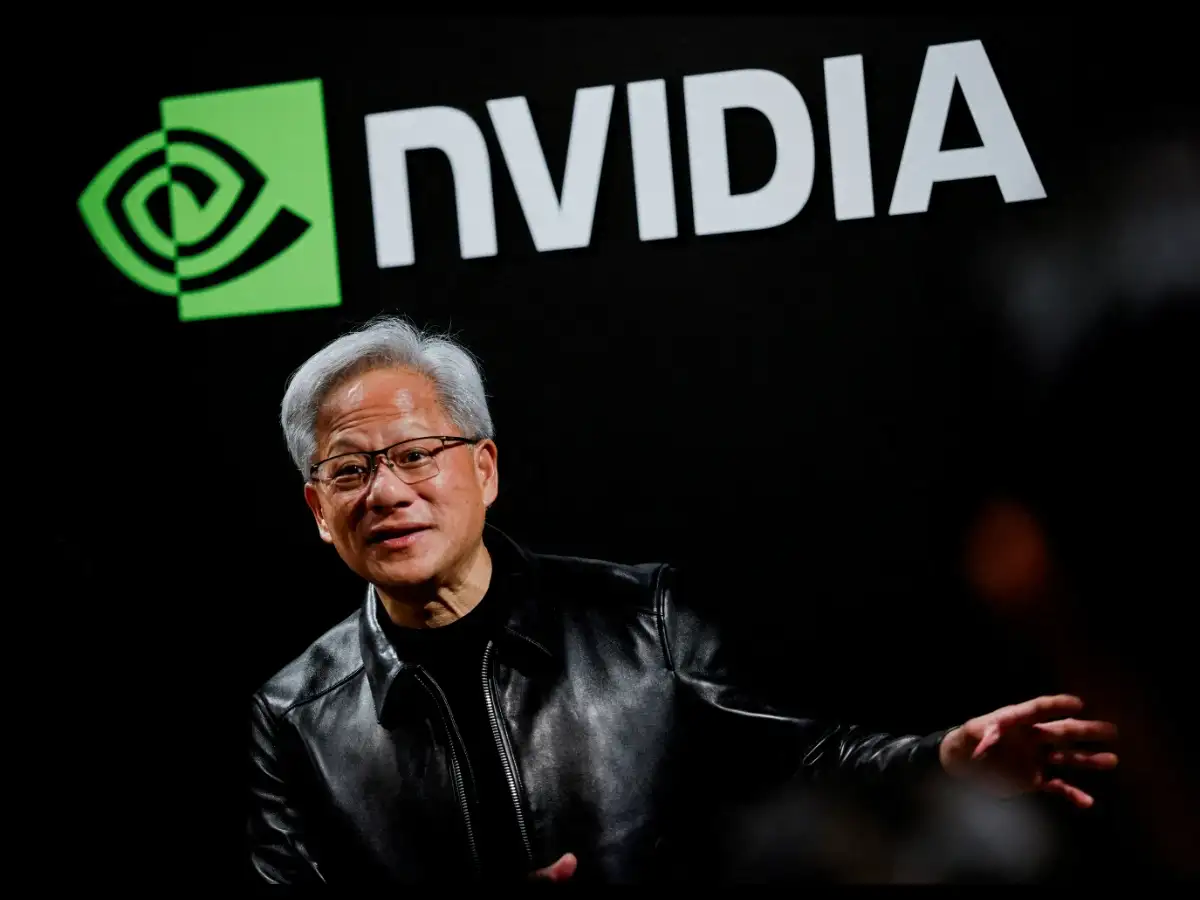 Nvidia CEO Jensen Huang
Stunning allegations of a spy plot have prompted Nvidia to investigate whether its founder and CEO, Jensen Huang, was the target of a "foreign intelligence effort."
What triggered the investigation:
China rejects claims: China's foreign ministry dismissed the spying allegations on Monday, saying they amount to a smear campaign.
Also in the letter:
■ SoftBank’s India gains
■ Crypto users exploit UPI
■ Jensen Huang faces spy probe
UPI sees strong growth during Diwali as festive spending lights up digital payments
Festive spending drove a sharp increase in digital payments during the Diwali weekend, with transactions on the Unified Payments Interface (UPI) rising 28% year-on-year (YoY) to 3.75 billion over four days, according to data released by the National Payments Corporation of India (NPCI).
By the numbers:
- Transaction value: UPI transactions worth Rs 4.99 lakh crore were processed during November 5-8, up 38% YoY.
- Dhanteras boost: November 6 recorded transactions worth Rs 1.37 lakh crore, the second-highest daily value on record.
- Record volumes: UPI transaction volumes hit a record 975.8 million on November 7.
- Higher ticket size: Average transaction size rose nearly 8% to Rs 1,331 from around Rs 1,234 last year.
What drove the growth: Higher gold prices played a part in driving the transaction value higher, said Reeju Datta, cofounder of Cashfree, a digital payment infrastructure provider.
The bigger picture: UPI processed a record 25.47 billion transactions in October, up 23% on-year, as consumers stepped up digital payments during the festive shopping season. Major ecommerce sales also began in October, boosting payment volumes and transaction values.
Indian organisations on edge as websites fail to Captcha AI intruders
Traditional Captcha techniques are failing to identify bot traffic and the internet’s oldest security question: ‘Are you a human?’ no longer has a reliable answer. Organisations are struggling to identify if the traffic to their websites is coming from a human, a legitimate bot acting on behalf of the user, or a malicious one.
Why it matters: The recent incident of US banks reporting unauthorised transactions by personal AI agents has sparked paranoia among India’s financial and ecommerce sector. It is forcing them to reassess how they allow autonomous agents onto their platforms.
Financial sector on alert: Zerodha’s CTO Kailash Nadh says the biggest challenge is that AI agents cannot be identified or blocked with 100% certainty.
“Hence, two-factor authentication becomes an absolute necessity. However, when users give agents full authority, including access to OTPs, establishing liability for rogue transactions becomes tricky,” Nadh said.
How companies are responding:
- Mastercard: Is developing its Agent Pay framework for India, using verified agent identities and secure, dynamic tokens to authenticate and track transactions.
- Razorpay: Its ACE Marketplace lets AI assistants search D2C stores and build carts, while consumers complete payments themselves.
- Visa: Its Trusted Agent Protocol allows merchants to verify agent identities and check information about their intent.
Lenskart, Meesho deliver gains of nearly $400 million for SoftBank Vision funds
Japanese technology investor SoftBank's Vision funds saw gains of nearly $400 million from its investments in Lenskart and Meesho during the September quarter, as the two Indian startups emerged among the strongest performers in its listed portfolio globally.
Financials:
- Lenskart: Saw returns of $273 million, the highest among the Vision funds' listed investments.
- Meesho: Gained $121 million during the quarter.
Monetising investments: SoftBank has sold shares worth more than Rs 9,300 crore in Lenskart and Meesho since June. Its Lenskart investment has generated 6.1x returns, including realised proceeds and the value of its remaining stake.
Recovery: The performance marks a recovery from the January-March quarter, when SoftBank's listed Indian portfolio recorded more than $600 million in mark-to-market losses, led by Swiggy, Ola Electric, Meesho, Delhivery, and FirstCry, ET reported in May.
Grey zone in payment laws: Crypto goes shopping in rupees using QR-linked loophole
Unified payments interface (UPI), the ubiquitous system that has transformed the way Indians move money, is being misused to shop in cryptocurrencies.
What happened: Web applications like goat.cash and conversion merchants acting as intermediaries are seamlessly converting cryptos in buyers’ wallets into rupees to pay sellers of any goods and services in less than two minutes.
The grey area: While cryptos are not accepted as legal tender in India, a Supreme Court bench in 2020 had set aside the Reserve Bank of India’s (RBI) April 2018 circular banning banks and regulated financial entities from providing services to crypto-related businesses or facilitating the buying or selling cryptos.
NPCI’s response: When contacted by ET, an official of National Payments Corporation of India, the RBI regulated entity behind UPI, said that per directions of the Supreme Court, it is not possible to stop such transactions.
The concern: “Whoever converts on a user’s behalf, in the course of business, must register with FIU-IND. Else, it may be running an unauthorised payment system under the Payment and Settlement Systems Act,” said former banker Anil Katia who specialises in payments systems.
“NPCI cannot readily see how a payer’s money was funded. The first point of failure is the bank holding the account: its KYC should capture the business activity behind the flows, and transaction monitoring should flag them. Regulators may not learn of it unless a bank, an aggrieved party, or a vigilant citizen reports it,” he added.
Also Read: SC asks WhatsApp, others to list measures to prevent digital arrest, related cyber crimes
What we know — and what we don't — as Nvidia investigates an alleged spy plot involving its CEO
Stunning allegations of a spy plot have prompted Nvidia to investigate whether its founder and CEO, Jensen Huang, was the target of a "foreign intelligence effort."
What triggered the investigation:
- Huang on Sunday admitted to having an extramarital affair, and acknowledged that news reports surrounding the relationship and potential national security concerns led Nvidia's board to investigate the matter.
- The New York Times identified the person he had been intimate with as business executive and Chinese citizen Alice Huang.
- The NYT report said US intelligence had determined she was gathering information for Beijing.
China rejects claims: China's foreign ministry dismissed the spying allegations on Monday, saying they amount to a smear campaign.
Want this newsletter delivered to your inbox?
I agree to receive newsletters and marketing communications via e-mail