
 Morning Dispatch Morning Dispatch |
UpGrad-Unacademy deal closes; India’s largest private satellite lifts off
Want this newsletter delivered to your inbox?
I agree to receive newsletters and marketing communications via e-mail

Thank you for subscribing to Morning Dispatch
We'll soon meet in your inbox.
Happy Monday! Upgrad is set to acquire Unacademy at a 90% markdown of its peak valuation. This and more in today's ETtech Morning Dispatch.
Also in the letter:
■ War hits packaging
■ IT productivity rises
■ What’s cooking at chip firms?
 UpGrad’s Ronnie Screwvala and Unacademy’s Gaurav Munjal
Upskilling platform UpGrad is set to acquire Unacademy in an all-stock deal after months of negotiations, sources told us.
Deal details:
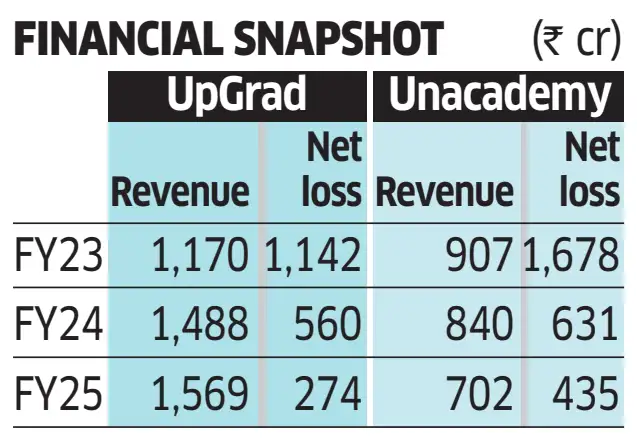
Yes, and: UpGrad is also in talks to raise about Rs 375 crore in an internal funding round from Temasek and founder Ronnie Screwvala, which would take its cash position to more than Rs 1,300 crore once the Unacademy transaction and the funding round close.
“It plans to deploy this capital towards organic growth opportunities, including scaling its B2B (business-to-business) and enterprise segments, embedding AI across student outcomes, and expanding global talent mobility beyond its existing study abroad business,” sources said.
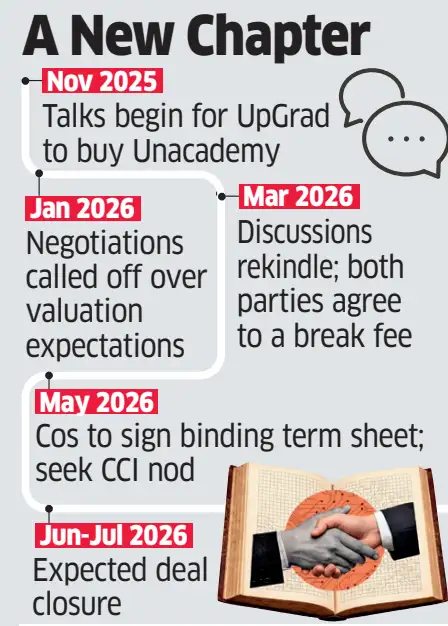
Setting context: The two companies began discussions on a deal in November last year, but hit a roadblock over a valuation mismatch in January. Then, in March 2026, Screwvala and Munjal announced on social media that they had signed a term sheet for UpGrad to acquire Unacademy in a 100% share-swap deal.
Deal significance: If completed, this would be one of the largest consolidation moves in India’s still-recovering edtech sector. The industry has been under pressure since the post-pandemic demand surge faded and Byju’s, once valued at $22 billion, collapsed, reshaping investor sentiment.
Also Read: Upgrad, Unacademy betting on AI to disrupt edtech
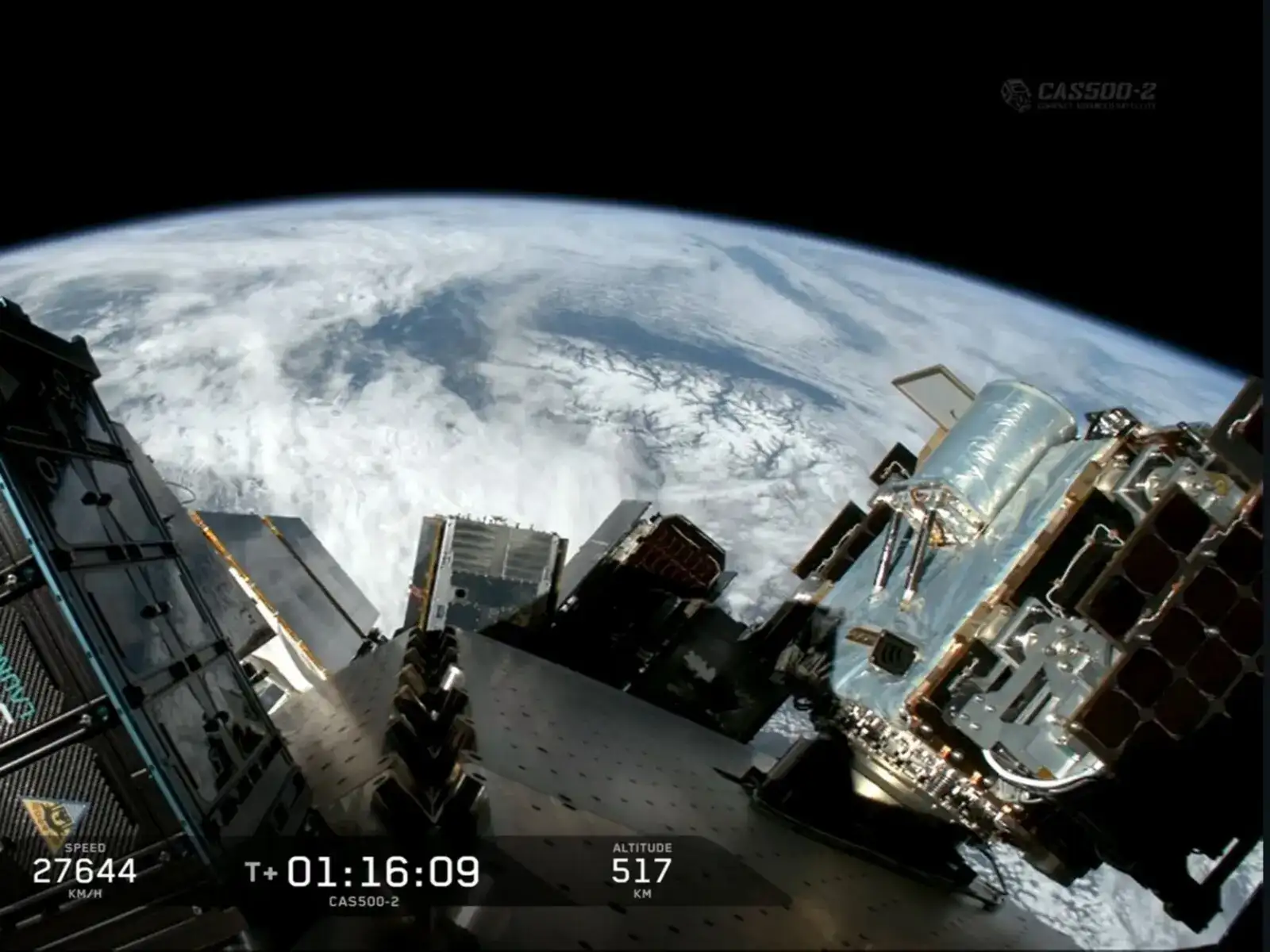
Bengaluru-based space startup GalaxEye’s Mission Drishti satellite was launched on Sunday aboard SpaceX’s Falcon 9 rocket from California, marking a major milestone for India’s private space sector.
Rocketing up: Mission Drishti is the world’s first OptoSAR satellite, combining electro-optical (EO) and synthetic aperture radar (SAR) sensors on a single operational platform, the company said.
EO sensors capture sharp images in daylight and clear skies, while SAR delivers all-weather, round-the-clock imagery using radar pulses.
CEO’s take: Speaking from California, GalaxEye CEO Suyash Singh told us the company is already seeing strong global interest in the differentiated datasets enabled by its OptoSAR payload. “We have interest from several commercial customers,” he said, adding that with the satellite now in orbit, the immediate focus is on completing commissioning.
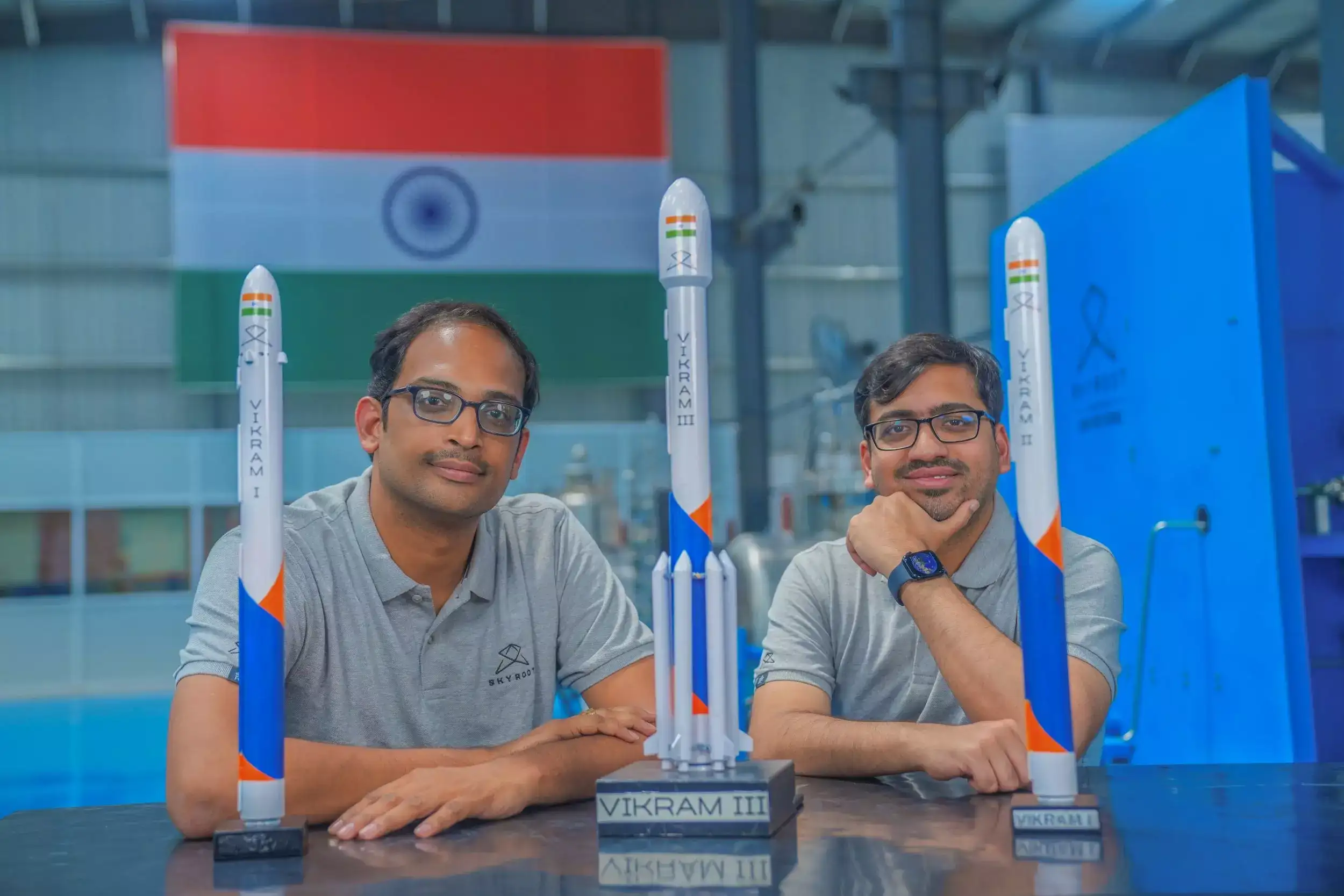 (L-R) Naga Bharath Daka and Pawan Kumar Chandana, founders, Skyroot
Skyroot Aerospace is gearing up to launch Vikram-1, India’s first privately built orbital rocket, within weeks, after completing final integration and testing.
Mission details: The Hyderabad-based startup is preparing to ship the remaining hardware to Sriharikota and will soon announce a launch window.
The window is expected to open in June and could stay available for about a month, depending on regulatory clearances and vehicle readiness. The flight is likely to last around 15 minutes and aims to place payloads into low Earth orbit at altitudes above 400 kilometres.
Why it matters: Unlike Vikram-S, Skyroot’s 2022 suborbital test vehicle, Vikram-1 is an orbital launcher and represents a much bigger technical and commercial leap. Skyroot sees this as a data-gathering test flight for future commercial missions, not a quest for a flawless debut.

Rising packaging costs tied to the West Asia conflict are forcing India’s direct-to-consumer (D2C) brands to rethink pricing and product strategy.
What’s happening: Beverage and consumer brands are changing formats to protect margins.
Cost pressure: Packaging costs are up 25-30% across aluminium, glass and PET due to supply disruptions. For D2C brands, packaging accounts for 10 to 25% of costs, versus 5-15% for large FMCG players, leaving them more exposed.
What’s next: Brands are juggling price hikes, packaging changes and premiumisation while trying to hold on to demand.
Big picture: Large FMCG firms have also raised prices and cut pack sizes to offset rising costs.

IT’s revenue per employee up in productivity: Revenue per employee rose at four of India’s top IT services companies in FY26 as tech firms look to decouple headcount from revenue growth amid increasing adoption of artificial intelligence.
Chip companies chase expert chefs: Semiconductor firms setting up in Sanand are hunting for top culinary talent, not just factory staff. Several are seeking chefs who can serve dishes such as Filipino adobo and Malaysian laksa to keep senior executives well fed.
Gaming regulator takes charge: The Online Gaming Authority of India (OGAI), which formally assumed its role as the statutory sectoral regulator on Friday, will first focus on registering eSports entities and handling public grievances, ministry officials said.
■ The hottest anti-AI gadget is a cyberdeck (Wired)
■ Big Tech’s AI payback might be coming into view (FT)
■ The quiet layoffs sweeping China’s tech giants (Rest of World)
Also in the letter:
■ War hits packaging
■ IT productivity rises
■ What’s cooking at chip firms?
UpGrad to acquire Unacademy for Rs 2,055 crore, 90% below peak valuation
Upskilling platform UpGrad is set to acquire Unacademy in an all-stock deal after months of negotiations, sources told us.
Deal details:
- The deal values Unacademy at about Rs 2,055 crore, or $218 million, which is more than 90% lower than its peak 2021 valuation of $3.4 billion.
- It could give UpGrad access to nearly Rs 900-950 crore in cash on Unacademy’s balance sheet.
- UpGrad is expected to file for Competition Commission of India (CCI) approval this week.
Yes, and: UpGrad is also in talks to raise about Rs 375 crore in an internal funding round from Temasek and founder Ronnie Screwvala, which would take its cash position to more than Rs 1,300 crore once the Unacademy transaction and the funding round close.
“It plans to deploy this capital towards organic growth opportunities, including scaling its B2B (business-to-business) and enterprise segments, embedding AI across student outcomes, and expanding global talent mobility beyond its existing study abroad business,” sources said.
Setting context: The two companies began discussions on a deal in November last year, but hit a roadblock over a valuation mismatch in January. Then, in March 2026, Screwvala and Munjal announced on social media that they had signed a term sheet for UpGrad to acquire Unacademy in a 100% share-swap deal.
Deal significance: If completed, this would be one of the largest consolidation moves in India’s still-recovering edtech sector. The industry has been under pressure since the post-pandemic demand surge faded and Byju’s, once valued at $22 billion, collapsed, reshaping investor sentiment.
Also Read: Upgrad, Unacademy betting on AI to disrupt edtech
India’s largest private satellite ‘Drishti’ lifts off, sets global first in OptoSAR imaging
Bengaluru-based space startup GalaxEye’s Mission Drishti satellite was launched on Sunday aboard SpaceX’s Falcon 9 rocket from California, marking a major milestone for India’s private space sector.
Rocketing up: Mission Drishti is the world’s first OptoSAR satellite, combining electro-optical (EO) and synthetic aperture radar (SAR) sensors on a single operational platform, the company said.
EO sensors capture sharp images in daylight and clear skies, while SAR delivers all-weather, round-the-clock imagery using radar pulses.
CEO’s take: Speaking from California, GalaxEye CEO Suyash Singh told us the company is already seeing strong global interest in the differentiated datasets enabled by its OptoSAR payload. “We have interest from several commercial customers,” he said, adding that with the satellite now in orbit, the immediate focus is on completing commissioning.
Skyroot Vikram-I rocket is raring to soar high
Skyroot Aerospace is gearing up to launch Vikram-1, India’s first privately built orbital rocket, within weeks, after completing final integration and testing.
Mission details: The Hyderabad-based startup is preparing to ship the remaining hardware to Sriharikota and will soon announce a launch window.
The window is expected to open in June and could stay available for about a month, depending on regulatory clearances and vehicle readiness. The flight is likely to last around 15 minutes and aims to place payloads into low Earth orbit at altitudes above 400 kilometres.
Why it matters: Unlike Vikram-S, Skyroot’s 2022 suborbital test vehicle, Vikram-1 is an orbital launcher and represents a much bigger technical and commercial leap. Skyroot sees this as a data-gathering test flight for future commercial missions, not a quest for a flawless debut.
D2C brands tweak packaging as war pushes up costs
Rising packaging costs tied to the West Asia conflict are forcing India’s direct-to-consumer (D2C) brands to rethink pricing and product strategy.
What’s happening: Beverage and consumer brands are changing formats to protect margins.
- Boba Bhai is shifting from aluminium cans to plastic bottles as input costs rise.
- Lahori Zeera plans to launch larger bottles alongside its 160 ml packs to spread costs.
- Jimmy’s Cocktails is weighing price hikes on premium products while holding entry-level prices steady.
- Fragrance label Bla Bli Blu is running on existing inventory for now, softening the immediate blow.
Cost pressure: Packaging costs are up 25-30% across aluminium, glass and PET due to supply disruptions. For D2C brands, packaging accounts for 10 to 25% of costs, versus 5-15% for large FMCG players, leaving them more exposed.
What’s next: Brands are juggling price hikes, packaging changes and premiumisation while trying to hold on to demand.
Big picture: Large FMCG firms have also raised prices and cut pack sizes to offset rising costs.
Other Top Stories By Our Reporters
IT’s revenue per employee up in productivity: Revenue per employee rose at four of India’s top IT services companies in FY26 as tech firms look to decouple headcount from revenue growth amid increasing adoption of artificial intelligence.
Chip companies chase expert chefs: Semiconductor firms setting up in Sanand are hunting for top culinary talent, not just factory staff. Several are seeking chefs who can serve dishes such as Filipino adobo and Malaysian laksa to keep senior executives well fed.
Gaming regulator takes charge: The Online Gaming Authority of India (OGAI), which formally assumed its role as the statutory sectoral regulator on Friday, will first focus on registering eSports entities and handling public grievances, ministry officials said.
Global Picks We Are Reading
■ The hottest anti-AI gadget is a cyberdeck (Wired)
■ Big Tech’s AI payback might be coming into view (FT)
■ The quiet layoffs sweeping China’s tech giants (Rest of World)
Want this newsletter delivered to your inbox?
I agree to receive newsletters and marketing communications via e-mail