
 Morning Dispatch Morning Dispatch |
ET Startup Awards 2025: Unveiling the Bootstrap Champ & Top Innovator nominees
Want this newsletter delivered to your inbox?
I agree to receive newsletters and marketing communications via e-mail

Thank you for subscribing to Morning Dispatch
We'll soon meet in your inbox.
The Economic Times Startup Awards (ETSA) are back! We have been hard at work for the past few months to bring you the 11th edition of the coveted honours.
Background: Launched in 2015 to celebrate the startup and new-age economy, ETSA has, over the past ten years chronicled India’s entrepreneurship ecosystem. Past winners of the prestigious Startup of the Year, like Lenskart, Delhivery, and Zomato, have grown into strong corporations, displaying the mettle of new economy ventures.
An elite jury will meet in Bengaluru on August 28 to decide the winners of the 11th edition of The Economic Times Startup Awards. We unveil the nominees in two of the eight categories: Bootstrap Champ, entrepreneurs who have built startups without external funding, and Top Innovators, startups developing transformative technologies.
ET reached out to more than 100 of the country’s leading entrepreneurs, investors, industry groups and other stakeholders to come up with this list of the brightest entrepreneurial talent.

Read more about the nominees here
Read more about the nominees here

The Promotion and Regulation of Online Gaming Bill, 2025, is already causing tremors beyond the gaming sector. Fintech and regtech startups that relied on real-money gaming (RMG) for volumes and margins are now bracing for impact.
Story so far: The controversial Bill cleared the Rajya Sabha on Thursday, a day after getting a green light from the Lok Sabha. It now awaits the President’s nod to become law. Meanwhile, gaming firms are preparing for a legal battle, hoping to stall the legislation.
Collateral damage: Industry insiders estimate payments firms will lose Rs 20,000–30,000 crore in monthly transaction volumes as real money stops flowing into gaming.
Lost charm: Regulatory firms that offered video know your customer (KYC) services to RMG platforms are also in a bind. With real-money play outlawed, there’s little need for deep customer verification. Most will now have to pivot to simpler onboarding use cases.
Also Read: Online Gaming Bill 2025 protects savings of crores of Indian middle-class families: Ashwini Vaishnaw

Gaming companies are already pulling the plug on paid games. Dream11, Zupee, and Peak XV Partners-backed Probo have announced shutdowns of their RMG operations.
Now and then: For some, the loss is staggering. Real-money formats accounted for 60–70% of revenues. Now, companies like Dream11 and My11Circle are testing overseas markets where RMG remains legal or shifting to ad-driven, free-to-play formats to stay afloat.
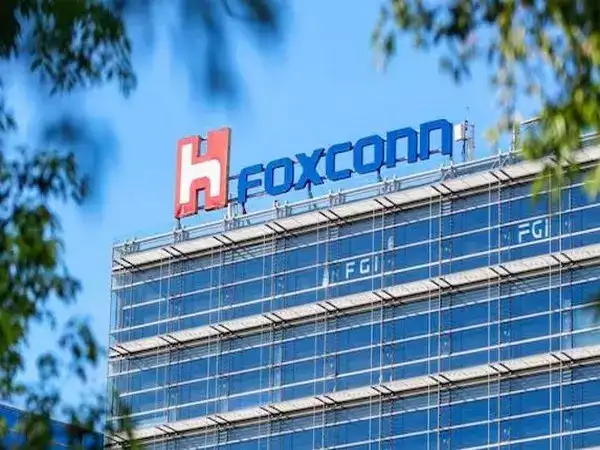
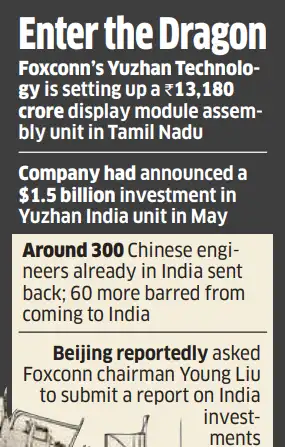
Foxconn’s iPhone ambitions in India have hit another snag. Yuzhan Technology, a Foxconn subsidiary, has ordered roughly 300 Chinese engineers stationed in India to return home – allegedly at Beijing’s request. This marks the second recall in as many months, even as the company tries to scale up iPhone manufacturing in India.
Tell me more: Foxconn has been asked to withdraw all Chinese expats deployed to India for setting up factories and the component supply chain. A group of 60 engineers, who were set to travel, have been told to stay put. The Chinese authorities have even asked Foxconn chairman Young Liu to file a report on the company’s India investments, a person familiar with the matter told us.
Damage control: After the first wave of recalls in early July, Foxconn began preparing backup plans. It is now flying in engineers from Taiwan to keep its India operations on track and limit disruption.
Mixed signals: The episode highlights the delicate state of India-China relations. Political overtures, helped by Trump-era trade talks, are running parallel to mounting friction. Foxconn’s pivot to India has rattled China’s dominance in iPhone production.

Is the bike-taxi ban lifted in Bengaluru? Bike taxis quietly returned to Bengaluru streets after a two-month hiatus as the Karnataka High Court questioned the blanket ban on the service. There has been no order to lift the ban, though — the government has not officially withdrawn it, and the court has only recommended regulation instead of prohibition. A final order can be expected when the matter is heard next on September 22.
Also Read: ETtech Explainer: Is the bike-taxi ban lifted in Bengaluru?
‘Rare’ China lifeline for Indian electronics firms: Beijing’s move to ease rare earth export curbs will remove a critical input supplies bottleneck for products ranging from electric cars to laptops and displays, giving India a competitive edge globally, industry executives told ET.
■ Why did a $10 billion startup let me vibe-code for them—and why did I love it? (Wired)
■ Microsoft’s Xbox handheld is a good first step toward a Windows gaming OS (The Verge)
■ AI giants race to scoop up elusive real-world data (Rest of World)
Background: Launched in 2015 to celebrate the startup and new-age economy, ETSA has, over the past ten years chronicled India’s entrepreneurship ecosystem. Past winners of the prestigious Startup of the Year, like Lenskart, Delhivery, and Zomato, have grown into strong corporations, displaying the mettle of new economy ventures.
And the nominees are…
An elite jury will meet in Bengaluru on August 28 to decide the winners of the 11th edition of The Economic Times Startup Awards. We unveil the nominees in two of the eight categories: Bootstrap Champ, entrepreneurs who have built startups without external funding, and Top Innovators, startups developing transformative technologies.
ET reached out to more than 100 of the country’s leading entrepreneurs, investors, industry groups and other stakeholders to come up with this list of the brightest entrepreneurial talent.
Bootstrap Champ
- Urban Vault
- SignDesk
- Suta
- Minfy Technologies
- Fyers
Read more about the nominees here
Top Innovator
- Quanfluence
- Chara Technologies
- Minus Zero
- Qure.ai
- Orbitt Space
Read more about the nominees here
Payment, regtech startups to feel the heat from real-money gaming ban
The Promotion and Regulation of Online Gaming Bill, 2025, is already causing tremors beyond the gaming sector. Fintech and regtech startups that relied on real-money gaming (RMG) for volumes and margins are now bracing for impact.
Story so far: The controversial Bill cleared the Rajya Sabha on Thursday, a day after getting a green light from the Lok Sabha. It now awaits the President’s nod to become law. Meanwhile, gaming firms are preparing for a legal battle, hoping to stall the legislation.
Collateral damage: Industry insiders estimate payments firms will lose Rs 20,000–30,000 crore in monthly transaction volumes as real money stops flowing into gaming.
- Payment firms preferred gaming platforms because of high volumes and better margins. Now, they are facing a topline loss.
- Unified Payments Interface (UPI) — the preferred payment mode among gamers — will also feel the pinch, the founder of a payment firm told us.
- Spike in transactions during marquee events like the Indian Premier League and ICC World Cup were key growth drivers, and now they’re about to vanish.
- With the tap turned off, Cashfree, Razorpay, PayU and Easebuzz face a direct hit to revenue.
Lost charm: Regulatory firms that offered video know your customer (KYC) services to RMG platforms are also in a bind. With real-money play outlawed, there’s little need for deep customer verification. Most will now have to pivot to simpler onboarding use cases.
Also Read: Online Gaming Bill 2025 protects savings of crores of Indian middle-class families: Ashwini Vaishnaw
Firms shutter paid games, explore alternative revenue streams
Gaming companies are already pulling the plug on paid games. Dream11, Zupee, and Peak XV Partners-backed Probo have announced shutdowns of their RMG operations.
Now and then: For some, the loss is staggering. Real-money formats accounted for 60–70% of revenues. Now, companies like Dream11 and My11Circle are testing overseas markets where RMG remains legal or shifting to ad-driven, free-to-play formats to stay afloat.
Foxconn arm recalls Chinese engineers from India — again!
Foxconn’s iPhone ambitions in India have hit another snag. Yuzhan Technology, a Foxconn subsidiary, has ordered roughly 300 Chinese engineers stationed in India to return home – allegedly at Beijing’s request. This marks the second recall in as many months, even as the company tries to scale up iPhone manufacturing in India.
Tell me more: Foxconn has been asked to withdraw all Chinese expats deployed to India for setting up factories and the component supply chain. A group of 60 engineers, who were set to travel, have been told to stay put. The Chinese authorities have even asked Foxconn chairman Young Liu to file a report on the company’s India investments, a person familiar with the matter told us.
Damage control: After the first wave of recalls in early July, Foxconn began preparing backup plans. It is now flying in engineers from Taiwan to keep its India operations on track and limit disruption.
Mixed signals: The episode highlights the delicate state of India-China relations. Political overtures, helped by Trump-era trade talks, are running parallel to mounting friction. Foxconn’s pivot to India has rattled China’s dominance in iPhone production.
Other Top Stories By Our Reporters
Is the bike-taxi ban lifted in Bengaluru? Bike taxis quietly returned to Bengaluru streets after a two-month hiatus as the Karnataka High Court questioned the blanket ban on the service. There has been no order to lift the ban, though — the government has not officially withdrawn it, and the court has only recommended regulation instead of prohibition. A final order can be expected when the matter is heard next on September 22.
Also Read: ETtech Explainer: Is the bike-taxi ban lifted in Bengaluru?
‘Rare’ China lifeline for Indian electronics firms: Beijing’s move to ease rare earth export curbs will remove a critical input supplies bottleneck for products ranging from electric cars to laptops and displays, giving India a competitive edge globally, industry executives told ET.
Global Picks We Are Reading
■ Why did a $10 billion startup let me vibe-code for them—and why did I love it? (Wired)
■ Microsoft’s Xbox handheld is a good first step toward a Windows gaming OS (The Verge)
■ AI giants race to scoop up elusive real-world data (Rest of World)
Want this newsletter delivered to your inbox?
I agree to receive newsletters and marketing communications via e-mail