
 Morning Dispatch Morning Dispatch |
Swiggy CEO on failed shareholder vote; Indian firms brace for Mythos
Want this newsletter delivered to your inbox?
I agree to receive newsletters and marketing communications via e-mail

Thank you for subscribing to Morning Dispatch
We'll soon meet in your inbox.
Happy Thursday! Swiggy group CEO Sriharsha Majety opened up about the recent hitch to become an Indian-owned company. This and more in today's ETtech Morning Dispatch.
Also in the letter:
■ Impact of SC verdict on GST
■ No more green cards for India this FY
■ Byju gets jail term

Swiggy cofounder and group CEO Sriharsha Majety said the company will soon return to shareholders with its rejected governance proposal to become an Indian Owned and Controlled Company (IOCC), insisting that worries about board rights arose from poor communication, not weak governance.
Why it matters: IOCC status would let Instamart shift to an inventory-led model, tighten control over selection, pricing, and margins, and bring it closer to the Eternal-owned rival Blinkit in both unit economics and operational control.
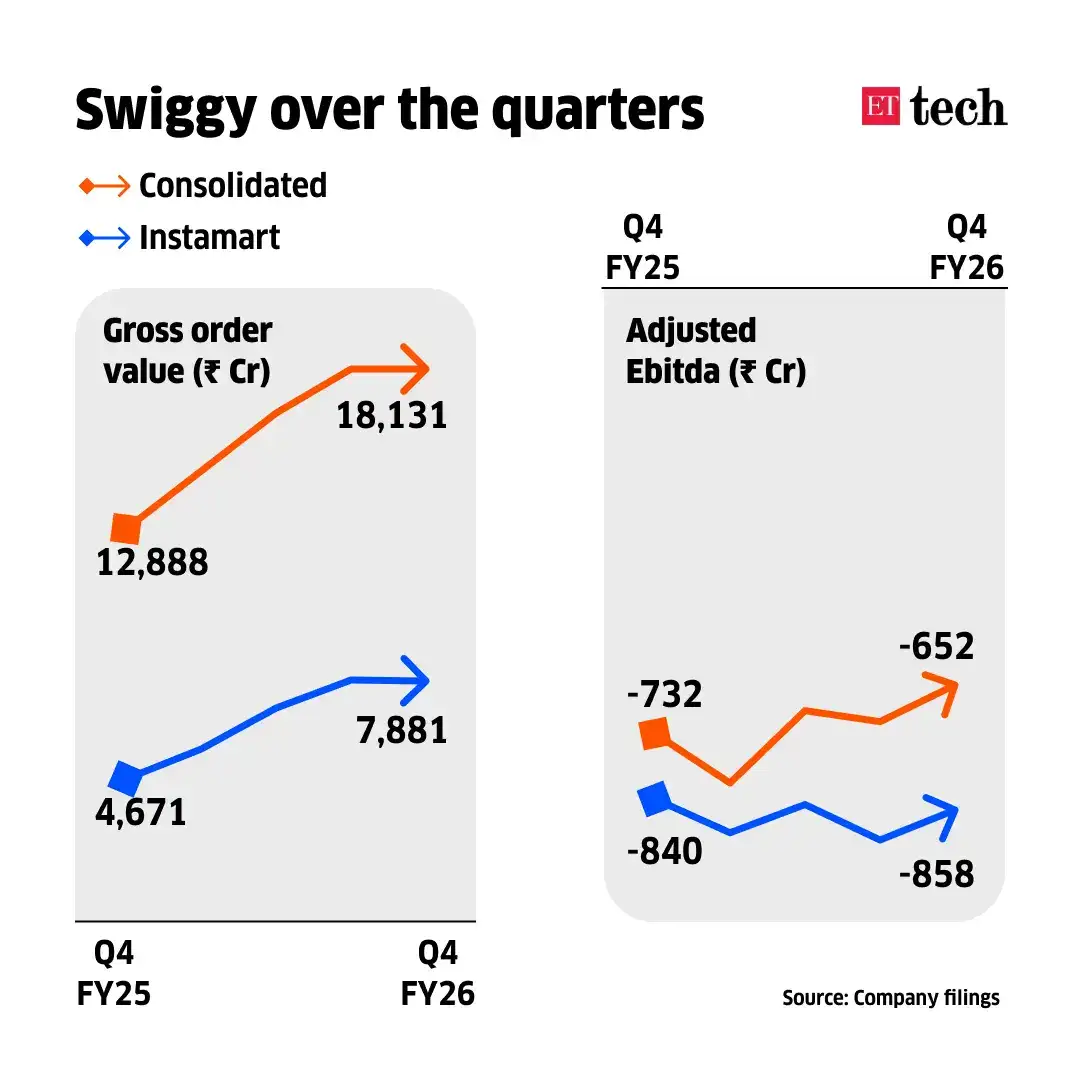
Instamart under focus: Investors now have one big question: Can Swiggy prove that its quick commerce can scale profitably? Instamart has cut discounts and narrowed losses, but growth has cooled even as market-share pressure mounts.
Also Read: ETtech Explainer: How Swiggy's failed bid to become an Indian firm matters for Instamart
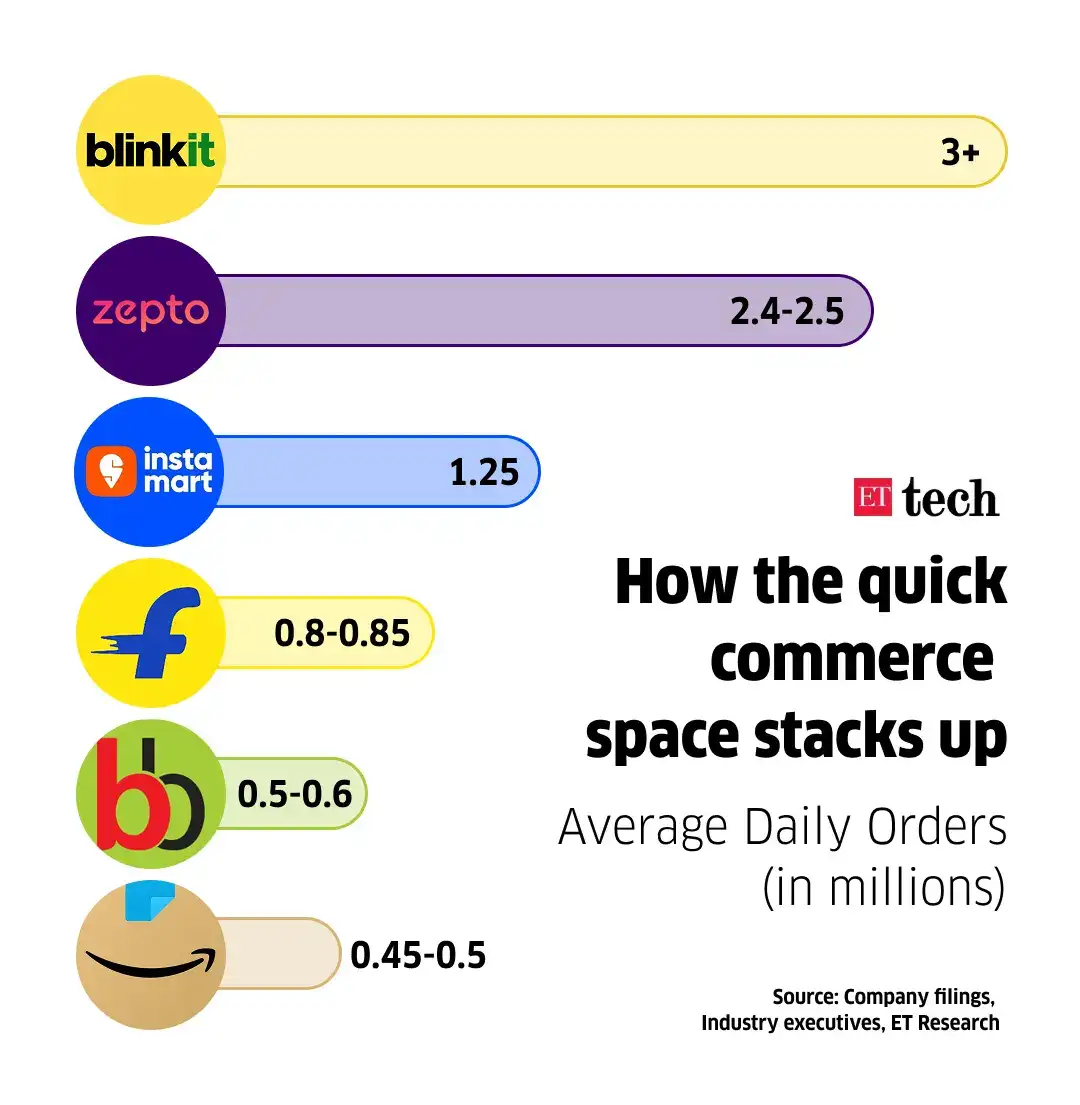
M&A talk dismissed: Majety dismissed buyout rumours, citing Swiggy's cash reserves and the profitability of its food delivery business.
Management bet: Swiggy is betting big on sustainable economics over subsidy-fuelled expansion, even if that slows growth in the near term.
Also Read: Swiggy says failed shareholder resolution aimed at governance, not founder control

Banks, telecom operators and power utilities have started stress-testing their codebases ahead of a wider rollout of Anthropic's Mythos model in the coming months.
What's the news: Companies are running their public-facing systems through existing AI models like Opus 4.7 and GPT 5.5, and have asked vendors to flag every potential exposure.
The Data Security Council of India (DSCI), a Nasscom-backed industry think-tank, has set up a sandbox where organisations can probe generative AI models for security vulnerabilities and data-privacy risks before using them in production.
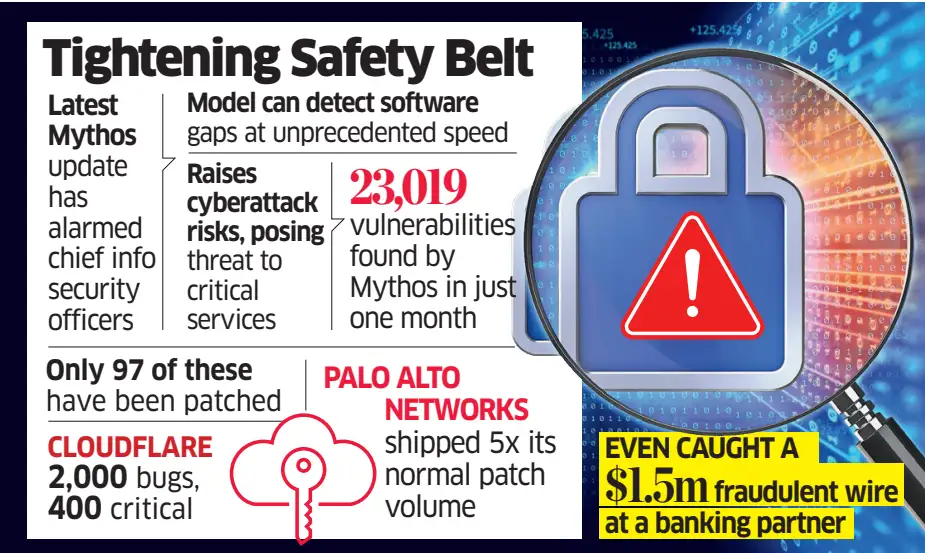
What's the threat: Anthropic's latest Mythos update, unveiled last week, has rattled chief information security officers (CISOs) because it can surface software vulnerabilities at a speed humans simply can't match.
Also Read: Anthropic AI model finds over 10,000 critical bugs across open-source software projects
Slow cyber preparedness: As the threat surface explodes, a widening talent gap, especially in markets like India, is leaving organisations exposed despite rising cyber budgets.
“The scale and velocity at which systems like Mythos can detect vulnerabilities fundamentally change the threat landscape for banks,” said the CISO of a large private sector bank. “Earlier, cyber attackers needed weeks or months to identify exploitable weaknesses; now, AI models can compress that window into hours.”
Also Read: Anthropic Mythos: Firms with access to model say speed of response, not uncovering flaws, is key

With the Supreme Court upholding a retrospective 28% GST on online gaming, the battle now shifts from legal theory to enforcement. Companies must confront tax demands of nearly Rs 92,000 crore and gear up for the next wave of litigation.
Fresh legal battlelines: Industry executives and tax experts say gaming firms can still contest valuation methods, tax computations, limitation periods and procedural lapses, though the core question of GST applicability appears settled.
Pressure on companies: Executives warn that a long-drawn legal process could inflate liabilities via compounding interest, turning tax disputes into existential threats for smaller firms with weaker balance sheets.
Recovery overhang: Lawyers expect the immediate fight to centre on recovery timelines, interim relief and restructuring of dues, with appellate forums likely to define how the industry absorbs this shock.
Sector at a crossroads: The ruling throws India's online gaming ecosystem into a new phase of uncertainty, as companies juggle legal strategy, cash conservation and day-to-day operations amid one of the sector's toughest regulatory hits.
Also Read: SC upholds govt retrospective 28% GST levy on online gaming companies

The US Department of Homeland Security said on May 22 that it has exhausted its green card limit for Indians under the EB-2 category for the year, adding that it will now issue new cards only in the next fiscal year, starting October 1, 2027.
Data decoded:
Also Read: 700,000 green card seekers in limbo; applying anew from home country to be challenging
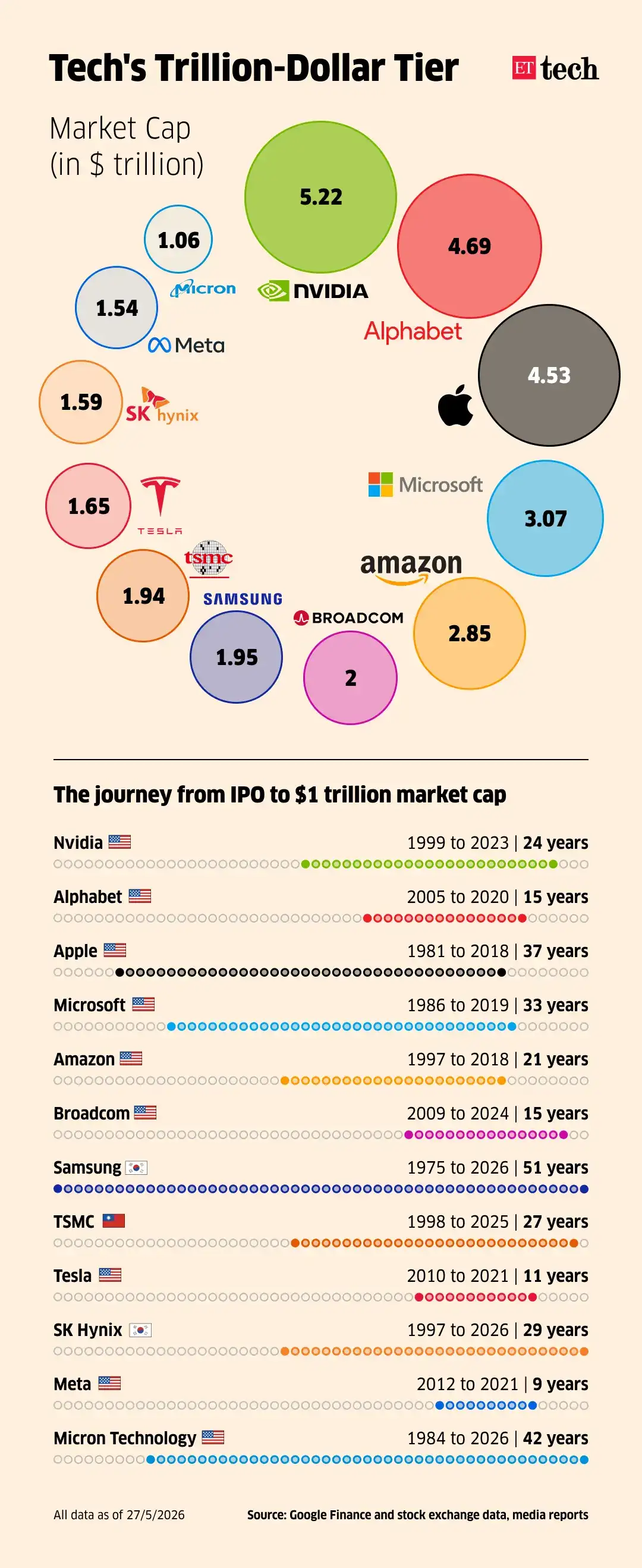
An AI-fuelled market rally is rapidly reshaping the global trillion-dollar club, with chipmakers and Big Tech firms driving massive gains in market value.

Byju gets jail term: A Singapore court has sentenced Byju Raveendran to six months in jail for contempt in ongoing proceedings, piling fresh legal pressure on the founder of the bankrupt edtech firm that bears his name.
Ola Electric eyes commercial EV launch: The electric two-wheeler maker Ola Electric is looking to launch a commercial vehicle for gig workers, aiming squarely at the booming quick-commerce and ecommerce delivery market, according to people in the know.
PhysicsWallah's Q4 revenue jump: Noida-based edtech firm PhysicsWallah posted a 50% year-on-year rise in operating revenue to Rs 919 crore for the quarter ended March 31, 2026, driven by growth in paid users and the expansion of its offline centre network.
■ AI Labs: Elon Musk wants AI in space (FT)
■ US companies have an AI problem. Indian IT wants to be the solution (Rest of World)
■ A reality check on the AI jobs hysteria (MIT Technology Review)
Also in the letter:
■ Impact of SC verdict on GST
■ No more green cards for India this FY
■ Byju gets jail term
No governance issue with resolution, will hold revote soon: Swiggy CEO Sriharsha Majety
Swiggy cofounder and group CEO Sriharsha Majety said the company will soon return to shareholders with its rejected governance proposal to become an Indian Owned and Controlled Company (IOCC), insisting that worries about board rights arose from poor communication, not weak governance.
Why it matters: IOCC status would let Instamart shift to an inventory-led model, tighten control over selection, pricing, and margins, and bring it closer to the Eternal-owned rival Blinkit in both unit economics and operational control.
Instamart under focus: Investors now have one big question: Can Swiggy prove that its quick commerce can scale profitably? Instamart has cut discounts and narrowed losses, but growth has cooled even as market-share pressure mounts.
Also Read: ETtech Explainer: How Swiggy's failed bid to become an Indian firm matters for Instamart
M&A talk dismissed: Majety dismissed buyout rumours, citing Swiggy's cash reserves and the profitability of its food delivery business.
Management bet: Swiggy is betting big on sustainable economics over subsidy-fuelled expansion, even if that slows growth in the near term.
Also Read: Swiggy says failed shareholder resolution aimed at governance, not founder control
Banks, telecom operators take test to check cybersecurity score
Banks, telecom operators and power utilities have started stress-testing their codebases ahead of a wider rollout of Anthropic's Mythos model in the coming months.
What's the news: Companies are running their public-facing systems through existing AI models like Opus 4.7 and GPT 5.5, and have asked vendors to flag every potential exposure.
The Data Security Council of India (DSCI), a Nasscom-backed industry think-tank, has set up a sandbox where organisations can probe generative AI models for security vulnerabilities and data-privacy risks before using them in production.
What's the threat: Anthropic's latest Mythos update, unveiled last week, has rattled chief information security officers (CISOs) because it can surface software vulnerabilities at a speed humans simply can't match.
- In just one month, Mythos has identified 23,019 vulnerabilities.
- Only 97 have been fixed so far, because human cybersecurity teams need about 14 days on average to patch each bug.
Also Read: Anthropic AI model finds over 10,000 critical bugs across open-source software projects
Slow cyber preparedness: As the threat surface explodes, a widening talent gap, especially in markets like India, is leaving organisations exposed despite rising cyber budgets.
“The scale and velocity at which systems like Mythos can detect vulnerabilities fundamentally change the threat landscape for banks,” said the CISO of a large private sector bank. “Earlier, cyber attackers needed weeks or months to identify exploitable weaknesses; now, AI models can compress that window into hours.”
Also Read: Anthropic Mythos: Firms with access to model say speed of response, not uncovering flaws, is key
SC verdict on GST leaves real-money gaming firms staring at a Rs 92,000-crore question
With the Supreme Court upholding a retrospective 28% GST on online gaming, the battle now shifts from legal theory to enforcement. Companies must confront tax demands of nearly Rs 92,000 crore and gear up for the next wave of litigation.
Fresh legal battlelines: Industry executives and tax experts say gaming firms can still contest valuation methods, tax computations, limitation periods and procedural lapses, though the core question of GST applicability appears settled.
Pressure on companies: Executives warn that a long-drawn legal process could inflate liabilities via compounding interest, turning tax disputes into existential threats for smaller firms with weaker balance sheets.
Recovery overhang: Lawyers expect the immediate fight to centre on recovery timelines, interim relief and restructuring of dues, with appellate forums likely to define how the industry absorbs this shock.
Sector at a crossroads: The ruling throws India's online gaming ecosystem into a new phase of uncertainty, as companies juggle legal strategy, cash conservation and day-to-day operations amid one of the sector's toughest regulatory hits.
Also Read: SC upholds govt retrospective 28% GST levy on online gaming companies
US Department says India's EB-2 green card limit exhausted for 2026
The US Department of Homeland Security said on May 22 that it has exhausted its green card limit for Indians under the EB-2 category for the year, adding that it will now issue new cards only in the next fiscal year, starting October 1, 2027.
Data decoded:
- Every year, 140,000 employment-based green cards are issued.
- Nearly a third of this is allocated under the EB-2 category, along with the unused visas from the other employment-based category, EB-1.
- This also has a cap of 7% per country. This translates to about 40,000 in total, with 2,800 green cards under this category.
Also Read: 700,000 green card seekers in limbo; applying anew from home country to be challenging
Charted: Tech's trillion-dollar tier
An AI-fuelled market rally is rapidly reshaping the global trillion-dollar club, with chipmakers and Big Tech firms driving massive gains in market value.
Other Top Stories By Our Reporters
Byju gets jail term: A Singapore court has sentenced Byju Raveendran to six months in jail for contempt in ongoing proceedings, piling fresh legal pressure on the founder of the bankrupt edtech firm that bears his name.
Ola Electric eyes commercial EV launch: The electric two-wheeler maker Ola Electric is looking to launch a commercial vehicle for gig workers, aiming squarely at the booming quick-commerce and ecommerce delivery market, according to people in the know.
PhysicsWallah's Q4 revenue jump: Noida-based edtech firm PhysicsWallah posted a 50% year-on-year rise in operating revenue to Rs 919 crore for the quarter ended March 31, 2026, driven by growth in paid users and the expansion of its offline centre network.
Global Picks We Are Reading
■ AI Labs: Elon Musk wants AI in space (FT)
■ US companies have an AI problem. Indian IT wants to be the solution (Rest of World)
■ A reality check on the AI jobs hysteria (MIT Technology Review)
Want this newsletter delivered to your inbox?
I agree to receive newsletters and marketing communications via e-mail