
 Morning Dispatch |
Online festive sales fizzle; Snowflake CEO on AI’s impact on software
Want this newsletter delivered to your inbox?
I agree to receive newsletters and marketing communications via e-mail

Thank you for subscribing to Morning Dispatch
We'll soon meet in your inbox.
Happy Monday! Festive ecommerce sales have slowed down this year, we tell you why. This and more in today’s ETtech Morning Dispatch.
Also in the letter:
■Google DeepMind exec on safe AI
■Deepfakes cloud Delhi protests
■The Pant Project raises funds

Direct-to-consumer (D2C) brands and executives at ecommerce platforms and logistics firms are seeing a tepid festive season so far.
Driving the news: Online delivery dispatches during the first 10 days of Amazon’s Great Indian Festival and Flipkart’s Big Billion Days ran 10-12% below the year-ago period, industry insiders said.
Sluggish demand for premium electronics such as smartphones, home appliances and laptops has been a key drag, as prices of these products have risen 30-40% in recent months.
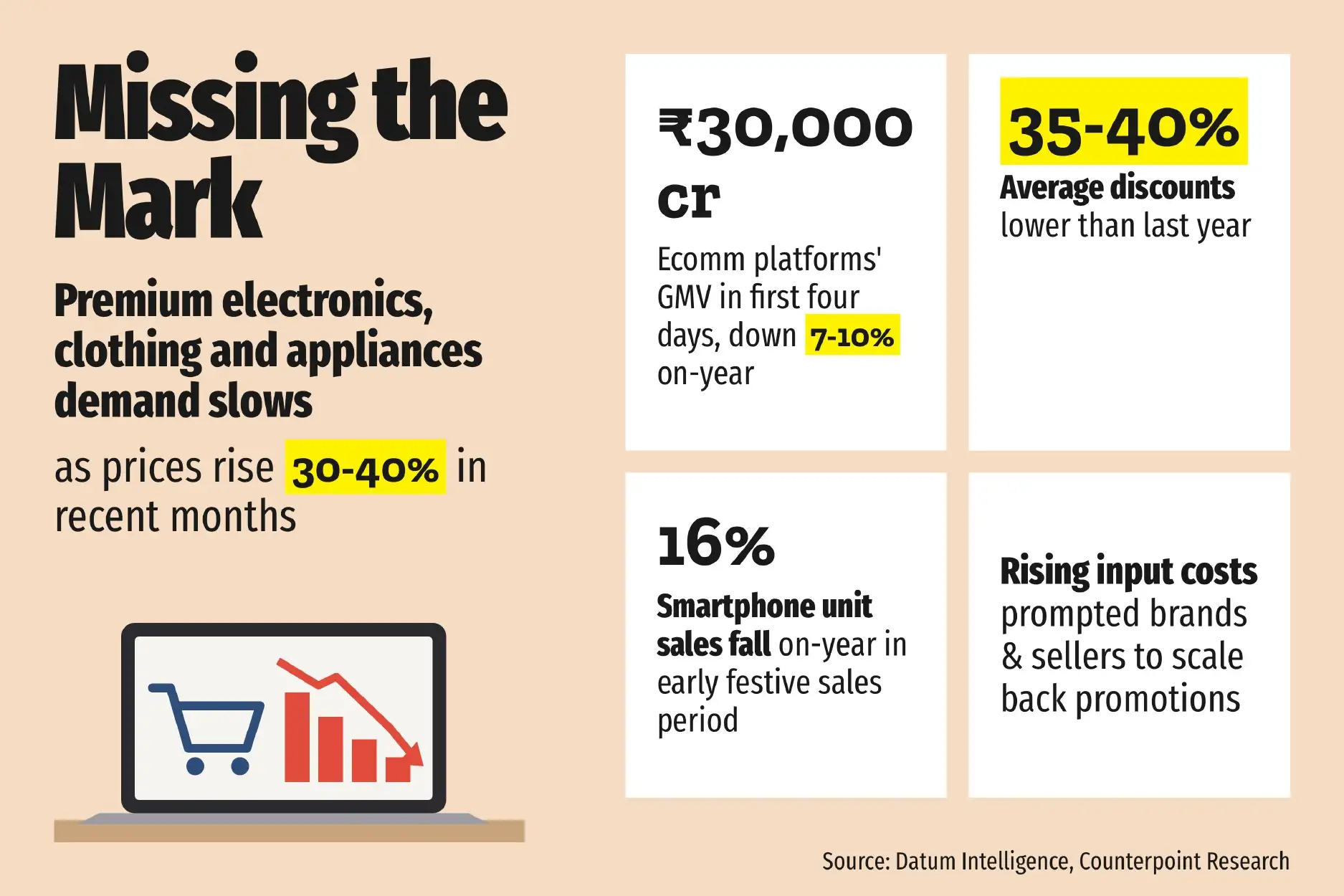
Electronics drag: Ecommerce platforms clocked Rs 29,800-30,900 crore in gross merchandise value (GMV) over the first four days, against Rs 33,200 crore a year ago, per Datum Intelligence.
Smartphones and electronics, which account for more than half of GMV during festive sale events for some platforms, have been hit hardest by price increases.
Amazon’s counter: Amazon said consumer interest remained strong, reporting over 440 million visits during the opening phase of the Great Indian Festival 2026, its highest ever, with over 72% of visits coming from beyond the top nine metros.
Despite that, some brands reported sales tapering as the event progressed.
Also Read: Online festive sales start slow as smartphone demand dips; quick commerce extends shopping window
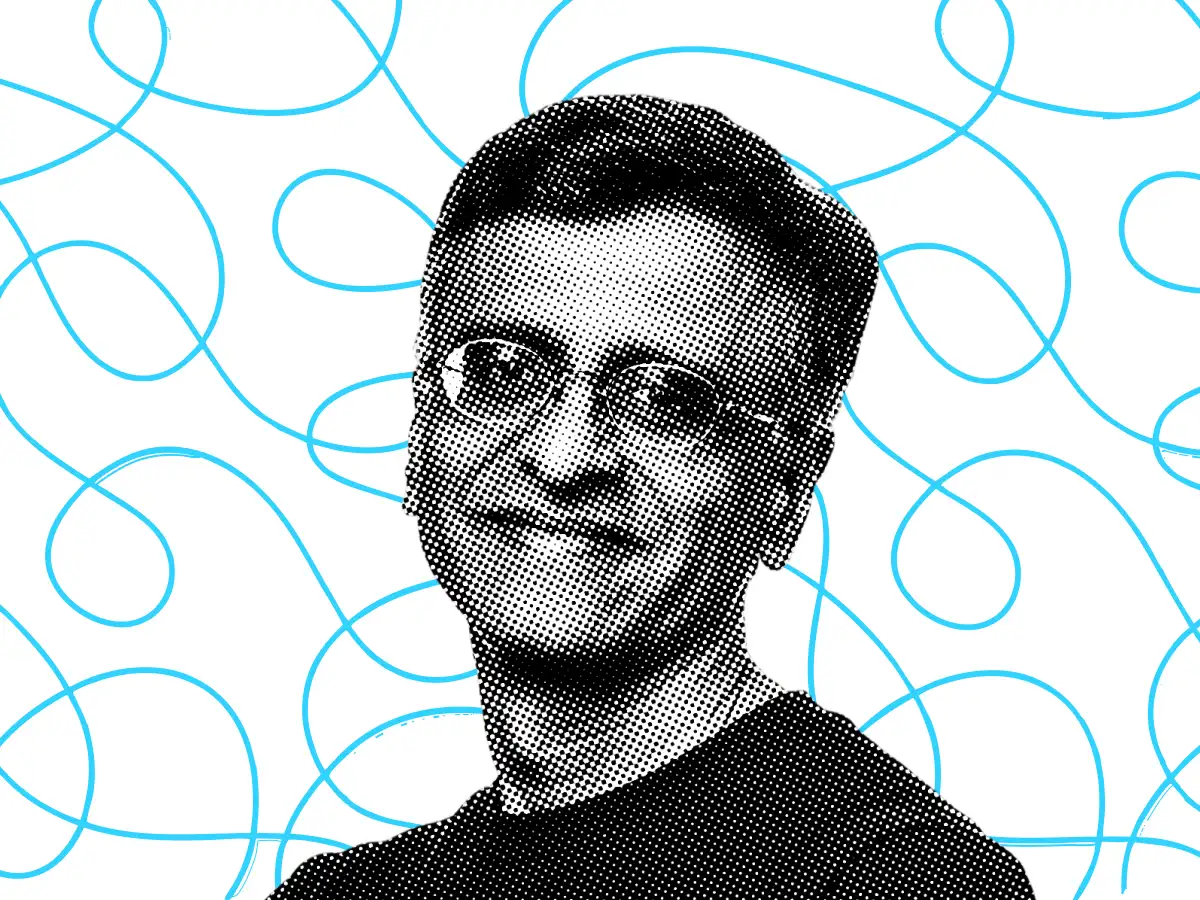 Snowflake CEO Sridhar Ramaswamy
 said artificial intelligence (AI) regulation should extend beyond frontier model labs to every AI agent businesses deploy, arguing that common, basic guidelines would benefit the industry. Edited excerpts:
On AI slowdown debate: The frontier models have become so much more powerful that, after incidents like the Hugging Face attack, people now have legitimate concerns about how careful we should be. By default, America is a place of permissionless innovation. When there is a new technology, the tendency is to wait for things to go wrong before taking action, whereas the tendency in Europe is to first figure out how to regulate it.
Enterprise software’s challenges: This is a before-and-after moment for software, and the latest generation of models is even better at it. We see massive opportunities. Our consumption model means we start at zero and get paid when people get utility, such as migrations at a scale and speed that would have been unimaginable before.
India play: We have doubled our sales team since last year, more than half our partners in the APJ (Asia-Pacific, Japan) region are from India, and we have set up a GCC (global capability centre) team to support global customers with a large presence here.
Also Read: India’s AI edge will come from talent, not compute, says Snowflake CEO
.jpg "Lila Ibrahim -2cc (1)") Google DeepMind’s chief AI readiness officer Lila Ibrahim
Google DeepMind’s chief AI readiness officer Lila Ibrahim told ET in an exclusive chat that AI should be developed with communities rather than imposed on them.
“Responsibility is not something you bolt on at the end. We have to build it in from the start,” she said, talking to us during her India visit.
Background: Ibrahim took on the newly created role in January 2026, after serving as chief operating officer for nearly nine years. Her mandate is to help prepare society for increasingly capable AI by bringing together governments, businesses, researchers and communities to shape how the technology is developed and deployed.
On the future of AGI: The future of AI, including the possibility of artificial general intelligence (AGI), would depend not just on technological progress but also on the choices people make as the technology develops, she said.
“What we can do is shape how we get there, and we humans, our communities, have agency in shaping how we get there,” Ibrahim said. “Now is the time for us to all really be intentional about what we’re building and how we’re building it.”

AI deepfakes have flooded social media as misleading posts circulate across websites amid protests in Delhi-NCR and Mumbai against the chief election commissioner and the special intensive revision of electoral rolls.
What’s happening: A video of an AI-generated woman trying to stop a police van, sexualised content edited into protest footage, forged documents attributed to protest leaders, and old visuals passed off as current footage are a dime and dozen across Instagram, Facebook and X, drawing millions of views and comments.
Detection slowdown: Ankush Tiwari, founder of pi-labs, which builds AI tools for deepfake detection and voice forensics, said AI tools are making synthetic content faster and cheaper to produce.
Today’s detection systems operate at 80–90% accuracy, and pi-labs is seeing demand for verification surge more than 100% every quarter.
The Pant Project raises funds: Direct-to-consumer (D2C) premium menswear brand The Pant Project has raised Rs 109 crore funding led by Mirae Asset Venture Investments with participation from Sorin Investments, MGA Ventures, B2V Ventures, B&K Securities, Dot&Key cofounder Anisha Saraf and others.
Software majors add more hands in Q2: Five out of the top six Indian technology companies sequentially doubled job additions in the September quarter to 10,300, overcoming concerns that artificial intelligence (AI) would shrink employment in the country’s most globally tracked industry through automation and an inevitable revenue squeeze.
The US needs a social compact on data centres (FT)
Western open-weight models still can’t beat China (Rest of World)
Apple’s antitrust settlement talks spur worries among developers (Wired)
Also in the letter:
■Google DeepMind exec on safe AI
■Deepfakes cloud Delhi protests
■The Pant Project raises funds
Ecommerce festive sales fizzle out on price pangs
Direct-to-consumer (D2C) brands and executives at ecommerce platforms and logistics firms are seeing a tepid festive season so far.
Driving the news: Online delivery dispatches during the first 10 days of Amazon’s Great Indian Festival and Flipkart’s Big Billion Days ran 10-12% below the year-ago period, industry insiders said.
Sluggish demand for premium electronics such as smartphones, home appliances and laptops has been a key drag, as prices of these products have risen 30-40% in recent months.
Electronics drag: Ecommerce platforms clocked Rs 29,800-30,900 crore in gross merchandise value (GMV) over the first four days, against Rs 33,200 crore a year ago, per Datum Intelligence.
Smartphones and electronics, which account for more than half of GMV during festive sale events for some platforms, have been hit hardest by price increases.
Amazon’s counter: Amazon said consumer interest remained strong, reporting over 440 million visits during the opening phase of the Great Indian Festival 2026, its highest ever, with over 72% of visits coming from beyond the top nine metros.
Despite that, some brands reported sales tapering as the event progressed.
Also Read: Online festive sales start slow as smartphone demand dips; quick commerce extends shopping window
Regulate the agents, not just the labs: Snowflake CEO on AI safety
Snowflake CEO Sridhar Ramaswamy said artificial intelligence (AI) regulation should extend beyond frontier model labs to every AI agent businesses deploy, arguing that common, basic guidelines would benefit the industry. Edited excerpts:
On AI slowdown debate: The frontier models have become so much more powerful that, after incidents like the Hugging Face attack, people now have legitimate concerns about how careful we should be. By default, America is a place of permissionless innovation. When there is a new technology, the tendency is to wait for things to go wrong before taking action, whereas the tendency in Europe is to first figure out how to regulate it.
Enterprise software’s challenges: This is a before-and-after moment for software, and the latest generation of models is even better at it. We see massive opportunities. Our consumption model means we start at zero and get paid when people get utility, such as migrations at a scale and speed that would have been unimaginable before.
India play: We have doubled our sales team since last year, more than half our partners in the APJ (Asia-Pacific, Japan) region are from India, and we have set up a GCC (global capability centre) team to support global customers with a large presence here.
Also Read: India’s AI edge will come from talent, not compute, says Snowflake CEO
AI responsibility must be natively built & community-driven: Google DeepMind’s Lila Ibrahim
Google DeepMind’s chief AI readiness officer Lila Ibrahim told ET in an exclusive chat that AI should be developed with communities rather than imposed on them.
“Responsibility is not something you bolt on at the end. We have to build it in from the start,” she said, talking to us during her India visit.
Background: Ibrahim took on the newly created role in January 2026, after serving as chief operating officer for nearly nine years. Her mandate is to help prepare society for increasingly capable AI by bringing together governments, businesses, researchers and communities to shape how the technology is developed and deployed.
On the future of AGI: The future of AI, including the possibility of artificial general intelligence (AGI), would depend not just on technological progress but also on the choices people make as the technology develops, she said.
“What we can do is shape how we get there, and we humans, our communities, have agency in shaping how we get there,” Ibrahim said. “Now is the time for us to all really be intentional about what we’re building and how we’re building it.”
Deepfakes muddy protest coverage as online platforms restrict individual accounts
AI deepfakes have flooded social media as misleading posts circulate across websites amid protests in Delhi-NCR and Mumbai against the chief election commissioner and the special intensive revision of electoral rolls.
What’s happening: A video of an AI-generated woman trying to stop a police van, sexualised content edited into protest footage, forged documents attributed to protest leaders, and old visuals passed off as current footage are a dime and dozen across Instagram, Facebook and X, drawing millions of views and comments.
Detection slowdown: Ankush Tiwari, founder of pi-labs, which builds AI tools for deepfake detection and voice forensics, said AI tools are making synthetic content faster and cheaper to produce.
Today’s detection systems operate at 80–90% accuracy, and pi-labs is seeing demand for verification surge more than 100% every quarter.
Other Top Stories By Our Reporters
The Pant Project raises funds: Direct-to-consumer (D2C) premium menswear brand The Pant Project has raised Rs 109 crore funding led by Mirae Asset Venture Investments with participation from Sorin Investments, MGA Ventures, B2V Ventures, B&K Securities, Dot&Key cofounder Anisha Saraf and others.
Software majors add more hands in Q2: Five out of the top six Indian technology companies sequentially doubled job additions in the September quarter to 10,300, overcoming concerns that artificial intelligence (AI) would shrink employment in the country’s most globally tracked industry through automation and an inevitable revenue squeeze.
Global Picks We Are Reading
The US needs a social compact on data centres (FT)
Western open-weight models still can’t beat China (Rest of World)
Apple’s antitrust settlement talks spur worries among developers (Wired)
Want this newsletter delivered to your inbox?
I agree to receive newsletters and marketing communications via e-mail