
 Morning Dispatch Morning Dispatch |
Skyroot fuels deeptech fire; Paytm Q1 profit jumps
Want this newsletter delivered to your inbox?
I agree to receive newsletters and marketing communications via e-mail

Thank you for subscribing to Morning Dispatch
We'll soon meet in your inbox.
Happy Tuesday! Skyroot Aerospace’s success may unlock fresh funding for India’s spacetech ecosystem. This and more in today’s ETtech Morning Dispatch.
Also in the letter:
■ Transition VC’s new fund
■ Operator-led startups draw funds
■ TN plant leak fans cybersecurity worries
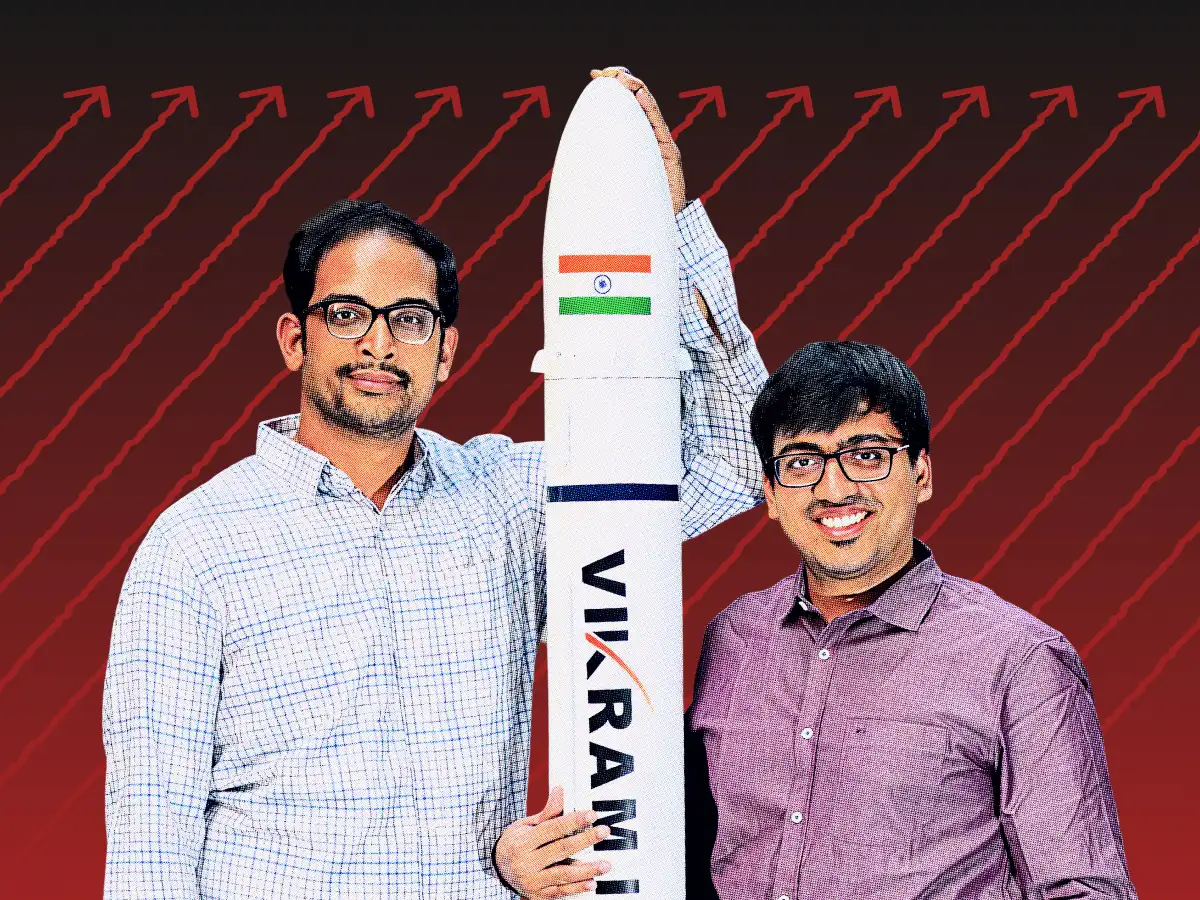
Skyroot Aerospace’s first successful orbital launch is more than a technical milestone; it’s a validation event for India’s private spacetech ecosystem and its long‑term investors.
New benchmark: Skyroot Aerospace, India’s first spacetech unicorn valued at $1.15 billion, is poised to become a reference point for valuing deeptech startups, with demonstrated engineering capability now central to investment decisions.
“The most remarkable thing about Skyroot’s successful Vikram launch today is that it validated something many in India have long believed; India has always had exceptional technical talent,” said Manu Iyer, managing director at BlueHill Capital and an investor in launch vehicle startup Ethereal.
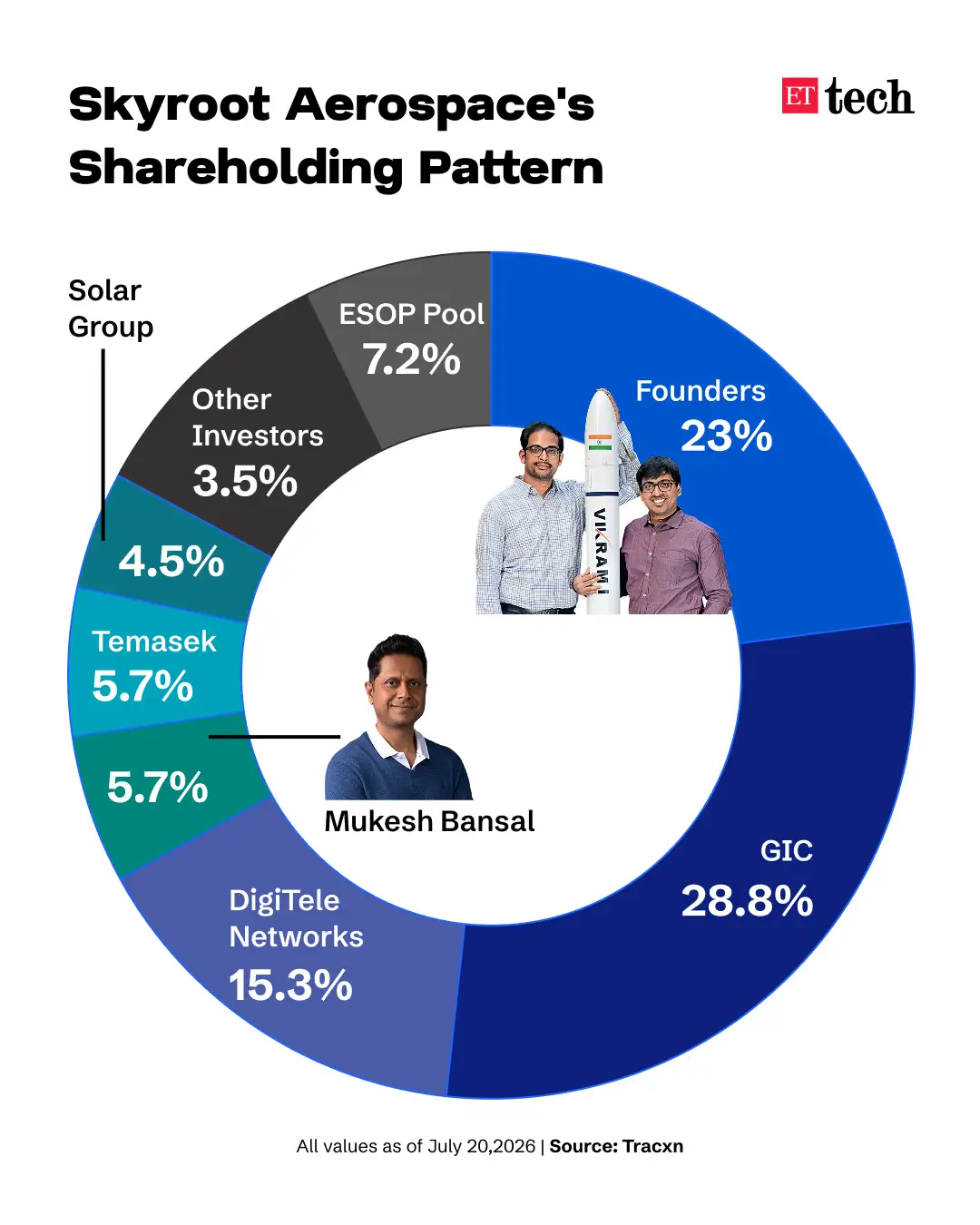
Early backers win: Early backers such as Mukesh Bansal and other angel and VC investors are seeing substantial returns.
Commercial ripple effects: The Vikram‑1 mission is expected to accelerate commercial activity across the spacetech value chain—launch providers, satellite makers, component suppliers, ground stations and mission‑ops firms. Startups like Digantara and Dhruva Space said Skyroot’s success brings much‑needed launch predictability.
Also Read: Skyroot targets one Vikram rocket launch every month from 2027: CEO Pawan Kumar Chandana
 Vijay Shekhar Sharma, CEO, Paytm
Fintech major Paytm reported a 28% year-on-year increase in operating revenue for the April-June quarter to Rs 2,448 crore, while net profit rose 79% to Rs 220 crore.
However, the company's board shelved its maiden bonus share issue proposal, choosing instead to prioritise long-term growth and profitability.
Profitability gathers pace:
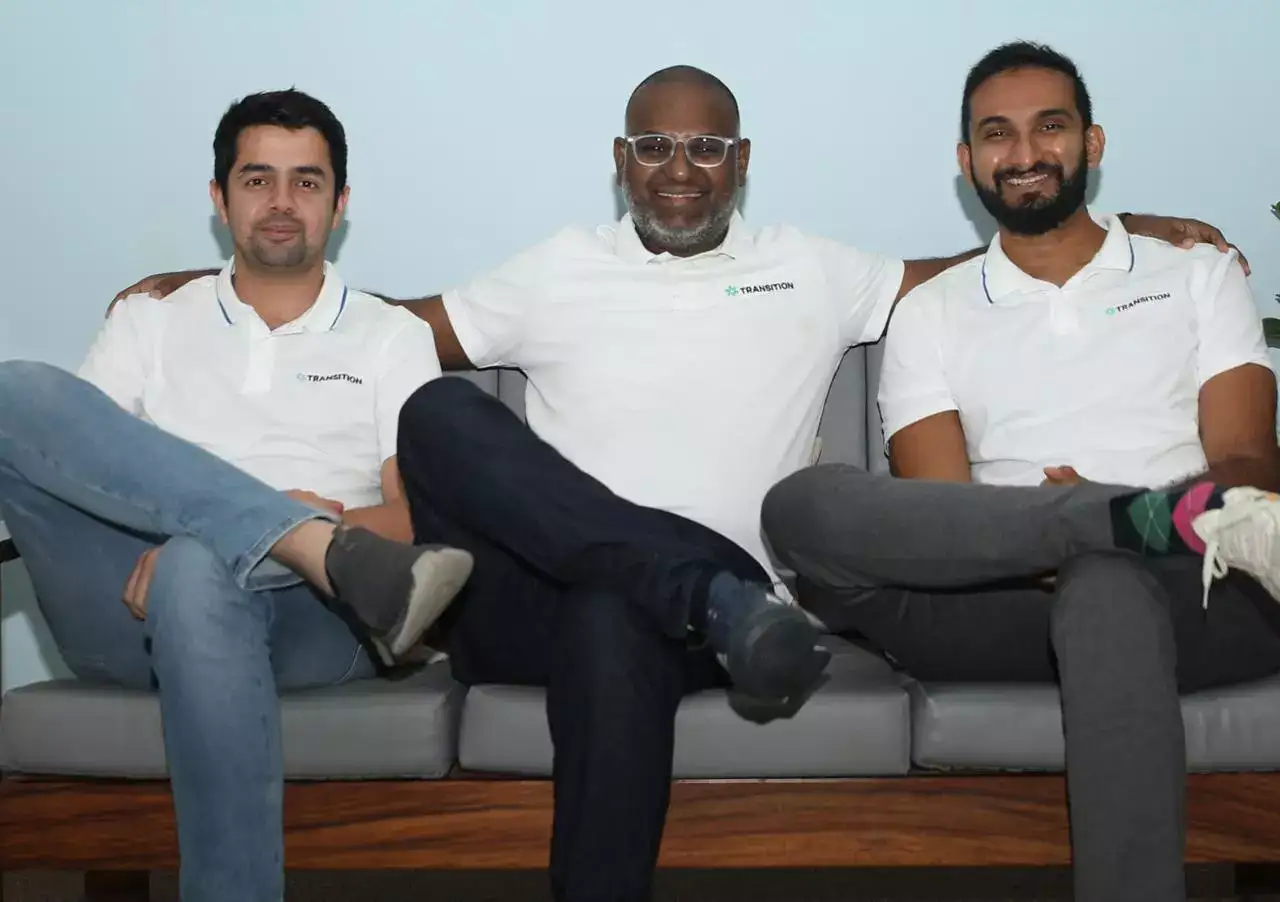 L-R: Shantanu Chaturvedi, partner, Mohammed Shoeb Ali and Raiyaan Shingati, managing partners at Transition VC
Transition VC, exclusively focussed on energy transition, has launched its second fund with a target corpus of Rs 1,500 crore ($150 million), more than double its maiden Rs 700-crore vehicle.
Fund details:
"Energy transition will eventually touch every individual. Our expertise lies in B2B hardware technologies. We believe that's where the biggest interventions need to happen and where technology can create the largest impact," Shingati explained.
Bigger picture: Investor appetite for climate and energy technologies is gathering pace.
Transition’s Fund I closed at Rs 700 crore against an initial Rs 400-crore target and has generated over 3x multiple on invested capital and 57% IRR in three years, with no write-offs so far.
Also Read: VCs pivot to EV infra & energy storage in new $65 million funding wave

A new report has found that senior executives who transitioned from leading India’s biggest startups to founding their own companies are drawing a disproportionately large share of venture capital.
Data decoded: According to a report by early-stage investor RTP Global and startup intelligence platform Tracxn:
Yes, and: As per the data, startup funding has been concentrated across fewer companies this year, with 1,100 startups raising nearly $11 billion so far. For comparison, in the same period last year, $10.5 billion was raised across 1,680 deals.
Also Read: Private late-stage cheques go big at $86 million average this year

TN plant leak fans cybersecurity worries: The reported leak of engineering drawings, supplier details, and project documents linked to the Kudankulam nuclear power plant in Tamil Nadu has highlighted the growing risk of cyberattacks that have a more profound impact than merely paralysing routine operations.
Raghu Vamsi Aerospace raises funds: Hyderabad-based aerospace and defence manufacturer Raghu Vamsi Aerospace Group (RVAG) has raised $40 million (around Rs 400 crore) in a round led by growth equity investor Norwest and Skegen Asset Management.
Scapia announces Esop buyback: The company did not disclose how many employees are eligible for the Rs 20-crore buyback, the price at which the options will be repurchased, or whether former employees are covered. It also did not specify a timeline for completing the exercise.
Turtlemint eyes profitable FY27: Insurance distribution platform Turtlemint expects to turn profitable on a full-year basis in FY27 on a growing renewal book and operating leverage, said cofounder and chief executive Dhirendra Mahyavanshi.
■ Apps marketed to US troops are shipping Chinese and Russian code (Wired)
■ ‘Gullible and ridiculous’: Dave Eggers on why no one will read AI novels (FT)
■ AI is shrinking video game development teams to one (Rest of World)
Also in the letter:
■ Transition VC’s new fund
■ Operator-led startups draw funds
■ TN plant leak fans cybersecurity worries
Deeptech startups to ride on Skyroot’s success; likely to fuel VC funding
Skyroot Aerospace’s first successful orbital launch is more than a technical milestone; it’s a validation event for India’s private spacetech ecosystem and its long‑term investors.
New benchmark: Skyroot Aerospace, India’s first spacetech unicorn valued at $1.15 billion, is poised to become a reference point for valuing deeptech startups, with demonstrated engineering capability now central to investment decisions.
“The most remarkable thing about Skyroot’s successful Vikram launch today is that it validated something many in India have long believed; India has always had exceptional technical talent,” said Manu Iyer, managing director at BlueHill Capital and an investor in launch vehicle startup Ethereal.
Early backers win: Early backers such as Mukesh Bansal and other angel and VC investors are seeing substantial returns.
- Bansal invested about $1.3 million across rounds and now holds a 5.67% stake.
- He has realised roughly $11 million from partial stake sales and his remaining stake is valued at about $63.2 million.
- Other early backers include former WhatsApp chief business officer Neeraj Arora and former Google executive Amit Singhal.
Commercial ripple effects: The Vikram‑1 mission is expected to accelerate commercial activity across the spacetech value chain—launch providers, satellite makers, component suppliers, ground stations and mission‑ops firms. Startups like Digantara and Dhruva Space said Skyroot’s success brings much‑needed launch predictability.
Also Read: Skyroot targets one Vikram rocket launch every month from 2027: CEO Pawan Kumar Chandana
Paytm Q1 profit jumps 79%; board shelves bonus share proposal
Fintech major Paytm reported a 28% year-on-year increase in operating revenue for the April-June quarter to Rs 2,448 crore, while net profit rose 79% to Rs 220 crore.
However, the company's board shelved its maiden bonus share issue proposal, choosing instead to prioritise long-term growth and profitability.
Profitability gathers pace:
- Earnings before interest, taxes, depreciation and amortisation (Ebitda) rose 182% to Rs 203 crore as revenue grew faster than indirect expenses.
- Paytm reiterated its medium-term Ebitda margin target of 15-20% over the next two to three years.
- Merchant payments, merchant loans, consumer payments and consumer monetisation will remain its four key growth engines.
- Paytm said it would remain disciplined in deploying its Rs 13,529-crore cash balance across organic and acquisition opportunities.
- Paytm expects payment processing margins to remain above four basis points over the medium term.
- It will invest Rs 100 crore in Paytm Money for technology, regulatory capital and expansion of its investment and wealth businesses.
Transition VC launches Rs 1,500 crore Fund II to back India's energy-tech startups
Transition VC, exclusively focussed on energy transition, has launched its second fund with a target corpus of Rs 1,500 crore ($150 million), more than double its maiden Rs 700-crore vehicle.
Fund details:
- The new fund will invest in about 20-23 hardware and deeptech startups across the energy demand and supply value chain.
- The cheque sizes will be about $2-5 million. The fund will hold 20-25% stake in its investments.
- Managing director Raiyaan Shingati told us the deployment will begin in Q3 FY27.
"Energy transition will eventually touch every individual. Our expertise lies in B2B hardware technologies. We believe that's where the biggest interventions need to happen and where technology can create the largest impact," Shingati explained.
Bigger picture: Investor appetite for climate and energy technologies is gathering pace.
Transition’s Fund I closed at Rs 700 crore against an initial Rs 400-crore target and has generated over 3x multiple on invested capital and 57% IRR in three years, with no write-offs so far.
Also Read: VCs pivot to EV infra & energy storage in new $65 million funding wave
Operator-led startups win an outsized share of venture capital: Report
A new report has found that senior executives who transitioned from leading India’s biggest startups to founding their own companies are drawing a disproportionately large share of venture capital.
Data decoded: According to a report by early-stage investor RTP Global and startup intelligence platform Tracxn:
- Operator-led startups raised $131.7 million in 2025, compared with $11.1 million in 2023.
- They account for less than 1% of all startups launched in 2025, but attracted 11% of the funding.
- This is nearly double their share from 5.8% in 2023.
Yes, and: As per the data, startup funding has been concentrated across fewer companies this year, with 1,100 startups raising nearly $11 billion so far. For comparison, in the same period last year, $10.5 billion was raised across 1,680 deals.
Also Read: Private late-stage cheques go big at $86 million average this year
Other Top Stories By Our Reporters
TN plant leak fans cybersecurity worries: The reported leak of engineering drawings, supplier details, and project documents linked to the Kudankulam nuclear power plant in Tamil Nadu has highlighted the growing risk of cyberattacks that have a more profound impact than merely paralysing routine operations.
Raghu Vamsi Aerospace raises funds: Hyderabad-based aerospace and defence manufacturer Raghu Vamsi Aerospace Group (RVAG) has raised $40 million (around Rs 400 crore) in a round led by growth equity investor Norwest and Skegen Asset Management.
Scapia announces Esop buyback: The company did not disclose how many employees are eligible for the Rs 20-crore buyback, the price at which the options will be repurchased, or whether former employees are covered. It also did not specify a timeline for completing the exercise.
Turtlemint eyes profitable FY27: Insurance distribution platform Turtlemint expects to turn profitable on a full-year basis in FY27 on a growing renewal book and operating leverage, said cofounder and chief executive Dhirendra Mahyavanshi.
Global Picks We Are Reading
■ Apps marketed to US troops are shipping Chinese and Russian code (Wired)
■ ‘Gullible and ridiculous’: Dave Eggers on why no one will read AI novels (FT)
■ AI is shrinking video game development teams to one (Rest of World)
Want this newsletter delivered to your inbox?
I agree to receive newsletters and marketing communications via e-mail