
 Morning Dispatch |
Quick services startups burn cash; GCCs step up AI hiring
Want this newsletter delivered to your inbox?
I agree to receive newsletters and marketing communications via e-mail

Thank you for subscribing to Morning Dispatch
We'll soon meet in your inbox.
Happy Friday! Snabbit, Swish and FirstClub are spending heavily to attract customers. This and more in today’s ETtech Morning Dispatch.
Also in the letter:
■ Kaynes Semicon plans expansion
■ Tiger Global trims Groww stake
■ India must catch up in AI race
 India’s newest quick commerce and services startups are burning cash fast as they try to build demand in niche categories such as home services, 10-minute food delivery and premium groceries, their first full-year results show.
Financial snapshot:
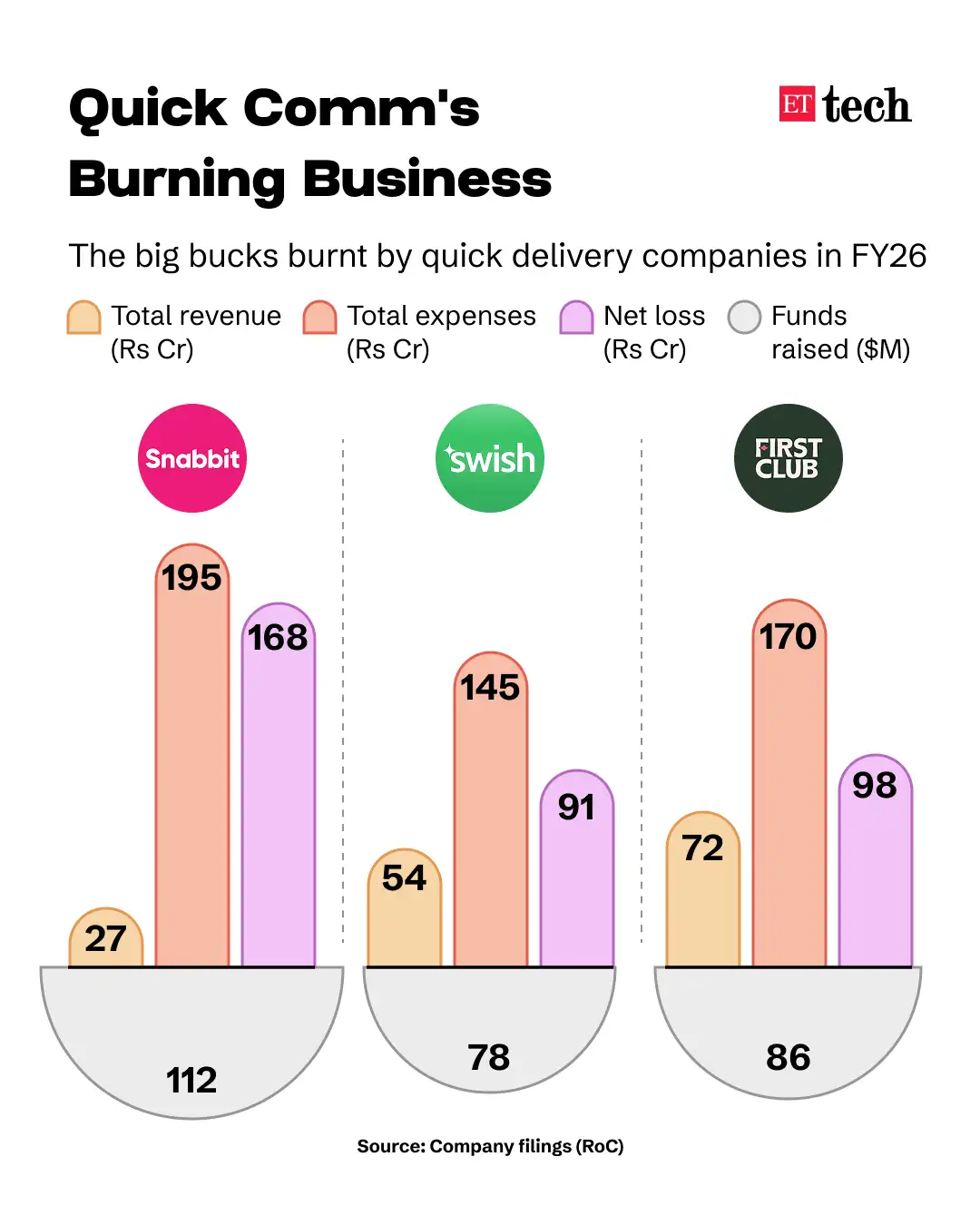
What stood out: Marketing and promotions were among the biggest costs for all three.
Snabbit spent Rs 48.7 crore on marketing, accounting for 25% of its total expenses for FY26. Swish’s spending of Rs 19 crore on marketing was about 13% of its total expenses, while at FirstClub, it was Rs 13.4 crore, or about 8%.
Experts take: The spending is part of the early playbook for businesses trying to establish themselves in markets with high potential but strong competition. Currently, the cost is being borne by these startups but as they scale, analysts said, the cost will be passed on to the consumers as platform fee, subscription or something else.

AI-related talent demand for freshers in global capability centres (GCCs) grew 45% in the ten months of 2026, with nearly 65% of the new GCC positions requiring AI capabilities, according to data shared by Adecco India with ET.
GCCs lead AI hiring: AI-led demand among freshers grew 19% year-on-year at IT services companies and 10-15% at business process management (BPM) firms. Overall fresher hiring at GCCs grew 20-25%, compared with 10-15% in IT services and a 5-10% decline in BPM.
Verbatim: “The conversation starter is still data, not necessarily coding. It's more around data engineering or data science because that is a natural progression to any AI conversation,” said Milind Shah, MD at staffing specialist firm Randstad India.
Limited talent pool: “(Companies) hire a few people from college and train them on AI for the next three-four months. It’s not like everyone is going after the same person. The (talent) pool is still limited,” Shah added.
What’s next: Over the next six to 12 months, fresher hiring is expected to grow 10-15% in GCCs, against 5-10% in IT services and 0-5% in BPM, Adecco’s data showed. The increase in GCC hiring is also being driven by new centres setting up in India, which are creating jobs even as established operations automate some functions.
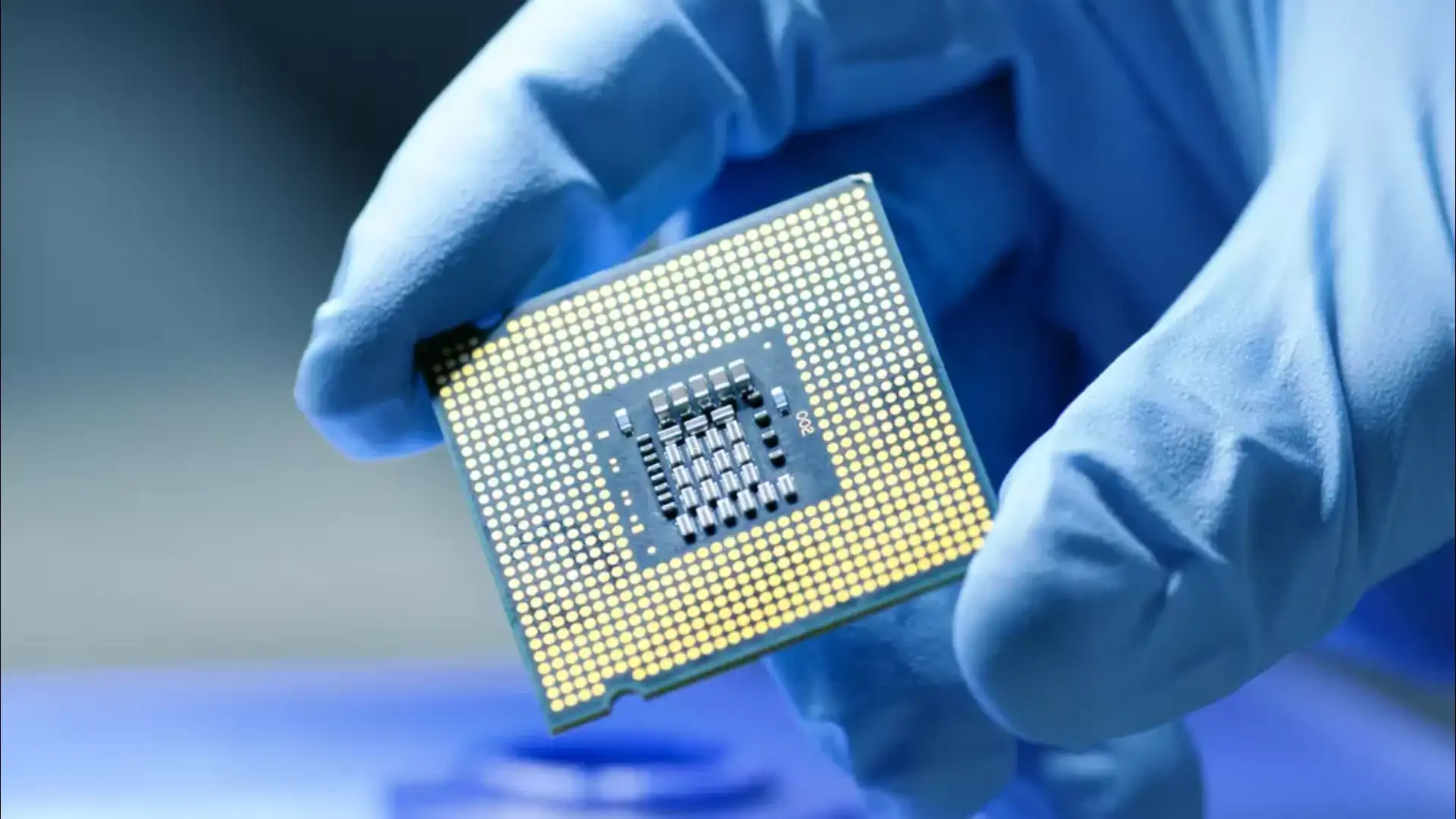
Kaynes Semicon is planning about fourfold expansion in annual outsourced semiconductor assembly and test (OSAT) capacity to about 8-9 billion devices over the next five years through a joint venture with Pennsylvania-based Vishay Intertechnology and by seeking government fiscal support under the India Semiconductor Mission (ISM) 2.0.
Capacity expansion: Kaynes Semicon has completed its first unit, while the second is nearly 90% complete. With Vishay’s commitment, Kaynes will accelerate its third unit, including infrastructure, utilities and equipment for making an additional 2.3 billion devices a year.
The deal: Vishay will invest $56.4 million for a 49% stake in an existing Kaynes Technology unit with Kaynes retaining 51%, according to Vishay’s filing with the US. The proposed venture will provide semiconductor back-end manufacturing services, including post-fabrication wafer processing, assembly, testing and packaging.
Why Vishay: Vishay produces MOSFETs, diodes and optoelectronic devices. Kaynes Semicon MD Raghu Panicker said these products align with the company’s plans for power semiconductors, advanced packaging, power diodes and IGBTs. He said Vishay is looking to shift a substantial part of its manufacturing to India.
Tiger Global sells Groww stakes: US investment firm Tiger Global has sold a 2.72% stake in stockbroking platform Groww through a series of open market transactions over the past six months, joining other early investors such as Peak XV Partners, Ribbit Capital and Y Combinator in monetising their investments in the company following its stock market debut.
India must catch up in AI race: India cannot afford to stay on the sidelines of the artificial intelligence revolution even as it falls behind the US and China in developing frontier technologies, said Aakrit Vaish, founder of Activate. Vaish believes the country will risk missing out on a significant economic and productivity opportunity if it does not work on AI.
Finnable raises Rs 405 crore: Digital lending firm Finnable has raised Rs 405 crore in a fresh funding round from new investors, including Bharat Value Fund (part of Pantomath Group), Pratithi Investments (the investment firm of Infosys co-founder Kris Gopalakrishnan), and NKSquared (the investment arm of Zerodha co-founders Nithin and Nikhil Kamath).
■ Nvidia halts chip shipments to south-east Asia (FT)
■ AI is great, but it can't deliver a lamb, say students (BBC)
■ How foreign AI romance apps are reshaping youth intimacy in Africa (Rest of World)
Also in the letter:
■ Kaynes Semicon plans expansion
■ Tiger Global trims Groww stake
■ India must catch up in AI race
Snabbit, Swish and FirstClub spend big to build demand in their first full year
Financial snapshot:
- Snabbit spent Rs 194.8 crore against revenue of Rs 12.2 crore in the fiscal year ended March 31, 2026.
- Swish reported expenses of Rs 144.8 crore, compared with operating revenue of Rs 47.6 crore.
- FirstClub reported operating revenue of Rs 64 crore and expenses of Rs 169.4 crore.
What stood out: Marketing and promotions were among the biggest costs for all three.
Snabbit spent Rs 48.7 crore on marketing, accounting for 25% of its total expenses for FY26. Swish’s spending of Rs 19 crore on marketing was about 13% of its total expenses, while at FirstClub, it was Rs 13.4 crore, or about 8%.
Experts take: The spending is part of the early playbook for businesses trying to establish themselves in markets with high potential but strong competition. Currently, the cost is being borne by these startups but as they scale, analysts said, the cost will be passed on to the consumers as platform fee, subscription or something else.
Nearly 65% of new GCC fresher jobs require AI skills
AI-related talent demand for freshers in global capability centres (GCCs) grew 45% in the ten months of 2026, with nearly 65% of the new GCC positions requiring AI capabilities, according to data shared by Adecco India with ET.
GCCs lead AI hiring: AI-led demand among freshers grew 19% year-on-year at IT services companies and 10-15% at business process management (BPM) firms. Overall fresher hiring at GCCs grew 20-25%, compared with 10-15% in IT services and a 5-10% decline in BPM.
Verbatim: “The conversation starter is still data, not necessarily coding. It's more around data engineering or data science because that is a natural progression to any AI conversation,” said Milind Shah, MD at staffing specialist firm Randstad India.
Limited talent pool: “(Companies) hire a few people from college and train them on AI for the next three-four months. It’s not like everyone is going after the same person. The (talent) pool is still limited,” Shah added.
What’s next: Over the next six to 12 months, fresher hiring is expected to grow 10-15% in GCCs, against 5-10% in IT services and 0-5% in BPM, Adecco’s data showed. The increase in GCC hiring is also being driven by new centres setting up in India, which are creating jobs even as established operations automate some functions.
Kaynes Semicon plans fourfold capacity expansion through Vishay joint venture
Kaynes Semicon is planning about fourfold expansion in annual outsourced semiconductor assembly and test (OSAT) capacity to about 8-9 billion devices over the next five years through a joint venture with Pennsylvania-based Vishay Intertechnology and by seeking government fiscal support under the India Semiconductor Mission (ISM) 2.0.
Capacity expansion: Kaynes Semicon has completed its first unit, while the second is nearly 90% complete. With Vishay’s commitment, Kaynes will accelerate its third unit, including infrastructure, utilities and equipment for making an additional 2.3 billion devices a year.
The deal: Vishay will invest $56.4 million for a 49% stake in an existing Kaynes Technology unit with Kaynes retaining 51%, according to Vishay’s filing with the US. The proposed venture will provide semiconductor back-end manufacturing services, including post-fabrication wafer processing, assembly, testing and packaging.
Why Vishay: Vishay produces MOSFETs, diodes and optoelectronic devices. Kaynes Semicon MD Raghu Panicker said these products align with the company’s plans for power semiconductors, advanced packaging, power diodes and IGBTs. He said Vishay is looking to shift a substantial part of its manufacturing to India.
Other Top Stories By Our Reporters
Tiger Global sells Groww stakes: US investment firm Tiger Global has sold a 2.72% stake in stockbroking platform Groww through a series of open market transactions over the past six months, joining other early investors such as Peak XV Partners, Ribbit Capital and Y Combinator in monetising their investments in the company following its stock market debut.
India must catch up in AI race: India cannot afford to stay on the sidelines of the artificial intelligence revolution even as it falls behind the US and China in developing frontier technologies, said Aakrit Vaish, founder of Activate. Vaish believes the country will risk missing out on a significant economic and productivity opportunity if it does not work on AI.
Finnable raises Rs 405 crore: Digital lending firm Finnable has raised Rs 405 crore in a fresh funding round from new investors, including Bharat Value Fund (part of Pantomath Group), Pratithi Investments (the investment firm of Infosys co-founder Kris Gopalakrishnan), and NKSquared (the investment arm of Zerodha co-founders Nithin and Nikhil Kamath).
Global Picks We Are Reading
■ Nvidia halts chip shipments to south-east Asia (FT)
■ AI is great, but it can't deliver a lamb, say students (BBC)
■ How foreign AI romance apps are reshaping youth intimacy in Africa (Rest of World)
Want this newsletter delivered to your inbox?
I agree to receive newsletters and marketing communications via e-mail