
 Morning Dispatch Morning Dispatch |
Iran crisis hits India’s economy; PE firms dial up SaaS deals
Want this newsletter delivered to your inbox?
I agree to receive newsletters and marketing communications via e-mail

Thank you for subscribing to Morning Dispatch
We'll soon meet in your inbox.
The ongoing conflict in the Middle East is likely to significantly impact Indian industries. This and more in today’s ETtech Morning Dispatch.
Also in the letter:
■ Snabbit’s order book
■ Micron’s Sanand plant opens
■ UPI transactions surge
Large-scale air and missile strikes by Israel and the United States on Iran over the weekend — and Tehran’s retaliation — are reverberating beyond the Middle East. Cybersecurity experts warn that the fallout may spill into India’s digital ecosystem.
Cybercrime to rise: Security firms expect an uptick in activity from hacktivist collectives and state-linked cyber groups targeting companies and infrastructure across the Gulf. Given India’s deep trade and technology ties with the region, spillover risks are real.
Recent history offers precedent. During Operation Sindoor and the May 2025 India-Pakistan flare-up, public-sector units and critical infrastructure in India were targeted by coordinated cyberattacks.
For instance: Researchers tracked groups such as Moroccan Soldiers, Team R70 (Russia), Lulzsec Arabs (the Middle East) and Islamic Hacker Army (Iraq), claiming website defacements and data breaches across Indian government and private networks. Many so-called “digital war tourists” or foreign hacker groups exploit geopolitical flashpoints to push ideology or monetise chaos.
Verbatim: “Cyber warfare typically precedes any kinetic mobilisation on the ground. It often begins with misinformation campaigns, espionage, and intelligence gathering, and the Gulf region has witnessed heightened volatility in cyberspace over the past few months,” said Siddharth Vishwanath, partner and Risk Consulting Leader at PwC India.
Also Read: Trump talks regime change in Iran after strikes, but history shows that could be very hard

Another critical sector in the line of fire is IT services. Escalation in the Middle East conflict may slow tech spending and freeze expansion plans across the Gulf, adding strain to an already cautious demand environment.
Rationale: The closure of the Strait of Hormuz — a route for nearly a third of global seaborne oil — risks pushing crude prices higher. With about 60% of India's oil imports coming from the region, sustained price spikes could slow US and European growth and squeeze discretionary technology budgets.
Also Read: TCS, Infosys defer trips to Middle East amid rising tensions, issue advisories to employees
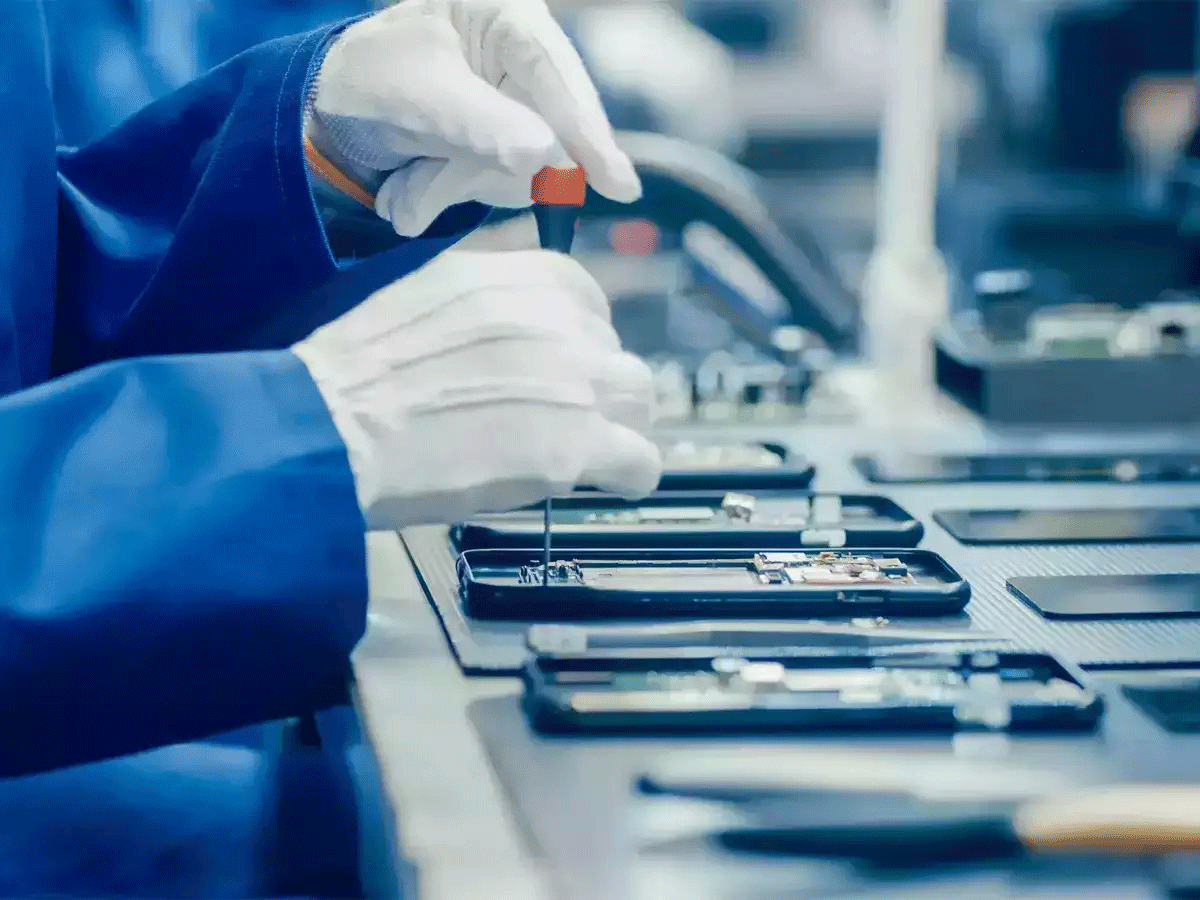
India's $4.5 billion in electronics and tech exports to the Gulf are also threatened, despite negligible trade in these items with Iran itself, due to the conflict, sources told us.
Tell me more:

Private equity (PE) firms are increasing control deals in India’s SaaS sector, betting that softer valuations and AI-driven change created attractive entry points.
AI shifts gears, valuations drop: SaaS multiples have cooled sharply from 2021 highs. Freshworks, which debuted at a $10 billion valuation, now trades well below that level.
At the same time, generative AI tools from players such as Anthropic are lowering the cost of building and replicating software features, tightening margins for smaller vendors.

Dry powder tales:
Trend to follow: While experts say the consolidation trend is still in its early stages, PE firms clearly see an opportunity as AI changes how software is built and valued.
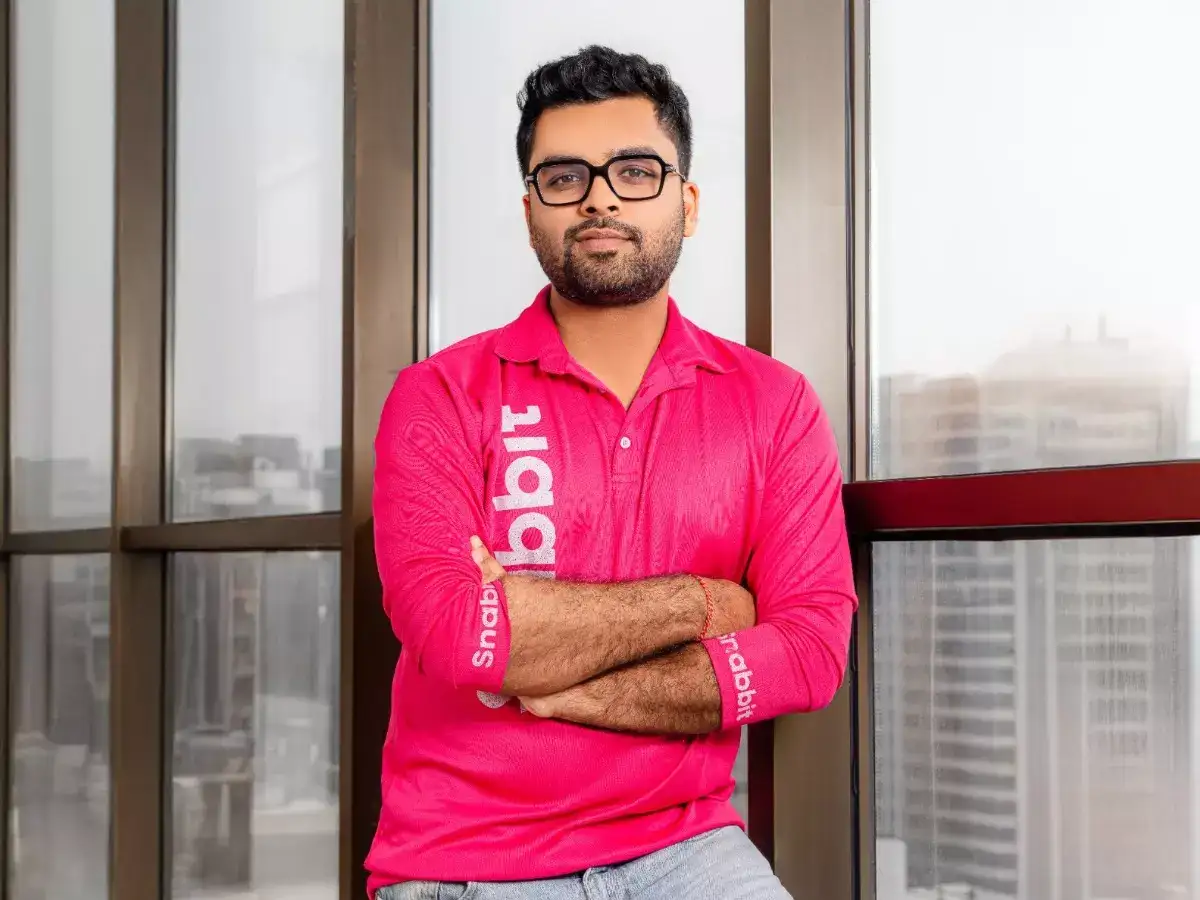 Aayush Agarwal, founder, Snabbit
Instant home-help startup Snabbit clocked 830,000 orders in February, up from about 500,000 in December, with traction building across Delhi-NCR, Pune, Bengaluru and Mumbai.
Deeper, not wider: Founder Aayush Agarwal said the surge wasn't driven by aggressive geographic expansion. The company now operates in 108 micro-markets, up from 87 in December, with some mature clusters reaching 1,500 jobs a day at peak.
User mix: New users accounted for 20-25% of monthly transacting customers in February, while repeat usage strengthened among bachelors and young couples opting for on-demand help over full-time staff.
Unit economics: Mature micro-markets are operating at 55-60% utilisation, lifting supply efficiency and profitability as density increases.
Also Read: ETtech in-depth: Instant househelp demand triples as industry scrambles to crack economics
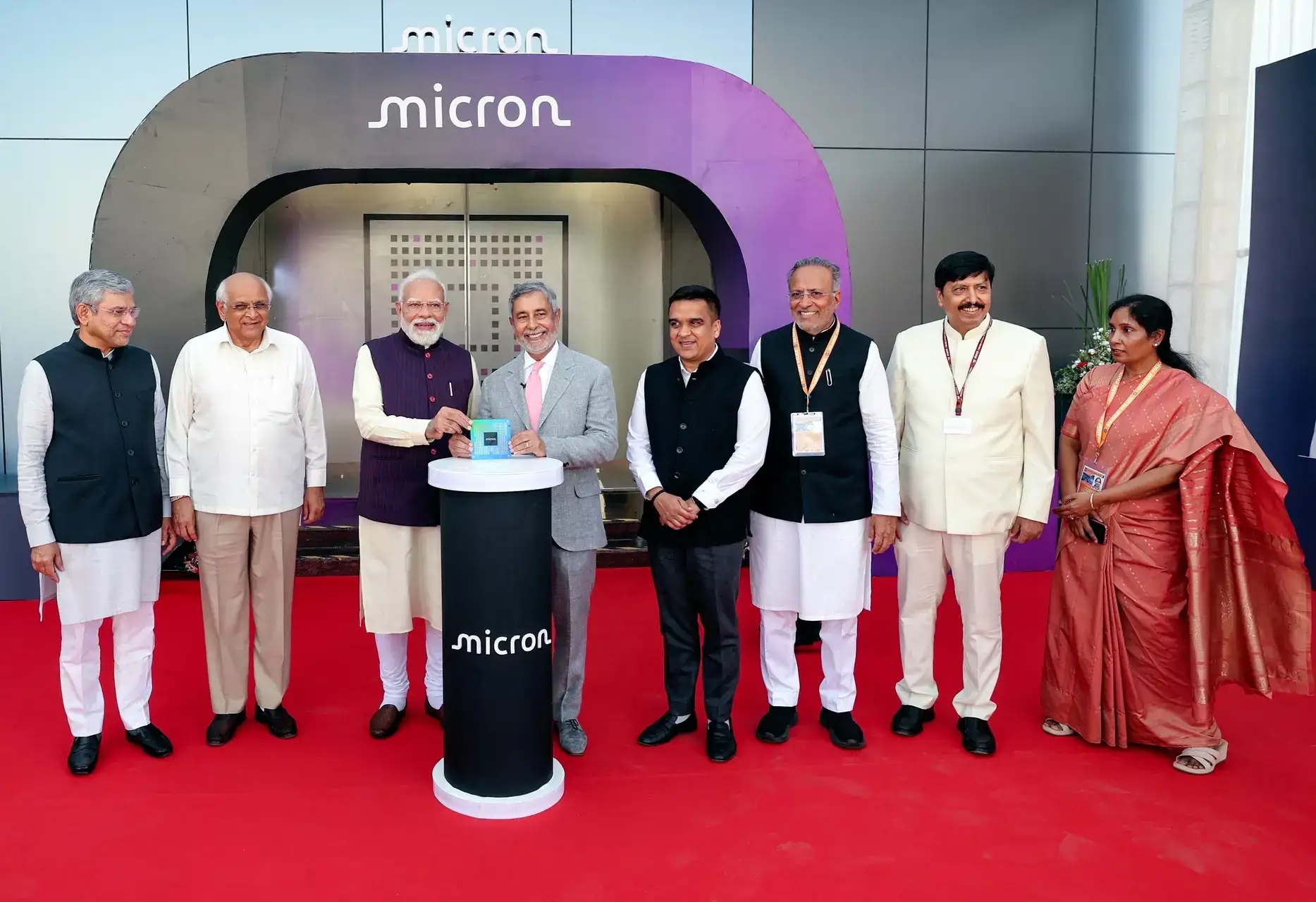
Prime Minister Narendra Modi on Saturday inaugurated American memory chipmaker Micron Technology’s Rs 22,500-crore semiconductor facility in Gujarat, calling on investors to come to India, saying the country is ready, reliable, and delivers.
Driving the news:

UPI transactions surge 27% annually: The Unified Payments Interface (UPI), operated by the National Payments Corporation of India (NPCI), recorded a 27% year-on-year (YoY) increase in transaction volumes in February, even as monthly volumes eased marginally from January levels.
Amazon India tweaks seller fees: Ecommerce major Amazon India is expanding its zero-referral-fee structure to products priced under Rs 1,000 and above Rs 300 across 1,800 categories, starting March 16. Additionally, there is a 20% reduction in the shipping fee charged to its sellers for products priced below Rs 300.
Inamo raises $8 million: Quick commerce enablement platform Inamo has raised $8 million led by Prime Venture Partners, with participation from existing investors Shastra VC, Antler India, and Gemba Capital. The capital includes $6 million in equity and $2 million in venture debt.
■ X is drowning in disinformation following US and Israeli attack on Iran (Wired)
■ Anthropic to sue Trump administration after AI lab is labelled security risk (FT)
■ The next AI whistleblower could come from anywhere in the world (Rest of World)
Also in the letter:
■ Snabbit’s order book
■ Micron’s Sanand plant opens
■ UPI transactions surge
Companies could see rise in digital threats: Experts
Large-scale air and missile strikes by Israel and the United States on Iran over the weekend — and Tehran’s retaliation — are reverberating beyond the Middle East. Cybersecurity experts warn that the fallout may spill into India’s digital ecosystem.
Cybercrime to rise: Security firms expect an uptick in activity from hacktivist collectives and state-linked cyber groups targeting companies and infrastructure across the Gulf. Given India’s deep trade and technology ties with the region, spillover risks are real.
Recent history offers precedent. During Operation Sindoor and the May 2025 India-Pakistan flare-up, public-sector units and critical infrastructure in India were targeted by coordinated cyberattacks.
For instance: Researchers tracked groups such as Moroccan Soldiers, Team R70 (Russia), Lulzsec Arabs (the Middle East) and Islamic Hacker Army (Iraq), claiming website defacements and data breaches across Indian government and private networks. Many so-called “digital war tourists” or foreign hacker groups exploit geopolitical flashpoints to push ideology or monetise chaos.
Verbatim: “Cyber warfare typically precedes any kinetic mobilisation on the ground. It often begins with misinformation campaigns, espionage, and intelligence gathering, and the Gulf region has witnessed heightened volatility in cyberspace over the past few months,” said Siddharth Vishwanath, partner and Risk Consulting Leader at PwC India.
Also Read: Trump talks regime change in Iran after strikes, but history shows that could be very hard
AI-hit tech companies fear slowdown in spends
Another critical sector in the line of fire is IT services. Escalation in the Middle East conflict may slow tech spending and freeze expansion plans across the Gulf, adding strain to an already cautious demand environment.
Rationale: The closure of the Strait of Hormuz — a route for nearly a third of global seaborne oil — risks pushing crude prices higher. With about 60% of India's oil imports coming from the region, sustained price spikes could slow US and European growth and squeeze discretionary technology budgets.
Also Read: TCS, Infosys defer trips to Middle East amid rising tensions, issue advisories to employees
Electronics exports of $4.5 billion at risk
India's $4.5 billion in electronics and tech exports to the Gulf are also threatened, despite negligible trade in these items with Iran itself, due to the conflict, sources told us.
Tell me more:
- The UAE was the second-largest buyer of Indian electronic products.
- In the first nine months of FY26, the UAE was the destination for $4.1 billion of electronics exports.
- Consignments of smartphones to the UAE and consumer electronics to Israel are shipped over Iranian airspace or near its territorial waters.
PE firms up SaaS buyouts as AI resets valuations & biz models
Private equity (PE) firms are increasing control deals in India’s SaaS sector, betting that softer valuations and AI-driven change created attractive entry points.
AI shifts gears, valuations drop: SaaS multiples have cooled sharply from 2021 highs. Freshworks, which debuted at a $10 billion valuation, now trades well below that level.
At the same time, generative AI tools from players such as Anthropic are lowering the cost of building and replicating software features, tightening margins for smaller vendors.
Dry powder tales:
- McKinsey estimates PE firms now account for more than half of global software buyouts.
- Industry executives say India could see more such deals as investors look to buy stable, profitable companies and combine them into larger platforms.
Trend to follow: While experts say the consolidation trend is still in its early stages, PE firms clearly see an opportunity as AI changes how software is built and valued.
Snabbit clocks over 8 lakh Feb orders as instant house help biz booms
Instant home-help startup Snabbit clocked 830,000 orders in February, up from about 500,000 in December, with traction building across Delhi-NCR, Pune, Bengaluru and Mumbai.
Deeper, not wider: Founder Aayush Agarwal said the surge wasn't driven by aggressive geographic expansion. The company now operates in 108 micro-markets, up from 87 in December, with some mature clusters reaching 1,500 jobs a day at peak.
User mix: New users accounted for 20-25% of monthly transacting customers in February, while repeat usage strengthened among bachelors and young couples opting for on-demand help over full-time staff.
Unit economics: Mature micro-markets are operating at 55-60% utilisation, lifting supply efficiency and profitability as density increases.
Also Read: ETtech in-depth: Instant househelp demand triples as industry scrambles to crack economics
SemicON: PM Narendra Modi launches Micron facility in Gujarat
Prime Minister Narendra Modi on Saturday inaugurated American memory chipmaker Micron Technology’s Rs 22,500-crore semiconductor facility in Gujarat, calling on investors to come to India, saying the country is ready, reliable, and delivers.
Driving the news:
- The semiconductor assembly, testing, marking, and packaging facility in Gujarat’s Sanand is the first of 10 projects under the India Semiconductor Mission to begin commercial production and shipment.
- It converts advanced DRAM (dynamic random access memory) and NAND (flash memory) wafers from Micron’s global manufacturing network into finished memory and storage products.
Other Top Stories By Our Reporters
UPI transactions surge 27% annually: The Unified Payments Interface (UPI), operated by the National Payments Corporation of India (NPCI), recorded a 27% year-on-year (YoY) increase in transaction volumes in February, even as monthly volumes eased marginally from January levels.
Amazon India tweaks seller fees: Ecommerce major Amazon India is expanding its zero-referral-fee structure to products priced under Rs 1,000 and above Rs 300 across 1,800 categories, starting March 16. Additionally, there is a 20% reduction in the shipping fee charged to its sellers for products priced below Rs 300.
Inamo raises $8 million: Quick commerce enablement platform Inamo has raised $8 million led by Prime Venture Partners, with participation from existing investors Shastra VC, Antler India, and Gemba Capital. The capital includes $6 million in equity and $2 million in venture debt.
Global Picks We Are Reading
■ X is drowning in disinformation following US and Israeli attack on Iran (Wired)
■ Anthropic to sue Trump administration after AI lab is labelled security risk (FT)
■ The next AI whistleblower could come from anywhere in the world (Rest of World)
Want this newsletter delivered to your inbox?
I agree to receive newsletters and marketing communications via e-mail