
 Morning Dispatch Morning Dispatch |
IBM CEO on AI disruption, stock slide; VCs cash in on D2C exits
Want this newsletter delivered to your inbox?
I agree to receive newsletters and marketing communications via e-mail

Thank you for subscribing to Morning Dispatch
We'll soon meet in your inbox.
Happy Wednesday! IBM CEO Arvind Krishna calls the recent stock slide an overreaction and lays out his view on India’s AI push and job disruption. This and more in today's ETtech Morning Dispatch.
Also in the letter:
■ AI beyond optics
■ Capillary to buy SessionM
■ Xflow's funding
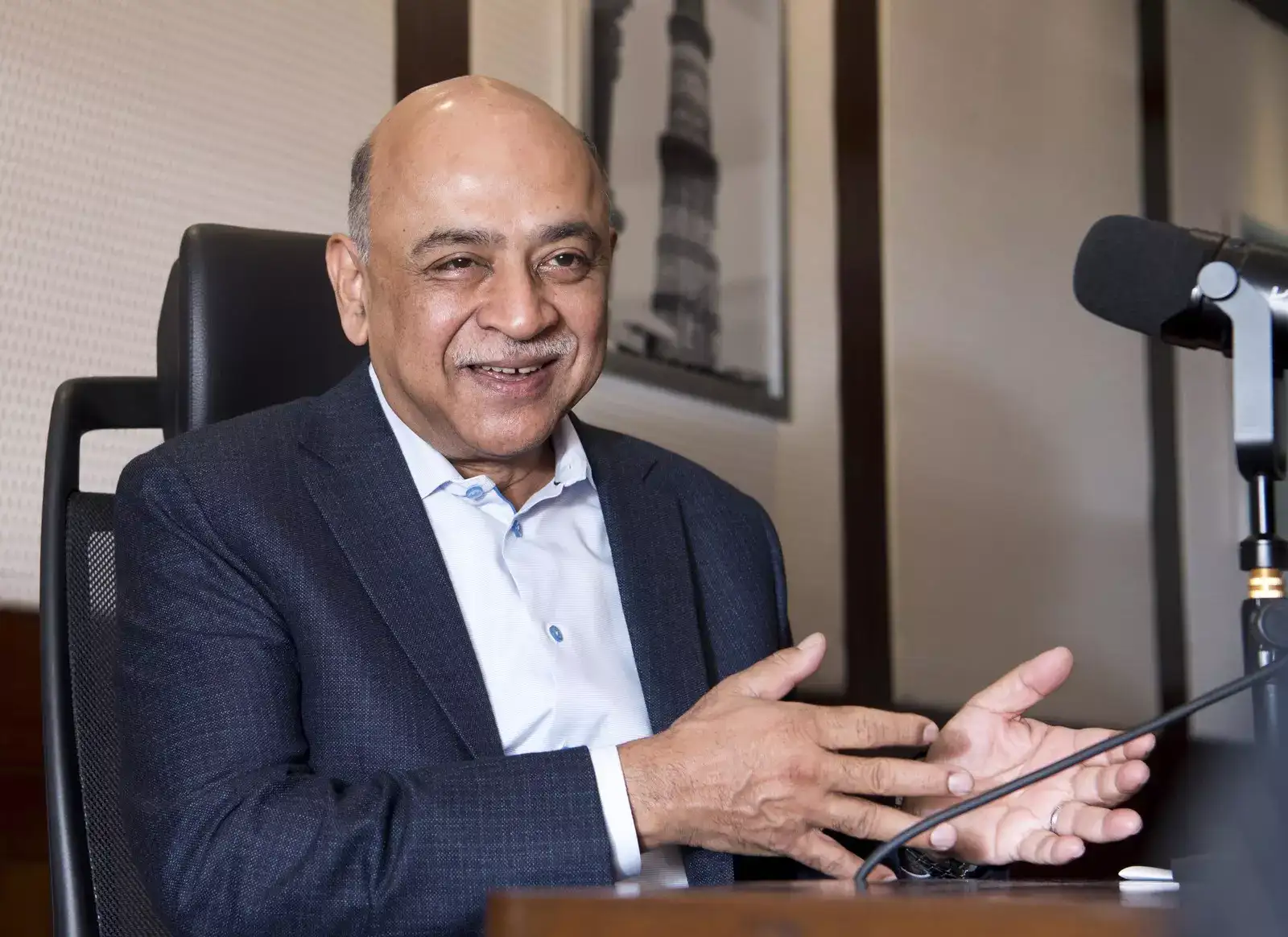 Arvind Krishna, CEO, IBM
In an interview with ET, IBM CEO Arvind Krishna shrugged off IBM’s 13% stock drop after an Anthropic blog post suggested its AI tool could compress legacy system maintenance timelines, calling the reaction excessive. He also spoke about India’s AI ambitions, the impact on traditional IT services and concerns around workforce disruption.
Edited excerpts:
On India: "When I was speaking with Ashwini Vaishnaw at Davos and also this week in India, he has been very clear. India needs to build about a dozen models, not hundreds, not thousands. Three out of those 12 are done in a year, which is not bad. India ought to focus on AI deployment because in the end, you are part of the global economy.”
On AI vs traditional IT: “A lot of people are using the same logic that was used for eyeballs in the year 2000. Eyeballs turned out to be a metric that was irrelevant in the long term. AI is going to be an incredible productivity tool. Inside our own company, we have created $4.5 billion of productivity gains, which we have reinvested in R&D and sales.”
On job displacement: “There will be some job displacement. Sixty percent of the world’s workers are in physical roles, so there is no displacement there. They may become more efficient using AI. Around 20% are in creative roles and will augment their work with AI. That leaves the final 20%. Could five to 10% of that 20% get displaced? Absolutely. But there is also much more work to be done.”
Also Read: IBM beats fourth-quarter revenue estimates as AI clamor boosts software demand

Venture capital firms are generating multifold returns from their early bets in direct-to-consumer brands as legacy FMCG giants acquire these digital-first companies to plug portfolio gaps and accelerate category expansion.
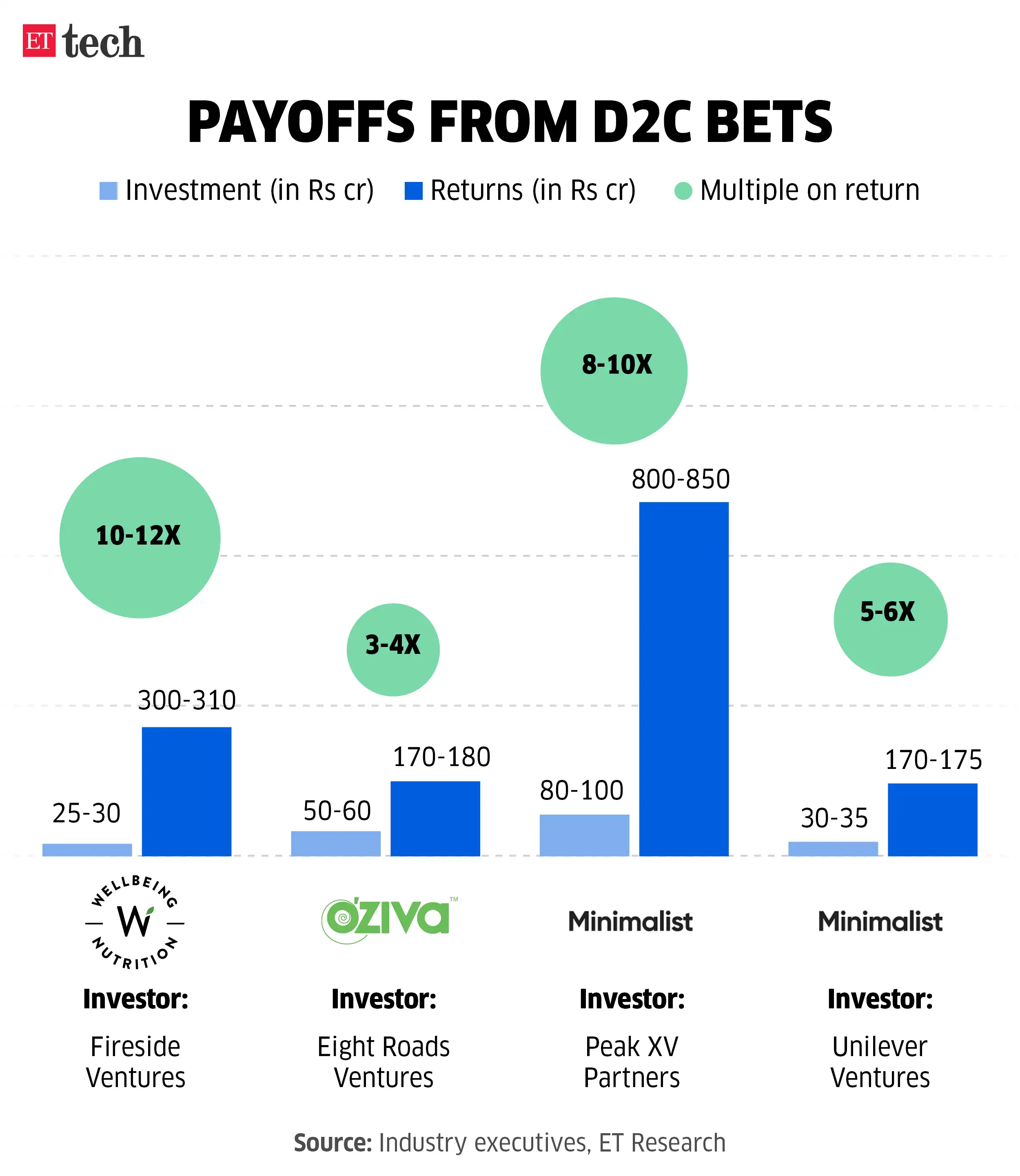
Recent deals involving Wellbeing Nutrition, Oziva and Minimalist show how VCs are converting relatively small cheques into outsized returns within just three to five years.
Who gained what:
Tell me more:
Also Read: Major VCs line up top dollars for coordinated AI capital push in India
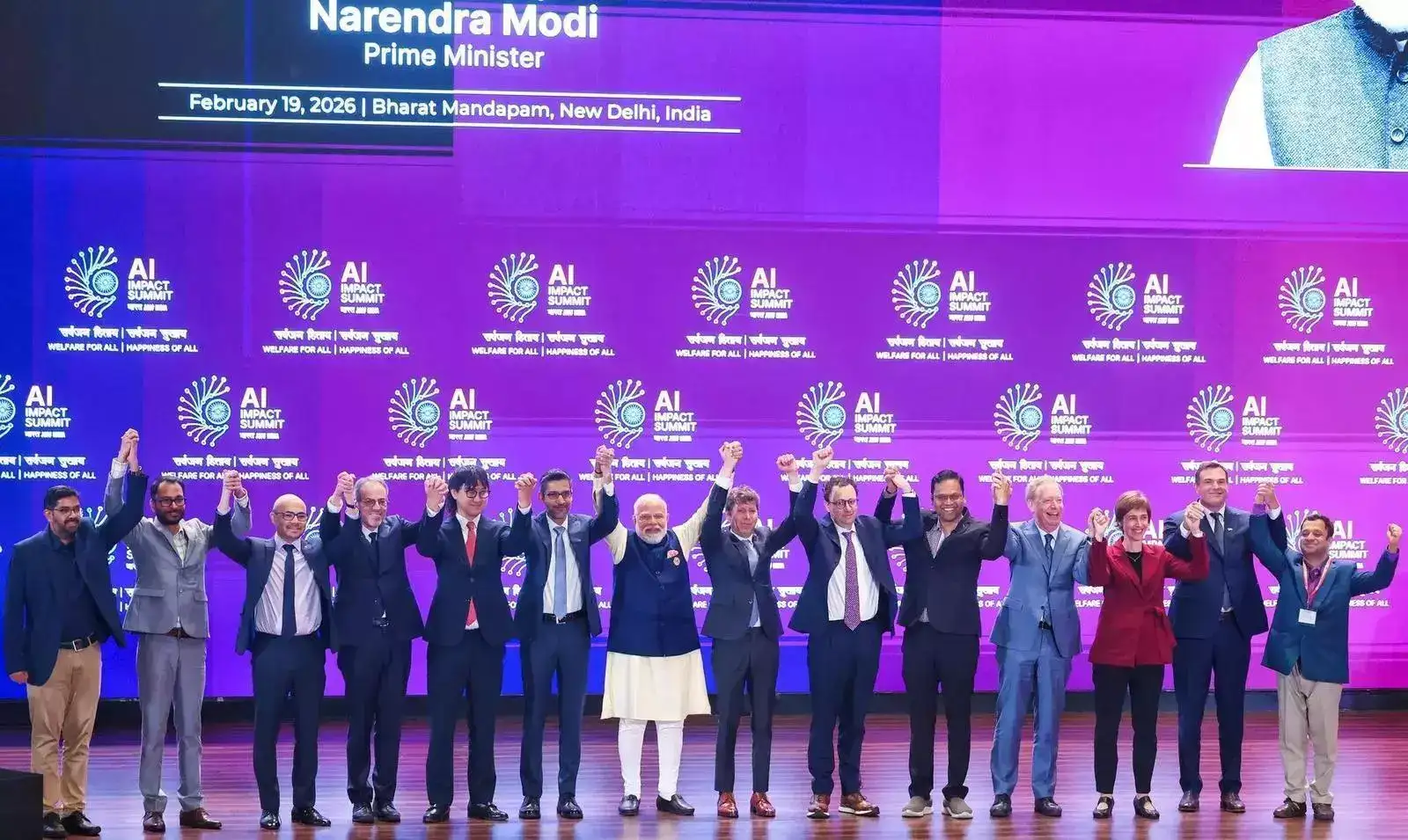
India's AI Impact Summit may have stumbled on execution, but it has forced a hard question into the open: where is the foundational capital for India's AI ambitions?
Why it matters: Governments can convene global heavyweights from Sam Altman to Dario Amodei — but ecosystems are built on capital formation, not conference optics.
The India question:
If serious GPU capacity sits with a handful of global cloud providers and Indian startups pay in dollars, margins compress fast.
Between the lines: Announcements of $100 billion-plus data centre investments from conglomerates sound transformative. But infrastructure is not innovation. AI value will accrue to those building differentiated applications, not just server farms.
The bottomline: Five years from now, the metric won't be who spoke on stage in Delhi. It will be whether India built globally consequential AI companies and whether domestic capital had the conviction to back them early and big.
Read the full column here.
Also Read: Indian AI innovations make their mark
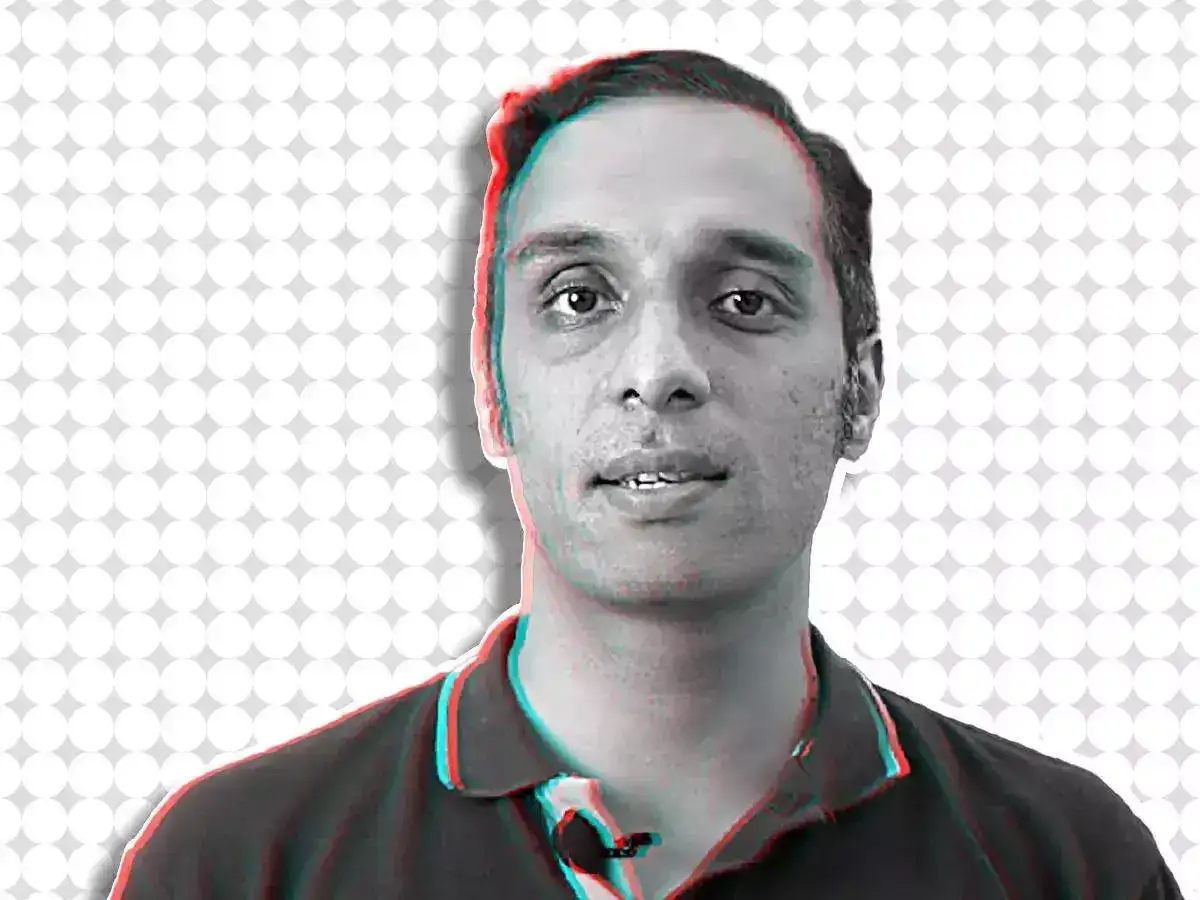 Aneesh Reddy, CEO, Capillary Technologies
Capillary Technologies to acquire Mastercard's SessionM for $20 million: Software-as-a-service (SaaS) company Capillary Technologies, which manages loyalty programmes for corporates, is acquiring US payments major Mastercard's loyalty and rewards business SessionM for $20 million in an all-cash deal.
Xflow secures $16.6 million: Cross-border payments startup Xflow has secured $16.6 million in a fresh funding round led by existing investor General Catalyst. US-based digital payments major PayPal has participated in the round as a new investor. With this round, Xflow has raised $32 million over three institutional funding rounds.
Livspace CBO Lalit Mittal quits amid layoffs, cofounder exit: Home decor startup Livspace’s chief business officer (CBO) Lalit Mittal has left the firm following cofounder Saurabh Jain’s exit. Mittal has decided to pursue his own entrepreneurial journey after spending six years at Livspace, a company spokesperson said in a statement responding to ET.
■ AI will never be conscious (Wired)
■ Data centers are racing to space — and regulation can’t keep up (Rest of the World)
■ Orbital space race heats up in Arctic north (BBC)
Also in the letter:
■ AI beyond optics
■ Capillary to buy SessionM
■ Xflow's funding
India not behind in AI race, must focus on deployment: IBM CEO Arvind Krishna
In an interview with ET, IBM CEO Arvind Krishna shrugged off IBM’s 13% stock drop after an Anthropic blog post suggested its AI tool could compress legacy system maintenance timelines, calling the reaction excessive. He also spoke about India’s AI ambitions, the impact on traditional IT services and concerns around workforce disruption.
Edited excerpts:
On India: "When I was speaking with Ashwini Vaishnaw at Davos and also this week in India, he has been very clear. India needs to build about a dozen models, not hundreds, not thousands. Three out of those 12 are done in a year, which is not bad. India ought to focus on AI deployment because in the end, you are part of the global economy.”
On AI vs traditional IT: “A lot of people are using the same logic that was used for eyeballs in the year 2000. Eyeballs turned out to be a metric that was irrelevant in the long term. AI is going to be an incredible productivity tool. Inside our own company, we have created $4.5 billion of productivity gains, which we have reinvested in R&D and sales.”
On job displacement: “There will be some job displacement. Sixty percent of the world’s workers are in physical roles, so there is no displacement there. They may become more efficient using AI. Around 20% are in creative roles and will augment their work with AI. That leaves the final 20%. Could five to 10% of that 20% get displaced? Absolutely. But there is also much more work to be done.”
Also Read: IBM beats fourth-quarter revenue estimates as AI clamor boosts software demand
VCs hit jackpot as FMCG giants go on D2C acquisition spree
Venture capital firms are generating multifold returns from their early bets in direct-to-consumer brands as legacy FMCG giants acquire these digital-first companies to plug portfolio gaps and accelerate category expansion.
Recent deals involving Wellbeing Nutrition, Oziva and Minimalist show how VCs are converting relatively small cheques into outsized returns within just three to five years.
Who gained what:
- Fireside Ventures: Rs 300–310 crore returns on a Rs 25–30 crore investment in Wellbeing Nutrition
- Eight Roads Ventures: Rs 170–180 crore returns on a Rs 50–60 crore investment in Oziva
- Peak XV Partners: Rs 800–850 crore returns on a Rs 80–100 crore investment in Minimalist
Tell me more:
- FMCG majors are acquiring D2C brands to enter fast-growing categories such as supplements and science-led skincare faster than building brands in-house.
- For VC firms, this expands the buyer universe beyond financial investors and improves the probability of exits, according to industry experts.
- Despite headline exits, only a small number of startups generate the bulk of returns, underscoring that venture investing remains a long-term, high-risk game.
Also Read: Major VCs line up top dollars for coordinated AI capital push in India
Full Stack by Samidha Sharma | AI Impact Summit: Beyond the optics, where is the 'foundational' capital?
India's AI Impact Summit may have stumbled on execution, but it has forced a hard question into the open: where is the foundational capital for India's AI ambitions?
Why it matters: Governments can convene global heavyweights from Sam Altman to Dario Amodei — but ecosystems are built on capital formation, not conference optics.
The India question:
- Who owns the compute?
- What does access cost?
- Who sets the rules?
If serious GPU capacity sits with a handful of global cloud providers and Indian startups pay in dollars, margins compress fast.
Between the lines: Announcements of $100 billion-plus data centre investments from conglomerates sound transformative. But infrastructure is not innovation. AI value will accrue to those building differentiated applications, not just server farms.
The bottomline: Five years from now, the metric won't be who spoke on stage in Delhi. It will be whether India built globally consequential AI companies and whether domestic capital had the conviction to back them early and big.
Read the full column here.
Also Read: Indian AI innovations make their mark
Other Top Stories By Our Reporters
Capillary Technologies to acquire Mastercard's SessionM for $20 million: Software-as-a-service (SaaS) company Capillary Technologies, which manages loyalty programmes for corporates, is acquiring US payments major Mastercard's loyalty and rewards business SessionM for $20 million in an all-cash deal.
Xflow secures $16.6 million: Cross-border payments startup Xflow has secured $16.6 million in a fresh funding round led by existing investor General Catalyst. US-based digital payments major PayPal has participated in the round as a new investor. With this round, Xflow has raised $32 million over three institutional funding rounds.
Livspace CBO Lalit Mittal quits amid layoffs, cofounder exit: Home decor startup Livspace’s chief business officer (CBO) Lalit Mittal has left the firm following cofounder Saurabh Jain’s exit. Mittal has decided to pursue his own entrepreneurial journey after spending six years at Livspace, a company spokesperson said in a statement responding to ET.
Global Picks We Are Reading
■ AI will never be conscious (Wired)
■ Data centers are racing to space — and regulation can’t keep up (Rest of the World)
■ Orbital space race heats up in Arctic north (BBC)
Want this newsletter delivered to your inbox?
I agree to receive newsletters and marketing communications via e-mail