
 Morning Dispatch Morning Dispatch |
Fragrance cos attract funds; fintechs up marketing game
Want this newsletter delivered to your inbox?
I agree to receive newsletters and marketing communications via e-mail

Thank you for subscribing to Morning Dispatch
We'll soon meet in your inbox.
Happy Monday! Several early-stage fragrance companies are in talks for fresh funding. This and more in today’s ETtech Morning Dispatch.
Also in the letter:
■ IndiaAI Mission CEO on upcoming summit
■ Palo Alto Networks CEO interview
■ Pearson chief on AI

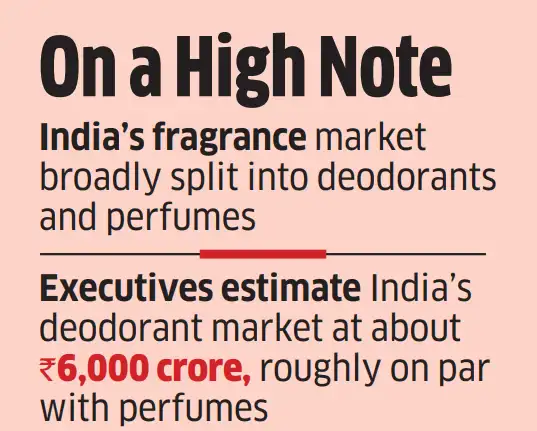
India’s direct-to-consumer (D2C) fragrance and deodorant sector is seeing early signs of a funding boom, with venture capital firms negotiating multiple deals with emerging brands amid Gen Z demand and a wave of premiumisation.
The deal pipeline:
What’s driving this:
Tell me more: Investors note a wide gap in the mid-premium segment – particularly in products priced between Rs 1,500 and Rs 4,000 for a 100 ml bottle.
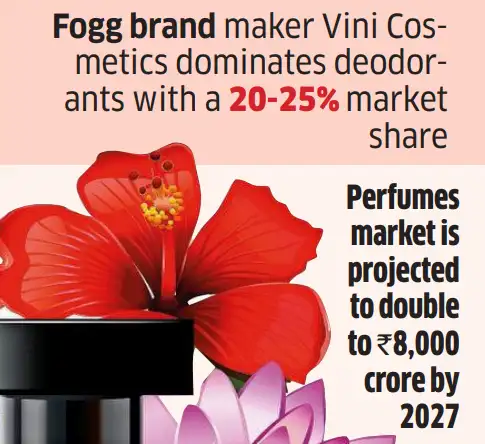
Retailer Nykaa has begun launching dedicated "Nykaa Perfumery" outlets to drive category adoption. The Indian perfume market is projected to double to Rs 8,000 crore by 2027.

After two years of aggressive cost-cutting, India’s top fintech players are loosening their purse strings for marketing in FY26. Companies like PhonePe, Paytm, and PB Fintech are dialling up ad spends to acquire new customers and capture market share.
Number-wise:
Top deck’s take: Paytm founder Vijay Shekhar Sharma explained during the latest earnings call that this was aimed at raising market share. Meanwhile, Yashish Dahiya, group chairman, PB Fintech, said the company is majorly promoting four products: term and health insurance, child education, and pension products and “their target is growth”.
Industry shift: Industry insiders say that having stabilised employee costs and regulatory compliance, fintechs are shifting back towards core business growth. The renewed focus on customer acquisition indicates a move from defensive consolidation to offensive expansion in a stable regulatory environment.
Also Read: VC-backed wealth management startups see revenue rise, losses widen

India AI Mission CEO Abhishek Singh said the upcoming India AI Summit is about bringing countries together to pursue common minimum standards for the technology, which can be deployed globally.
What to expect: India will attempt to build a multilateral consensus on deploying a set of open-access AI resources that lead to responsible, ethical deployment worldwide, Singh explained.
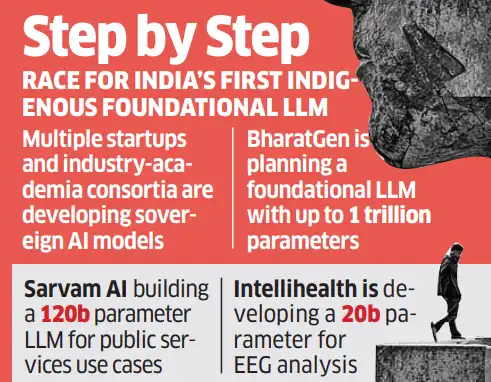
Small versus large: Clarifying that India is not pursuing trillion-parameter AI models or artificial general intelligence, he stated that India's needs can be addressed with small language models (SLMs), even as low as 14 billion parameters. A parameter is a variable that AI models learn during training and adjust as they process data. It ultimately determines how input data is transformed into output.
"Our objective is to solve for India, to design the system in a way that it helps in solving our problems by leveraging Indian datasets that are domain-specific. SLMs and smaller models are perfectly okay," he said.
Also Read: Govt eyeing 25,000 more GPUs as AI Mission’s fourth tender closes

Hackers breach govt systems in 37 countries: A hacking group broke into government systems in 37 countries, nearly a fifth of the planet, in one of the most extensive coordinated cyber espionage campaigns ever recorded, Pete Renals, director of National Security Programs at Palo Alto Networks’ Unit 42, told ET in an exclusive interview.
Pearson chief on AI: British education firm and publisher Pearson is repositioning itself as an AI-powered learning company as artificial intelligence rapidly reshapes jobs and skills worldwide, global chief executive Omar Abbosh told ET in an exclusive interview.
India-US trade deal to boost GPU access: Union IT and electronics minister Ashwini Vaishnaw said that with India and the US finalising a framework for an interim trade agreement, India’s access to advanced GPUs and data centre equipment will accelerate, and ample opportunities will open up for domestic startups, service providers and the broader AI ecosystem.
Ashwini Vaishnaw assures domestic AI firms: Union IT and electronics minister Ashwini Vaishnaw has clarified that domestic and foreign companies will be treated on par with respect to tax benefits for data centres, after concerns arose among local players about an uneven playing field.
■ Can Europe get kids off social media? (FT)
■ Moltbook was peak AI theater (MIT Technology Review)
■ Why Claude Cowork is a math problem Indian IT can’t solve (Rest of World)
Also in the letter:
■ IndiaAI Mission CEO on upcoming summit
■ Palo Alto Networks CEO interview
■ Pearson chief on AI
Investors catch a big whiff of money in D2C fragrance firms
India’s direct-to-consumer (D2C) fragrance and deodorant sector is seeing early signs of a funding boom, with venture capital firms negotiating multiple deals with emerging brands amid Gen Z demand and a wave of premiumisation.
The deal pipeline:
- DSG Consumer Partners is in discussions to invest Rs 18-20 crore in Phitku. The brand sells alum-based underarm roll-ons and is doing monthly sales of Rs 1.5-2.0 crore, sources told us.
- V3 Ventures is in talks to invest Rs 20-25 crore in Fraganote, which currently generates monthly revenue of Rs 2-2.5 crore.
- This comes after recent investments in actor Samantha Ruth Prabhu’s Secret Alchemist and Indore-based House of EM5.
What’s driving this:
- A growing demand from Gen Z consumers, coupled with the trend of premiumisation, is driving a shift from deodorant sprays to perfumes.
- There is also growing awareness that aerosols can be harmful to the skin and may be carcinogenic over time.
- Unlike global markets, where users typically move gradually from deodorants to colognes, Indian consumers are skipping the intermediate stages and upgrading directly to Eau de Parfum (EDP).
Tell me more: Investors note a wide gap in the mid-premium segment – particularly in products priced between Rs 1,500 and Rs 4,000 for a 100 ml bottle.
Retailer Nykaa has begun launching dedicated "Nykaa Perfumery" outlets to drive category adoption. The Indian perfume market is projected to double to Rs 8,000 crore by 2027.
Large fintechs press the pedal on marketing spends to boost growth
After two years of aggressive cost-cutting, India’s top fintech players are loosening their purse strings for marketing in FY26. Companies like PhonePe, Paytm, and PB Fintech are dialling up ad spends to acquire new customers and capture market share.
Number-wise:
- IPO-bound PhonePe spent Rs 455 crore in the first half of the current fiscal, compared to Rs 307 crore in the first six months of FY25.
- Its rival, Paytm, spent Rs 37 crore in the June quarter, Rs 50 crore in the September quarter, and Rs 69 crore in the December quarter.
- Policybazaar's parent, PB Fintech, also raised its December-quarter marketing spend by 6.5% year-on-year to Rs 308.5 crore.
Top deck’s take: Paytm founder Vijay Shekhar Sharma explained during the latest earnings call that this was aimed at raising market share. Meanwhile, Yashish Dahiya, group chairman, PB Fintech, said the company is majorly promoting four products: term and health insurance, child education, and pension products and “their target is growth”.
Industry shift: Industry insiders say that having stabilised employee costs and regulatory compliance, fintechs are shifting back towards core business growth. The renewed focus on customer acquisition indicates a move from defensive consolidation to offensive expansion in a stable regulatory environment.
Also Read: VC-backed wealth management startups see revenue rise, losses widen
India eyes common standards for AI deployment at AI Summit
India AI Mission CEO Abhishek Singh said the upcoming India AI Summit is about bringing countries together to pursue common minimum standards for the technology, which can be deployed globally.
What to expect: India will attempt to build a multilateral consensus on deploying a set of open-access AI resources that lead to responsible, ethical deployment worldwide, Singh explained.
- The first is an open source repository of AI solutions for key sectors such as agriculture, healthcare and education that all countries can use.
- The second one will focus on deploying safe and ethical AI, ensuring bias mitigation, regulating deepfakes, and watermarking AI content.
- A common funding facility to roll out these measures is also part of the proposals that will be presented to leaders during the five-day summit beginning February 16.
Small versus large: Clarifying that India is not pursuing trillion-parameter AI models or artificial general intelligence, he stated that India's needs can be addressed with small language models (SLMs), even as low as 14 billion parameters. A parameter is a variable that AI models learn during training and adjust as they process data. It ultimately determines how input data is transformed into output.
"Our objective is to solve for India, to design the system in a way that it helps in solving our problems by leveraging Indian datasets that are domain-specific. SLMs and smaller models are perfectly okay," he said.
Also Read: Govt eyeing 25,000 more GPUs as AI Mission’s fourth tender closes
Other Top Stories By Our Reporters
Hackers breach govt systems in 37 countries: A hacking group broke into government systems in 37 countries, nearly a fifth of the planet, in one of the most extensive coordinated cyber espionage campaigns ever recorded, Pete Renals, director of National Security Programs at Palo Alto Networks’ Unit 42, told ET in an exclusive interview.
Pearson chief on AI: British education firm and publisher Pearson is repositioning itself as an AI-powered learning company as artificial intelligence rapidly reshapes jobs and skills worldwide, global chief executive Omar Abbosh told ET in an exclusive interview.
India-US trade deal to boost GPU access: Union IT and electronics minister Ashwini Vaishnaw said that with India and the US finalising a framework for an interim trade agreement, India’s access to advanced GPUs and data centre equipment will accelerate, and ample opportunities will open up for domestic startups, service providers and the broader AI ecosystem.
Ashwini Vaishnaw assures domestic AI firms: Union IT and electronics minister Ashwini Vaishnaw has clarified that domestic and foreign companies will be treated on par with respect to tax benefits for data centres, after concerns arose among local players about an uneven playing field.
Global Picks We Are Reading
■ Can Europe get kids off social media? (FT)
■ Moltbook was peak AI theater (MIT Technology Review)
■ Why Claude Cowork is a math problem Indian IT can’t solve (Rest of World)
Want this newsletter delivered to your inbox?
I agree to receive newsletters and marketing communications via e-mail