
 Morning Dispatch Morning Dispatch |
Fable 5 wake-up call; Indians chase SpaceX jackpot
Want this newsletter delivered to your inbox?
I agree to receive newsletters and marketing communications via e-mail

Thank you for subscribing to Morning Dispatch
We'll soon meet in your inbox.
Happy Monday! The Fable 5 disruption has triggered fresh calls for India to build its own AI muscle. This and more in today’s ETtech Morning Dispatch.
Also in the letter:
■ Househelp discount wars return
■ Indian IT eyes Europe
■ Red Hat's India play
 Dario Amodei, CEO, Anthropic
After a US export-control directive forced Anthropic to cut off foreign users from its latest AI models, Indian founders, investors and AI leaders are sounding the alarm: India cannot keep depending on overseas AI infrastructure.
Their message is clear: India needs sovereign AI capabilities of its own – just as it built the Unified Payment Interface (UPI) and Aadhaar instead of relying on imported rails.
A new supply chain risk:
Also Read: US ban on Anthropic's Fable 5 & Mythos 5 to put Indian IT services firms at competitive disadvantage
India's big AI bet: For now, much of India’s sovereign AI ambition rides on Sarvam AI, the Bengaluru startup chosen under the IndiaAI Mission to build indigenous foundation models.
But the money gap is huge. Sarvam has raised $41 million so far, while OpenAI and Anthropic together have pulled in capital worth hundreds of billions of dollars.
Also Read: Anthropic ban: Sarvam AI's Pratyush Kumar warns against reliance on foreign models
“We can experiment with new architectures. We can build smaller models. We can build models designed specifically for Indian languages and use cases,” says Aakrit Vaish, cofounder, Activate, who was also on the advisor committee of the India AI mission.
Why it matters: Indian AI startups building for global markets fear being cut off from cutting-edge models, leaving them on the back foot against US rivals.
Also Read: Anthropic’s Fable 5 takedown triggers India Inc push for AI self-reliance
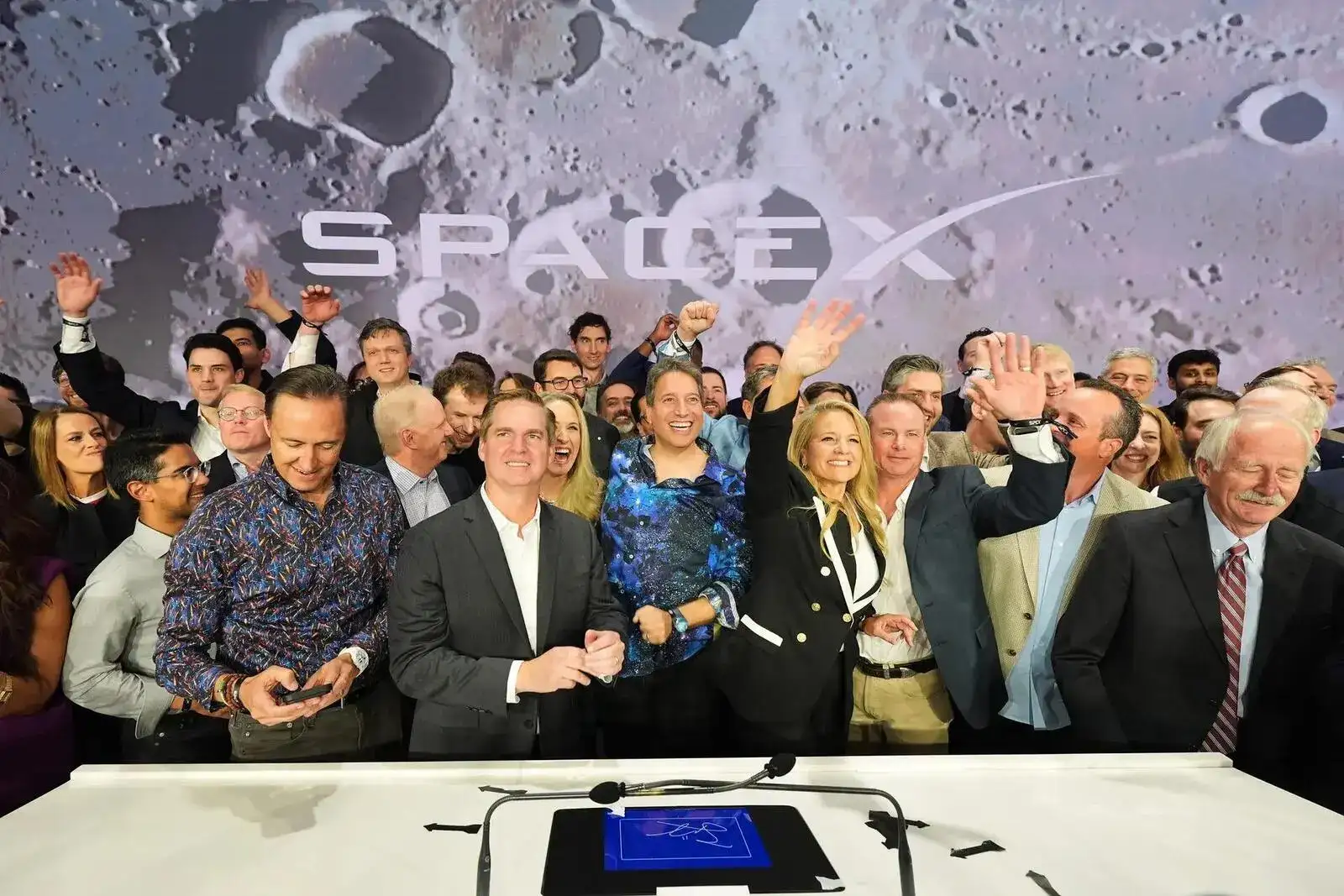
Elon Musk's rocket company SpaceX has listed in the US — and Indian investors are taking notice. Data from brokers that enable US stock investing shows a clear spike in interest.
Driving the news: Trading volumes on Friday and early Saturday morning in India were up by 20-25% among both new and existing investors. Roughly one in five trades went into SpaceX shares, according to Vested Finance and IndMoney data.
Also Read: Elon Musk recalls SpaceX’s journey from mere 10% chance of success to the world’s biggest IPO
What this tells us:
Also Read: SpaceX: Five key moments, from first launch to Starship megarocket
Long-term view: A more enabling regulatory framework via the GIFT City route is nudging more Indians into global markets. This signals both confidence in India’s own growth story and a rising appetite for new-age companies worldwide. The enthusiasm around Indian startup IPOs mirrors this broader shift.
Also Read: States challenge Nasdaq, FTSE Russell for fast-tracking SpaceX
 (L-R) Urban Company's Abhiraj Bhal, Snabbit's Aayush Aggarwal and Pronto's Anjali Sardana
India's instant househelp startups are back to spending aggressively to win customers.
Urban Company, Snabbit, and Pronto ramped up discounts in May after briefly dialling back incentives in April amid a worker shortage.
What's happening? The trio’s combined monthly cash burn jumped about 25% month-on-month to $14-15 million in May, up from $10-12 million in April, according to industry executives.
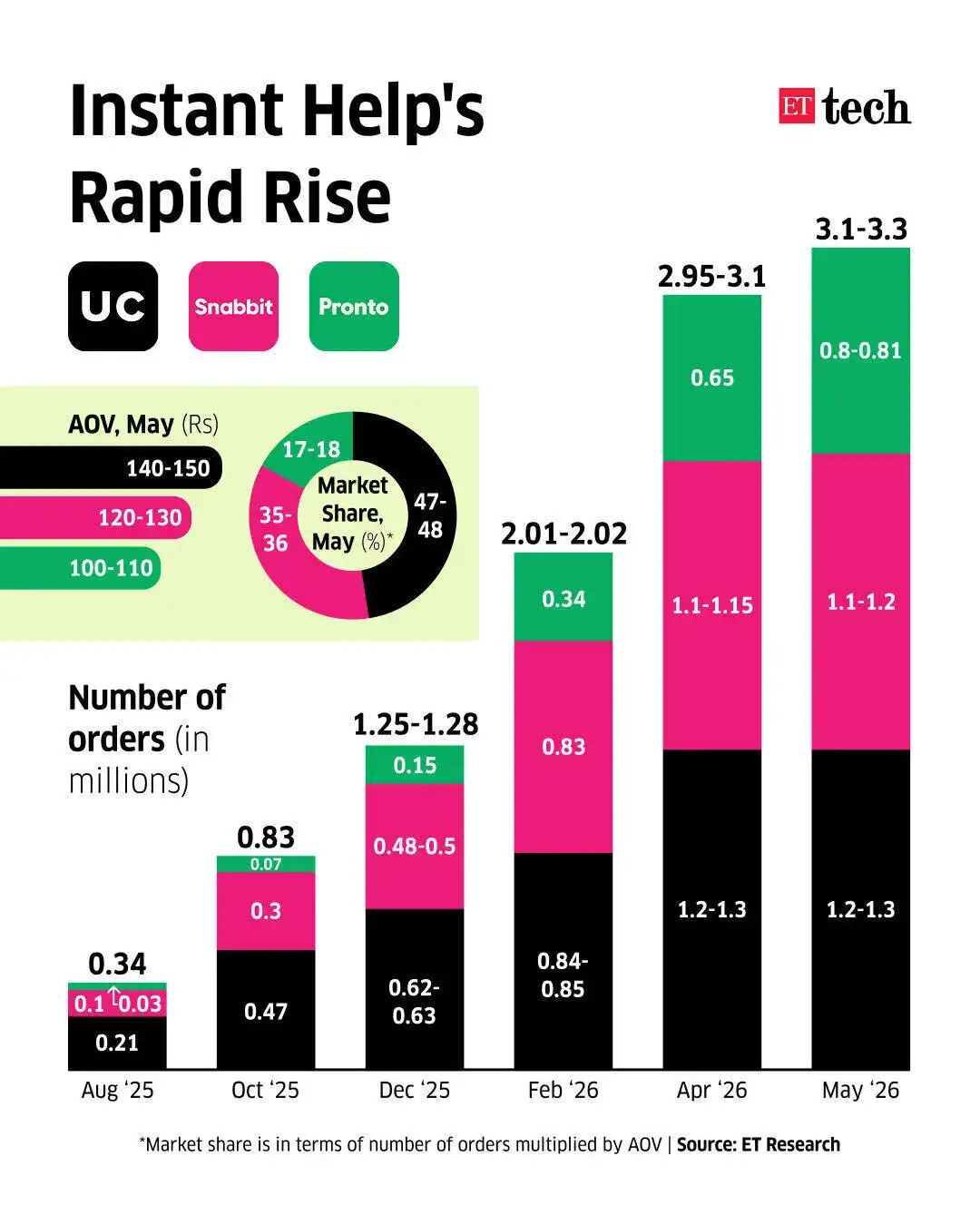
The catch: That extra spend hasn't delivered a big demand spike.
Sector reset: A labour crunch had briefly choked supply, forcing companies to raise prices in some markets. As worker availability improved in May, platforms swung back to aggressive customer acquisition via discounts and offers.
For example:
Also Read: Optimising to win, capture market share in InstaHelp: Urban Company CEO Bhal as firm reports 57x jump in net loss

Europe becomes Indian IT's fastest-growing market: Europe is emerging as the next big growth market for Indian IT services, accounting for over a third of the new delivery centres opened by top firms last fiscal, as it continues to outpace North America.
Red Hat sees an opening as Indian enterprises turn to AI sovereignty: Red Hat is seeing rising demand for its open-source stack from Indian enterprises that want tighter control over AI and cloud infrastructure, amid mounting worries about tech sovereignty, data governance and vendor lock-in, a senior executive said.
AI workloads push data centres to upgrade fire and cooling systems: Data centres are racing to strengthen fire safety, cooling and electrical infrastructure to protect operations from sudden failures as AI-driven loads surge, said industry executives and analysts.
■ What the SpaceX IPO reveals about Gulf money in AI (Rest of World)
■ Meta Employees Absolutely Hate Mark Zuckerberg’s Plan for a Companywide AI Hackathon (Wired)
■ AI riches turn Samsung factory town into luxury hotspot (FT)
Also in the letter:
■ Househelp discount wars return
■ Indian IT eyes Europe
■ Red Hat's India play
Fable 5 shock puts sovereign AI back on India's agenda
After a US export-control directive forced Anthropic to cut off foreign users from its latest AI models, Indian founders, investors and AI leaders are sounding the alarm: India cannot keep depending on overseas AI infrastructure.
Their message is clear: India needs sovereign AI capabilities of its own – just as it built the Unified Payment Interface (UPI) and Aadhaar instead of relying on imported rails.
A new supply chain risk:
- Investors now see AI as a strategic dependency on par with energy, semiconductors, and rare earths.
- Companies, they say, must factor in “AI supply-chain risk” and avoid leaning on a single model provider.
- The playbook? Spread workloads across multiple models and build orchestration layers that can dynamically switch based on cost, performance and availability.
Also Read: US ban on Anthropic's Fable 5 & Mythos 5 to put Indian IT services firms at competitive disadvantage
India's big AI bet: For now, much of India’s sovereign AI ambition rides on Sarvam AI, the Bengaluru startup chosen under the IndiaAI Mission to build indigenous foundation models.
But the money gap is huge. Sarvam has raised $41 million so far, while OpenAI and Anthropic together have pulled in capital worth hundreds of billions of dollars.
Also Read: Anthropic ban: Sarvam AI's Pratyush Kumar warns against reliance on foreign models
“We can experiment with new architectures. We can build smaller models. We can build models designed specifically for Indian languages and use cases,” says Aakrit Vaish, cofounder, Activate, who was also on the advisor committee of the India AI mission.
Why it matters: Indian AI startups building for global markets fear being cut off from cutting-edge models, leaving them on the back foot against US rivals.
Also Read: Anthropic’s Fable 5 takedown triggers India Inc push for AI self-reliance
SpaceX IPO: Indians queue up to invest more in US stocks
Elon Musk's rocket company SpaceX has listed in the US — and Indian investors are taking notice. Data from brokers that enable US stock investing shows a clear spike in interest.
Driving the news: Trading volumes on Friday and early Saturday morning in India were up by 20-25% among both new and existing investors. Roughly one in five trades went into SpaceX shares, according to Vested Finance and IndMoney data.
Also Read: Elon Musk recalls SpaceX’s journey from mere 10% chance of success to the world’s biggest IPO
What this tells us:
- Indians increasingly want exposure to frontier tech being built in the US.
- They are also using US stocks as a hedge against the rupee and a vehicle for long-term goals like funding children’s education.
- Reserve Bank of India (RBI) data shows that in March 2026, Indians invested $440 million in international stocks under the central bank's remittance scheme, up 43% on-year.
Also Read: SpaceX: Five key moments, from first launch to Starship megarocket
Long-term view: A more enabling regulatory framework via the GIFT City route is nudging more Indians into global markets. This signals both confidence in India’s own growth story and a rising appetite for new-age companies worldwide. The enthusiasm around Indian startup IPOs mirrors this broader shift.
Also Read: States challenge Nasdaq, FTSE Russell for fast-tracking SpaceX
Instant househelp startups burn $14-15 million in May as discounts heat up
India's instant househelp startups are back to spending aggressively to win customers.
Urban Company, Snabbit, and Pronto ramped up discounts in May after briefly dialling back incentives in April amid a worker shortage.
What's happening? The trio’s combined monthly cash burn jumped about 25% month-on-month to $14-15 million in May, up from $10-12 million in April, according to industry executives.
The catch: That extra spend hasn't delivered a big demand spike.
- Total monthly orders in the sector inched up to around 3.2-3.3 million in May from 2.9-3.1 million in April.
- Urban Company’s InstaHelp handled about 1.2-1.3 million orders.
- Snabbit processed around 1.1-1.2 million orders.
- Pronto recorded roughly 800,000-810,000 orders.
Sector reset: A labour crunch had briefly choked supply, forcing companies to raise prices in some markets. As worker availability improved in May, platforms swung back to aggressive customer acquisition via discounts and offers.
For example:
- Snabbit is pitching a one-time package of three 60-minute visits for Rs 199 in select micro-markets across Bengaluru and Gurugram.
- Urban Company is onboarding new users with a Re 1 trial offer for InstaHelp services.
Also Read: Optimising to win, capture market share in InstaHelp: Urban Company CEO Bhal as firm reports 57x jump in net loss
Other Top Stories By Our Reporters
Europe becomes Indian IT's fastest-growing market: Europe is emerging as the next big growth market for Indian IT services, accounting for over a third of the new delivery centres opened by top firms last fiscal, as it continues to outpace North America.
Red Hat sees an opening as Indian enterprises turn to AI sovereignty: Red Hat is seeing rising demand for its open-source stack from Indian enterprises that want tighter control over AI and cloud infrastructure, amid mounting worries about tech sovereignty, data governance and vendor lock-in, a senior executive said.
AI workloads push data centres to upgrade fire and cooling systems: Data centres are racing to strengthen fire safety, cooling and electrical infrastructure to protect operations from sudden failures as AI-driven loads surge, said industry executives and analysts.
Global Picks We Are Reading
■ What the SpaceX IPO reveals about Gulf money in AI (Rest of World)
■ Meta Employees Absolutely Hate Mark Zuckerberg’s Plan for a Companywide AI Hackathon (Wired)
■ AI riches turn Samsung factory town into luxury hotspot (FT)
Want this newsletter delivered to your inbox?
I agree to receive newsletters and marketing communications via e-mail