
 Morning Dispatch Morning Dispatch |
Byju's Aakash endgame; Startup deal street wakes up
Want this newsletter delivered to your inbox?
I agree to receive newsletters and marketing communications via e-mail

Thank you for subscribing to Morning Dispatch
We'll soon meet in your inbox.
Happy Monday! Byju's US lenders and Manipal are close to sealing a settlement over Aakash. This and more in today’s ETtech Morning Dispatch.
Also in the letter:
■ Zepto’s costly growth spurt
■ India's new GCC contenders
■ Execs back in class
Manipal Education and Medical Group and GLAS Trust, representing Byju’s US lenders, are in advanced settlement talks ahead of a June 23 NCLT hearing.
At the heart of the negotiations is Aakash Educational Services, the test-prep chain that remains the crown jewel of the collapsed edtech group.
What’s being settled?

Strategic acquisitions of Indian startups are roaring back, with buyers in consumer, fintech and ecommerce seeking assets as deal flow accelerates.
Driving the news:
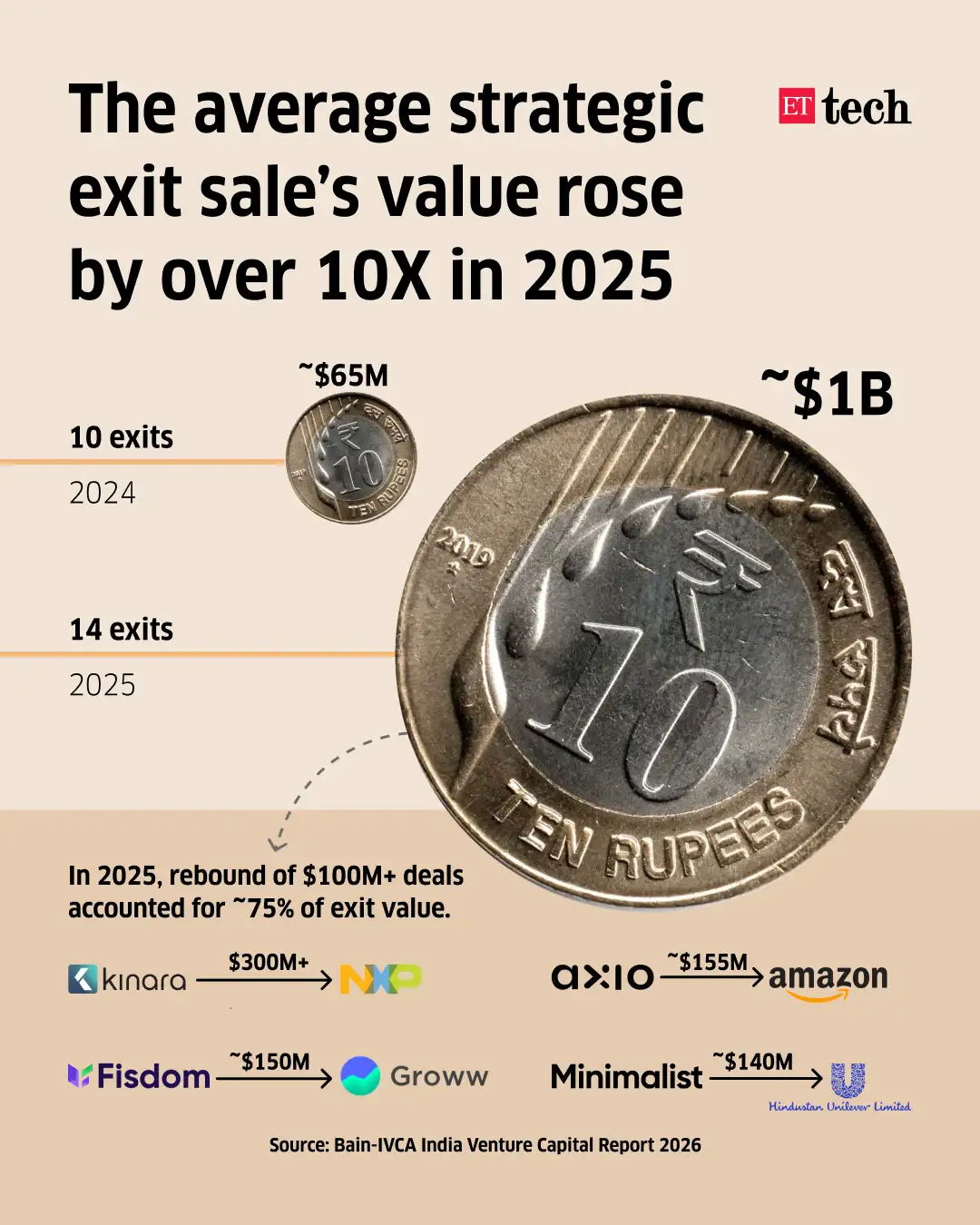
Tell me more: This surge marks a sharp reversal from 2024, when strategic sales had all but vanished as an exit path for venture investors amid weak dealmaking and a dearth of large exits.
Activity rebounded in 2025, with strategic exit value soaring to over $1 billion from approximately $65 million the year prior. This accounted for about 15% of all exits, according to the Bain–IVCA India Venture Capital Report 2026.
Expert take: Industry leaders say buyers now prefer to acquire capabilities and brands rather than build them from scratch.
They also note that startups are scaling much faster than a few years ago, with some consumer brands reaching Rs 100 crore in revenue within 12–15 months while remaining profitable or burning far less cash.
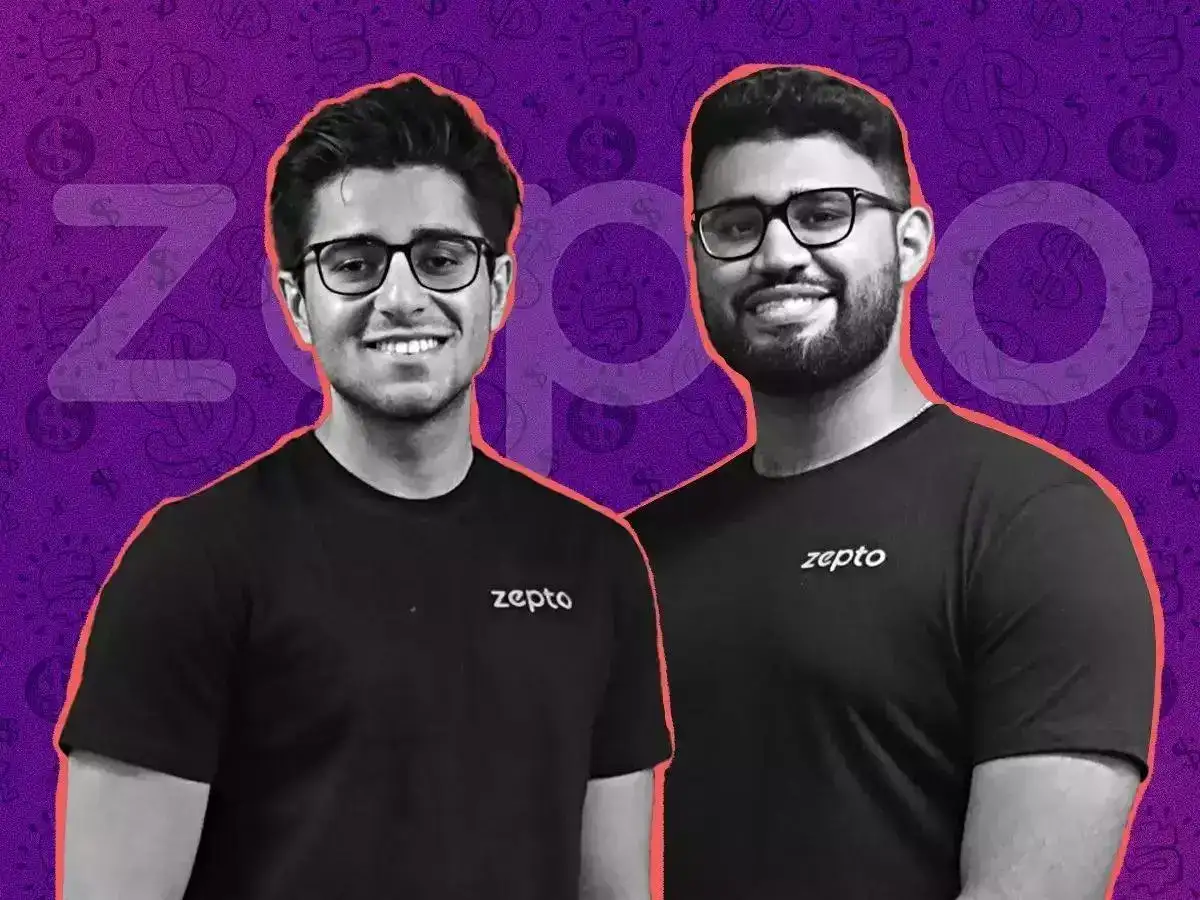 Aadit Palicha and Kaivalya Vohra, cofounders, Zepto
Zepto is heading to the public markets just as quick commerce enters another cash-burning expansion phase. The company trails only Blinkit in order volumes, but analysts and industry insiders say aggressive discounting has fuelled its growth and delayed monetisation.
Tell me more:
Why it matters: Jefferies estimates Zepto's average order value (AOV) at approximately Rs 357, significantly lower than Blinkit's Rs 530 and Instamart's Rs 490. Analysts attribute this difference to Zepto's focus on everyday low prices, emphasizing more frequent orders and affordability instead of larger baskets.
Competition widens:

PE firms, mid-market companies drive India’s new GCC wave: Private equity-backed firms and mid-market companies now account for a rising share of India’s global capability centre (GCC) expansion, a space long dominated by large multinationals.
Indian executives back in the classroom for a fresh chapter: Artificial intelligence is powering a fresh boom in India’s upskilling market as professionals across sectors rush to acquire new skills and stay relevant in a workplace being disrupted by automation and generative AI.
■ Buying a used iPhone makes more sense than ever (Wired)
■ Did Anthropic talk its way into an AI export ban? (FT)
■ In the Weights is your new AI-centric vanity search (TechCrunch)
Also in the letter:
■ Zepto’s costly growth spurt
■ India's new GCC contenders
■ Execs back in class
Byju’s-Aakash settlement talks enter final stretch ahead of NCLT hearing
Manipal Education and Medical Group and GLAS Trust, representing Byju’s US lenders, are in advanced settlement talks ahead of a June 23 NCLT hearing.
At the heart of the negotiations is Aakash Educational Services, the test-prep chain that remains the crown jewel of the collapsed edtech group.
What’s being settled?
- The settlement seeks to define how Aakash’s value will be carved up between Manipal, Think & Learn’s creditors, and entities linked to founder Byju Raveendran and his family.
- Manipal currently owns about 58% of Aakash. Think & Learn held 25.75% before a rights issue that could have diluted its stake to around 5%.
- Another key piece: 17,891,289 Aakash shares held via Beeaar Investco, which are under scrutiny because of Qatar Investment Authority’s claims against Raveendran.
- GLAS and the resolution professional opposed the rights issue, arguing that it would erode creditor recoveries.
- The Supreme Court allowed the rights issue to proceed but later recorded Aakash’s undertaking to ring-fence Think & Learn’s 25.75% stake until NCLAT delivers its verdict.
- If the talks succeed, the parties could submit the final terms to the NCLT on June 23.
Dealmaking stays hot as startup M&A momentum powers into 2026
Strategic acquisitions of Indian startups are roaring back, with buyers in consumer, fintech and ecommerce seeking assets as deal flow accelerates.
Driving the news:
- The latest example: one of India's biggest D2C deals, with L’Oréal snapping up a majority stake in Innovist.
- Consumer and retail lead the pack. Marico has picked up popcorn brand 4700BC and wellness label Cosmix this year.
- USV acquired Wellbeing Nutrition in February, while beauty and healthcare firm Puresta bought SkinQ.
- In fintech, Pine Labs acquired Shopflo in an Rs 88-crore deal.
Tell me more: This surge marks a sharp reversal from 2024, when strategic sales had all but vanished as an exit path for venture investors amid weak dealmaking and a dearth of large exits.
Activity rebounded in 2025, with strategic exit value soaring to over $1 billion from approximately $65 million the year prior. This accounted for about 15% of all exits, according to the Bain–IVCA India Venture Capital Report 2026.
Expert take: Industry leaders say buyers now prefer to acquire capabilities and brands rather than build them from scratch.
They also note that startups are scaling much faster than a few years ago, with some consumer brands reaching Rs 100 crore in revenue within 12–15 months while remaining profitable or burning far less cash.
Inside Zepto's profit push ahead of its IPO
Zepto is heading to the public markets just as quick commerce enters another cash-burning expansion phase. The company trails only Blinkit in order volumes, but analysts and industry insiders say aggressive discounting has fuelled its growth and delayed monetisation.
Tell me more:
- Zepto processed 640 million orders in FY26, trailing Blinkit's 917 million but surpassing Swiggy Instamart's 412 million.
- It reported an adjusted Ebitda loss of about Rs 5,000 crore in FY26, compared with Rs 3,500 crore at Instamart and Rs 277 crore at Blinkit.
- On a per-order basis, though, Zepto cut its losses to Rs 79 in FY26, down from Rs 136 a year earlier, thanks to a leaner supply chain and lower marketing spend.
Why it matters: Jefferies estimates Zepto's average order value (AOV) at approximately Rs 357, significantly lower than Blinkit's Rs 530 and Instamart's Rs 490. Analysts attribute this difference to Zepto's focus on everyday low prices, emphasizing more frequent orders and affordability instead of larger baskets.
Competition widens:
- Amazon is rapidly scaling its quick commerce play and plans to expand its network to 1,000 dark stores.
- Flipkart aims to open about 1,600 dark stores by the end of 2026.
- Reliance Retail says its hyperlocal delivery network already covers more than 5,100 pin codes across 1,200 cities.
Other Top Stories By Our Reporters
PE firms, mid-market companies drive India’s new GCC wave: Private equity-backed firms and mid-market companies now account for a rising share of India’s global capability centre (GCC) expansion, a space long dominated by large multinationals.
Indian executives back in the classroom for a fresh chapter: Artificial intelligence is powering a fresh boom in India’s upskilling market as professionals across sectors rush to acquire new skills and stay relevant in a workplace being disrupted by automation and generative AI.
Global Pick We Are Reading
■ Buying a used iPhone makes more sense than ever (Wired)
■ Did Anthropic talk its way into an AI export ban? (FT)
■ In the Weights is your new AI-centric vanity search (TechCrunch)
Want this newsletter delivered to your inbox?
I agree to receive newsletters and marketing communications via e-mail