
 Morning Dispatch Morning Dispatch |
Block deals test valuations; gig platforms quit welfare board
Want this newsletter delivered to your inbox?
I agree to receive newsletters and marketing communications via e-mail

Thank you for subscribing to Morning Dispatch
We'll soon meet in your inbox.
Happy Friday! Block deals are putting startups’ private valuations to the test. This and more in today’s ETtech Morning Dispatch.
Also in the letter:
■ Groww vs Zerodha
■ Dream11's pivot
■ Temple buys Longevous

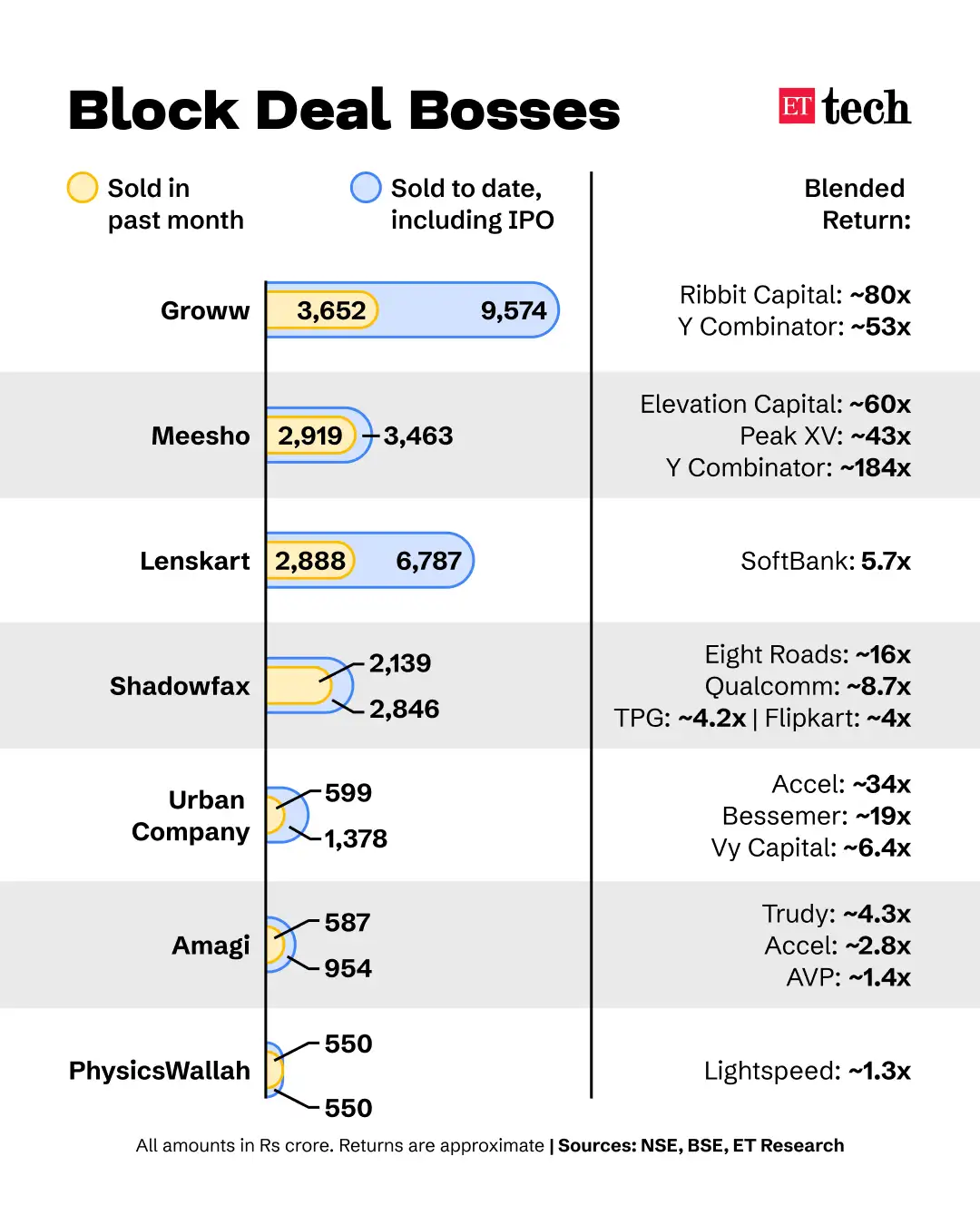
Investors sold Rs 13,300 crore of shares through bulk and block deals across seven newly listed Indian startups over the past month, converting holdings into cash and showing how little headline valuations reveal about eventual returns.
Entry stage, holding period and post-listing performance produced sharply different outcomes across funds.
The return divide:
 Why now:

Uber, Eternal and Porter have quit the Karnataka Platform-Based Gig Workers Welfare Board, saying they do not want to be part of a statutory body set up under a law they are challenging in the high court.
IAMAI and several aggregator platforms had moved the Karnataka High Court against the Karnataka Platform-Based Gig Workers (Social Security and Welfare) Act, 2025 and its rules in June.
Driving the news: The three companies were part of the board formed under the Act. Amazon India, another member, has remained on the board as it is not involved in the court case.
The board has four representatives, each from platform companies and worker unions, along with two independent experts and government officials.
Tell me more: The Karnataka government is now looking for other platforms to fill the vacant seats. Delhivery, Namma Yatri and Yulu have agreed to join the board, people familiar with the matter told us.
At present, 15 platform companies have registered with the board. Together, they represent around seven lakh gig workers.

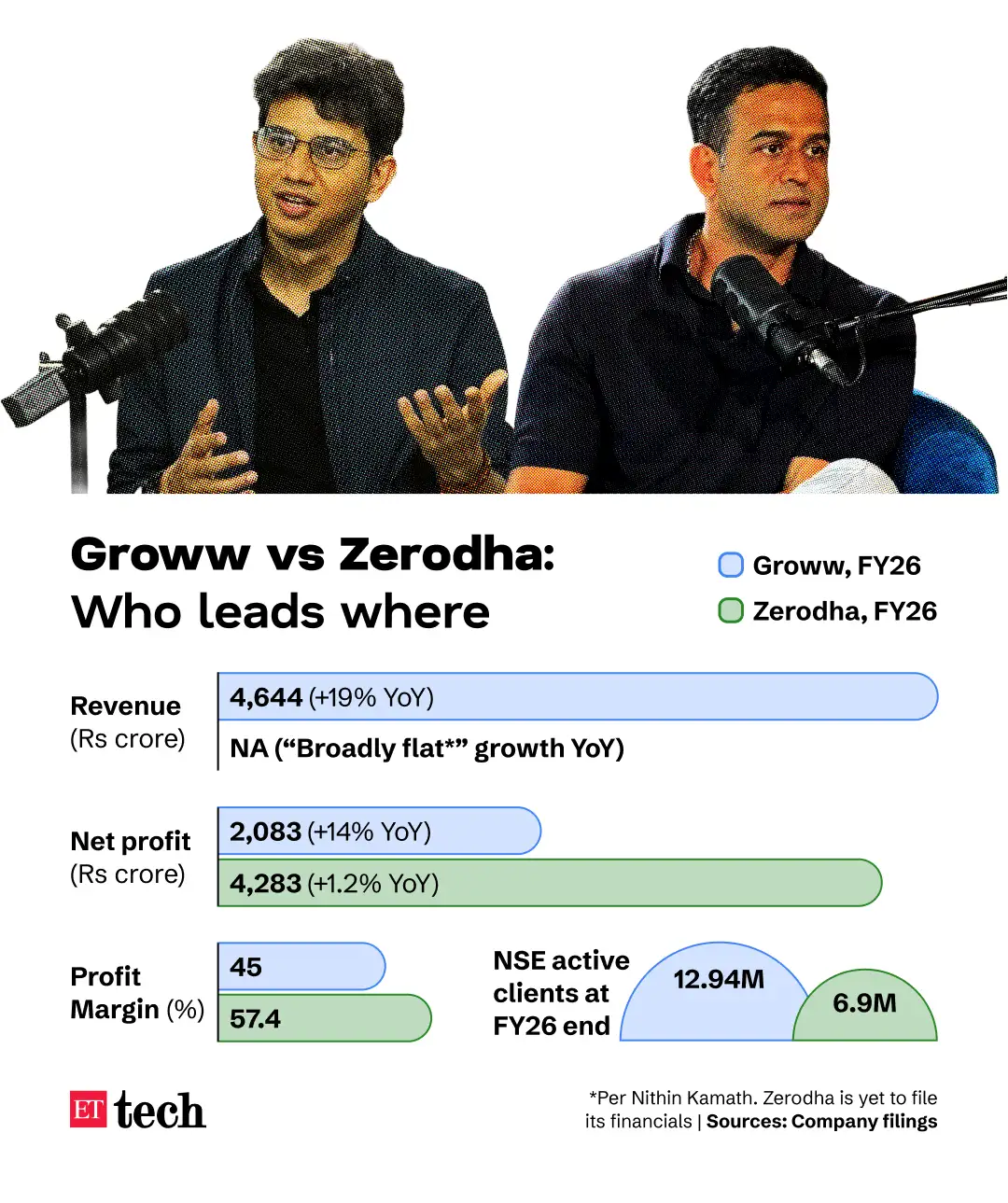
Fintech firm Groww expanded faster in FY26 and had a much bigger active-client base, but Zerodha was almost twice as large both in revenues and profits.
Let’s take a look at how the rivals stack up.
Financials:
 Response to slowdown: Both brokers were affected by weaker retail trading after the September 2024 market peak, tighter futures-and-options rules, higher securities transaction tax, and the end of exchange rebates.
In FY26, Zerodha’s brokerage income fell 10.7% to Rs 2,738 crore, while its net transaction charge income dropped to zero from Rs 400 crore. Groww faced the same challenges, but grew its stocks, mutual funds, and derivatives business, with commodities and margin funding also driving revenues.
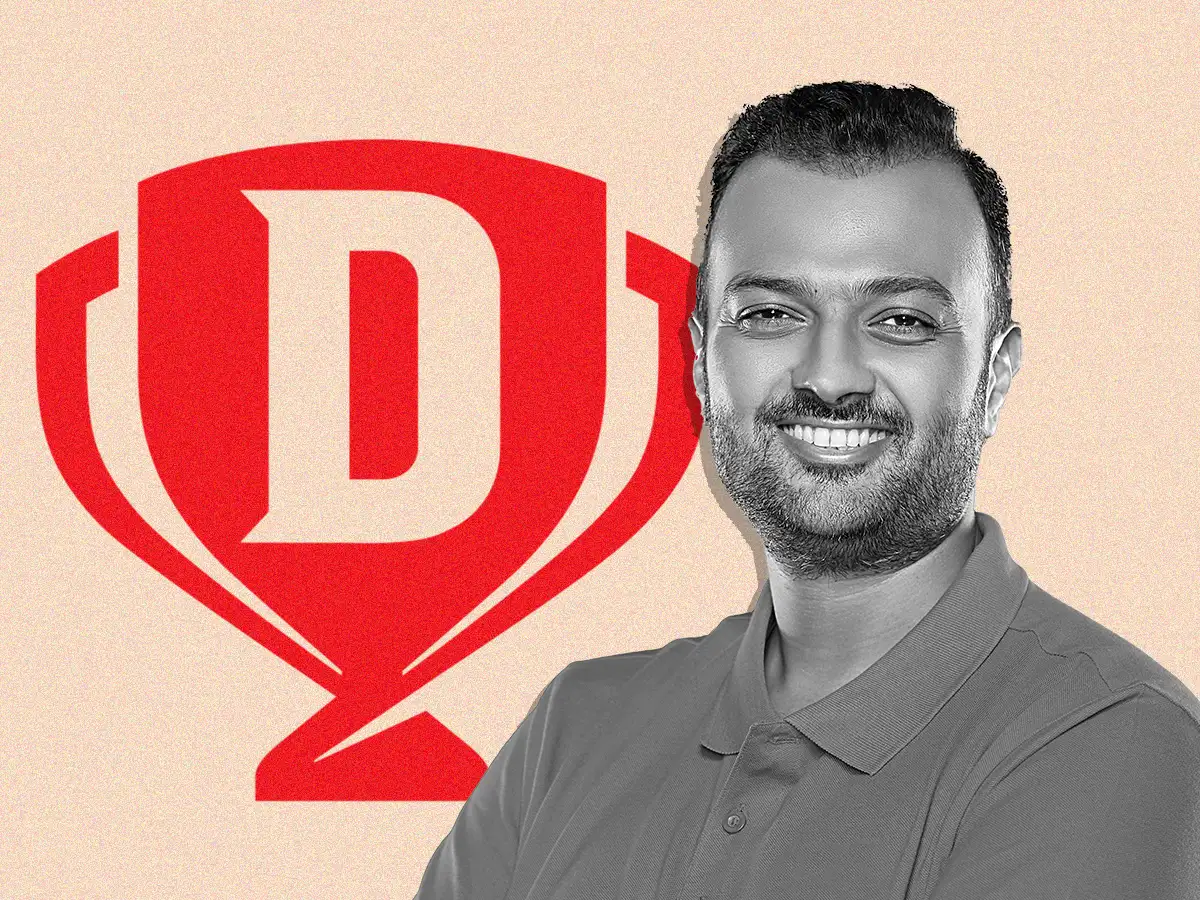 Harsh Jain, CEO, Dream Sports
Dream11 completes pivot away from being a gaming platform: Dream11 has completed its transition away from fantasy gaming, shutting down prize-based contests and repositioning itself as a broader sports engagement platform, the company said on Thursday.
Temple acquires Longevous: Eternal and Zomato founder Deepinder Goyal’s wearable startup Temple has acquired London-based biotech firm Longevous for an undisclosed amount.
Karnataka to run voice AI pilots with ElevenLabs: The Karnataka government plans to run pilot projects with Sequoia Capital-backed voice AI startup ElevenLabs across skilling, investment promotion, healthcare, culture and citizen services.
■ Netflix Failed at Video Games. Now It’s Trying to Promote Them (Wired)
■ India’s data center boom is leaving the people it displaces with nothing (Rest of World)
■ Google, Microsoft and OpenAI among 100 firms calling for better cyber defences (BBC)
Also in the letter:
■ Groww vs Zerodha
■ Dream11's pivot
■ Temple buys Longevous
Startup block-deal rush puts private valuations to the cash test
Investors sold Rs 13,300 crore of shares through bulk and block deals across seven newly listed Indian startups over the past month, converting holdings into cash and showing how little headline valuations reveal about eventual returns.
Entry stage, holding period and post-listing performance produced sharply different outcomes across funds.
The return divide:
- Early backers dominated: Ribbit made 80x on Groww; Elevation Capital 60x and Peak XV 43x on Meesho; one Y Combinator fund returned 184x.
- Meanwhile, late-stage deals have delivered mixed returns. SoftBank’s Lenskart investment returned 5.7x since 2019, while Lightspeed made just 31% on PhysicsWallah in less than two years.
- At Urban Company, Shadowfax and Amagi, returns varied by investor and entry stage.
- Sellers have monetised Rs 25,550 crore, including initial public offerings (IPO), offers for sale and earlier block trades.
- Lock-in expiries create the exit window, while pressure to return cash to limited partners drives sales.
- Public-market performance determines proceeds and residual values. Groww, Meesho and Lenskart have gained 96%, 88% and 61% over issue prices, versus PhysicsWallah’s 16%.
Uber, Eternal, Porter quit Karnataka gig and platform workers welfare board
Uber, Eternal and Porter have quit the Karnataka Platform-Based Gig Workers Welfare Board, saying they do not want to be part of a statutory body set up under a law they are challenging in the high court.
IAMAI and several aggregator platforms had moved the Karnataka High Court against the Karnataka Platform-Based Gig Workers (Social Security and Welfare) Act, 2025 and its rules in June.
Driving the news: The three companies were part of the board formed under the Act. Amazon India, another member, has remained on the board as it is not involved in the court case.
The board has four representatives, each from platform companies and worker unions, along with two independent experts and government officials.
Tell me more: The Karnataka government is now looking for other platforms to fill the vacant seats. Delhivery, Namma Yatri and Yulu have agreed to join the board, people familiar with the matter told us.
At present, 15 platform companies have registered with the board. Together, they represent around seven lakh gig workers.
ETtech Explainer: Groww vs Zerodha — one wins the customer race, the other the earnings battle
Fintech firm Groww expanded faster in FY26 and had a much bigger active-client base, but Zerodha was almost twice as large both in revenues and profits.
Let’s take a look at how the rivals stack up.
Financials:
- Groww’s operating revenue rose 19% to Rs 4,644 crore and net profit rose 14% to Rs 2,083 crore.
- Zerodha’s revenue was flat at about Rs 8,800 crore, while profit edged up 1.2% to Rs 4,283 crore.
In FY26, Zerodha’s brokerage income fell 10.7% to Rs 2,738 crore, while its net transaction charge income dropped to zero from Rs 400 crore. Groww faced the same challenges, but grew its stocks, mutual funds, and derivatives business, with commodities and margin funding also driving revenues.
Other Top Stories By Our Reporters
Dream11 completes pivot away from being a gaming platform: Dream11 has completed its transition away from fantasy gaming, shutting down prize-based contests and repositioning itself as a broader sports engagement platform, the company said on Thursday.
Temple acquires Longevous: Eternal and Zomato founder Deepinder Goyal’s wearable startup Temple has acquired London-based biotech firm Longevous for an undisclosed amount.
Karnataka to run voice AI pilots with ElevenLabs: The Karnataka government plans to run pilot projects with Sequoia Capital-backed voice AI startup ElevenLabs across skilling, investment promotion, healthcare, culture and citizen services.
Global Picks We Are Reading
■ Netflix Failed at Video Games. Now It’s Trying to Promote Them (Wired)
■ India’s data center boom is leaving the people it displaces with nothing (Rest of World)
■ Google, Microsoft and OpenAI among 100 firms calling for better cyber defences (BBC)
Want this newsletter delivered to your inbox?
I agree to receive newsletters and marketing communications via e-mail