
 Morning Dispatch Morning Dispatch |
BigBasket’s profitability plan; UnifyApps eyes $100 million funding
Want this newsletter delivered to your inbox?
I agree to receive newsletters and marketing communications via e-mail

Thank you for subscribing to Morning Dispatch
We'll soon meet in your inbox.
Happy Wednesday! BigBasket is slashing its operational footprint to stay relevant in the quick commerce race. This and more in today’s ETech Morning Dispatch.
Also in the letter:
■ Fatwa roils crypto markets
■ Qcomm platforms’ gourmet war
■ Experts on new AI law
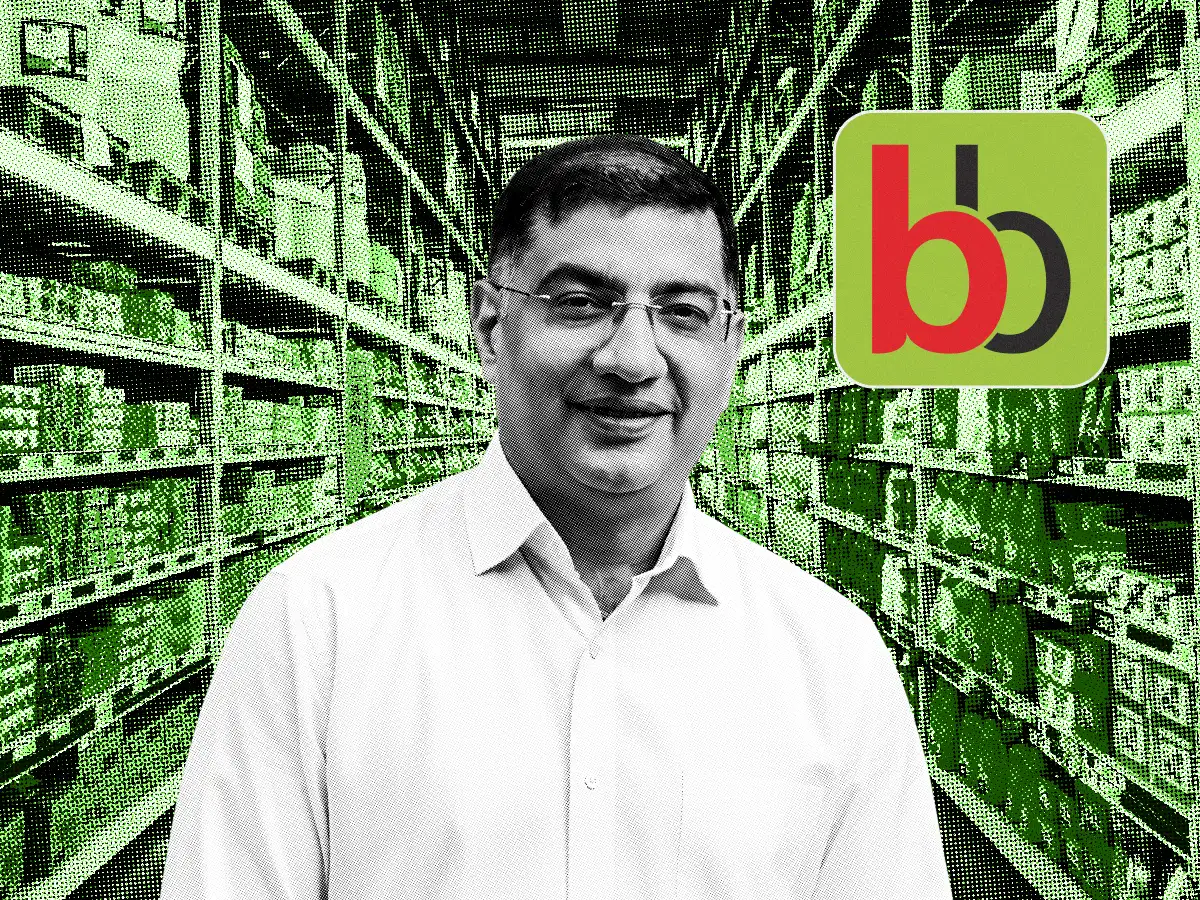 Amit Nanda, CEO, BigBasket
To stay in the quick-commerce race, Tata Digital’s BigBasket is doubling down on about 40 profitable cities, about half its earlier 76-market footprint.
Under new reins: BigBasket’s new CEO Amit Nanda has a clear brief: turn the rapid delivery business profitable as competition heats up and margins tighten.
An executive told us the company now plans to prioritise larger cities where higher density works in its favour. BigBasket has been under scrutiny within the salt-to-software conglomerate for mounting cash burn and losses. “A sort of cluster strategy to tap a denser user profile in big cities will be more profitable than spreading out across markets," the person added.
Changing tack: Sources added the company is shifting from a founder-led operating style to a more professionally run, execution-heavy model.
They added that Nanda will zero in on three levers – customer, pricing and assortment.
Catching up: BigBasket faces pressure to claw back ground in quick commerce, where Zepto, Blinkit, and Swiggy’s Instamart have surged ahead. Ecommerce majors Amazon and Flipkart are also piling into the space.
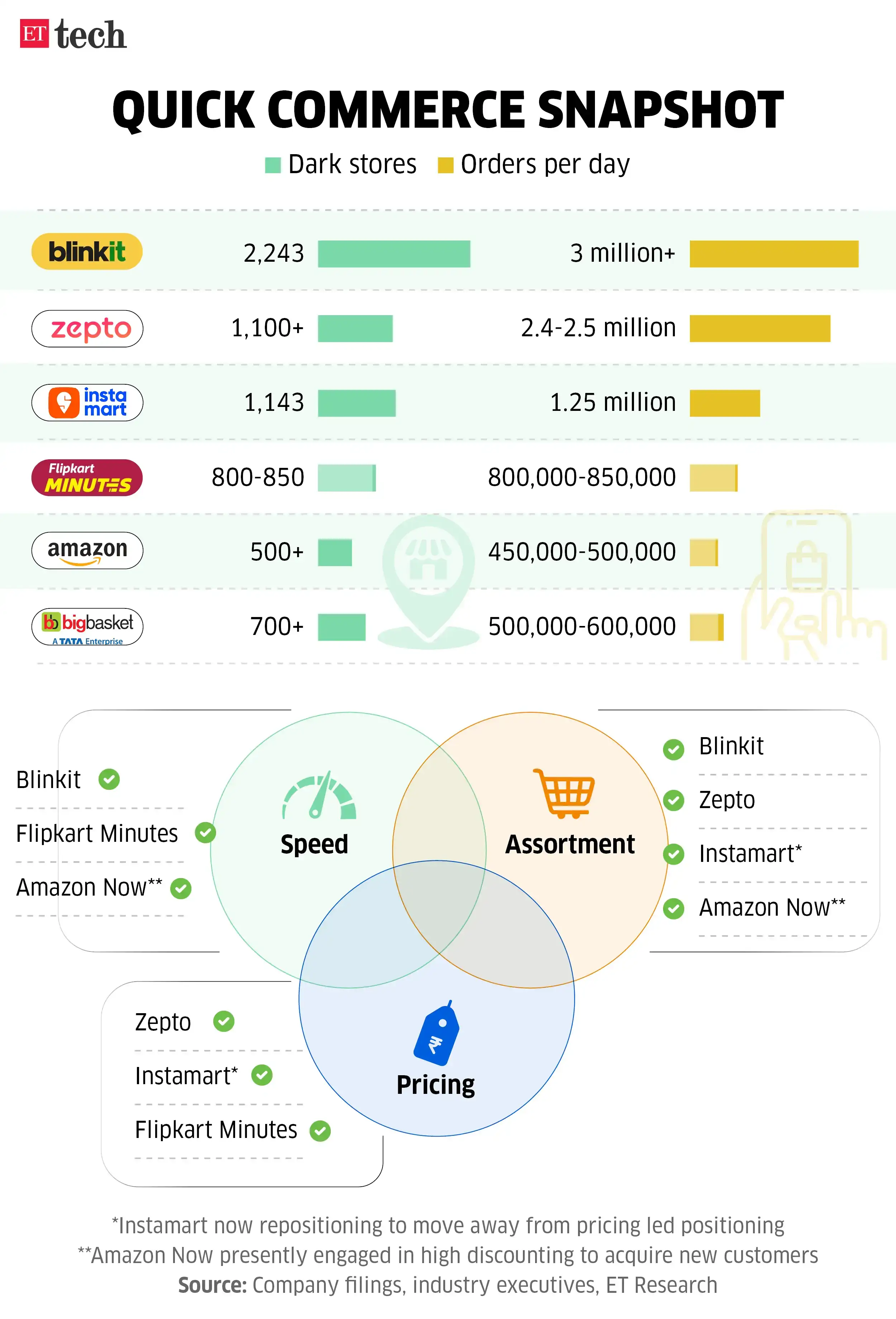
Tata Digital CEO Sajith Sivanandan told us in April that BigBasket was slow off the blocks but is now starting to recover lost ground. BigBasket cofounder and CEO Hari Menon, who recently exited, also conceded in a LinkedIn post that he was initially in denial about quick commerce as a concept.
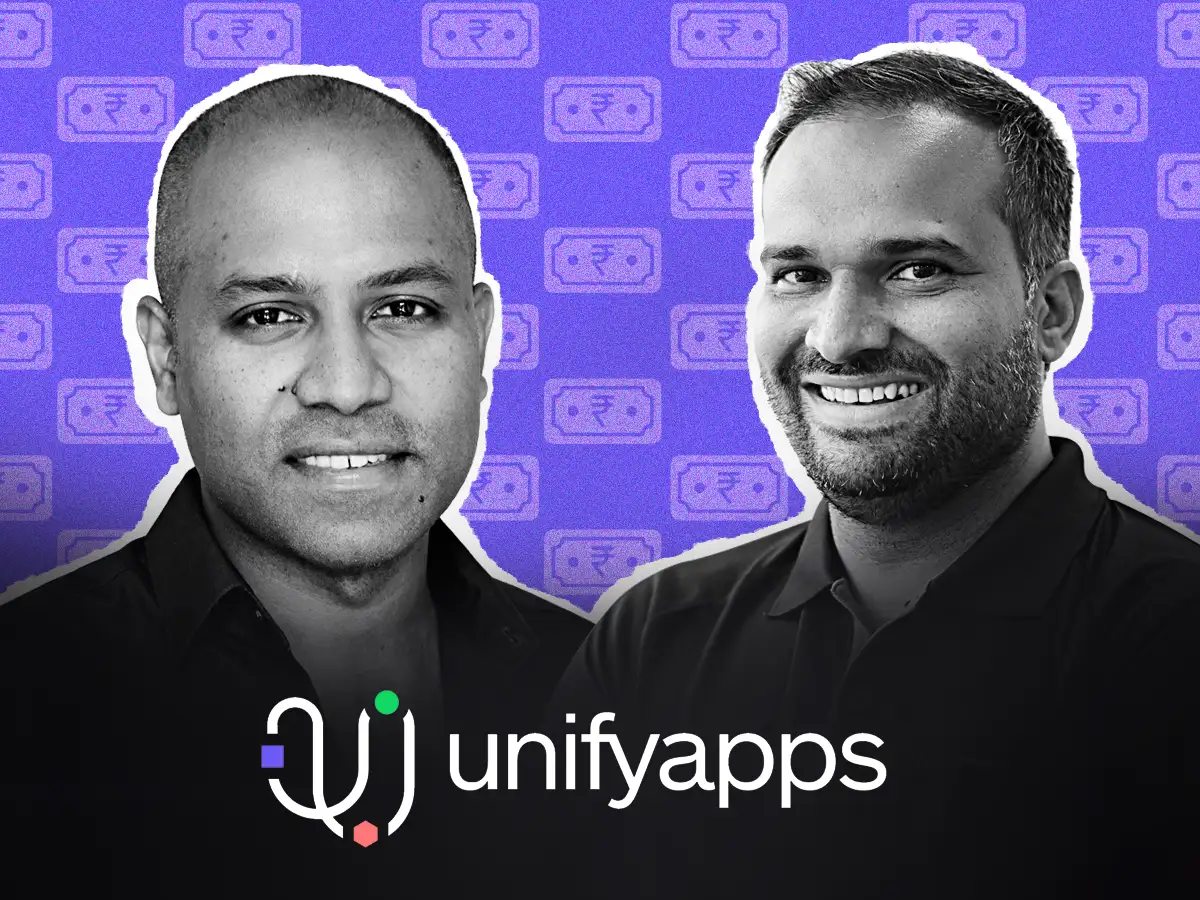 Ragy Thomas and Pavitar Singh, cofounders, UnifyApps
AI startup UnifyApps is in talks to raise $100-120 million in a new round, sources told us, in what would be one of the largest capital raises for an Indian AI firm.
Deal details:
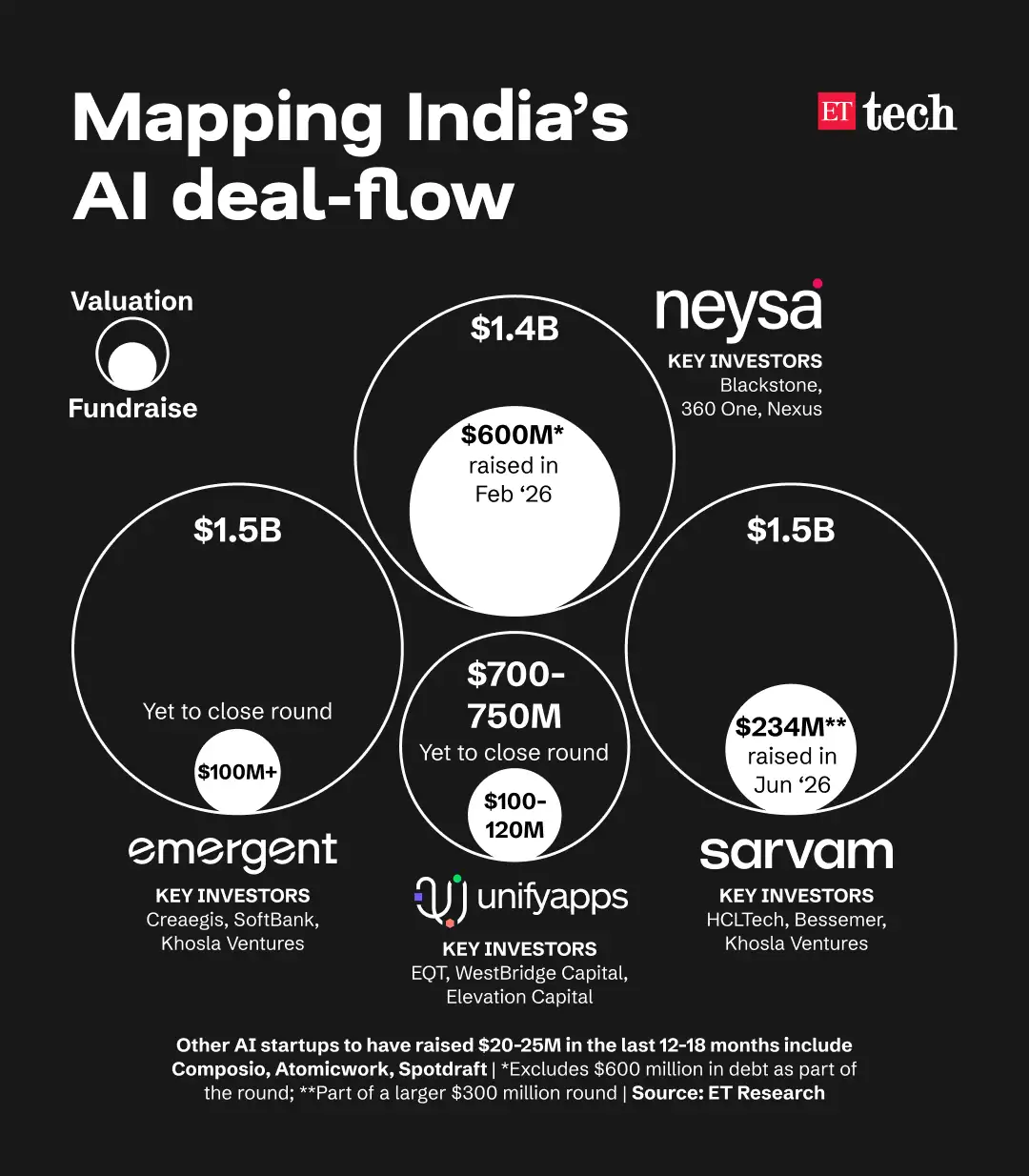
What’s the plan: One of the people cited above said enterprise demand is climbing fast. “Enterprises are increasingly looking to embed AI into existing software stacks instead of replacing them, creating demand for platforms that can integrate fragmented systems and enterprise data.”
About UnifyApps: The company helps enterprises unify data, automate workflows and deploy AI agents across business functions. It said in October last year that its revenue had surged more than 600% year-on-year. Unify serves clients across retail, banking, travel and telecom.
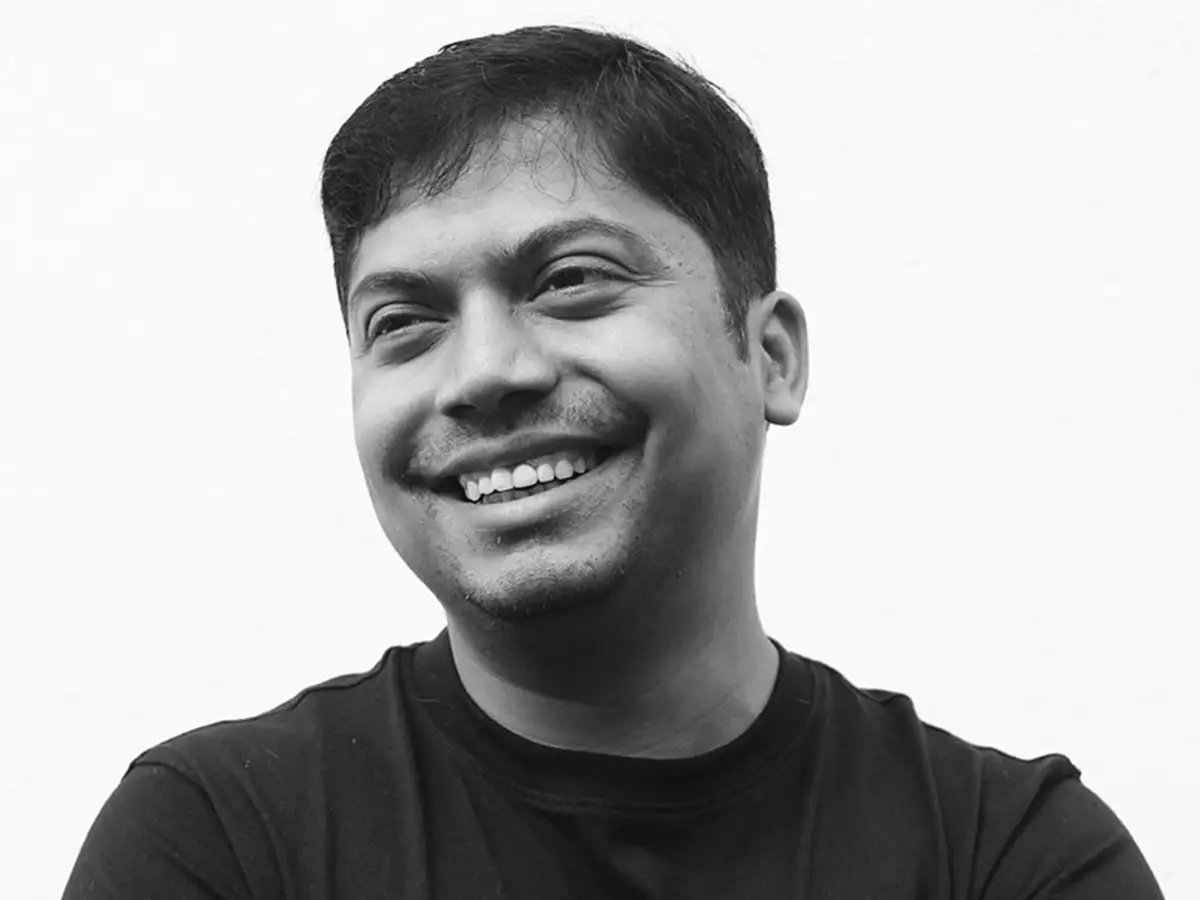 Mohit Kumar, founder, Ultrahuman
Smart-ring maker Ultrahuman is in talks to raise about $60 million at a post-money valuation of $360-400 million, in a round led by existing investors Steadview Capital and Blume Ventures. The deal is structured as an extension of the $35-40 million round closed in March.
Funding reset:
Business-to-business (B2B) ecommerce platform Udaan has announced a $160 million structured financing transaction.
Deal structure:

A fatwa by an influential Islamic scholar in Pakistan declaring cryptocurrency trading haram has sparked pockets of panic selling in Pakistan, the UAE and India.
What happened: Renowned Islamic scholar Mufti Muhammad Taqi Usmani issued a fatwa declaring that cryptocurrency trading, including transactions involving stablecoins, is not permissible under Islamic law.
The ruling carries weight because he is one of the most influential figures in global Islamic finance.
Market reaction: Founders and brokers report pockets of panic selling. Some religious investors in key markets such as Pakistan and the UAE have dumped their entire holdings over the past 48 hours, founders and analysts told ET. India has seen limited impact so far, but Saudi Arabia, Indonesia and Malaysia could see bigger spillover.
Broader context: Pakistan has been trying ot position itself as a regional crypto hub. Binance alone has about seven million users in Pakistan—part of a $1.5 billion crypto market that ranks as the world’s third-largest, according to Chainalysis.

Qcomm platforms’ gourmet war: Quick commerce is gearing up for a gourmet grocery war. IPO-bound Zepto is set to launch its Select range, Flipkart Minutes is planning to offer a premium grocery range and Amazon Now has started piloting Gourmet Picks, according to people aware of the developments.
The AI law debate: The government’s plan to bring a specific law for artificial intelligence (AI) has prompted legal and policy experts to question whether India needs new legislation, with many arguing that existing laws can regulate most AI risks if strengthened, even as they acknowledge gaps in governing powerful AI systems.
Temasek pares Lenskart stake: Singapore's sovereign wealth fund, Temasek, has sold a 2% stake in eyewear retailer Lenskart for about Rs 1,945 crore through open-market transactions, according to regulatory filings with the stock exchanges on Tuesday.
■ Siri AI is becoming Apple’s everything tool (Wired)
■ DeepMind chief Demis Hassabis calls for US-led body to test ‘frontier’ AI models (FT)
■ The Gulf has billions to spend on AI. It still needs Nvidia (Rest of World)
Also in the letter:
■ Fatwa roils crypto markets
■ Qcomm platforms’ gourmet war
■ Experts on new AI law
BigBasket narrows focus as new CEO takes on profitability mandate
To stay in the quick-commerce race, Tata Digital’s BigBasket is doubling down on about 40 profitable cities, about half its earlier 76-market footprint.
Under new reins: BigBasket’s new CEO Amit Nanda has a clear brief: turn the rapid delivery business profitable as competition heats up and margins tighten.
An executive told us the company now plans to prioritise larger cities where higher density works in its favour. BigBasket has been under scrutiny within the salt-to-software conglomerate for mounting cash burn and losses. “A sort of cluster strategy to tap a denser user profile in big cities will be more profitable than spreading out across markets," the person added.
Changing tack: Sources added the company is shifting from a founder-led operating style to a more professionally run, execution-heavy model.
They added that Nanda will zero in on three levers – customer, pricing and assortment.
Catching up: BigBasket faces pressure to claw back ground in quick commerce, where Zepto, Blinkit, and Swiggy’s Instamart have surged ahead. Ecommerce majors Amazon and Flipkart are also piling into the space.
Tata Digital CEO Sajith Sivanandan told us in April that BigBasket was slow off the blocks but is now starting to recover lost ground. BigBasket cofounder and CEO Hari Menon, who recently exited, also conceded in a LinkedIn post that he was initially in denial about quick commerce as a concept.
UnifyApps eyes $120 million from EQT; value may climb 3.5x
AI startup UnifyApps is in talks to raise $100-120 million in a new round, sources told us, in what would be one of the largest capital raises for an Indian AI firm.
Deal details:
- UnifyApps is in discussions with private equity firm EQT for the funding.
- The investment will value the startup at $700-750 million, a more-than-threefold jump from its $200 million valuation after the October funding round.
What’s the plan: One of the people cited above said enterprise demand is climbing fast. “Enterprises are increasingly looking to embed AI into existing software stacks instead of replacing them, creating demand for platforms that can integrate fragmented systems and enterprise data.”
About UnifyApps: The company helps enterprises unify data, automate workflows and deploy AI agents across business functions. It said in October last year that its revenue had surged more than 600% year-on-year. Unify serves clients across retail, banking, travel and telecom.
Ultrahuman is in talks to bag $60 million at $400 million value
Smart-ring maker Ultrahuman is in talks to raise about $60 million at a post-money valuation of $360-400 million, in a round led by existing investors Steadview Capital and Blume Ventures. The deal is structured as an extension of the $35-40 million round closed in March.
Funding reset:
- The talks follow a difficult fundraising period, with Ultrahuman’s patent dispute with Oura clouding access to the US, its largest market.
- SoftBank and WestBridge Capital had separately evaluated investments at $500-550 million in valuation but did not proceed.
Udaan closes $160 million in equity-and-debt deal amid insolvency battle
Business-to-business (B2B) ecommerce platform Udaan has announced a $160 million structured financing transaction.
Deal structure:
- The transaction includes fresh equity, debt and debt-to-equity conversion.
- Existing investors Lightspeed and M&G Prudential are investing $50-60 million in fresh equity, as ET reported in May.
- BlackRock's credit platform is providing about $45 million in debt.
- The remaining amount will come from bondholders converting debt into equity.
Pakistan cleric’s fatwa sparks multi-market crypto panic
A fatwa by an influential Islamic scholar in Pakistan declaring cryptocurrency trading haram has sparked pockets of panic selling in Pakistan, the UAE and India.
What happened: Renowned Islamic scholar Mufti Muhammad Taqi Usmani issued a fatwa declaring that cryptocurrency trading, including transactions involving stablecoins, is not permissible under Islamic law.
The ruling carries weight because he is one of the most influential figures in global Islamic finance.
Market reaction: Founders and brokers report pockets of panic selling. Some religious investors in key markets such as Pakistan and the UAE have dumped their entire holdings over the past 48 hours, founders and analysts told ET. India has seen limited impact so far, but Saudi Arabia, Indonesia and Malaysia could see bigger spillover.
Broader context: Pakistan has been trying ot position itself as a regional crypto hub. Binance alone has about seven million users in Pakistan—part of a $1.5 billion crypto market that ranks as the world’s third-largest, according to Chainalysis.
Other Top Stories By Our Reporters
Qcomm platforms’ gourmet war: Quick commerce is gearing up for a gourmet grocery war. IPO-bound Zepto is set to launch its Select range, Flipkart Minutes is planning to offer a premium grocery range and Amazon Now has started piloting Gourmet Picks, according to people aware of the developments.
The AI law debate: The government’s plan to bring a specific law for artificial intelligence (AI) has prompted legal and policy experts to question whether India needs new legislation, with many arguing that existing laws can regulate most AI risks if strengthened, even as they acknowledge gaps in governing powerful AI systems.
Temasek pares Lenskart stake: Singapore's sovereign wealth fund, Temasek, has sold a 2% stake in eyewear retailer Lenskart for about Rs 1,945 crore through open-market transactions, according to regulatory filings with the stock exchanges on Tuesday.
Global Picks We Are Reading
■ Siri AI is becoming Apple’s everything tool (Wired)
■ DeepMind chief Demis Hassabis calls for US-led body to test ‘frontier’ AI models (FT)
■ The Gulf has billions to spend on AI. It still needs Nvidia (Rest of World)
Want this newsletter delivered to your inbox?
I agree to receive newsletters and marketing communications via e-mail