
 Morning Dispatch Morning Dispatch |
Accel’s $550 million India fund; South Park Commons bets on deeptech
Want this newsletter delivered to your inbox?
I agree to receive newsletters and marketing communications via e-mail

Thank you for subscribing to Morning Dispatch
We'll soon meet in your inbox.
Happy Wednesday! Venture capital firm Accel has raised its ninth India fund. This and more in today’s ETtech Morning Dispatch.
Also in the letter:
■ Details on ISM 2.0
■ Zepto warehouse sealed
■ Explained: Meesho’s second shot at grocery
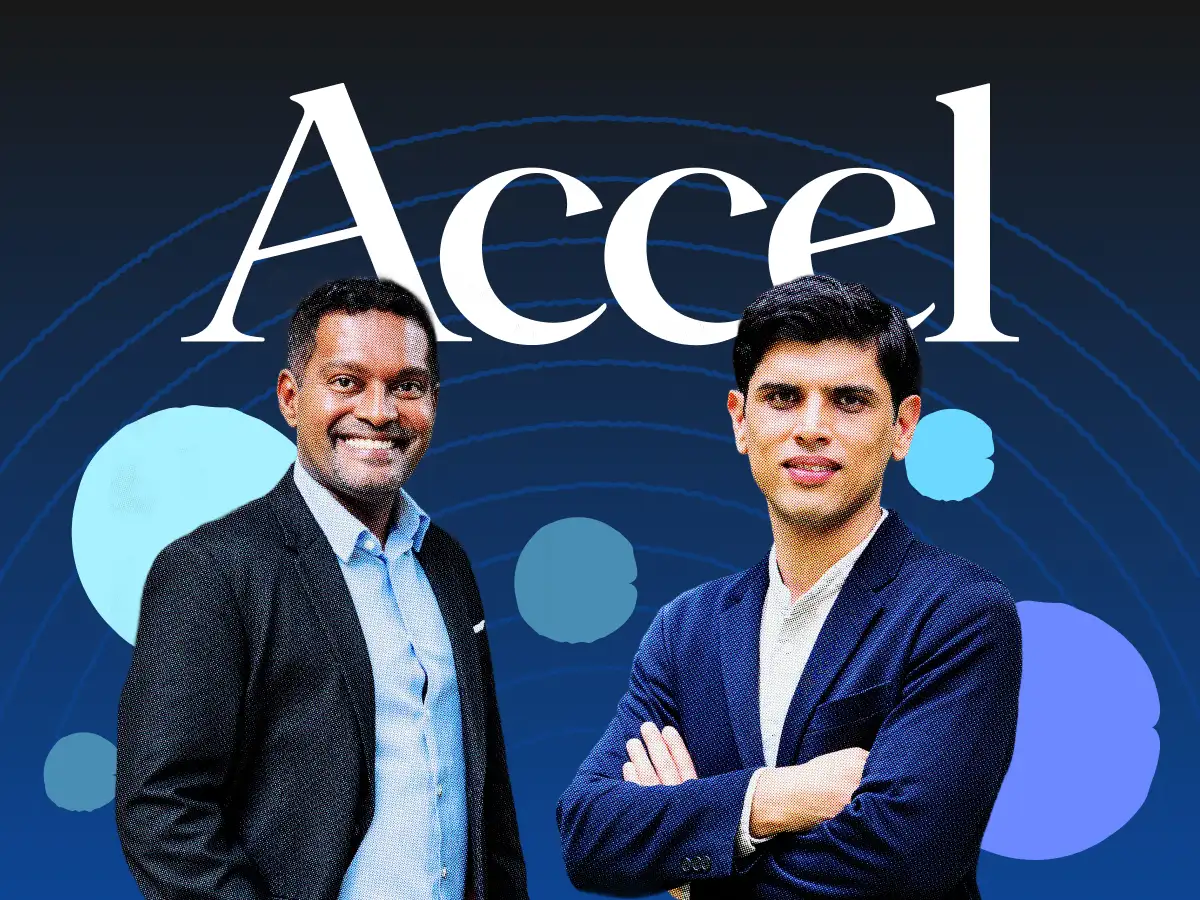 Accel India partners Anand Daniel and Abhinav Chaturvedi
Accel has raised $550 million for its ninth India fund, about 15% smaller than its $650 million Fund VIII, as it continues to focus on deeptech, manufacturing and AI.
Tell me more: The move mirrors a broader trend of large venture firms in India downsizing their latest funds amid fewer local AI opportunities and an industry reset.
Accel India partners Anand Daniel and Abhinav Chaturvedi said early-stage deal flow in India has remained largely unchanged, even as the US and Europe see a surge in new AI startups.
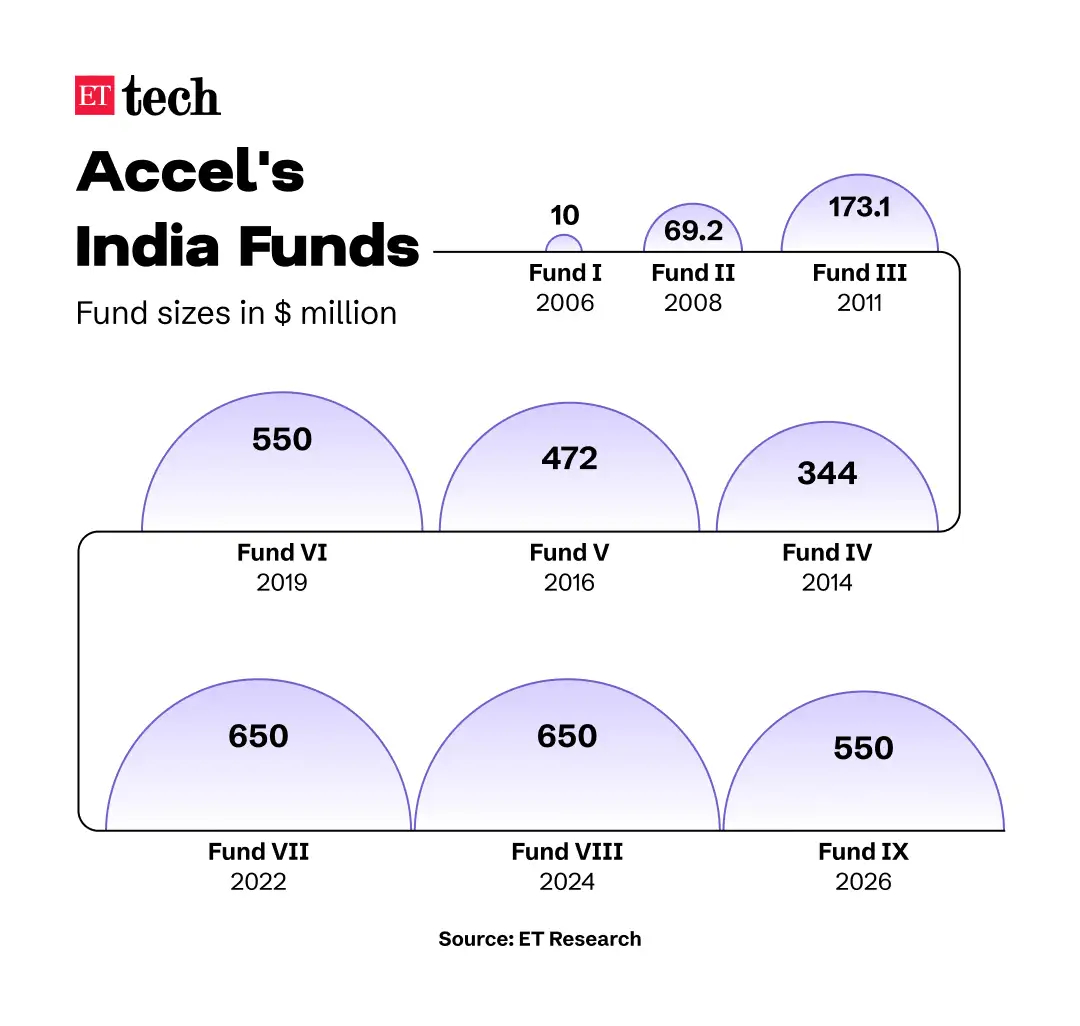
Fund focus: “From a fund strategy standpoint, there’s no major change. We previously had $650 million… this is $550 million, and we'll continue investing across the same sectors with a lot of focus on AI alongside consumer, fintech, manufacturing, etc., plus newer categories emerging out of India,” Daniel said.
The partners also described the new fund as a “top-up” to the existing $650 million vehicle, with plenty of dry powder to invest in roughly 15-25 companies over the life of the fund.
Also Read: Capital Call: Indian VCs face toughest fundraising market in a decade
IPO opportunity: Known for clocking one the biggest venture returns in 2018 when Walmart acquired Flipkart, Accel is betting on India’s IPO-led liquidity window. Chaturvedi said they aim to invest early and help companies scale to becoming $1-2 billion-plus businesses.
Also Read: VCs double down on high-growth bets as select startups ratchet up steep valuations
 L-R: Aditya Agarwal, partner, and Prateek Mehta, general partner-India, South Park Commons
South Park Commons (SPC), the San Francisco-based founder collective and early-stage investor, is betting that India’s next wave of tech firms will come from deeptech and frontier tech rather than just consumer and fintech.
Verbatim: “I am very bullish about India's hardtech and deeptech story. I think that overall, India's AI story, up and down the stack, has been good, not great. We do not have a native leading-edge semiconductor or a frontier AI model company yet. We are starting to get some good AI applications, but we're still a little early on that front,” Aditya Agarwal, partner at SPC, told us in an exclusive interaction.
Setting context: These comments come as SPC has raised a $575 million fourth fund, more than twice the $275 million it raised in its previous fund.
.jpg "Untitled design (2)") Anirban Mukherjee, CEO, PayU India
Anirban Mukherjee, CEO, PayU India
Any merchant discount rate (MDR) on Unified Payments Interface (UPI) should be simple and linked to merchant size and industry, PayU India CEO Anirban Mukherjee told us.
More on this: Mukherjee said the fee should be the same for online and physical merchants, as their costs broadly balance out. Physical merchants involve distribution expenses, while online businesses spend more on merchant verification and risk management.
He said MDR could help fund payment infrastructure, cybersecurity and fraud management.
“If UPI MDR happens, I expect banks to come back very strongly into investing more in the digitisation of payments,” he said at PayU India's leadership roundtable.
Tell me more: UPI makes up 52% of PayU India's transaction volume and a third of its payment value. Mukherjee said it was too early to assess the revenue impact of MDR after existing contracts are taken into account.
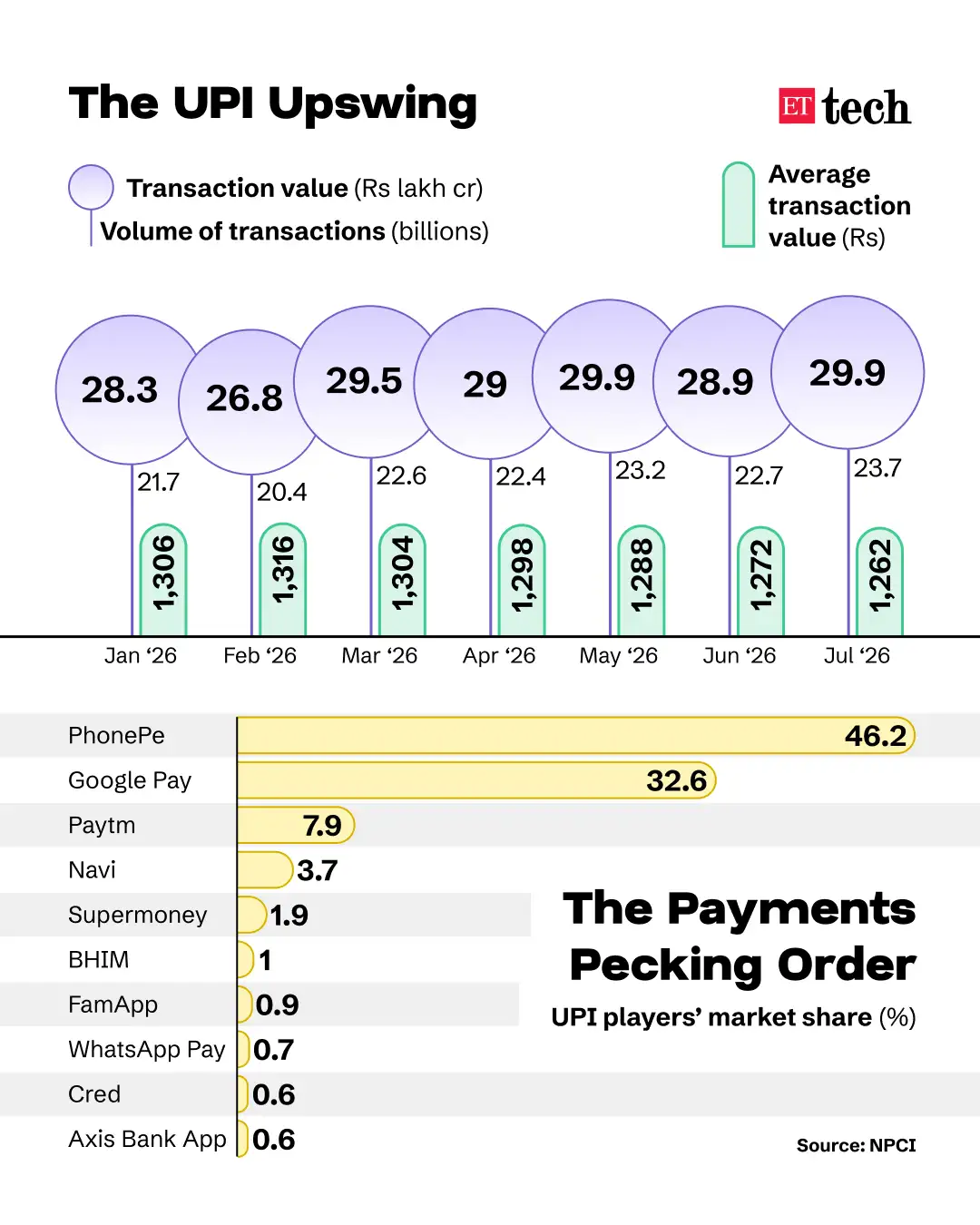
Background: Parliament on Monday passed legislation allowing the Centre to change the zero-MDR framework. Finance minister Nirmala Sitharaman said consumers and most low-value merchant payments would remain free.
ET has reported extensively on India's plan to restore MDR for large-merchant UPI transactions.
Semiconductor materials equipment manufacturers will get a 30% capital subsidy under the newly launched second phase of the India Semiconductor Mission (ISM) 2.0. This is in addition to a five-year production linked incentive (PLI), sources told us.
Driving the news:
Quote, unquote: “The capex subsidy support would help us invest in backend manufacturing such as vacuum chambers, precision-machined components and an advanced equipment assembly line,” said Manjunath Jyothinagara, MD of domestic equipment company Kastech Equipment.

Why Meesho is building a low-cost logistics network for grocery: Value ecommerce platform Meesho is taking a second shot at grocery, but this time via a business-to-business (B2B) retail play and a separate local logistics network, after acquiring Kirana Club in June.ETtech explains why.
Zepto warehouse near Bengaluru sealed: Karnataka’s Food Safety and Drug Administration department on Tuesday sealed a Zepto warehouse operated by Nippon Express in Hoskote taluk, Bengaluru Rural district, after an inspection found alleged violations related to food labelling, storage and handling.
Slice Q1 profit tops FY26 earnings: Slice Small Finance Bank reported a net profit of Rs 50.9 crore for the June quarter, exceeding its profit of Rs 48.4 crore over the whole of the previous financial year (FY26), as it continued to build on a post-merger turnaround.
■ Can a 30-person start-up build Britain’s answer to OpenAI? (FT)
■ How one VC burns through hundreds of millions of tokens a day to find the next unicorn (Rest of World)
■ Raw images, no filters: Why MySpace fans want it back as relaunch hinted (BBC)
Also in the letter:
■ Details on ISM 2.0
■ Zepto warehouse sealed
■ Explained: Meesho’s second shot at grocery
Accel raises $550 million for India, keeps early-stage focus as AI reshapes deal flow
Accel has raised $550 million for its ninth India fund, about 15% smaller than its $650 million Fund VIII, as it continues to focus on deeptech, manufacturing and AI.
Tell me more: The move mirrors a broader trend of large venture firms in India downsizing their latest funds amid fewer local AI opportunities and an industry reset.
Accel India partners Anand Daniel and Abhinav Chaturvedi said early-stage deal flow in India has remained largely unchanged, even as the US and Europe see a surge in new AI startups.
Fund focus: “From a fund strategy standpoint, there’s no major change. We previously had $650 million… this is $550 million, and we'll continue investing across the same sectors with a lot of focus on AI alongside consumer, fintech, manufacturing, etc., plus newer categories emerging out of India,” Daniel said.
The partners also described the new fund as a “top-up” to the existing $650 million vehicle, with plenty of dry powder to invest in roughly 15-25 companies over the life of the fund.
Also Read: Capital Call: Indian VCs face toughest fundraising market in a decade
IPO opportunity: Known for clocking one the biggest venture returns in 2018 when Walmart acquired Flipkart, Accel is betting on India’s IPO-led liquidity window. Chaturvedi said they aim to invest early and help companies scale to becoming $1-2 billion-plus businesses.
Also Read: VCs double down on high-growth bets as select startups ratchet up steep valuations
Silicon Valley’s South Park Commons bullish on India's deeptech space
South Park Commons (SPC), the San Francisco-based founder collective and early-stage investor, is betting that India’s next wave of tech firms will come from deeptech and frontier tech rather than just consumer and fintech.
Verbatim: “I am very bullish about India's hardtech and deeptech story. I think that overall, India's AI story, up and down the stack, has been good, not great. We do not have a native leading-edge semiconductor or a frontier AI model company yet. We are starting to get some good AI applications, but we're still a little early on that front,” Aditya Agarwal, partner at SPC, told us in an exclusive interaction.
Setting context: These comments come as SPC has raised a $575 million fourth fund, more than twice the $275 million it raised in its previous fund.
- It will back around 70 companies, with about 60% of the corpus reserved for follow-on investments.
- Through the new fund, SPC will also participate in series A deals, beyond its traditional pre-seed and early-stage focus.
UPI fee should vary by merchant size and sector: PayU India CEO
Any merchant discount rate (MDR) on Unified Payments Interface (UPI) should be simple and linked to merchant size and industry, PayU India CEO Anirban Mukherjee told us.
More on this: Mukherjee said the fee should be the same for online and physical merchants, as their costs broadly balance out. Physical merchants involve distribution expenses, while online businesses spend more on merchant verification and risk management.
He said MDR could help fund payment infrastructure, cybersecurity and fraud management.
“If UPI MDR happens, I expect banks to come back very strongly into investing more in the digitisation of payments,” he said at PayU India's leadership roundtable.
Tell me more: UPI makes up 52% of PayU India's transaction volume and a third of its payment value. Mukherjee said it was too early to assess the revenue impact of MDR after existing contracts are taken into account.
Background: Parliament on Monday passed legislation allowing the Centre to change the zero-MDR framework. Finance minister Nirmala Sitharaman said consumers and most low-value merchant payments would remain free.
ET has reported extensively on India's plan to restore MDR for large-merchant UPI transactions.
- Govt to move amendments to IT Act to pave way for levy of MDR: sources
- MDR on UPI will impact businesses, not users: FM Nirmala Sitharaman hits back at Congress' Jairam Ramesh
- Proposed UPI MDR changes spark reactions from politicians, Industry leaders and users
- UPI apps could chase big-ticket transactions as MDR return looms
ISM 2.0 will offer 30% capital subsidy, five-year PLI for chip ecosystem
Semiconductor materials equipment manufacturers will get a 30% capital subsidy under the newly launched second phase of the India Semiconductor Mission (ISM) 2.0. This is in addition to a five-year production linked incentive (PLI), sources told us.
Driving the news:
- The PLI will be set at 10% of the domestic bill of materials (BoM) value in the first year, staggered to 8%, 6%, 4% and 2% over the next four years.
- Total government support will be capped at 50% of eligible capital expenditure.
Quote, unquote: “The capex subsidy support would help us invest in backend manufacturing such as vacuum chambers, precision-machined components and an advanced equipment assembly line,” said Manjunath Jyothinagara, MD of domestic equipment company Kastech Equipment.
Other Top Stories By Our Reporters
Why Meesho is building a low-cost logistics network for grocery: Value ecommerce platform Meesho is taking a second shot at grocery, but this time via a business-to-business (B2B) retail play and a separate local logistics network, after acquiring Kirana Club in June.ETtech explains why.
Zepto warehouse near Bengaluru sealed: Karnataka’s Food Safety and Drug Administration department on Tuesday sealed a Zepto warehouse operated by Nippon Express in Hoskote taluk, Bengaluru Rural district, after an inspection found alleged violations related to food labelling, storage and handling.
Slice Q1 profit tops FY26 earnings: Slice Small Finance Bank reported a net profit of Rs 50.9 crore for the June quarter, exceeding its profit of Rs 48.4 crore over the whole of the previous financial year (FY26), as it continued to build on a post-merger turnaround.
Global Picks We Are Reading
■ Can a 30-person start-up build Britain’s answer to OpenAI? (FT)
■ How one VC burns through hundreds of millions of tokens a day to find the next unicorn (Rest of World)
■ Raw images, no filters: Why MySpace fans want it back as relaunch hinted (BBC)
Want this newsletter delivered to your inbox?
I agree to receive newsletters and marketing communications via e-mail