
 Morning Dispatch Morning Dispatch |
a16z’s Raghuram isn't writing off India AI yet; insurers weigh new rules
Want this newsletter delivered to your inbox?
I agree to receive newsletters and marketing communications via e-mail

Thank you for subscribing to Morning Dispatch
We'll soon meet in your inbox.
Happy Monday! a16z’s Raghu Raghuram said India can build frontier AI companies by using its talent. This and more in today’s ETtech Morning Dispatch.
Also in the letter:
■ Infy’s new hiring strategy
■ New deeptech fund
.jpg "Raghu Rahuram A16Z (1)") Raghu Raghuram, managing partner, a16z
Raghu Raghuram, managing partner, a16z
India has few frontier AI model companies and limited computing capacity, but according to a16z managing partner Raghu Raghuram, the country should not be written off. In an interview with ET, Raghuram said Indian startups could first build services on open-weight models before eventually developing their own.
India's strengths: "We know India has the talent. We know that as computing spreads, the models are going to change and there's going to be an opportunity for new ones. By now, the recipes for building good models are known," he said, adding, that "some day there can be" big model companies from the country.
Also read | Insurance mis-selling is arising because upfront commissions are too high: IRDAI chairman Ajay Seth
Machine Age Fund: The former VMware CEO, who helped steer its $69-billion sale to Broadcom, now co-leads a16z’s $1.1-billion Machine Age Fund with Martin Casado.
When asked why a separate fund for hardware and infrastructure startups, Raghuram said, "Demand for compute capacity is growing at triple digits and supply is growing at double digits on average. And if you ask any AI-native company what is holding them back, they all say we need more compute."
Taking on competition: “Historically, the chip industry has moved in cycles. But two things have happened. One, the nature of the problem has changed so dramatically. The AI workload behaves in a very different way than conventional computing workloads. And second, this is not something that's going to be a five-year cycle. We are literally talking about, who knows, 30-40-year cycles,” he said.
Also Read: Tech elite's new school Horowitz Andreessen Academy aims to replace university
Insurance distributors plan to ask the insurance regulator whether the commission caps proposed on September 23 will apply retrospectively to existing policies and their future renewal payouts, people in the know told us.
What this means: Companies are expected to raise this in their submissions to the regulator’s consultation paper. A retrospective application could cut future renewal income instead of limiting the impact to new policies sold after the rules take effect.
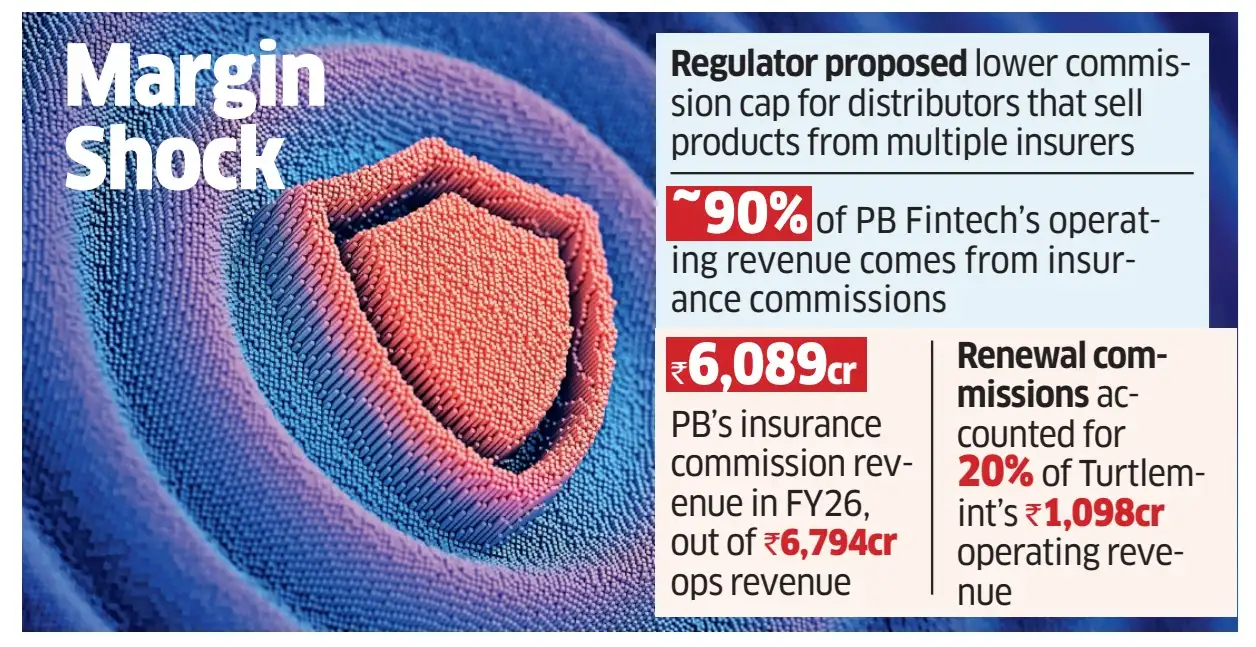 The caps could squeeze earnings at companies such as PB Fintech, Turtlemint and InsuranceDekho while also affecting insurance distribution income for banks and non-banking financial companies.
Number game: For online distributors, renewal commissions are a significant part of economics, especially for long-duration health and life policies.
Proposed structure: IRDAI has proposed product-complexity-based caps rather than a single uniform limit. For individual health policies in general insurance, the draft suggests:
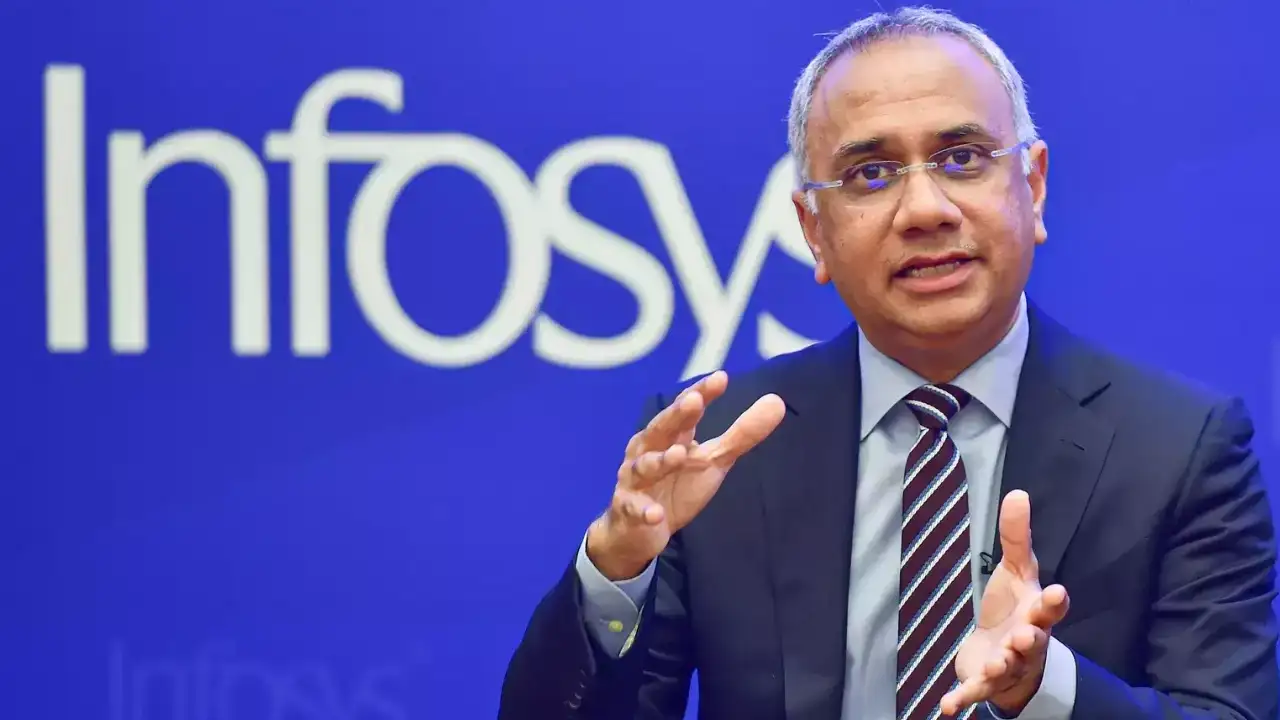 Salil Parekh, CEO, Infosys
Infosys plans to move a quarter to a third of its over 320,000-strong workforce into specialist roles and build a team of around 6,000 frontier engineers, people who attended a recent company event told ET.
Driving the news: The Bengaluru-based IT services giant is hiring from top Indian institutes and US campuses, sometimes competing directly with AI labs for talent, and in some cases taking on clients’ surplus staff for redeployment.
Why this shift: With AI disrupting the traditional headcount-led billing model, Infosys acknowledged at its annual Americas confluence in Washington, DC, that its employee-deployment rate card is under pressure.
“Infosys said it hasn’t restructured, which is a noticeably different approach from what many companies are doing right now. It says a lot about how it’s thinking about talent and change management, and about where it expects to need people in future,” said Dana Daher, executive research leader at HFS Research who was present at the confluence.
AI strategy: CEO Salil Parekh and CEO-designate Ashiss Kumar Dash outlined plans to help enterprises “unlock AI value” and scale from experimentation to enterprise-wide deployment. Parekh reiterated that AI contributed 8% of total revenue ($1.6 billion) in Q1, growing at a double-digit rate quarter-on-quarter.
Also Read: Big Tech’s AI switch may dent $20 billion of IT outsourcing revenue

IIT Madras-backed deeptech fund raises Rs 450 crore: The IITM Unicorn Frontier Fund-I, launched by IIT Madras, IIT Madras Research Park and Unicorn India Ventures, has raised Rs 450 crore in its first close and deployed nearly Rs 55 crore across four deeptech startups.
ED attaches assets in RummyCulture money laundering case: The Enforcement Directorate (ED) has provisionally attached movable and immovable properties worth about Rs 442.35 crore in connection with its money laundering investigation into RummyCulture and other online real-money gaming platforms operated by Gameskraft Technologies and RummyTime Technologies.
■ The data centre backlash should also be a climate reckoning; it isn’t yet (Wired)
■ China is excelling in health tech. That’s good news for the world (Rest of World)
■ Big companies warn lack of ‘AI openness’ could hit investment in Europe (FT)
Also in the letter:
■ Infy’s new hiring strategy
■ New deeptech fund
“Too early in the cycle to write off India in AI": Andreessen Horowitz's Raghu Raghuram
India has few frontier AI model companies and limited computing capacity, but according to a16z managing partner Raghu Raghuram, the country should not be written off. In an interview with ET, Raghuram said Indian startups could first build services on open-weight models before eventually developing their own.
India's strengths: "We know India has the talent. We know that as computing spreads, the models are going to change and there's going to be an opportunity for new ones. By now, the recipes for building good models are known," he said, adding, that "some day there can be" big model companies from the country.
Also read | Insurance mis-selling is arising because upfront commissions are too high: IRDAI chairman Ajay Seth
Machine Age Fund: The former VMware CEO, who helped steer its $69-billion sale to Broadcom, now co-leads a16z’s $1.1-billion Machine Age Fund with Martin Casado.
When asked why a separate fund for hardware and infrastructure startups, Raghuram said, "Demand for compute capacity is growing at triple digits and supply is growing at double digits on average. And if you ask any AI-native company what is holding them back, they all say we need more compute."
Taking on competition: “Historically, the chip industry has moved in cycles. But two things have happened. One, the nature of the problem has changed so dramatically. The AI workload behaves in a very different way than conventional computing workloads. And second, this is not something that's going to be a five-year cycle. We are literally talking about, who knows, 30-40-year cycles,” he said.
Also Read: Tech elite's new school Horowitz Andreessen Academy aims to replace university
Irdai commission caps put insurance distributors' renewal income in focus
Insurance distributors plan to ask the insurance regulator whether the commission caps proposed on September 23 will apply retrospectively to existing policies and their future renewal payouts, people in the know told us.
What this means: Companies are expected to raise this in their submissions to the regulator’s consultation paper. A retrospective application could cut future renewal income instead of limiting the impact to new policies sold after the rules take effect.
Number game: For online distributors, renewal commissions are a significant part of economics, especially for long-duration health and life policies.
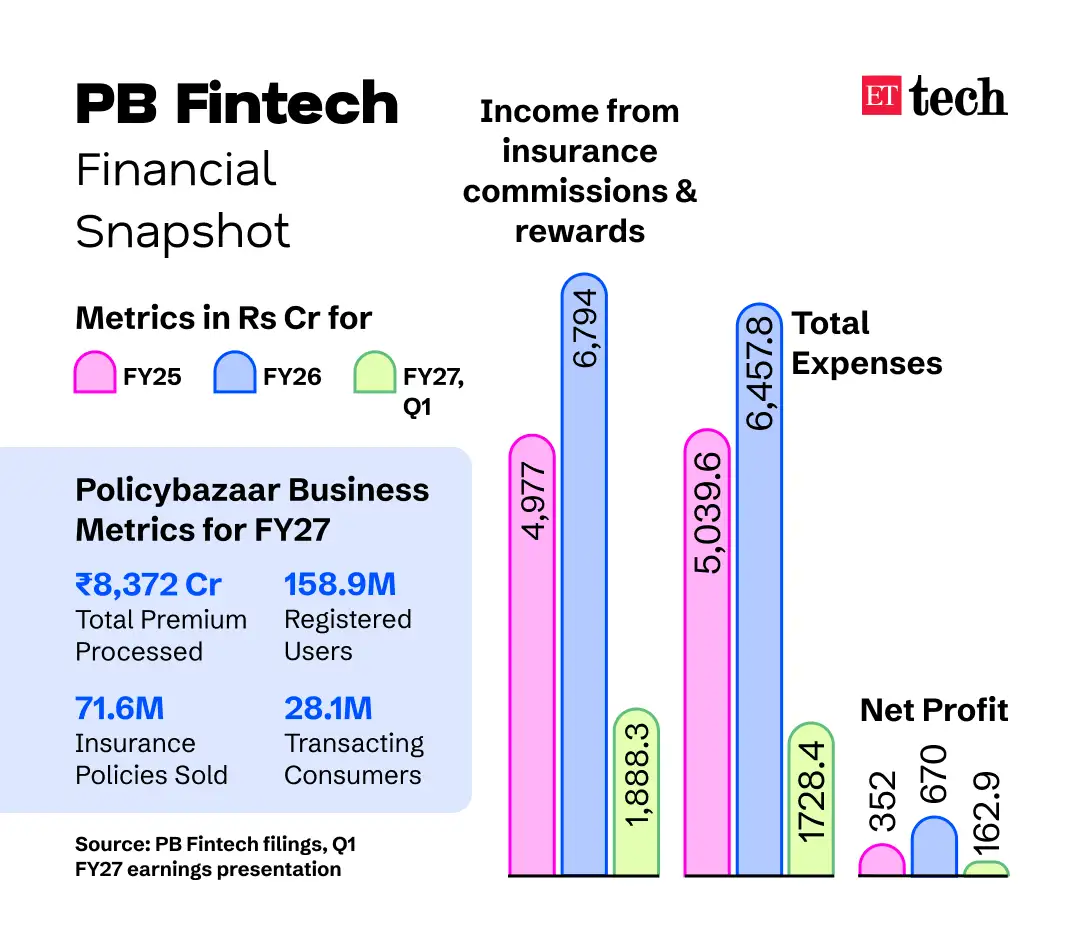
- Almost 90% of PB Fintech’s operating revenue comes from insurance commissions. In 2025-26, it earned Rs 6,089 crore from commissions, including Rs 935 crore from policy renewals.
- Turtlemint’s renewal commission revenue was Rs 225 crore in 2025-26, about 20% of its Rs 1,098 crore operating revenue.
Proposed structure: IRDAI has proposed product-complexity-based caps rather than a single uniform limit. For individual health policies in general insurance, the draft suggests:
- First-year commission: 15% for distribution entities, 20% for agents.
- Renewal commission: 5%.
- Portability commission: 10%.
Infosys to move up to one-third workforce into specialist roles
Infosys plans to move a quarter to a third of its over 320,000-strong workforce into specialist roles and build a team of around 6,000 frontier engineers, people who attended a recent company event told ET.
Driving the news: The Bengaluru-based IT services giant is hiring from top Indian institutes and US campuses, sometimes competing directly with AI labs for talent, and in some cases taking on clients’ surplus staff for redeployment.
Why this shift: With AI disrupting the traditional headcount-led billing model, Infosys acknowledged at its annual Americas confluence in Washington, DC, that its employee-deployment rate card is under pressure.
“Infosys said it hasn’t restructured, which is a noticeably different approach from what many companies are doing right now. It says a lot about how it’s thinking about talent and change management, and about where it expects to need people in future,” said Dana Daher, executive research leader at HFS Research who was present at the confluence.
AI strategy: CEO Salil Parekh and CEO-designate Ashiss Kumar Dash outlined plans to help enterprises “unlock AI value” and scale from experimentation to enterprise-wide deployment. Parekh reiterated that AI contributed 8% of total revenue ($1.6 billion) in Q1, growing at a double-digit rate quarter-on-quarter.
Also Read: Big Tech’s AI switch may dent $20 billion of IT outsourcing revenue
Other Top Stories By Our Reporters
IIT Madras-backed deeptech fund raises Rs 450 crore: The IITM Unicorn Frontier Fund-I, launched by IIT Madras, IIT Madras Research Park and Unicorn India Ventures, has raised Rs 450 crore in its first close and deployed nearly Rs 55 crore across four deeptech startups.
ED attaches assets in RummyCulture money laundering case: The Enforcement Directorate (ED) has provisionally attached movable and immovable properties worth about Rs 442.35 crore in connection with its money laundering investigation into RummyCulture and other online real-money gaming platforms operated by Gameskraft Technologies and RummyTime Technologies.
Global Picks We Are Reading
■ The data centre backlash should also be a climate reckoning; it isn’t yet (Wired)
■ China is excelling in health tech. That’s good news for the world (Rest of World)
■ Big companies warn lack of ‘AI openness’ could hit investment in Europe (FT)
Want this newsletter delivered to your inbox?
I agree to receive newsletters and marketing communications via e-mail