
 Full Stack Full Stack |
AI Impact Summit: Beyond the optics, where is the 'foundational' capital?
 By Samidha Sharma
An inside commentary on tech, startups & dealmaking to help make sense of the news
Want this newsletter delivered to your inbox?
I agree to receive newsletters and marketing communications via e-mail

Thank you for subscribing to Full Stack
We'll soon meet in your inbox.
Welcome to a new edition of Full Stack. This is the place where you’ll find unfiltered commentary on all things technology.
Please keep the bouquets, brickbats and suggestions coming. You can reach me at samidha.sharma@timesofindia.com and follow me on Elon Musk's X @samidhas.
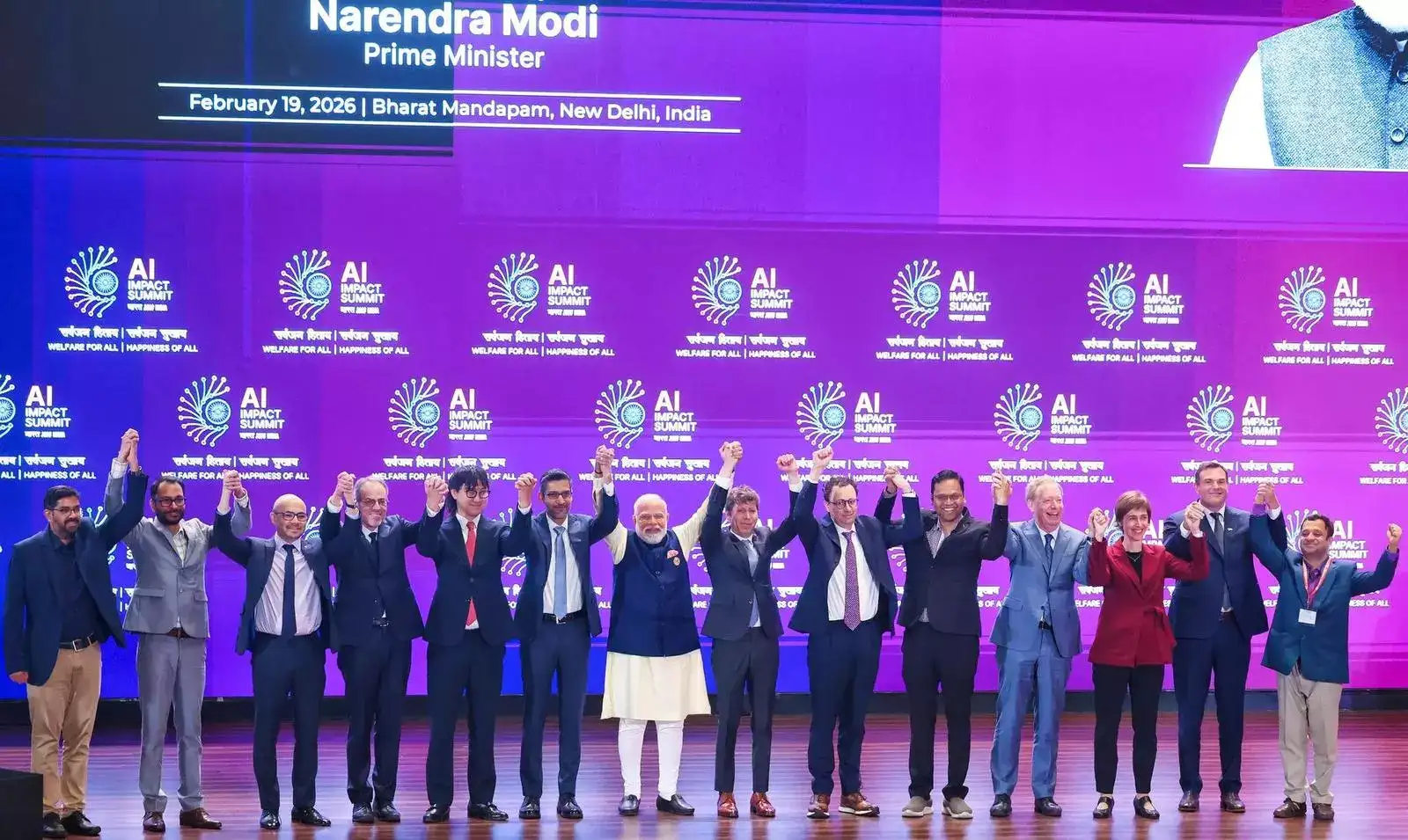
A startup CEO messaged last week saying that despite all the chaos and bad press the AI Impact Summit had received, he felt it had woken up the country to the reality of a technology that is threatening to upend jobs and industries at scale. That optimism stood out for me in a sea of social media scorn calling the summit an execution disaster.
Let's address the elephant in the room — how did we manage to bungle the optics so badly?
India pulled in a stellar lineup of global AI leaders, from Sam Altman of OpenAI to Dario Amodei of Anthropic and other luminaries of this age of algorithms. Yet what played out on stage often felt underwhelming, with some of the big-ticket speakers reading from phones and sheets of paper. Were there no teleprompters, or did these speakers not think it was notably odd to look so unprepared?
Then came the road closures, traffic snarls, and the controversy over a Chinese robot dog showcased by Noida-based Galgotias University.
All of this reinforced what's pretty well known, that governments can convene power, but executing events of global scale is a specialised craft.
Enough has been said about the mismanagement, but what does it all mean for India and its tech and startup ecosystem?
Back to the founder who saw the glass half full. Over the past week, several entrepreneurs asked me a pointed question — how does this summit help us build bigger in AI? Most said nothing changes for them post the summit.
Startup India redux
Amid the disillusionment and some sparks of positivity at the Summit, I recalled January 2016, when Prime Minister Narendra Modi launched Startup India with much fanfare, just two years after a historic electoral win for the Bharatiya Janata Party. The event was headlined by Travis Kalanick of Uber, Adam Neumann of WeWork, and Masayoshi Son of SoftBank Group.
 (L-R) SoftBank founder Masayoshi Son with his former lieutenant Nikesh Arora, and WeWork founder Adam Neumann
Startup India did ignite aspirations a decade ago, but the real inflection point in India’s startup ecosystem predated the summit.
In 2014, venture capital flooded into companies such as Flipkart, riding the euphoria of Alibaba group’s record $25 billion IPO, which reshaped global risk appetite for emerging market tech.
Governments can make noise, but dollars move when markets signal predictability in policies and credible return on investments. The same question now looms over AI.
What follows this capital is far more important. In a world of shifting geopolitics, India’s AI ambitions hinge on three key questions: Who owns the compute? What does access cost? And who sets the rules? If serious AI capacity sits with a handful of global cloud providers and Indian startups are paying in dollars for scarce GPUs, the economics can turn punishing very quickly.
Roughly 50% of global venture funding last year was invested in the artificial intelligence sector, similar to the past three years, according to Crunchbase data. Venture funding to AI reached $211 billion, up 85% year over year, from $114 billion in 2024, the data showed. But a significant share of that capital continues to be concentrated in frontier model companies (read OpenAI and Anthropic) and large-scale compute infrastructure.
While Silicon Valley VCs such as General Catalyst have pledged to deploy capital to grow Indian AI, this is not the same as when the floodgates opened for the consumer tech sector here and startups were flush with funds.
Some, like Lightspeed Venture Partners, are betting on applied AI as the next big opportunity for India, punting on startups that build on top of foundational models across sectors.
Missing capital
The country's IT minister, Ashwini Vaishnaw, stated last week that over the next two years, more than $200 billion worth of investment is likely to come into India. He said these were commitments from venture capital firms, and deeptech startups will run across all five layers —energy, chips, infrastructure, models, and applications — of the AI stack.
Indian conglomerates such as Reliance Industries and the Adani group announced multi-billion-dollar data centre and digital infrastructure investments at the Summit. The $100 billion commitments sound transformative, but infrastructure is not innovation in the AI race.
Data centres are built on real estate while AI value will be generated when Indian startups build differentiated products.
So, why would Reliance or Adani not back Indian firms like Sarvam AI instead, and give them the war chest needed for building foundational models out of India? While the summit may have been chaotic, it has forced this conversation — that was so far restricted to the venture capital community — into the mainstream.
The real test is not whether India can bring global AI leaders on stage, but whether, five years from now, we can point to globally consequential AI companies we’ve built. But for that to happen, India will need more than just lofty headlines screaming billions of dollars.
Samidha Sharma is Editor - ETtech. She's been covering the tech and new-age digital economy for over a decade, and has had a ringside view of the industry and its people.
Please keep the bouquets, brickbats and suggestions coming. You can reach me at samidha.sharma@timesofindia.com and follow me on Elon Musk's X @samidhas.
A startup CEO messaged last week saying that despite all the chaos and bad press the AI Impact Summit had received, he felt it had woken up the country to the reality of a technology that is threatening to upend jobs and industries at scale. That optimism stood out for me in a sea of social media scorn calling the summit an execution disaster.
Let's address the elephant in the room — how did we manage to bungle the optics so badly?
India pulled in a stellar lineup of global AI leaders, from Sam Altman of OpenAI to Dario Amodei of Anthropic and other luminaries of this age of algorithms. Yet what played out on stage often felt underwhelming, with some of the big-ticket speakers reading from phones and sheets of paper. Were there no teleprompters, or did these speakers not think it was notably odd to look so unprepared?
Then came the road closures, traffic snarls, and the controversy over a Chinese robot dog showcased by Noida-based Galgotias University.
All of this reinforced what's pretty well known, that governments can convene power, but executing events of global scale is a specialised craft.
Enough has been said about the mismanagement, but what does it all mean for India and its tech and startup ecosystem?
Back to the founder who saw the glass half full. Over the past week, several entrepreneurs asked me a pointed question — how does this summit help us build bigger in AI? Most said nothing changes for them post the summit.
Startup India redux
Amid the disillusionment and some sparks of positivity at the Summit, I recalled January 2016, when Prime Minister Narendra Modi launched Startup India with much fanfare, just two years after a historic electoral win for the Bharatiya Janata Party. The event was headlined by Travis Kalanick of Uber, Adam Neumann of WeWork, and Masayoshi Son of SoftBank Group.
Startup India did ignite aspirations a decade ago, but the real inflection point in India’s startup ecosystem predated the summit.
In 2014, venture capital flooded into companies such as Flipkart, riding the euphoria of Alibaba group’s record $25 billion IPO, which reshaped global risk appetite for emerging market tech.
Governments can make noise, but dollars move when markets signal predictability in policies and credible return on investments. The same question now looms over AI.
What follows this capital is far more important. In a world of shifting geopolitics, India’s AI ambitions hinge on three key questions: Who owns the compute? What does access cost? And who sets the rules? If serious AI capacity sits with a handful of global cloud providers and Indian startups are paying in dollars for scarce GPUs, the economics can turn punishing very quickly.
Roughly 50% of global venture funding last year was invested in the artificial intelligence sector, similar to the past three years, according to Crunchbase data. Venture funding to AI reached $211 billion, up 85% year over year, from $114 billion in 2024, the data showed. But a significant share of that capital continues to be concentrated in frontier model companies (read OpenAI and Anthropic) and large-scale compute infrastructure.
While Silicon Valley VCs such as General Catalyst have pledged to deploy capital to grow Indian AI, this is not the same as when the floodgates opened for the consumer tech sector here and startups were flush with funds.
Some, like Lightspeed Venture Partners, are betting on applied AI as the next big opportunity for India, punting on startups that build on top of foundational models across sectors.
Missing capital
The country's IT minister, Ashwini Vaishnaw, stated last week that over the next two years, more than $200 billion worth of investment is likely to come into India. He said these were commitments from venture capital firms, and deeptech startups will run across all five layers —energy, chips, infrastructure, models, and applications — of the AI stack.
Indian conglomerates such as Reliance Industries and the Adani group announced multi-billion-dollar data centre and digital infrastructure investments at the Summit. The $100 billion commitments sound transformative, but infrastructure is not innovation in the AI race.
Data centres are built on real estate while AI value will be generated when Indian startups build differentiated products.
So, why would Reliance or Adani not back Indian firms like Sarvam AI instead, and give them the war chest needed for building foundational models out of India? While the summit may have been chaotic, it has forced this conversation — that was so far restricted to the venture capital community — into the mainstream.
The real test is not whether India can bring global AI leaders on stage, but whether, five years from now, we can point to globally consequential AI companies we’ve built. But for that to happen, India will need more than just lofty headlines screaming billions of dollars.
Samidha Sharma is Editor - ETtech. She's been covering the tech and new-age digital economy for over a decade, and has had a ringside view of the industry and its people.
Want this newsletter delivered to your inbox?
I agree to receive newsletters and marketing communications via e-mail