Tim Cook doesn’t believe law of large numbers will limit Apple’s growth
As Apple becames the first US company worth over $700 billion, analysts use to justify concerns over Apple’s growth potential doesn’t really exist.
By Bloomberg | Updated:

An onstage interview with Tim Cook on Tuesday turned into a mini-debate about mathematics that left everybody in the audience a little bit dumber. Gary Cohn, the president of Goldman Sachs Group, opened the presentation by rattling off several numbers from Cook's tenure as Apple chief executive officer, including the monster quarter the company just posted. "So far, Apple seems fairly undeterred by the law of large numbers," Cohn said.
The law of large numbers has come up frequently in relation to Apple this decade—including when Steve Jobs was in charge but especially now that the company has surpassed a market value of $700 billion. Analysts refer to this math theory to explain why investors should worry about the future prospects for Apple and other giant companies. As the thinking goes, financial growth begins to slow for a company that achieves a certain mass of revenue because it becomes increasingly difficult to find new businesses that move the needle.
"We don't believe in such laws as laws of large numbers," Cook said at the Goldman Sachs Technology and Internet Conference in San Francisco. "It's just sort of an old dogma, I think, that was cooked up by somebody. Steve did a lot of things for us over the years, but one of the things he ingrained in us: that putting limits on your thinking are never good. We're actually not focused on the numbers. We're focused on the things that produce the numbers."
But here's the thing: This argument has nothing to do with the law of large numbers. There's a real math theory called the law of large numbers, which explains probability. It means that if you perform the same experiment a large number of times, you should get a predictable outcome. For example, if you keep flipping a coin and recording the results, you should get heads half the time and tails half the time, explains Yuri Lima, a postdoctoral fellow in mathematics at the University of Maryland. He says this wouldn't generally apply to corporate earnings unless the results were truly random. (If that were the case, investors have a lot more to worry about.) IPhone sales aren't random because they involve a number of controllable factors, such as Apple's ability to manufacture them and the decisions of people to buy them.
"Stock-market observers always use this term as it applies to Apple, but it really bothers me and probably everyone who knows what the law of large numbers is," says Zach Shrier, co-founder of the Los Angeles financial advisory firm Shrier Wealth Management. "It would be the same thing as Tim Cook saying, 'I don't believe in gravity because I think Apple can keep going higher.'"
Putting aside whether Cook and Wall Street's finest fell asleep during AP statistics, concern about Apple's earnings growth hitting the runner's wall has dogged the company for years. In 2010, Cook explained why there was plenty of room for Apple to grow, including in the mobile phone market where it trailed Nokia and BlackBerry at the time. "I don't think we are hitting the law of large numbers," Cook said then. "The phone market will increasingly become a smartphone market." He gave a similar answer in 2012, when he was asked onstage at the Goldman Sachs tech conference about how the law of large numbers will affect Apple's ability to top the 37 million iPhones it sold in the 2011 holiday quarter. It sold twice that many last quarter.
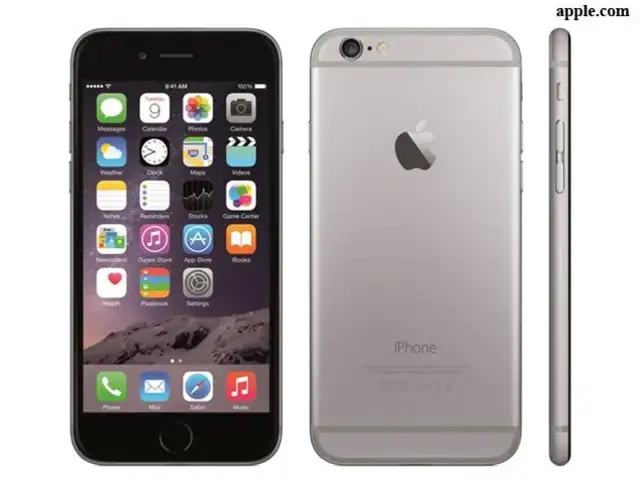
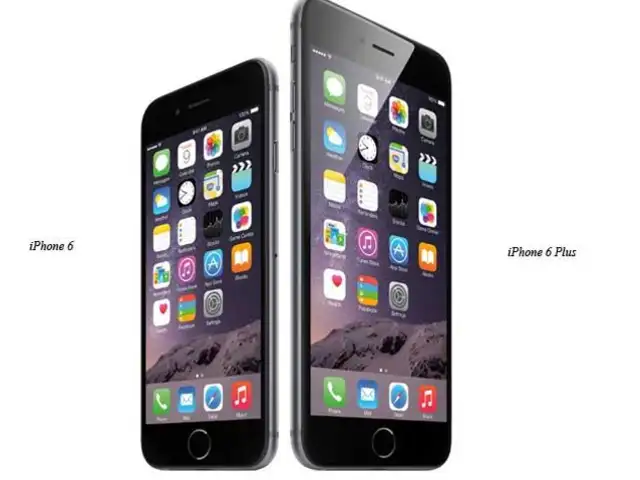
There were no questions about the law of large numbers during Apple's Jan. 27 earnings call. The company has quieted critics, at least temporarily, by delivering growth that caught the Street completely by surprise. Cook mostly has the success of the larger-screen iPhone 6 to thank. The performance stoked analysis, such as "Apple shows a flagrant disregard for the law of large numbers" and "Here's how Apple gets away with breaking the 'laws' of business." (Jean-Louis Gassée, an industry analyst and former Apple executive, correctly acknowledged the dual-law phenomenon in a blog post on Sunday, "How Many Laws Did Apple Break?") The real law of large numbers, formulated by Swiss mathematician Jacob Bernoulli in 1713, "has been often misunderstood," says Ohad Feldheim, a postdoctoral math fellow at the University of Minnesota in Minneapolis.
But the question about where long-term growth will come from is a legitimate one that applies to any large and aging business. Apple may not be there yet—on average, analysts expect its $122 stock price to reach at least $132 in the next year, according to data compiled by Bloomberg—but eventually, every company risks becoming a victim of its own success. In Warren Buffett's Berkshire Hathaway shareholder letters, he's written about the prospect of growth slowing as the company gets larger, says Shrier. "Luckily, Buffett has never called it the law of large numbers, and if he ever does, I'm leaving the business."
The law of large numbers has come up frequently in relation to Apple this decade—including when Steve Jobs was in charge but especially now that the company has surpassed a market value of $700 billion. Analysts refer to this math theory to explain why investors should worry about the future prospects for Apple and other giant companies. As the thinking goes, financial growth begins to slow for a company that achieves a certain mass of revenue because it becomes increasingly difficult to find new businesses that move the needle.
"We don't believe in such laws as laws of large numbers," Cook said at the Goldman Sachs Technology and Internet Conference in San Francisco. "It's just sort of an old dogma, I think, that was cooked up by somebody. Steve did a lot of things for us over the years, but one of the things he ingrained in us: that putting limits on your thinking are never good. We're actually not focused on the numbers. We're focused on the things that produce the numbers."
But here's the thing: This argument has nothing to do with the law of large numbers. There's a real math theory called the law of large numbers, which explains probability. It means that if you perform the same experiment a large number of times, you should get a predictable outcome. For example, if you keep flipping a coin and recording the results, you should get heads half the time and tails half the time, explains Yuri Lima, a postdoctoral fellow in mathematics at the University of Maryland. He says this wouldn't generally apply to corporate earnings unless the results were truly random. (If that were the case, investors have a lot more to worry about.) IPhone sales aren't random because they involve a number of controllable factors, such as Apple's ability to manufacture them and the decisions of people to buy them.
"Stock-market observers always use this term as it applies to Apple, but it really bothers me and probably everyone who knows what the law of large numbers is," says Zach Shrier, co-founder of the Los Angeles financial advisory firm Shrier Wealth Management. "It would be the same thing as Tim Cook saying, 'I don't believe in gravity because I think Apple can keep going higher.'"
Putting aside whether Cook and Wall Street's finest fell asleep during AP statistics, concern about Apple's earnings growth hitting the runner's wall has dogged the company for years. In 2010, Cook explained why there was plenty of room for Apple to grow, including in the mobile phone market where it trailed Nokia and BlackBerry at the time. "I don't think we are hitting the law of large numbers," Cook said then. "The phone market will increasingly become a smartphone market." He gave a similar answer in 2012, when he was asked onstage at the Goldman Sachs tech conference about how the law of large numbers will affect Apple's ability to top the 37 million iPhones it sold in the 2011 holiday quarter. It sold twice that many last quarter.
ADVERTISEMENT
There were no questions about the law of large numbers during Apple's Jan. 27 earnings call. The company has quieted critics, at least temporarily, by delivering growth that caught the Street completely by surprise. Cook mostly has the success of the larger-screen iPhone 6 to thank. The performance stoked analysis, such as "Apple shows a flagrant disregard for the law of large numbers" and "Here's how Apple gets away with breaking the 'laws' of business." (Jean-Louis Gassée, an industry analyst and former Apple executive, correctly acknowledged the dual-law phenomenon in a blog post on Sunday, "How Many Laws Did Apple Break?") The real law of large numbers, formulated by Swiss mathematician Jacob Bernoulli in 1713, "has been often misunderstood," says Ohad Feldheim, a postdoctoral math fellow at the University of Minnesota in Minneapolis.
But the question about where long-term growth will come from is a legitimate one that applies to any large and aging business. Apple may not be there yet—on average, analysts expect its $122 stock price to reach at least $132 in the next year, according to data compiled by Bloomberg—but eventually, every company risks becoming a victim of its own success. In Warren Buffett's Berkshire Hathaway shareholder letters, he's written about the prospect of growth slowing as the company gets larger, says Shrier. "Luckily, Buffett has never called it the law of large numbers, and if he ever does, I'm leaving the business."
Download
The Economic Times Business News App for the Latest News in Business, Sensex, Stock Market Updates & More.
The Economic Times Business News App for the Latest News in Business, Sensex, Stock Market Updates & More.
Download
The Economic Times News App for Quarterly Results, Latest News in ITR, Business, Share Market, Live Sensex News & More.
The Economic Times News App for Quarterly Results, Latest News in ITR, Business, Share Market, Live Sensex News & More.
Related Articles
 Tata's Apple iPhone factory in Tamil Nadu faces shutdown threat over farmland water contamination; pollution body seeks explanation2026-06-13T08:47:01Z
- The most important Apple iOS 27 feature may be the one many users can't access2026-06-12T11:15:07Z
- Apple iPhone 18 Pro price, release date, colours, specs, camera and battery: Everything we know so far2026-06-11T12:56:59Z
BusinessInsider.in
The best part about Apple's blowout earnings report was how the iPhone business continues to counteract every theory Apple doubters have had over the years.
At first, those doubters said Apple was doomed because it refused to make a "cheap" iPhone to compete with all those budget-friendly Android phones that eventually helped Google snap up a good 80% or more of the global smartphone market.
The theory went that unless Apple made a cheaper phone, Google would take over the world and developers would flock to the platform and start making the best apps for Android instead of iPhone.
The best part about Apple's blowout earnings report was how the iPhone business continues to counteract every theory Apple doubters have had over the years.
At first, those doubters said Apple was doomed because it refused to make a "cheap" iPhone to compete with all those budget-friendly Android phones that eventually helped Google snap up a good 80% or more of the global smartphone market.
The theory went that unless Apple made a cheaper phone, Google would take over the world and developers would flock to the platform and start making the best apps for Android instead of iPhone.



ADVERTISEMENT


