The Future TV technology you need to know about
You will want to upgrade your TV, so what technologies should we all be on the lookout for?
By Techradar | Updated:

By Ian Morris
You know the deal, you turn the TV on at the end of a long day and you think "I've had this TV nearly a year now, must be time to get a new one". Of course, for most people this doesn't progress much further than that initial thought, happily there are usually other people sharing our houses that can talk some sense into us.
But, eventually you will want to upgrade your TV, so what technologies should we all be on the lookout for?
Here's a list of some of the thanks that are going to change, get better or come on the market in the near future that you're going to want to have on your next TV set.
HDR and wide colour
Without doubt one of the biggest changes, and most needed, is an increase in the transmission colour space.
For a long time broadcast cameras have been capturing far more colour than could ever be sent over the air. TVs too have, for years, been able to display much more colour detail than they were ever asked to.
Expect to see more vivid colours in the future though, as TVs evolve to show us more, thanks to improved broadcast and 4K disc formats, like Ultra HD Blu-ray.
Somewhat related to wide colour is HDR. This, again, is going to be one of the most significant changes to broadcast TV we're ever going to see. If you look at TV now, you will notice that a typical shot will have light areas and dark areas. Imagine a window with a bright summer day outside, but a darker scene inside.
Traditional TVs - along with disc formats, downloads and streams - only allow us to see detail in one or the other. So you can have either loads of detail inside the dark area, with the window blown out and very white or you can reverse that, and see loads of detail outside, and just black inside.
The human eye and brain handle this for you in reality, so looking out of the window doesn't usually work like this. But with HDR a movie or TV show can be shot in a way that all the detail can be recovered.
Directors will still get to chose what you see, but they will also be able to give you mind-blowing visuals too. An HDR photograph gives you some idea of what's possible, so have a look to see what's coming.
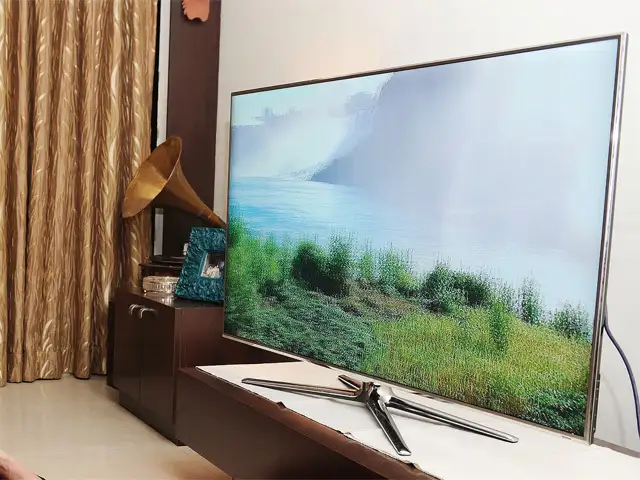
Netflix will stream wide colour and HDR video this year to TVs which are able to support that format, like the glorious Samsung UE65JS9500 and some of LG's OLED range.
High framerate
Remember when The Hobbit was released on HFR and everyone bitched and moaned about how it looked like a video? Well, ignore those idiots because HFR has a great deal to offer, and has potentially more benefit than yet another resolution increase from 1080p to 4K.
HFR has a lot of benefits for things that aren't movies. For one thing, reality shows and news don't need to be shot in a low framerate any more.
Historically, in the analogue world 50i or 25p were ways to save bandwidth. Essentially, you save capacity by sending half the total picture twice as often as the frame rate. So 25p was sent in two fields, each contained 50% of the picture.
While the total amount of data sent doesn't change, you're achieving twice as much resolution as you would normally be able to "afford".
But look, we can send 4K over the internet now. We have much better compression and we just don't need to send crappy 25FPS video. TVs too can easily handle frame rates of 120fps, and 60fps has been a reality for years too.
Of course "drama" productions rely on low frame rates to make us think they are high-quality productions. In reality the motion blur and general crappiness offered by 25p is used to conceal a load of mistakes.
A lot of TV would look a lot better in 60p though, especially sport. So expect this to make up some of what a 4K broadcast standard eventually becomes.
Wideband reception
One of Qualcomm's upcoming ideas is that your next phone be able to stream a lot of data to a device very close to it.
If you owned one of those TVs that was "wireless" and allowed you to mount it on a wall with nothing but a power socket then you've seen this in action. Basically, it's like any wireless tech but operates in the very high gigahertz range of frequencies. It works over very short distances, but allows you to send 1080p or even 4K video from your phone to your TV.
This means your phone can become even more of an entertainment hub than ever before.
It would work well with TVs that are actually very simple and have few inputs. Just send a signal from any device in your lounge to the TV without the need to plug it in with HDMI.
A magical see-through mirror TV
To those of us who are nuts about picture quality, actual TV design can make up some of the less interesting stuff. But when you look at what's coming in the next few years it's hard not to get a bit excited.
One of the things that OLEDs can do quite simply is transparency. OLED panels are transparent anyway, just because of how they are produced with an organic compound is sandwiched between two electrode layers. One of these is transparent - so you can see a picture - while the other isn't in a normal TV, but making both transparent isn't a problem.
Practically speaking, having a transparent OLED means you can put them on things that need to be seen through. Perhaps this is a window, a mirror in your bathroom or just a TV that's able to become part of the furniture when you switch it off, making for a much less obvious piece of technology.
A TV you stick to the wall
This is another triumph for OLED, and LG has already shown off a demo of an TV that's so thin you can just stick it to a wall. The panel itself is less than 1mm thick, and weighs a bit less than 2kg.
To stick it to the wall you just use a magnetic mat, and Bob's your uncle, a TV that looks like a poster.
Clever stuff.
Quantum LED and Crystal LED
These are two technologies we've recently covered in depth, so we'll not do it again now. But let's just say that TVs which use self-emitting pixels (ones which produce their own light) are the way forward.
LCD should die out, hopefully, and QLED, CLED and OLED should be the panels which lead the charge into the next decade.
Although with all that said, LCDs have remains incredibly adaptable, so perhaps we shouldn't write them off just yet...
You know the deal, you turn the TV on at the end of a long day and you think "I've had this TV nearly a year now, must be time to get a new one". Of course, for most people this doesn't progress much further than that initial thought, happily there are usually other people sharing our houses that can talk some sense into us.
But, eventually you will want to upgrade your TV, so what technologies should we all be on the lookout for?
Here's a list of some of the thanks that are going to change, get better or come on the market in the near future that you're going to want to have on your next TV set.
HDR and wide colour
Without doubt one of the biggest changes, and most needed, is an increase in the transmission colour space.
ADVERTISEMENT
For a long time broadcast cameras have been capturing far more colour than could ever be sent over the air. TVs too have, for years, been able to display much more colour detail than they were ever asked to.
Expect to see more vivid colours in the future though, as TVs evolve to show us more, thanks to improved broadcast and 4K disc formats, like Ultra HD Blu-ray.
Somewhat related to wide colour is HDR. This, again, is going to be one of the most significant changes to broadcast TV we're ever going to see. If you look at TV now, you will notice that a typical shot will have light areas and dark areas. Imagine a window with a bright summer day outside, but a darker scene inside.
Traditional TVs - along with disc formats, downloads and streams - only allow us to see detail in one or the other. So you can have either loads of detail inside the dark area, with the window blown out and very white or you can reverse that, and see loads of detail outside, and just black inside.
ADVERTISEMENT
The human eye and brain handle this for you in reality, so looking out of the window doesn't usually work like this. But with HDR a movie or TV show can be shot in a way that all the detail can be recovered.
Directors will still get to chose what you see, but they will also be able to give you mind-blowing visuals too. An HDR photograph gives you some idea of what's possible, so have a look to see what's coming.
ADVERTISEMENT
Netflix will stream wide colour and HDR video this year to TVs which are able to support that format, like the glorious Samsung UE65JS9500 and some of LG's OLED range.
High framerate
Remember when The Hobbit was released on HFR and everyone bitched and moaned about how it looked like a video? Well, ignore those idiots because HFR has a great deal to offer, and has potentially more benefit than yet another resolution increase from 1080p to 4K.
HFR has a lot of benefits for things that aren't movies. For one thing, reality shows and news don't need to be shot in a low framerate any more.
Historically, in the analogue world 50i or 25p were ways to save bandwidth. Essentially, you save capacity by sending half the total picture twice as often as the frame rate. So 25p was sent in two fields, each contained 50% of the picture.
While the total amount of data sent doesn't change, you're achieving twice as much resolution as you would normally be able to "afford".
But look, we can send 4K over the internet now. We have much better compression and we just don't need to send crappy 25FPS video. TVs too can easily handle frame rates of 120fps, and 60fps has been a reality for years too.
Of course "drama" productions rely on low frame rates to make us think they are high-quality productions. In reality the motion blur and general crappiness offered by 25p is used to conceal a load of mistakes.
A lot of TV would look a lot better in 60p though, especially sport. So expect this to make up some of what a 4K broadcast standard eventually becomes.
Wideband reception
One of Qualcomm's upcoming ideas is that your next phone be able to stream a lot of data to a device very close to it.
If you owned one of those TVs that was "wireless" and allowed you to mount it on a wall with nothing but a power socket then you've seen this in action. Basically, it's like any wireless tech but operates in the very high gigahertz range of frequencies. It works over very short distances, but allows you to send 1080p or even 4K video from your phone to your TV.
This means your phone can become even more of an entertainment hub than ever before.
It would work well with TVs that are actually very simple and have few inputs. Just send a signal from any device in your lounge to the TV without the need to plug it in with HDMI.
A magical see-through mirror TV
To those of us who are nuts about picture quality, actual TV design can make up some of the less interesting stuff. But when you look at what's coming in the next few years it's hard not to get a bit excited.
One of the things that OLEDs can do quite simply is transparency. OLED panels are transparent anyway, just because of how they are produced with an organic compound is sandwiched between two electrode layers. One of these is transparent - so you can see a picture - while the other isn't in a normal TV, but making both transparent isn't a problem.
Practically speaking, having a transparent OLED means you can put them on things that need to be seen through. Perhaps this is a window, a mirror in your bathroom or just a TV that's able to become part of the furniture when you switch it off, making for a much less obvious piece of technology.
A TV you stick to the wall
This is another triumph for OLED, and LG has already shown off a demo of an TV that's so thin you can just stick it to a wall. The panel itself is less than 1mm thick, and weighs a bit less than 2kg.
To stick it to the wall you just use a magnetic mat, and Bob's your uncle, a TV that looks like a poster.
Clever stuff.
Quantum LED and Crystal LED
These are two technologies we've recently covered in depth, so we'll not do it again now. But let's just say that TVs which use self-emitting pixels (ones which produce their own light) are the way forward.
LCD should die out, hopefully, and QLED, CLED and OLED should be the panels which lead the charge into the next decade.
Although with all that said, LCDs have remains incredibly adaptable, so perhaps we shouldn't write them off just yet...
Download
The Economic Times Business News App for the Latest News in Business, Sensex, Stock Market Updates & More.
The Economic Times Business News App for the Latest News in Business, Sensex, Stock Market Updates & More.
Download
The Economic Times News App for Quarterly Results, Latest News in ITR, Business, Share Market, Live Sensex News & More.
The Economic Times News App for Quarterly Results, Latest News in ITR, Business, Share Market, Live Sensex News & More.
Text: ET Bureau
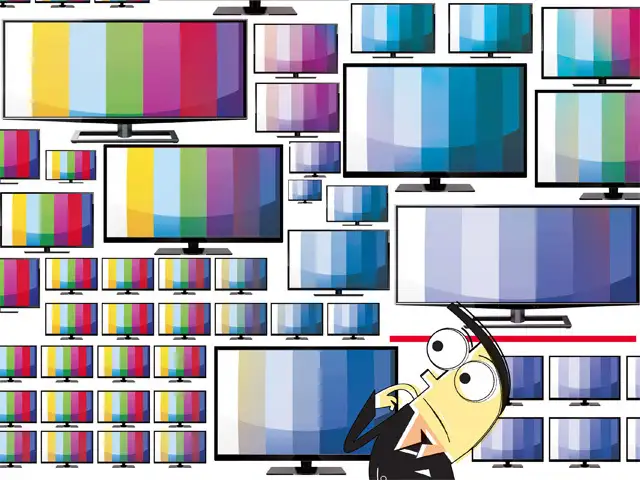
There are so many variables presented to you when buying a new TV. ET answers some of the burning questions you may have before putting down a sizeable investment on a new set.
There are so many variables presented to you when buying a new TV. ET answers some of the burning questions you may have before putting down a sizeable investment on a new set.


ADVERTISEMENT


