
The pandemic has pushed us to the age of cobots
1/6
Being tech savvy
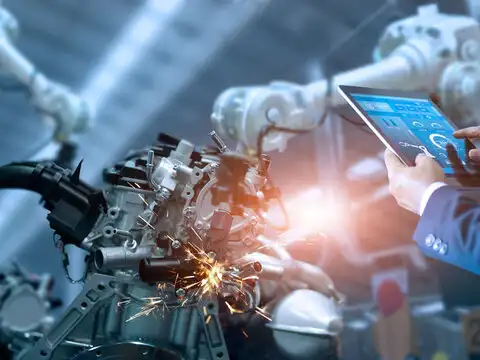
The pandemic has taught us many things like social distancing, working and studying from home, using new apps to stay connected with family and friends and more. Another big change has been seen in medium and small factories that are adopting technologies at a faster pace to operate during the pandemic and also increase efficiencies. They are learning the use of collaborative robots or cobots.
2/6
What are cobots?
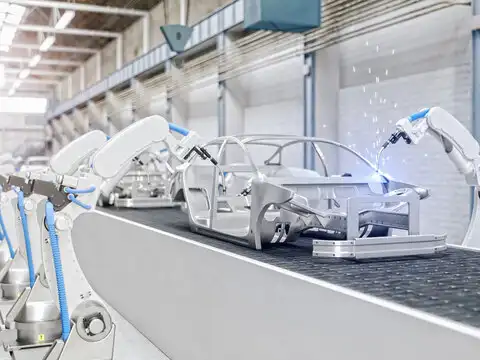
Cobots are lightweight, programmable solutions that are used in manufacturing plants. These can be programmed to do machine tending, gluing and dispensing, screw driving, injection moulding, sanding, deburring and more. Cobots have been used to helping manufacturers address workers’ health concerns and enable them to gain efficiency across processes.
3/6
How it came to India?
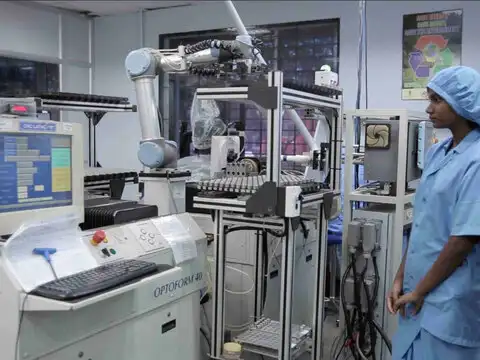
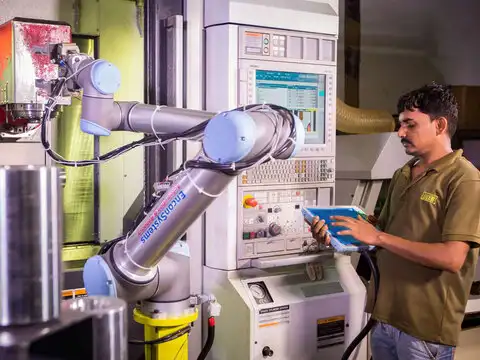
The world’s first cobot was installed in December 2008 at Linatex, a Danish supplier for industrial applications. Two years later, Bajaj Auto inducted the country’s first cobot. Several auto manufacturers followed suit like Ashok Leyland, which used these smart automation and robotics and got huge benefits from it. With the help of robotics one can paint big vehicles and do welding work. Cobots are the fastest growing technologies in the industrial automation space. (Pic: Universal Robots)
Amazon Top Deals
POWERED BY

Crompton Ozone 75 Litres Desert Air Cooler for home | Large & Easy Clean Ice Chamber | 4-Way Air Deflection | High Density Honeycomb Pads | Everlast Pump | Auto Fill| 3 Year Brand Warranty
₹9,798Buy Now43%
OFF

LG 32 L Convection Microwave Oven (MC3286BRUM, Black, 360° Motorised Rotisserie for Bar-be-queing, 301 Auto Cook Menu, Stainless steel cavity, Indian Cuisine, Tandoor Se, Steam Clean & Diet Fry)
₹19,340Buy Now19%
OFF
4/6
Cobots vs industrial robots
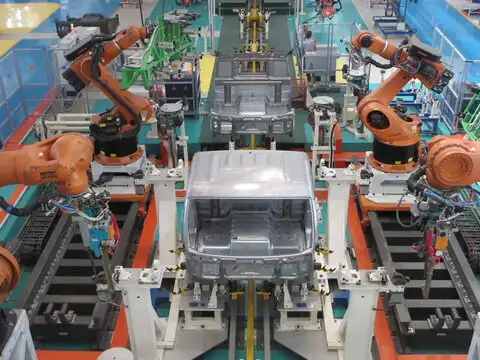
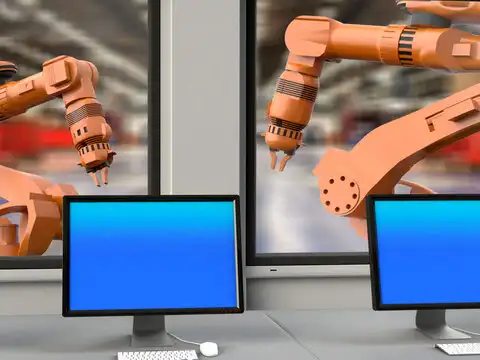
Industrial robots are bulky and require installations. Cobots can be deployed quickly and take up very little space. One doesn’t need to be a tech expert to run these machines, a little bit of basic training and understanding is enough to operate them. Cobots are now being used in fulfilment centres of e-commerce enterprises and assembly lines of auto and electronics majors. (Pic: Ashok Leyland factory)
5/6
A long way to go…
The adoption of cobots is yet to gain momentum in India. The International Federation of Robotics states that the average number of robots per 10,000 employees is about 99. While countries like China have around 140 robots, nations such as South Korea boasts of numbers around 800. India’s numbers stand at about four robots, 25 times behind the global average. This shows that there is a huge untapped potential for the technology in the country.
6/6
ROIs and job loss fears
One of the reasons India has seen a slow adaptation rate that most manufacturing companies, particularly the small ones, see smart factories as an avoidable expenditure instead of an investment targeted at higher ROI in the long run. The other fear is that of job loss of their workers. The former thought process changed as firms low on tech adoption struggled to survive and navigate the pandemic. Most SMEs understand the need for robotics in order to be in the game and scaling up. Experts feel that enough jobs will be created with better pay for people once cobots become a way of life for manufacturing companies. (Pic: Universal Robots)