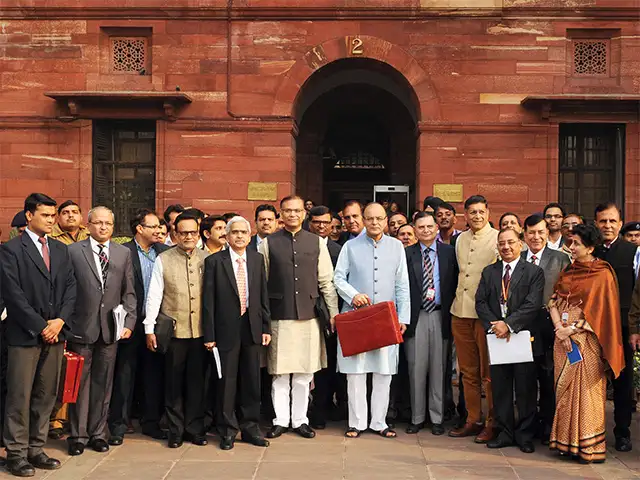
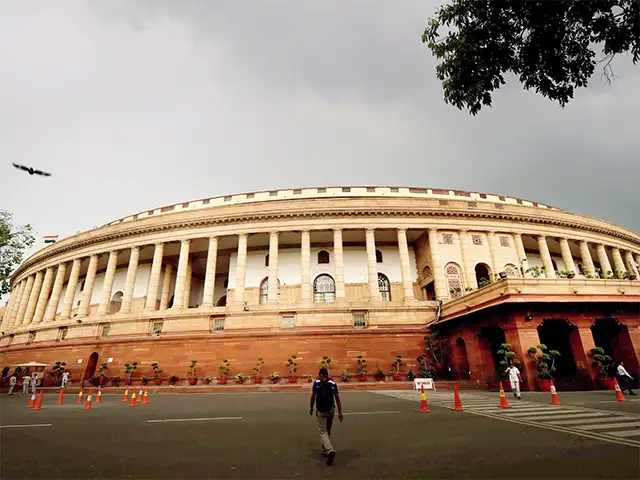
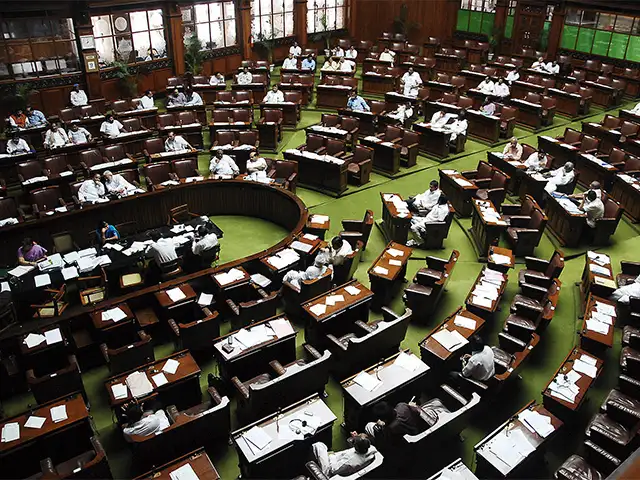
Budget 2017: Jaitley reduces income tax for 96% of companies by 5%

Jaitley said that the income tax for smaller companies with annual turnover upto Rs. 50 crore is reduced to 25% in order to make MSME companies more viable and also to encourage firms to migrate to company format.

Budget 2017: Jaitley reduces income tax for 96% of companies by 5%
Hit hard by demonitisation, Finance Minister Arun Jaitley's move to provide some relief to the MSME sector in Budget 2017 came through a welcome move to reduce income tax for small companies to 25% with annual turnover upto Rs. 50 crore.

Jaitley said that the income tax for smaller companies with annual turnover upto Rs. 50 crore is reduced to 25% in order to make MSME companies more viable and also to encourage firms to migrate to company format. The move is, however, not merely limited to MSMEs, but also to startups who earn upto Rs 50 crore.

As per data of Assessment Year 2015-16, there are 6.94 lakh companies filing returns of which 6.67 lakh companies fall in this category and, therefore, percentage-wise 96% of companies will get this benefit of lower taxation. "This will make our MSME sector more competitive as compared to large companies. The revenue forgone estimate for this measure is expected to be Rs. 7,200 crore per annum," said Jaitley.

An issue of contention for small companies has been the levy of Minimum Alternate Tax (MAT) and Jaitley added that it is not practical to remove or reduce MAT at present. However, in order to allow companies to use MAT credit in future years, he proposed to allow carry forward of MAT upto a period of 15 years instead of 10 years at present.

MAT is at present levied as an advance tax. Although the plan for phasing-out of exemptions will kick in from April 1, 2017, the full benefit of revenue out of phase-out will be available to the Government only after 7 to 10 years when all those who are already availing exemptions at present complete their period of availment.
Download
The Economic Times Business News App
for the Latest News in Business, Sensex, Stock Market Updates & More.

If Budget sounds Greek to you, this could help
1/9
The Union Budget can sound all greek for some. If you are one of them, this could help.

Here's a guide to the India's most important financial statement.

The Union Budget can sound all greek for some. If you are one of them, this could help. Here's a guide to the India's most important financial statement.
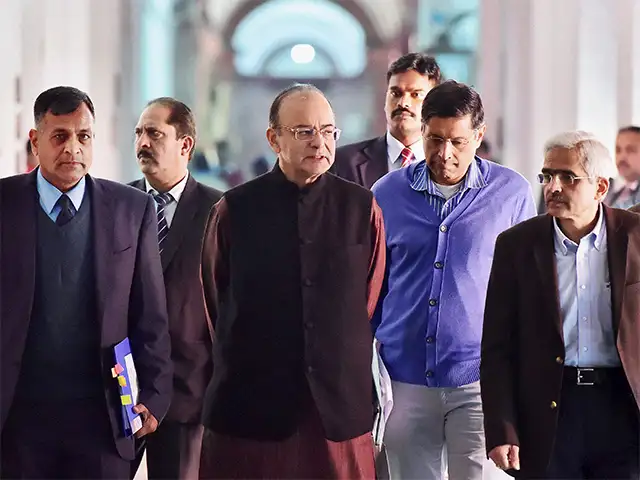
According to Article 112 of the Constitution of India, the Union Budget of a year is a statement of the estimated receipts and expenditure of the government for that particular year.
Budget is made through a consultative process involving ministry of finance, NITI Aayog and spending ministries.

Finance ministry issues guidelines to spending based on which ministries present their demands.

The Budget Division of the Department of Economic Affairs in the finance ministry is the nodal body responsible for producing the Budget.
Budget is made through a consultative process involving ministry of finance, NITI Aayog and spending ministries. Finance ministry issues guidelines to spending based on which ministries present thei..
Read More
Budget Division issues a circular to all Union ministries, states, UTs, autonomous bodies, depts and the defence forces for preparing the estimates for the next year.

After ministries & departments send in their demands, extensive consultations are held between Union ministries and the Department of Expenditure of the finance ministry.

At the same time, the Department of Economic Affairs and Department of Revenue meet stakeholders such as farmers, businessmen, FIIs, economists and civil society groups to take their views.

Once the, pre-Budget meetings are over, a final call on the tax proposals is taken by the finance minister. The proposals are discussed with the PM before the Budget is frozen.
Budget Division issues a circular to all Union ministries, states, UTs, autonomous bodies, depts and the defence forces for preparing the estimates for the next year. After ministries & departments ..
Read More
The Secretary General of the Lok Sabha Secretariat seeks approval of President after the Speaker agrees to the date suggested by the government.

FM presents the budget in the Lok Sabha outlining key estimates and proposals.

Finance Minister briefs the cabinet on the budget proposals through a 'summary for the cabinet' just before he presents the budget.

The ‘Annual Financial Statement’ is laid on the Table of the Rajya Sabha after the FM’s speech.

On the morning of the budget, the government seeks President’s approval through a “Summary for the President” approved by the FM and PM.
The Secretary General of the Lok Sabha Secretariat seeks approval of President after the Speaker agrees to the date suggested by the government. FM presents the budget in the Lok Sabha outlining key..
Read More
FM’s budget speech has two parts. Part A deals with general economic survey of the country and policy statements. Part B contains tax proposals.

The ‘Annual Financial Statement’ is laid on the Table of the Rajya Sabha after the FM’s speech.

No discussion takes place the day the budget is presented.
FM’s budget speech has two parts. Part A deals with general economic survey of the country and policy statements. Part B contains tax proposals. The ‘Annual Financial Statement’ is laid on the Table..
Read More
Budget debate is split into TWO PARTS

General discussion

A few days after the budget, there is a general discussion in Lok Sabha for 2-3 days.

The FM replies to the debate at the end of the discussion.

A ‘VOTE-ON-ACCOUNT’ for expenditure in initial months of financial year is obtained from Parliament.

The House is adjourned for a fixed period.
Budget debate is split into TWO PARTS General discussion A few days after the budget, there is a general discussion in Lok Sabha for 2-3 days. The FM replies to the debate at the end of the discus..
Read More
During the break, demands for grants are considered by relevant standing committees.

These demands are taken up one by one as per a schedule decided by the business advisory committee of house.

Any member can seek a cut in allocation through one of the three cut motions:

1. Disapproval of Policy Cut
2. Economy Cut
3. Token Cut

On the last day of the discussion on the Demands for Grants, the Speaker puts all the outstanding Demands for Grants to the vote in the House.
During the break, demands for grants are considered by relevant standing committees. These demands are taken up one by one as per a schedule decided by the business advisory committee of house. Any..
Read More
After the demand for grants, Appropriation Bill is put to vote in Lok Sabha. It gives the government powers to spend from the Consolidated Fund of India.

After the Appropriation Bill, Finance Bill is considered and passed by Parliament as a Money Bill.

The bill is required to be passed by both the Houses and receive assent of the President within 75 days of its introduction.

Once the Finance Bill is passed and signed by the President, the budget process is over.
After the demand for grants, Appropriation Bill is put to vote in Lok Sabha. It gives the government powers to spend from the Consolidated Fund of India. After the Appropriation Bill, Finance Bill i..
Read More
READ MORE
ADVERTISEMENT

READ MORE:

LOGIN & CLAIM

50 TIMESPOINTS

More from our Partners

Loading next story
Business News › Small Biz › SME Sector › Budget 2017: Jaitley reduces income tax for 96% of companies by 5%
Text Size:AAA
Success
This article has been saved

*

+