You need a smart plan first to build a smart city: Maharashtra CM Devendra Fadnavis
Maharashtra CM Devendra Fadnavis is in a hurry to fix his state, which he says has suffered from policy paralysis for the past 15 years.

Maharashtra Chief Minister Devendra Fadnavis is clearly a man in a hurry. According to him, the state has suffered for the past 15 years due to a complete policy and administrative paralysis. Speaking to ET, Fadnavis spells out his plan to transform Mumbai into a global financial hub and how he intends to remedy the decade-long policy paralysis that led to investment going to other states. Edited excerpts:
You have been talking of Mumbai as a financial hub, to compete with Singapore and Dubai. How will you overcome the challenges and what are your plans for Mumbai?
For any city to go global it has to have a qualitative change — that is one initiative. Second initiative is developing a service industry as Mumbai cannot be developed as a manufacturing hub any more. Even in the Mumbai Metropolitan Region you can't have much of manufacturing activity. So, what we can do is develop Mumbai as a financial services centre as it has a unique position vis-a-vis the time zone, because for 4-5 working hours we overlap with London. Most of the GDPs, barring the US, fall in proper (work) time zones when compared with Mumbai. Even Shanghai doesn't have this time advantage. Only Dubai has this advantage.
If we create an ecosystem for financial services to expand in Mumbai, it would create a lot of economic activity. Although Mumbai is developing right now, the economic activity is coming down. This can be taken care of. The Percy Mistry report says that the banks can earn $50 billion if Mumbai is developed as a financial hub. Another unique advantage is that of human resource that Mumbai has.
What it requires is commercial spaces, infrastructure and tweaking of certain laws. The basic problem today in making Mumbai a financial centre is that in our law whatever business you do from Mumbai or from any Indian city is that it is taxable. So, financial services are tradeable. I mean they are cost order. If you tax a service that is traded elsewhere, why would someone come to Mumbai. So our appeal through this deliberation is that it should adopt the global model of taxation.
Would that mean no taxes?
No. Only those financial services which are created and utilised within the country should be taxed. Those which are utilised and created elsewhere by using Mumbai as a financial centre should not be taxed. That would be the incentive for people to come and operate from Mumbai.
One of the aspects that everybody discusses is the multiplicity of agencies, BMC is controlled by Shiv Sena, and there is MMRDA...
I’m trying to bring most of them under the Chief Minister’s Office (CMO). If you look at the multiple agencies, 60% of them come under urban development. I have started a war room in the CMO which will coordinate between these agencies. We have been pro-active in organising meetings between these agencies and asking them to share problems with each other so that the CM can solve or facilitate it. We are trying to form an institution or an institutional mechanism where there is an interaction every day or at that very moment. Not the bureacratic way of sending a letter seeking approval and the letter being dumped for six months.
Can you elaborate on functioning of the war room?
Initially, the war room will pick up about 10-15 infrastructure projects and would co-ordinate between all agencies critical to the projects. If any agency has a problem, they can approach the war room which will help facilitate a resolution of the problem. Ultimately, we want to institutionalise this mechanism so that even the CMO is not needed (to intervene).
So are you thinking in terms of a CEO, he may not be called a CEO?
I don’t think a CEO is needed, however, an officer to co-ordinate is needed. When you talk of a CEO, it gives you a sense of a undemocratic power centre. The idea is just to have a co-ordinating officer.
You have been talking of Mumbai as a financial hub, to compete with Singapore and Dubai. How will you overcome the challenges and what are your plans for Mumbai?
For any city to go global it has to have a qualitative change — that is one initiative. Second initiative is developing a service industry as Mumbai cannot be developed as a manufacturing hub any more. Even in the Mumbai Metropolitan Region you can't have much of manufacturing activity. So, what we can do is develop Mumbai as a financial services centre as it has a unique position vis-a-vis the time zone, because for 4-5 working hours we overlap with London. Most of the GDPs, barring the US, fall in proper (work) time zones when compared with Mumbai. Even Shanghai doesn't have this time advantage. Only Dubai has this advantage.
If we create an ecosystem for financial services to expand in Mumbai, it would create a lot of economic activity. Although Mumbai is developing right now, the economic activity is coming down. This can be taken care of. The Percy Mistry report says that the banks can earn $50 billion if Mumbai is developed as a financial hub. Another unique advantage is that of human resource that Mumbai has.
What it requires is commercial spaces, infrastructure and tweaking of certain laws. The basic problem today in making Mumbai a financial centre is that in our law whatever business you do from Mumbai or from any Indian city is that it is taxable. So, financial services are tradeable. I mean they are cost order. If you tax a service that is traded elsewhere, why would someone come to Mumbai. So our appeal through this deliberation is that it should adopt the global model of taxation.
Would that mean no taxes?
ADVERTISEMENT
No. Only those financial services which are created and utilised within the country should be taxed. Those which are utilised and created elsewhere by using Mumbai as a financial centre should not be taxed. That would be the incentive for people to come and operate from Mumbai.
One of the aspects that everybody discusses is the multiplicity of agencies, BMC is controlled by Shiv Sena, and there is MMRDA...
I’m trying to bring most of them under the Chief Minister’s Office (CMO). If you look at the multiple agencies, 60% of them come under urban development. I have started a war room in the CMO which will coordinate between these agencies. We have been pro-active in organising meetings between these agencies and asking them to share problems with each other so that the CM can solve or facilitate it. We are trying to form an institution or an institutional mechanism where there is an interaction every day or at that very moment. Not the bureacratic way of sending a letter seeking approval and the letter being dumped for six months.
Can you elaborate on functioning of the war room?
ADVERTISEMENT
Initially, the war room will pick up about 10-15 infrastructure projects and would co-ordinate between all agencies critical to the projects. If any agency has a problem, they can approach the war room which will help facilitate a resolution of the problem. Ultimately, we want to institutionalise this mechanism so that even the CMO is not needed (to intervene).
So are you thinking in terms of a CEO, he may not be called a CEO?
ADVERTISEMENT
I don’t think a CEO is needed, however, an officer to co-ordinate is needed. When you talk of a CEO, it gives you a sense of a undemocratic power centre. The idea is just to have a co-ordinating officer.
You have spoken with MoS for Finance Jayant Sinha on tweaking laws to make Mumbai a financial hub. What did he say?
He was quite positive, but I think it is his prerogative. He will speak his mind on February 6. I think the central government is very positive.
High cost of real estate, high cost of transportation in Mumbai could be hurdle. Many people complain that they can’t afford property? How will the government solve this problem?
The government can. For last few years, we didn't create a lot of commercial space, we just created one Bandra-Kurla Complex (BKC) and that is all. We want to create more BKCs. We have identified places where such centres can come up. MMRDA will do some centres and CIDCO will do some. We will ask agencies that have land parcels to create such centres.
If we create more commercial space then the problem would be of taxation. That can also be worked up on. If it is municipal tax then the municipal corporation will look in to it. if there a tax regime of the state government then the state government will look in to it.
ADVERTISEMENT
Are you looking in to some kind of easy tax rates, tax breaks or tax concessions?Right now we are trying to understand what the issues are. One issue which we have found out is the availability of commercial space and have started working on it. On how to make it more attractive there could be 100 suggestions of which we could pick five that’s why this conclave.
What about residential real estate? More people are coming in to Mumbai and prices are too steep...
Yes. You have to have a simultaneous policy where you create housing on existing land, which we have through urban renewal. At the same time you need to arrest this urban influx in the fringe areas. You need to create new cities. That's what we are trying to do. NAINA (Navi Mumbai Airport Influence Notified Area)is an example. It's a 600 sq km region near Navi Mumbai airport, which would be bigger than Mumbai. A few days ago, I gave clearance to the development plan of 60 villages in Bhiwandi that can host 18 to 20 lakh people and also act as a logistics hub to Mumbai.
ADVERTISEMENT
So there are 4,000 godowns in 600 acres, which are illegal. We have earmarked that area for a logistics hub and will regularise them. At the same time in another 2,200 acres we will create a logistics hub that would fuel the growth and act as an economic growth engine. People who come New Bhiwandi, or these 60 villages, will find employment. They wouldn’t have to come to Mumbai.Projects like Metro, coastal roads and other infrastructure projects cost thousands of crores. Where will the money come from?
ADVERTISEMENT
Our Prime Minister has already created credit lines for us, Japan through China. What is now needed is cleared projects. For 72 kms of Metro Rs 50,000 crore is needed. JICA (Japan International Cooperation Agency) will be financing it. We also have a tie-up with the World Bank. For Trans Harbour Link we have approached JICA and it has said that it's ready to finance it.As of now I think cleared project is an issue. Financial strategy is not an issue for Mumbai. In Mumbai, financial strategy can be evolved if you have a cleared project. Investors want to invest in cleared projects.
So the idea is to get cleared projects and go to multilateral agencies?
Yes, right.
What about smart cities? We have been hearing about Navi Mumbai, Vasai and Virar being developed for a long time. What is the government going to do differently now?
That is what I have started doing. If you want to create a city, first you need to have a development plan and for years together we did not sanction development plans. Now, Kalyan and Bhiwandi development plans were lying for the last 4-5 years. If you don’t have a development plan how will you then develop a city? If you take 10 years for finalising one development plan, the purpose for which you created the development plan would totally change. What we are doing is we are immediately sanctioning the development plans. In the last two months, I have sanctioned more than 35 development plans. We have to also find the financial strategies to finance the development plans. We have started doing that too. In cities the major instrument by which you can finance the development plan is through TDR and through accommodation reservations. So we are coming up, We are already issuing a new TDR policy where we will incentivise people more for those reservations. The policy will incentivise people to actually develop reservations. By doing that you will actually create more infrastructure in the city.
When you talk of the government monetising land assets, do you mean government selling off its land assets?
I don’t think that you have to sell. It's your equity and based on that equity, you can keep that land with you and raise money.
How many cities in the fringes do you plan to create?
ADVERTISEMENT
There was an idea that we would, say, create 10 new cities not just in the fringes of Mumbai but other places too. Like day before yesterday, I have cleared a plan for new Nagpur — Nagpur Metro area. So it's entirely a new city and a development plan is already sanctioned with financial strategy. The plan would be open for suggestions and objections and in three months time we would finalise it.Would these cities be as big as Mumbai?
No, you don’t need big cities. You need to create small urban centres to arrest the influx.
The state government has taken a number of steps to relax laws. What about labour reforms?
Today, I have delegated powers to the Principal Secretary, Industries to give incentives to industries which are already structured. You already have in place structured incentives and even then the file comes to the Chief Minister. It’s not needed it takes three years. So, several powers to delegate have been given to the Principal Secretary. Only if he wants to deviate will he come (to me), otherwise he need not come.
ADVERTISEMENT
As far as labour laws are concerned I am trying to amend it. The previous government had already presented a proposal to the Central government which has cleared it. There are several phases for amending the labour laws. The labour laws are such that they are neither beneficial to the labourers nor to the industry. It’s just a time-consuming exercise... We are trying to make a law so that more employment is created. There will be flexibility for labour, and at the same time there would be an easy exit policy.
Right now, due to an artificial line these industries are employing contract labourers. If we create atmosphere for an exit policy for the industries then it would be better for them to employ regular employees.
ADVERTISEMENT
The number of regular employees can be increased three-fold if you have a proper policy. While retrenching or while exiting we want to give more benefits to the labourer. I think it would be a win-win policy.
What about the specifics? Like Rajasthan has increased the ceiling for which government permission is needed for retrenchment to 300 from 100. What number do you have in mind?
We are thinking of increasing it. We have not decided the number as yet.
What about benefits for the labourers?
There are a number of benefits. Where it was 15 days (wages for each year served as compensation for retrenched workers), we increased it to 60 days. So we have increased the incentives to the labour three- to four-fold.
How will the infrastructure policies announced for Mumbai Trans Harbour Link, Metro rail and other projects work? Will there be private participation? Will the government step in to it?
Right now most of them would be through EPC route. Some of them would also be through PPP route.
You spoke about getting a good response in Davos. Would we see much more investment in Maharashtra?
I think now there is a sense of excitement among people to come to Maharashtra. I just want to share that the Schindler’s case in Pune where entire investment was done and for two years consent to operate was not given. Due to a policy that zero discharge industry can't be started within 2 km of a river. It doesn’t make proper sense. When we went to Davos and handed over the letter (consent to operate) to Schindler, they told us they are now expanding and they would be setting up a facility to develop escalators. The earlier project was for elevators and this one would be for escalators. This would be the first escalator manufacturing facility in India. When we gave the letter of expansion to Cognizant, their reaction was now we feel that India is as fast as China. I told them that in the times to come, we would be faster than China.
You have plans for making Mumbai as the financial centre. Would you would face competition from Gujarat, from the GIFT City that is coming up?
I think that Mumbai has a unique advantage and if we leverage that advantage no one in India can compete with us, no one. We (Mumbai) lost because for 15 years we had a policy, decision and implementation paralysis. In times like these the second-best centres come up and the best lose. That is what has happened to Mumbai.
There is talk of combining the Metro to run parallel to the coastal road?
ADVERTISEMENT
We are exploring it, but we haven’t made any plans yet.You have faced criticism on the River Zone policy?
I must tell you what really happened. When we look at the Schindler’s case, we thought that why is a zero discharge industry is not being permitted to set up. We thought of moving zero discharge industry in another zone and we moved a proposal to the Law and Judiciary department. The department gave us an opinion that creating such a policy is not in competence with the state government. This policy is ultra vires and only Central government can create such policy. They said we will not give an opinion because how can we give an opinion on an ultra vires policy. It is a policy which is not in accordance with the Constitution.
They said while creating a policy they were not on board, their opinion was not sought. So we decided to scrap it and we stick to the national policy. Nothing has changed. Once you apply to set up an industry, you have to take a location clearance. The policy of location clearance looks at rivers, vicinity, discharge and then you have the environment impact analysis.
ADVERTISEMENT
Environmental clearance follows and finally you have consent to establish. What we are doing is, we are shortening the time taken in these four stepsAfter we took over, we started this Karanja port. Two ports Jaigadh and Diggi, were facing huge problems, such as lack of proper roads. For years the ports have been ready. They were not given clearances. I have given all the clearances, they have already started the work, so now I am trying to enhance the port infrastructure or the port capacity three-fold.
The toll policy in the state has been a subject of debate and controversy. Why can’t we withdraw it and replace it with a petrol or diesel cess?
You need to have a sustainable policy, you can’t have a haphazard policy. We are working on the toll policy. The problem is that the agreements which were entered in to (with the toll operators) are lopsided and do not have a buy back. The Mumbai- Pune Expressway has no buy back. How can you have such an agreement? I have to rework all my plans. We will come up with a new policy.
There is talk of the state giving tax holidays for small manufacturing units in Dharavi who are opposing its redevelopment?
We just had a meeting on Dharavi. I think we need to give a hearing to certain voices in Dharavi. There are informal industries in Dharavi and when you create infrastructure for them they become formal and would attract taxes. So therein lies the resentment, and also a solution. So for 4-5 years there can be a tax holiday. Once they come in to the formal sector, they would also be ready to pay taxes. I have not made the policy. I am trying to find a solution.
ADVERTISEMENT
What are the plans for developing the Mumbai Port Trust?
The Mumbai Port Trust would be proactive and it could facilitate the port trade development. You will find more and more initiatives coming from the Mumbai Port Trust. Any port-led development will lead to enhancement of our financial sector because we did not enhance capacities of our ports. We lost to neighbouring countries that have developed better ports or neighbouring states who have developed port capacities. Port-led development is something that contributes most to the GDP.
Download
The Economic Times Business News App for the Latest News in Business, Sensex, Stock Market Updates & More.
The Economic Times Business News App for the Latest News in Business, Sensex, Stock Market Updates & More.
Moinak Mitra, ET Bureau
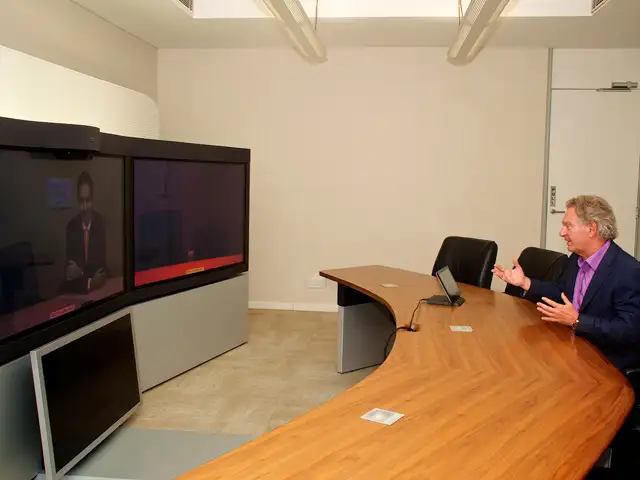
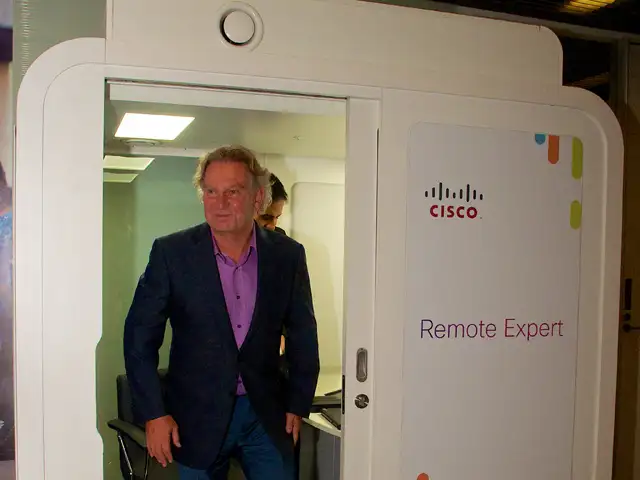
As the Chief Globalisation Officer at Cisco, Wim Elfrink prides himself on applying digital overlay to physical infrastructure.
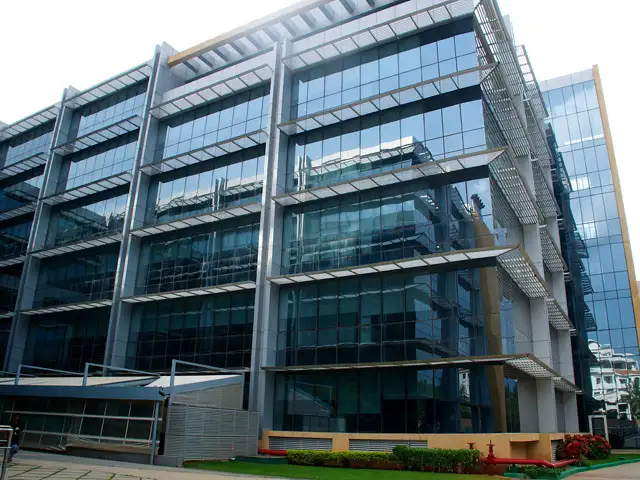
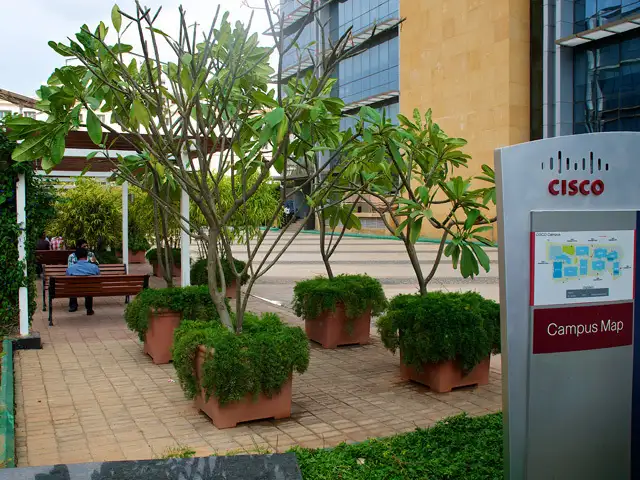
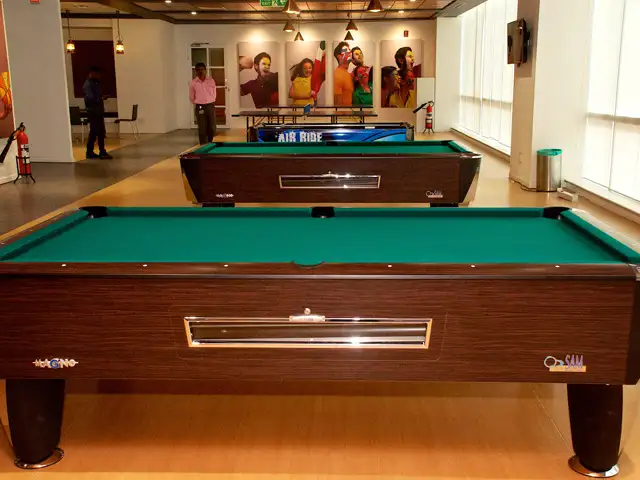
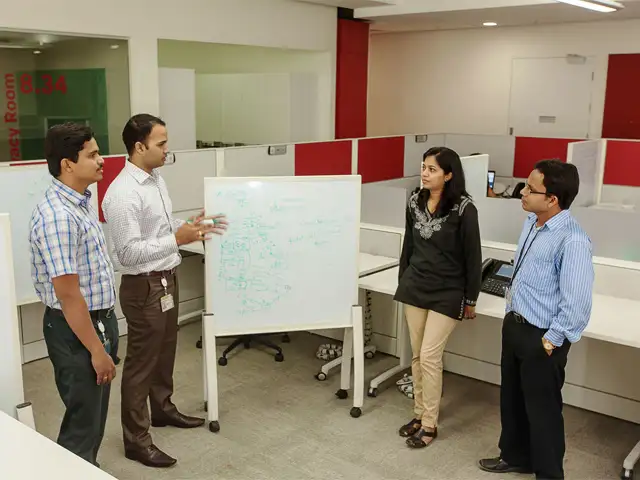
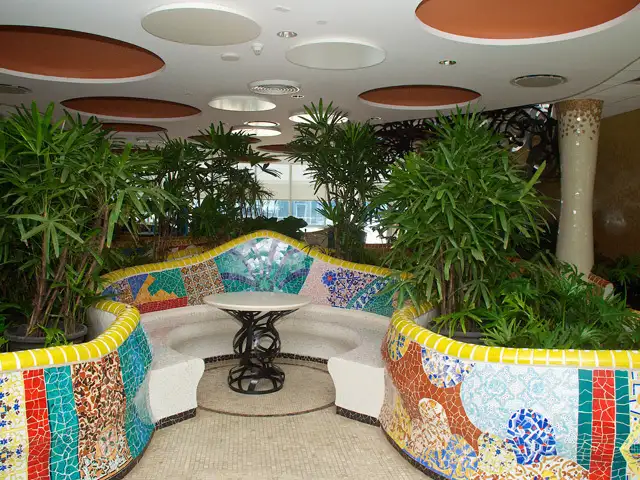
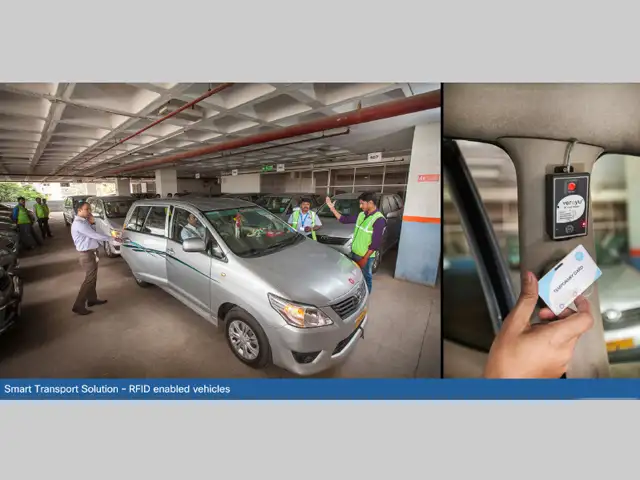
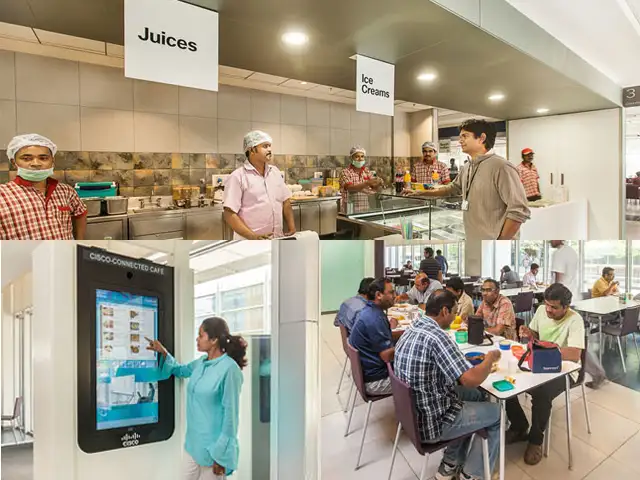
He's also the brain behind the 2.18 million square feet Cisco Smart Campus in Bengaluru that houses eight glass-and-concrete buildings showcasing a digitally connected and sustainable environment where 8,500-odd techies don't have an assigned workplace.
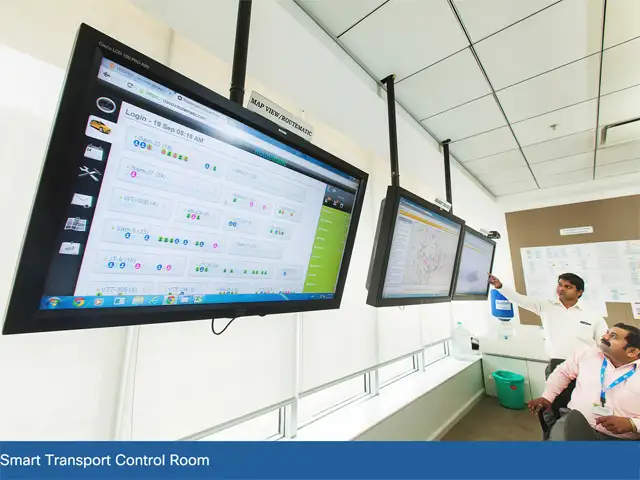
The campus ecosystem resembles a smart city and is in line with Prime Minister Narendra Modi's big idea of digitising India by setting up 100 smart cities.
As the Chief Globalisation Officer at Cisco, Wim Elfrink prides himself on applying digital overlay to physical infrastructure.
He's also the brain behind the 2.18 million square feet Cisco Smart Campus in Bengaluru that houses eight glass-and-concrete buildings showcasing a digitally connected and sustainable environment where 8,500-odd techies don't have an assigned workplace.
The campus ecosystem resembles a smart city and is in line with Prime Minister Narendra Modi's big idea of digitising India by setting up 100 smart cities.

ADVERTISEMENT


