Are immigrants the secret to America's economic success?
The author discusses the impact of immigration on the U.S. economy, emphasizing its positive contribution to economic growth. Despite concerns raised by some politicians, evidence suggests that immigration has not led to job displacement or wage r...
By NYT News Service | Updated:

iStock
When we accuse a politician of dehumanizing some ethnic group, we're usually being metaphorical. The other day, however, Donald Trump said it straight out: Some migrants are "not people, in my opinion."
Well, in my opinion, they are people. I'd still say that even if the migrant crime wave Trump and his allies harp on were real, and not a figment of their imagination (violent crime has in fact been plummeting in many cities). And I'd say it even if there weren't growing evidence that immigration is helping the U.S. economy -- indeed, that it may be a major reason for our surprising economic success.
But as it happens, there is a lot of evidence to that effect.
Some background here: When COVID struck, there were widespread concerns that it might lead to long-term economic "scarring." Millions of workers were laid off; how many of them would either depart the labor force permanently or lose valuable skills? Investment and new business formation fell. It seemed plausible that even after the worst of the pandemic was behind us, America would have a smaller, less productive workforce than previously expected.
None of that happened. If we compare the current state of the U.S. economy with Congressional Budget Office projections made just before the pandemic, we find that real gross domestic product has risen by about 1 percentage point more than expected, while employment exceeds its projected level by 2.9 million workers.
How did we do that? U.S. workers and businesses turned out to be more resilient and adaptable than they were given credit for. Also, our policymakers didn't make the mistakes that followed the 2008 financial crisis, when an underpowered fiscal stimulus was followed by a premature turn to austerity that delayed a full recovery for many years. Instead, the Biden administration went big on spending, probably contributing to a temporary burst of inflation but also helping to ensure rapid recovery -- and at this point the inflation has largely faded away while the recovery remains.
Beyond that, the very surge in immigration that has nativists so upset has played a big role in increasing the economy's potential.
The budget office recently upgraded its medium-term economic projections, largely because it believes that increased immigration will add to the workforce. It estimates that the immigration surge will add about 2% to real GDP by 2034.
But are immigrants taking jobs away from native-born Americans? No. A recent Goldman Sachs analysis shows no rise in native-born unemployment during the immigration surge. It does show a rise in foreign-born unemployment, which I'll come back to. But for now let's just note that there is no good evidence that immigrants are taking away jobs from workers born in America.
Still, doesn't immigration put downward pressure on wages? That sounds as if it could be true -- in particular, you might think that immigrants with relatively little formal education compete with less educated native-born workers. I used to believe this myself.
But many (although not all) academic studies find that immigration has little effect on the wages of native-born workers, even when those workers have similar education levels. Instead of being substitutes for native-born workers, immigrants often seem to complement them, bringing different skills and concentrating in different occupations.
In some ways the current immigration surge, probably consisting mainly of less educated workers (especially among those without legal status), is a test case. Have wages for lower-wage workers declined? On the contrary, what we've seen recently is a surprising move toward wage equality, with big gains at the bottom.
Overall, then, immigration appears to have been a big plus for U.S. economic growth, among other things expanding our productive capacity in a way that reduced the inflationary impact of Biden's spending programs.
It's also important to realize that immigration, if it continues (and if a future Trump administration doesn't round up millions of people for deportation), will help pay for Social Security and Medicare. CBO expects 91% of adult immigrants between 2022 and 2034 to be under 55, compared with 62% for the overall population. That means a substantial number of additional workers paying into the system without collecting retirement benefits for many years.
Finally, let me return to that Goldman Sachs analysis, which shows no rise in unemployment among the native-born but a significant rise among the foreign-born. Believe it or not, that's probably good news.
Goldman argues that the rise in foreign-born unemployment reflects a long-standing tendency for recent immigrants to have relatively high unemployment, presumably because it takes some time for many of them to get settled into sustained employment; unemployment is much lower among immigrants who have been here three years or more.
Why is this probably good news? The overall U.S. unemployment rate has crept up recently -- not enough to trigger the Sahm rule, which links rising unemployment to recessions, but enough to make me and others a bit nervous.
Goldman argues, however, that this time is different. All of the rise in unemployment is among foreign-born workers -- and this, they suggest, means that we aren't seeing the kind of weakening in demand for labor that presages recessions. What we're seeing instead, they argue, is an increase in labor supply, with many of the new workers taking some time to find their feet. If so, the Sahm rule, which has been spectacularly successful as a recession indicator in the past, may currently be misleading.
I hope they're right.
The bottom line is that while America's immigration system is dysfunctional and really needs more resources -- resources it would be getting if Republicans, pushed by Trump, hadn't turned their backs on a bill they helped devise -- the recent surge in immigration has actually been good for the economy so far, and gives us reason to be more optimistic about the future.
(This article originally appeared in The New York Times.)
Well, in my opinion, they are people. I'd still say that even if the migrant crime wave Trump and his allies harp on were real, and not a figment of their imagination (violent crime has in fact been plummeting in many cities). And I'd say it even if there weren't growing evidence that immigration is helping the U.S. economy -- indeed, that it may be a major reason for our surprising economic success.
But as it happens, there is a lot of evidence to that effect.
Some background here: When COVID struck, there were widespread concerns that it might lead to long-term economic "scarring." Millions of workers were laid off; how many of them would either depart the labor force permanently or lose valuable skills? Investment and new business formation fell. It seemed plausible that even after the worst of the pandemic was behind us, America would have a smaller, less productive workforce than previously expected.
None of that happened. If we compare the current state of the U.S. economy with Congressional Budget Office projections made just before the pandemic, we find that real gross domestic product has risen by about 1 percentage point more than expected, while employment exceeds its projected level by 2.9 million workers.
How did we do that? U.S. workers and businesses turned out to be more resilient and adaptable than they were given credit for. Also, our policymakers didn't make the mistakes that followed the 2008 financial crisis, when an underpowered fiscal stimulus was followed by a premature turn to austerity that delayed a full recovery for many years. Instead, the Biden administration went big on spending, probably contributing to a temporary burst of inflation but also helping to ensure rapid recovery -- and at this point the inflation has largely faded away while the recovery remains.
ADVERTISEMENT
Beyond that, the very surge in immigration that has nativists so upset has played a big role in increasing the economy's potential.
The budget office recently upgraded its medium-term economic projections, largely because it believes that increased immigration will add to the workforce. It estimates that the immigration surge will add about 2% to real GDP by 2034.
But are immigrants taking jobs away from native-born Americans? No. A recent Goldman Sachs analysis shows no rise in native-born unemployment during the immigration surge. It does show a rise in foreign-born unemployment, which I'll come back to. But for now let's just note that there is no good evidence that immigrants are taking away jobs from workers born in America.
Still, doesn't immigration put downward pressure on wages? That sounds as if it could be true -- in particular, you might think that immigrants with relatively little formal education compete with less educated native-born workers. I used to believe this myself.
ADVERTISEMENT
But many (although not all) academic studies find that immigration has little effect on the wages of native-born workers, even when those workers have similar education levels. Instead of being substitutes for native-born workers, immigrants often seem to complement them, bringing different skills and concentrating in different occupations.
In some ways the current immigration surge, probably consisting mainly of less educated workers (especially among those without legal status), is a test case. Have wages for lower-wage workers declined? On the contrary, what we've seen recently is a surprising move toward wage equality, with big gains at the bottom.
ADVERTISEMENT
Overall, then, immigration appears to have been a big plus for U.S. economic growth, among other things expanding our productive capacity in a way that reduced the inflationary impact of Biden's spending programs.
It's also important to realize that immigration, if it continues (and if a future Trump administration doesn't round up millions of people for deportation), will help pay for Social Security and Medicare. CBO expects 91% of adult immigrants between 2022 and 2034 to be under 55, compared with 62% for the overall population. That means a substantial number of additional workers paying into the system without collecting retirement benefits for many years.
Finally, let me return to that Goldman Sachs analysis, which shows no rise in unemployment among the native-born but a significant rise among the foreign-born. Believe it or not, that's probably good news.
Goldman argues that the rise in foreign-born unemployment reflects a long-standing tendency for recent immigrants to have relatively high unemployment, presumably because it takes some time for many of them to get settled into sustained employment; unemployment is much lower among immigrants who have been here three years or more.
Why is this probably good news? The overall U.S. unemployment rate has crept up recently -- not enough to trigger the Sahm rule, which links rising unemployment to recessions, but enough to make me and others a bit nervous.
Goldman argues, however, that this time is different. All of the rise in unemployment is among foreign-born workers -- and this, they suggest, means that we aren't seeing the kind of weakening in demand for labor that presages recessions. What we're seeing instead, they argue, is an increase in labor supply, with many of the new workers taking some time to find their feet. If so, the Sahm rule, which has been spectacularly successful as a recession indicator in the past, may currently be misleading.
I hope they're right.
The bottom line is that while America's immigration system is dysfunctional and really needs more resources -- resources it would be getting if Republicans, pushed by Trump, hadn't turned their backs on a bill they helped devise -- the recent surge in immigration has actually been good for the economy so far, and gives us reason to be more optimistic about the future.
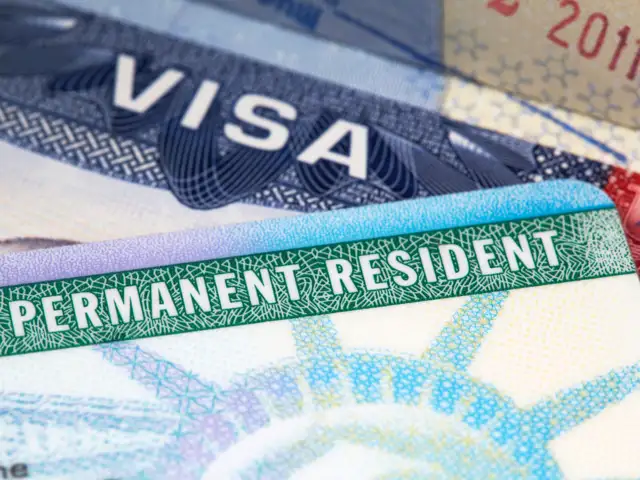
If you are a family member of a US citizen, you have the option to seek lawful permanent resident status while you are within the United States. This classification encompasses immediate family members, fiancés, widowers, and individuals who have suffered cruelty at the hands of a US citizen.








(This article originally appeared in The New York Times.)
Download
The Economic Times Business News App for the Latest News in Business, Sensex, Stock Market Updates & More.
The Economic Times Business News App for the Latest News in Business, Sensex, Stock Market Updates & More.
ADVERTISEMENT


