
Visiting children abroad? Seven countries where Indian parents can explore longer-stay visitor visa options

1/8
From Canada's five-year Super Visa to New Zealand's Parent Boost, here is how families can plan extended visits overseas
For Indian parents whose children have settled overseas, a short holiday may not always be enough. Whether it is spending time with grandchildren, helping families through important milestones or simply staying together for longer, many parents look for ways to extend their visits without applying for permanent residence. Several countries offer specific parent and grandparent visa arrangements, while others allow visitors to apply for longer-validity visas or multiple-entry permits. However, a visa's validity and the period a visitor can actually remain in a country are not necessarily the same.
Here is a closer look at the options, how long parents may stay and the conditions Indian families should understand before making travel plans.
Here is a closer look at the options, how long parents may stay and the conditions Indian families should understand before making travel plans.

2/8
Canada’s Super Visa lets parents stay for five years at a time
Canada's Super Visa is among the more generous options for Indian parents and grandparents visiting children settled overseas.
Eligible applicants can stay for up to five years at a time, with multiple entries over a visa validity period of up to 10 years.
The host must be an adult Canadian citizen, permanent resident or registered Indian living in Canada and meet the minimum income requirement.
Parents must also undergo a medical examination and purchase private health insurance covering at least one year, with minimum emergency coverage of CAD 100,000. The visa is specifically designed for parents and grandparents, rather than general visitors.

3/8
UK offers visitor visas valid for up to 10 years
Indian parents who regularly visit children in Britain can apply for a long-term Standard Visitor visa valid for two, five or 10 years. These are multiple-entry visas, allowing repeated visits during their validity. However, each visit is normally limited to six months.
The longer validity does not mean parents can live in the UK continuously for years. UK Visas and Immigration assesses whether applicants qualify for the requested duration and may issue a shorter visa if they do not. Repeated or successive visits that suggest someone is effectively making the UK their main home can also lead to scrutiny.
The longer validity does not mean parents can live in the UK continuously for years. UK Visas and Immigration assesses whether applicants qualify for the requested duration and may issue a shorter visa if they do not. Repeated or successive visits that suggest someone is effectively making the UK their main home can also lead to scrutiny.

4/8
Australia offers parents three- or five-year Sponsored Parent visas
Australia's Sponsored Parent (Temporary) visa, subclass 870, provides a dedicated route for parents of eligible Australian citizens, permanent residents and eligible New Zealand citizens.
Depending on the visa granted, parents can stay for three or five years at a time. They may apply for further visas, subject to eligibility, allowing a cumulative stay of up to 10 years.
However, the child must first obtain approval as a Parent Sponsor before the parent applies. Applicants must lodge their visa application within six months of sponsorship approval. The visa does not provide permanent residence or permit paid employment in Australia.

5/8
New Zealand's Parent Boost visa allows five-year family visits
New Zealand introduced its Parent Boost Visitor Visa in October 2025 for eligible parents of citizens and residents. It allows parents to visit for up to five years, with multiple entries during the visa period.
A second five-year visa may also be possible, potentially allowing a total of 10 years across two visas. The applicant must be sponsored by their child, meet health and character requirements, and demonstrate sufficient financial support. Medical or travel insurance is compulsory.
One important condition is that parents must leave New Zealand during the third year for health and insurance checks. This is a temporary visitor route, not a pathway to permanent residence.
6/8
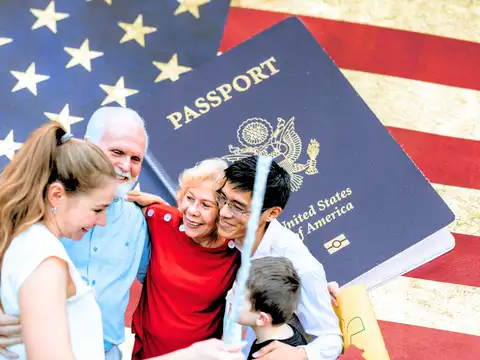
US B-1/ B-2 visa allows family visits, but the I-94 decides the stay
Indian parents visiting children in the US generally use the B-2 tourist visa or a combined B-1/B-2 visitor visa. These visas can allow multiple trips, depending on their validity and entry conditions. However, the visa's expiry date does not determine how long parents can remain in America during an individual visit.
That decision rests with the US Customs and Border Protection officer at the port of entry. The authorised departure date is recorded on the electronic Form I-94 or admission record.
Parents should check this date after arrival rather than assume they can automatically stay for six months. An extension requires a separate application to US Citizenship and Immigration Services before the authorised stay expires.

7/8
UAE residents can sponsor parents for extended family visits
For Indian parents whose children work and live in the UAE, family visit permits provide another option. The UAE's Federal Authority for Identity, Citizenship, Customs and Port Security (ICP) provides entry permits for visiting relatives or friends, with standard validity options of 30, 60 or 90 days.
The UAE government also states that expatriate residents can sponsor their parents for a year's stay by paying a financial deposit as a guarantee for each parent. These are different arrangements, so families should check the applicable sponsorship category, emirate-specific requirements, financial conditions and documentation before applying.
Applications can be made through the relevant immigration authority, including ICP or Dubai's GDRFA.

8/8
Financial proof, insurance and sponsorship documents matter
A longer-validity visitor visa does not guarantee approval or unrestricted entry. Parents should prepare evidence of their relationship with the child, the host's immigration status, accommodation arrangements and financial support. Depending on the destination, authorities may ask for bank statements, sponsorship letters, income evidence, medical examinations and health insurance.
Canada, for instance, requires Super Visa applicants to have qualifying private medical insurance, while New Zealand's Parent Boost route also makes insurance compulsory. Applicants should demonstrate that their visit is temporary and that they will comply with the visa conditions. Before booking flights, families should check the latest requirements, entry conditions and permitted stay with the destination country's official immigration authority.
Canada, for instance, requires Super Visa applicants to have qualifying private medical insurance, while New Zealand's Parent Boost route also makes insurance compulsory. Applicants should demonstrate that their visit is temporary and that they will comply with the visa conditions. Before booking flights, families should check the latest requirements, entry conditions and permitted stay with the destination country's official immigration authority.