Thailand bats for a Schengen-like visa for South East Asia to lure rich tourists
Thailand's pursuit of a joint-visa program to attract long-haul tourists involves discussions with neighboring countries and strategic initiatives. The proposal includes visa extensions, reciprocal deals, and plans for casinos and event-based tour...
By Bloomberg |
Thailand is steering an initiative for a joint-visa program with countries that together hosted about 70 million tourists last year as Prime Minister Srettha Thavisin ramps up initiatives to attract more long-haul and high-spending travelers.
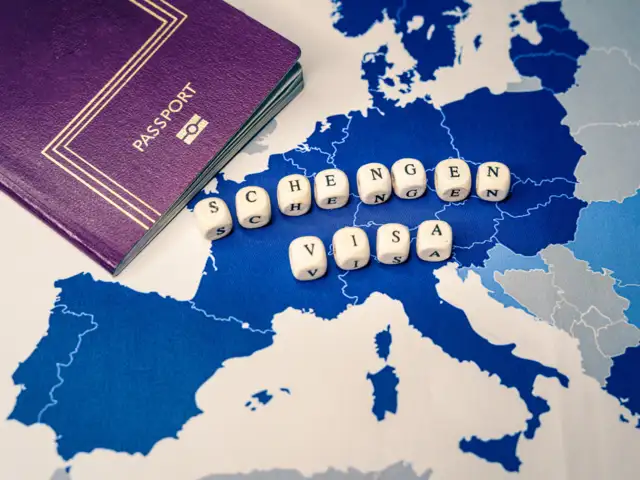
Srettha — who’s pledged to elevate Thailand’s status as a tourism hotspot into an aviation and logistics hub — has discussed the Schengen-type visa idea with his counterparts in Cambodia, Laos, Malaysia, Myanmar and Vietnam in recent months. The facility is meant to ensure seamless mobility for travelers among the six neighboring countries.
With most leaders positively responding to the single-visa concept, tourism-reliant Thailand aims to generate more revenue per traveler and cushion its economy from headwinds such as sluggish exports and weak global demand that’s hurt its manufacturing industry.
The six Southeast Asian nations reported a combined 70 million foreign tourist arrivals in 2023, according to official data. Thailand and Malaysia accounted for more than half of the tally, generating about $48 billion in tourism revenue.
The single-visa is the most-ambitious among Srettha’s lineup of tourism initiatives but targeted for the long-term. The industry has served the country well, accounting for about 20% of total jobs and making up about 12% to the nation’s $500 billion economy. Barring the pandemic years, tourism has flourished and provided a cushion against a slump in manufacturing and exports, the traditional bulwarks of the economy.
The tourism industry is upbeat, with Marisa Sukosol Nunbhakdi, a former president of the Thai Hotels Association, saying “a common visa could entice long-haul travelers to make an easier decision.” The visa validity will need to be extended to 90 days from the usual 30-day period to make it attractive, she said.
ADVERTISEMENT
Srettha’s administration has set a goal of attracting 80 million tourists by 2027. And since taking power about seven months ago, his government has signed a reciprocal visa waiver deal with China — Thailand’s largest market for tourists — and offered temporary visa waivers for travelers from India, Taiwan and Kazakhstan. It’s also mulling a plan to open casinos inside large entertainment complexes and event-based tourism will help the country generate more revenue.
If done right, the benefits of visa-free travel won’t be confined to tourism alone as ease of travel would be a boon for business travelers and trade, according to Bill Barnett, managing director of hospitality and property consultancy C9 Hotelworks.
But a Schengen-type visa, which allows free travel around the border-free zone within Europe, may be an uphill task given Asean’s poor track record in expediting multilateral policy framework and the group’s standing as a talk shop.
ADVERTISEMENT
“Country by country seems to be the best way to do it,” Barnett said. “Bilateral agreements, where governments are leading the way for this type of thing, make a lot of sense as they are looking outward and not inward.”
For a joint visa scheme, approvals have to be coordinated and the absence of standard immigration criteria among participating nations unlike the European Union can pose challenges, according to Thitinan Pongsudhirak, professor at Chulalongkorn University’s political science faculty. Asean, as a grouping is a divided body with a poor immigration record, he said.
ADVERTISEMENT
With Srettha being neophyte in politics, he may lack the clout to push through the visa proposal, Thitinan said.
“All the various things he’s been trying to do, I see it as picking low-hanging fruits and picking fruits off the ground,” Thitinan said.“Sometimes fruits on the ground are rotten.”
Travelling to Europe? How to get 5 year Multiple-Entry Schengen Visa
1/7
If you are entering the Schengen Area from a country where there is no visa-free travel agreement, you need to apply for a Schengen visa. The four main Schengen Visa types—A, B, C, and D—are available for these.
The most common kind of Schengen visa, known as a Uniform Schengen Visa, encompasses kinds A, B, and C and allows you to visit any Schengen Zone country once every six months for up to 90 days. It also gives you access to your airport transit visa. If you're traveling to Europe for a short time, you will require this visa.
If you are entering the Schengen Area from a country where there is no visa-free travel agreement, you need to apply for a Schengen visa. The four main Schengen Visa types—A, B, C, and D—are availabl..
Read More
The 26 countries that comprise the Schengen area. The European Union counts 23 of the 27 as members. The remaining four nations make up the Non-European Union nations and are particular members of the European Free Trade Association (EFTA). These four non-EU nations are Norway, Liechtenstein, Iceland, and Switzerland.
The other 23 nations are Germany, Austria, Czech Republic, Estonia, Finland, Denmark, Greece, Belgium, Slovenia, Italy, Hungary, Latvia, Lithuania, Malta, Luxemburg, Netherlands, Poland, Portugal, Slovakia, France, Sweden, Spain and Croatia.
The 26 countries that comprise the Schengen area. The European Union counts 23 of the 27 as members. The remaining four nations make up the Non-European Union nations and are particular members of th..
Read More
The purpose of a Schengen visa is to allow travel through or short-term stays of up to 90 days within any 180-day period inside the Schengen area. A visa given by one Schengen state is valid in all other Schengen states; however, you must apply for the visa in the country of your principal destination.
If you plan to visit more than one Schengen country, but none of them will be your primary destination, you must apply for a visa from the region you will enter first.
The purpose of a Schengen visa is to allow travel through or short-term stays of up to 90 days within any 180-day period inside the Schengen area. A visa given by one Schengen state is valid in all o..
Read More
The EU Visa Code permits the issuing of multiple-entry visas for multiple visits to Schengen member states; however, the conditions for doing this were not made clear and unambiguous.
The new Visa Code established several conditions that visa holders must meet in order to obtain a Schengen Visa. It became operative on February 2 and is applicable to the foreign embassies, consulates, and visa centers of the Schengen member states.
The EU Visa Code permits the issuing of multiple-entry visas for multiple visits to Schengen member states; however, the conditions for doing this were not made clear and unambiguous.The new Visa Cod..
Read More
One sort of Schengen visa that you can obtain from India to travel to any Schengen country is a 5-year multiple-entry visa. A five-year MEV is available to individuals who have obtained and lawfully utilized a multiple-entry visa in the last three years, which must have been valid for at least two years.
During a five-year period, this visa grants you unrestricted travel into 26 European countries, provided you don't over the 90/180-day limit.
One sort of Schengen visa that you can obtain from India to travel to any Schengen country is a 5-year multiple-entry visa. A five-year MEV is available to individuals who have obtained and lawfully ..
Read More
To be eligible for a multiple-entry or long-term Schengen visa, you must meet the following requirements in addition to often visiting the Schengen Area.
You must provide evidence of why they will require multiple entries into the Schengen Area throughout the next year(s).
You must have a perfect visa record, which means they you never overstayed your visa's duration while in the Schengen Area or worked illegally.
To be eligible for a multiple-entry or long-term Schengen visa, you must meet the following requirements in addition to often visiting the Schengen Area.You must provide evidence of why they will req..
Read More
A 5-year multiple entry Schengen visa costs the same as a conventional short-stay visa, i.e., €80, despite allowing you to make repeated visits totaling less than 90 days during the validity of the visa.
A 5-year multiple entry Schengen visa costs the same as a conventional short-stay visa, i.e., €80, despite allowing you to make repeated visits totaling less than 90 days during the validity of the v..