
Ramayana Trail 2026: Explore the destinations where the epic Ramayana comes alive
1/8
From Ayodhya to Sri Lanka, actual places to explore the Ramayana's enduring legacy across Asia
The Ramayana is more than an epic that has travelled through generations. Its characters, landscapes and legendary events have left their mark on destinations across India, Nepal, Sri Lanka and Southeast Asia. From Ayodhya, traditionally regarded as Lord Rama's birthplace, to the forests associated with Sita Ma's captivity in Sri Lanka, these places offer travellers an opportunity to explore the story through temples, pilgrimage sites, ancient ruins and cultural performances. Whether you want to follow the journey of Lord Rama or discover how the epic was reinterpreted across Asia, these 10 destinations offer a travel route through one of the region's most enduring stories.
2/8
Ayodhya, Uttar Pradesh
Begin where Lord Rama's story comes home
Nearest airport: Ayodhya Airport (AYJ). Alternatively, Ayodhya is around three hours by car from Lucknow.
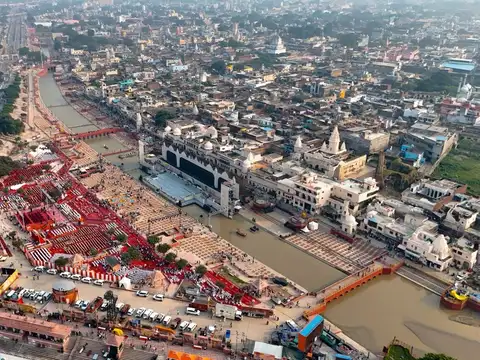
For anyone looking to trace the Ramayana's journey, Ayodhya is the natural place to begin. Traditionally regarded as the birthplace of Lord Rama, the city is also where the epic reaches its conclusion, with Rama returning home after 14 years of exile.
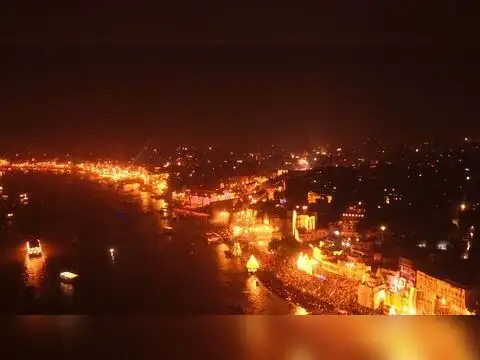
The Ram Mandir, built at the site traditionally revered as Lord Rama's birthplace, is among the city's most significant places to visit. Its importance becomes particularly visible during Diwali, the festival associated with the return of Lord Rama and Sita Ma to Ayodhya. Every year, the celebrations bring the story to life as thousands of oil lamps illuminate the banks of the Sarayu River.
Another important stop is Hanuman Garhi, a hilltop temple dedicated to Lord Hanuman, who played a central role in helping Rama rescue Sita Ma. According to local tradition, Hanuman remained in Ayodhya to protect the kingdom after Rama's return. Visitors climb 76 steps to reach the temple.
Travel highlight: Plan a visit around Diwali to experience Ayodhya's celebrations and the illuminated Sarayu riverfront.
3/8
Janakpur, Nepal
Visit the city associated with Rama and Sita's wedding
Nearest airport: Janakpur Airport (JKR).
The Ramayana's next important chapter takes travellers to Janakpur in Nepal, traditionally associated with Mithila, the kingdom of King Janaka and the setting of Sita Ma's swayamvara.
According to the epic, King Janaka announced that whoever could lift and string the enormous bow of Lord Shiva would marry his daughter. While the other suitors failed, Lord Rama lifted the bow and broke it while drawing the string, demonstrating his extraordinary strength and winning Sita Ma's hand in marriage.
The city continues to celebrate this association through Vivah Panchami, an annual festival that recreates the divine wedding through processions and traditional ceremonies. Visitors can explore the pavilion traditionally identified as the place where the deities were married.
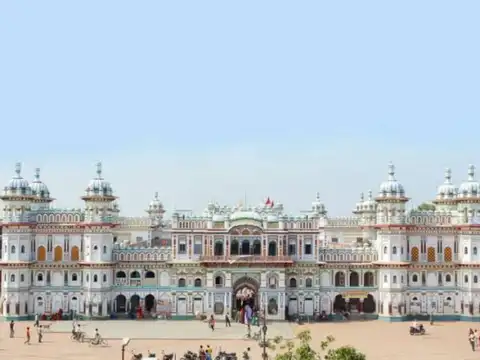
Another major attraction is Janaki Mandir, a temple dedicated to Sita Ma. Its white façades, domes and intricate architectural details make it one of Janakpur's most recognisable landmarks.
Travel highlight: Time your visit with Vivah Panchami to see the city recreate the wedding celebrations associated with the Ramayana.
4/8
Chitrakoot, MP and UP
Walk through the forests of Rama's exile
Nearest airport: Prayagraj Airport (IXD).
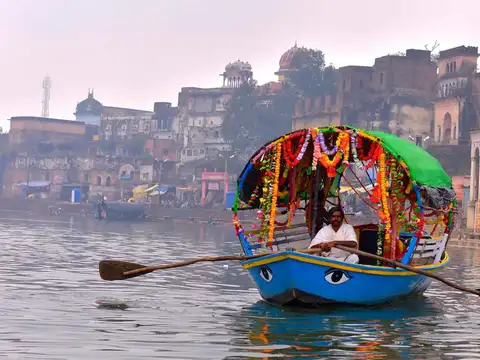
Away from the grand temples and royal settings, Chitrakoot offers a glimpse of the quieter landscape associated with Lord Rama's years in exile.
After leaving Ayodhya, Rama travelled into the forest with Sita Ma and his younger brother Lakshmana. Chitrakoot, with its wooded hills and rivers, is traditionally associated with the place where the three spent the early years of their 14-year exile.
The destination is also connected with one of the epic's most moving family encounters. When Bharata travelled from Ayodhya to persuade his elder brother to return and take the throne, Rama refused, determined to complete his exile. Bharata instead took Rama's sandals back to the kingdom and placed them on the throne, symbolising that he would govern on his brother's behalf.
Visitors can explore Bharat Milap Temple, traditionally associated with the brothers' reunion. It lies along the pilgrimage route around Kamadgiri Hill, where Rama, Sita Ma and Lakshmana are believed to have lived during their exile.
Travel highlight: Explore the Kamadgiri Hill pilgrimage route and visit Bharat Milap Temple to understand Chitrakoot's place in the epic.
5/8
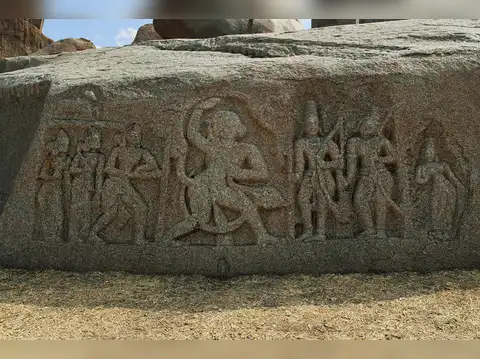
Hemakuta Hill, Hampi, Karnataka
Discover the legendary kingdom of Hanuman
Nearest airport: Vidyanagar Airport (VDY).
With its enormous granite boulders, ancient temples and dramatic landscape along the Tungabhadra River, Hampi is one of the most distinctive destinations associated with the Ramayana.
The region is traditionally identified with Kishkindha, the vanara kingdom, the forest-dwelling army that became Lord Rama's ally in his search for Sita Ma.
According to the epic, this is where Rama meets Hanuman, who introduces him to Sugriva, the exiled ruler of Kishkindha. Rama helps Sugriva reclaim his kingdom from his brother Vali. In return, Sugriva promises his army's support in finding Sita Ma. Hanuman eventually leads the search party to Lanka, where he discovers her whereabouts.
Across the river from Hampi stands Anjanadri Hill, traditionally regarded as Hanuman's birthplace. Visitors can climb the steps to its hilltop temple and take in panoramic views of the surrounding rocky landscape.
There is another reason to spend time here. Hampi's UNESCO-listed ruins preserve the remains of the Vijayanagara Empire, once one of southern India's great medieval kingdoms. Virupaksha Temple, the Vittala Temple complex and the Royal Enclosure are among the important sites to explore.
Travel highlight: Combine a visit to Anjanadri Hill with Hampi's historic temple complexes and the striking landscape around the Tungabhadra River.
6/8
Rameshwaram, Tamil Nadu
Stand close to the legendary route to Lanka
Nearest airport: Madurai Airport (IXM).
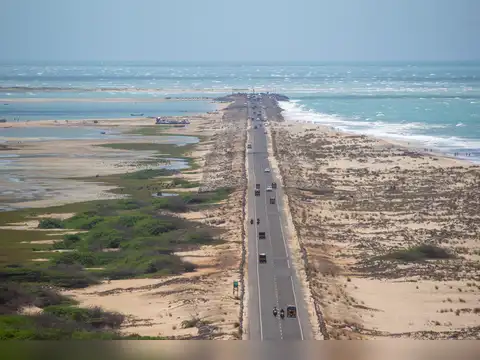
At the southern edge of India, Rameswaram occupies an important place in the Ramayana's journey towards Lanka.
The island lies off the Tamil Nadu coast, separated from Sri Lanka by a narrow stretch of sea. According to the epic, Lord Rama's army constructed a bridge across the water to reach Lanka and confront Ravana, who had abducted Sita Ma. This crossing is traditionally associated with Ram Setu, also known as Adam's Bridge, a chain of limestone shoals extending between India's Pamban Island and Sri Lanka's Mannar Island.
Rameswaram is also home to Ramanathaswamy Temple, one of Hinduism's most important pilgrimage destinations. Tradition holds that Lord Rama prayed to Lord Shiva here following his victory over Ravana, although some accounts associate the prayer with the period before his journey to Sri Lanka.
A visit to nearby Dhanushkodi adds another dimension to the experience. The coastal destination offers views across the narrow waters towards Sri Lanka and lies close to the legendary crossing described in the epic.
Travel highlight: Visit Ramanathaswamy Temple and continue to Dhanushkodi for coastal views associated with the journey towards Lanka.
7/8
Gurulupotha and Nuwara Eliya, Sri Lanka
Explore places linked to Sita Ma's captivity
Nearest international airport: Bandaranaike International Airport (CMB), Colombo. Allow approximately five to six hours by car from Colombo to Nuwara Eliya. Travel to Gurulupotha via Kandy before continuing to Nuwara Eliya.
The Ramayana Trail continues across the sea into Sri Lanka, where several locations are traditionally associated with the period when Sita Ma was held captive by Ravana.
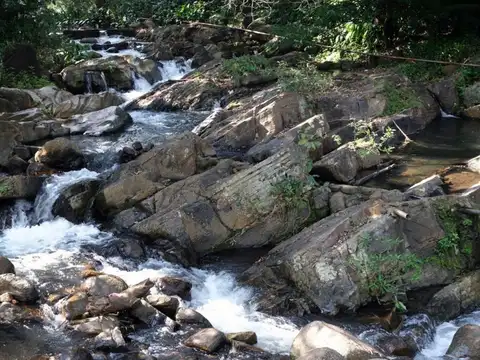
One such place is Gurulupotha, associated with Sita Kotuwa, meaning Sita's Fort. According to local tradition, Sita Ma was initially held in a palace belonging to Ravana's wife, Mandodari, in a forested area near present-day Gurulupotha.
Although the palace no longer exists, visitors can reach the site through a forest walking trail. The surroundings include waterfalls, streams and dense vegetation.
The next important destination is Nuwara Eliya, associated with Ashoka Vatika, the garden within Ravana's kingdom where Sita Ma was later held. This is also where Lord Hanuman is believed to have found her during his search.
Seetha Amman Temple is associated with the legendary garden. Nearby rocks are said to carry markings believed by local tradition to be footprints left by Hanuman.
Beyond its Ramayana connections, Nuwara Eliya offers a different reason to stay longer. Its tea plantations, waterfalls and mountain scenery make Sri Lanka's central highlands an appealing destination for travellers.
Travel highlight: Explore Seetha Amman Temple and the forested surroundings of Sita Kotuwa while discovering Sri Lanka's central highlands.
8/8
Bangkok, Thailand
Follow the Ramayana through colourful temple murals
Nearest airport: Suvarnabhumi Airport (BKK). Best time to visit: November to February.
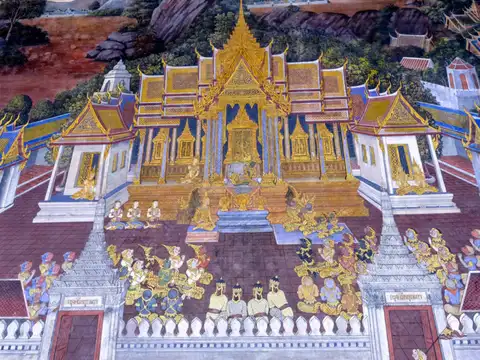
In Thailand, the Ramayana evolved into the Ramakien, a national epic shaped by Thai literary, artistic and religious traditions.
One of the best places to explore this interpretation is Wat Phra Kaew, the Temple of the Emerald Buddha, located within Bangkok's Grand Palace complex.
The temple's extensive galleries feature colourful murals depicting scenes from the Ramakien. Royal processions, elaborate palaces and large-scale battles unfold across the walls, offering visitors a visual account of the story as it was adapted into Thai culture.
The characters also have distinctive Thai identities. Phra Ram is the counterpart of Lord Rama, while Thotsakan represents Ravana, the ten-headed ruler of Lanka.
For travellers interested in the cultural journey of the Ramayana, these murals offer an opportunity to see how an Indian epic became an important part of Thailand's artistic heritage.
Travel highlight: Spend time exploring the mural galleries at Wat Phra Kaew to see the Ramakien's characters and battles depicted in Thai art.