Liquids carry on rule may exit security checks soon - DHS hints at next big change
The United States Department of Homeland Security may soon revise the Transportation Security Administration's 3-1-1 liquids rule. This rule limits the amount of liquid passengers can carry in their hand luggage. Secretary Kristi Noem hinted at a ...
By ET Online | Updated:

Agencies
A key airport security measure that has frustrated millions of travelers for nearly two decades may soon be revisited. U.S. Secretary of Homeland Security Kristi Noem has suggested that the federal government is considering changes to the Transportation Security Administration’s (TSA) long-standing 3-1-1 liquids rule, which restricts the amount of liquid passengers can carry in their hand luggage.
Speaking at the Hill Nation Summit in Washington on Wednesday, Noem hinted that a formal policy shift may be on the way. “I’m questioning [the liquids rule],” she told NewsNation host Blake Burman. “So that may be the next big announcement — what size your liquids need to be.”
The comments come just days after the Department of Homeland Security rolled back the mandatory shoe removal rule at TSA checkpoints, signaling a broader effort to modernize airport security procedures in the United States. Together, these changes may indicate a turning point in how travelers move through American airports, with a focus on speeding up the process without compromising safety.
What is the 3-1-1 rule?
The 3-1-1 liquids rule has been in effect since September 2006 and was introduced following a foiled terrorist plot in the United Kingdom involving liquid explosives on board flights. It limits carry-on liquids to 3.4 ounces (100 millilitres) per container, all of which must fit inside a single quart-sized, resealable plastic bag. The rule was designed to mitigate the risk of liquid-based explosive devices.
Authorities had uncovered plans to smuggle and detonate liquid explosives aboard transatlantic flights. The new restrictions were quickly adopted across global aviation, becoming a fixture in airport security protocols worldwide.
Faster, smarter security check-in
“Hopefully the future of an airport, where I’m looking to go, is that you walk in the door with your carry-on suitcase, you walk through a scanner and go right to your flight,” Noem said. “It takes you one minute.”
She added that DHS is currently working with private technology firms to pilot updated screening processes at selected airports. These projects will aim to improve both safety and passenger experience by reducing unnecessary delays at security checkpoints.
“It is still a process that is protecting people who are traveling on our airlines, but it has to make sense,” Noem said. “It has to actually do something to make you safer.”
Possible policy shift after shoe rule rollback
Noem’s remarks suggest the DHS may be open to revisiting that policy in light of new technologies. Her vision for the future includes shorter wait times and more seamless passenger screening.
Trusted traveler programs like TSA PreCheck and the deployment of advanced screening systems have made this change possible. According to DHS, this step is part of a phased plan to modernize airport screening systems while maintaining robust security standards.
Although Noem’s comments point to potential changes, DHS emphasized that any policy shift would be communicated through formal channels. For now, passengers must continue to follow existing liquid restrictions at TSA checkpoints. But with increasing emphasis on smarter security systems and traveler convenience, major changes could be on the horizon.
Speaking at the Hill Nation Summit in Washington on Wednesday, Noem hinted that a formal policy shift may be on the way. “I’m questioning [the liquids rule],” she told NewsNation host Blake Burman. “So that may be the next big announcement — what size your liquids need to be.”
The comments come just days after the Department of Homeland Security rolled back the mandatory shoe removal rule at TSA checkpoints, signaling a broader effort to modernize airport security procedures in the United States. Together, these changes may indicate a turning point in how travelers move through American airports, with a focus on speeding up the process without compromising safety.
What is the 3-1-1 rule?
The 3-1-1 liquids rule has been in effect since September 2006 and was introduced following a foiled terrorist plot in the United Kingdom involving liquid explosives on board flights. It limits carry-on liquids to 3.4 ounces (100 millilitres) per container, all of which must fit inside a single quart-sized, resealable plastic bag. The rule was designed to mitigate the risk of liquid-based explosive devices.
Authorities had uncovered plans to smuggle and detonate liquid explosives aboard transatlantic flights. The new restrictions were quickly adopted across global aviation, becoming a fixture in airport security protocols worldwide.
ADVERTISEMENT
As reported by CNN, while effective in its time, critics have argued that the rule is outdated given the evolution of threat detection technologies. Larger quantities of liquids, aerosols, and gels continue to be allowed in checked baggage.Faster, smarter security check-in
“Hopefully the future of an airport, where I’m looking to go, is that you walk in the door with your carry-on suitcase, you walk through a scanner and go right to your flight,” Noem said. “It takes you one minute.”
She added that DHS is currently working with private technology firms to pilot updated screening processes at selected airports. These projects will aim to improve both safety and passenger experience by reducing unnecessary delays at security checkpoints.
“It is still a process that is protecting people who are traveling on our airlines, but it has to make sense,” Noem said. “It has to actually do something to make you safer.”
ADVERTISEMENT
Possible policy shift after shoe rule rollback
Noem’s remarks suggest the DHS may be open to revisiting that policy in light of new technologies. Her vision for the future includes shorter wait times and more seamless passenger screening.
ADVERTISEMENT
According to the CNN reports, the potential liquid rule overhaul follows DHS’s recent easing of the shoe removal mandate, another post-9/11 measure. Initially introduced in 2001 after the attempted “shoe bombing” incident involving Richard Reid, the rule required all travelers to remove their shoes during TSA screening. However, newer scanning technologies now allow threats to be detected without requiring passengers to take off their footwear.Trusted traveler programs like TSA PreCheck and the deployment of advanced screening systems have made this change possible. According to DHS, this step is part of a phased plan to modernize airport screening systems while maintaining robust security standards.
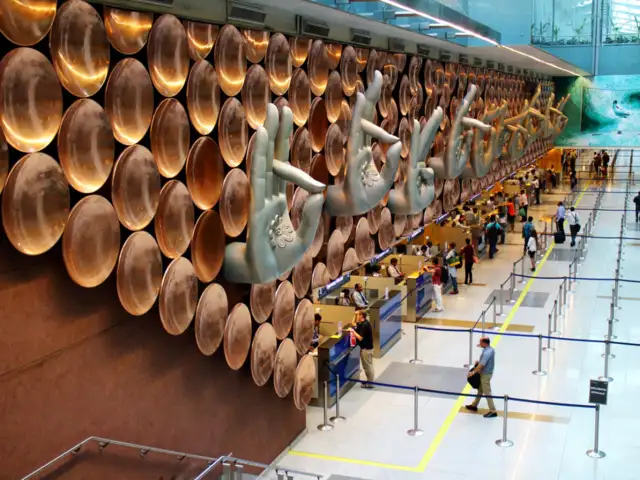
Delhi’s Indira Gandhi International Airport (IGIA) has climbed to the 9th spot on the list of the world’s busiest airports in 2024, according to the latest report by Airports Council International (ACI). This is a jump from its 10th position in 2023. With close to 7.8 crore passengers, Delhi airport outperformed major hubs like Los Angeles, Paris, and New York in terms of footfall.



Although Noem’s comments point to potential changes, DHS emphasized that any policy shift would be communicated through formal channels. For now, passengers must continue to follow existing liquid restrictions at TSA checkpoints. But with increasing emphasis on smarter security systems and traveler convenience, major changes could be on the horizon.
Download
The Economic Times Business News App for the Latest News in Business, Sensex, Stock Market Updates & More.
The Economic Times Business News App for the Latest News in Business, Sensex, Stock Market Updates & More.
ADVERTISEMENT


