
7 places around the world you can visit with links to some of the most famous books
1/8
7 places behind famous books
For book lovers, travelling can offer another way to experience a favourite story. Across the world, real streets, buildings, towns and landscapes have appeared in famous books or become closely linked with the writers who created them. Some destinations served as settings for celebrated novels, while others were home to authors whose surroundings shaped their literary worlds. From Dublin’s connection with Ulysses to the Colombian hometown associated with Gabriel García Márquez, these places allow travellers to explore the real-world connections behind famous works of literature.
2/8
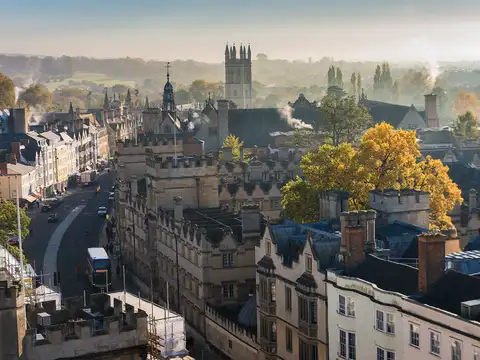
Oxford, England
Oxford has a strong connection with Alice’s Adventures in Wonderland through Lewis Carroll, the pen name of Charles Lutwidge Dodgson. Carroll taught mathematics at Christ Church and became friends with Dean Henry Liddell and his family, including Alice Liddell. His friendship with the Liddell children led to the creation of the famous Alice stories. Christ Church also holds manuscripts, editions and other material connected with Carroll and the publication of the books.
3/8
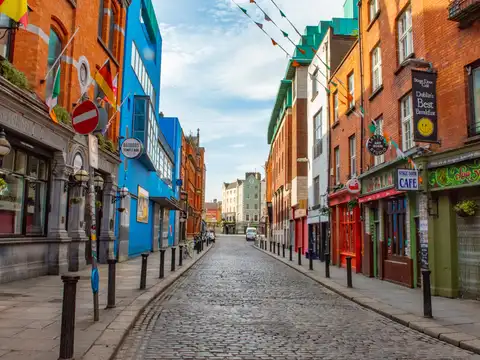
Dublin, Ireland
Dublin is at the heart of James Joyce’s Ulysses, with the novel following Leopold Bloom through the city during a single day. Several real locations mentioned in the book remain associated with Joyce and his work. The Martello Tower at Sandycove, now home to the James Joyce Museum, is among the best-known literary landmarks. The James Joyce Centre also displays the door from No. 7 Eccles Street, the fictional home of Leopold and Molly Bloom.
Amazon Top Deals
POWERED BY

Crompton Ozone 75 Litres Desert Air Cooler for home | Large & Easy Clean Ice Chamber | 4-Way Air Deflection | High Density Honeycomb Pads | Everlast Pump | Auto Fill| 3 Year Brand Warranty
₹9,798Buy Now43%
OFF

LG 32 L Convection Microwave Oven (MC3286BRUM, Black, 360° Motorised Rotisserie for Bar-be-queing, 301 Auto Cook Menu, Stainless steel cavity, Indian Cuisine, Tandoor Se, Steam Clean & Diet Fry)
₹19,090Buy Now20%
OFF
4/8
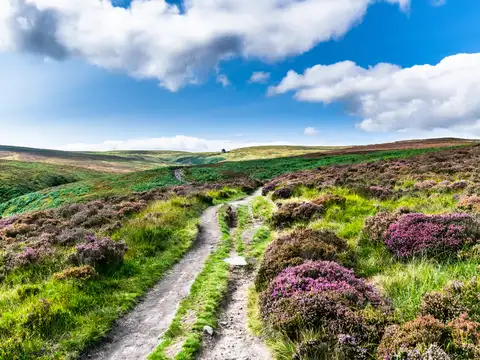
Haworth, England
Haworth is closely associated with Emily Brontë and Wuthering Heights. Brontë lived at Haworth Parsonage with her family, on the edge of the moors, where she wrote the novel. The Brontë Parsonage Museum now occupies the family home and preserves original items connected with the sisters. Nearby Top Withens is also linked to the novel and is widely believed to have inspired the fictional Wuthering Heights, although the precise connection remains uncertain.
5/8
Lyme Regis, England
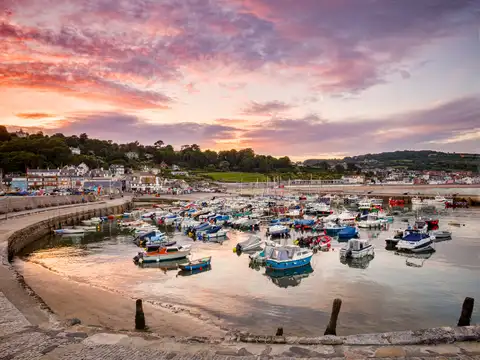
Lyme Regis features prominently in John Fowles’ The French Lieutenant’s Woman, with the town and its famous Cobb forming important settings in the novel. Fowles lived in Lyme Regis, and the town and its harbour landmark are closely associated with the book. The Cobb also appeared in the 1980 film adaptation. Visitors can explore the waterfront and coastline that became linked with Fowles’ novel.
6/8
Monterey, California, US
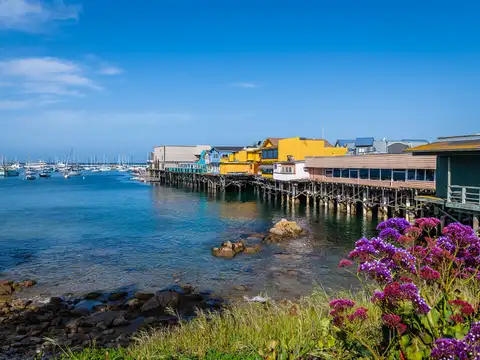
Monterey has a direct literary connection with John Steinbeck’s Cannery Row. The novel draws on the city’s former sardine-canning district and the people Steinbeck knew there. The area was originally called Ocean View Avenue and was later renamed Cannery Row in recognition of Steinbeck’s novel. The district retains its historical and literary links with Steinbeck, while the waterfront continues to feature places associated with the writer and his work.
7/8
Aracataca, Colombia
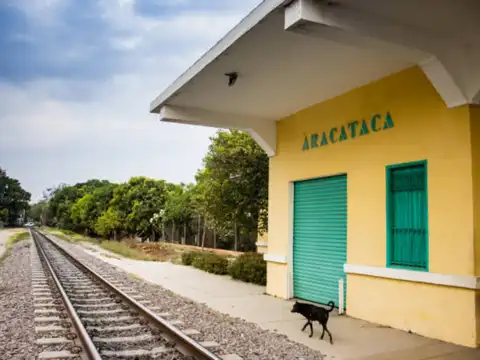
Aracataca, the birthplace of Gabriel García Márquez, is closely linked to the fictional world of One Hundred Years of Solitude. Memories of the town and García Márquez’s childhood contributed to the world associated with Macondo, the fictional town at the centre of the novel. Colombia’s official tourism authority describes Aracataca as an important stop on the García Márquez route and highlights places connected with his early life. Visitors can explore the Gabriel García Márquez Museum and other locations linked to the author.
8/8
London, England
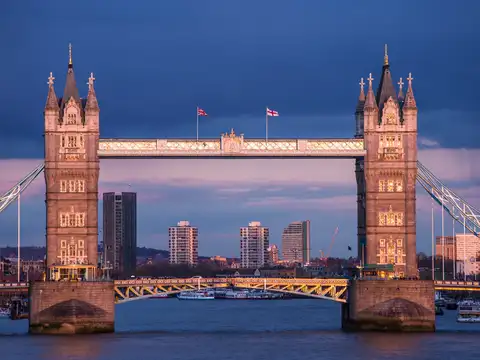
London is central to the work of Charles Dickens, whose novels frequently drew on the city and its people. Dickens lived at 48 Doughty Street between 1837 and 1839, during a period when he completed The Pickwick Papers and wrote Oliver Twist and Nicholas Nickleby. The house is now the Charles Dickens Museum and preserves the setting of his family home. For readers, visiting Dickens-related locations across London offers a chance to explore the city that featured prominently in his writing.